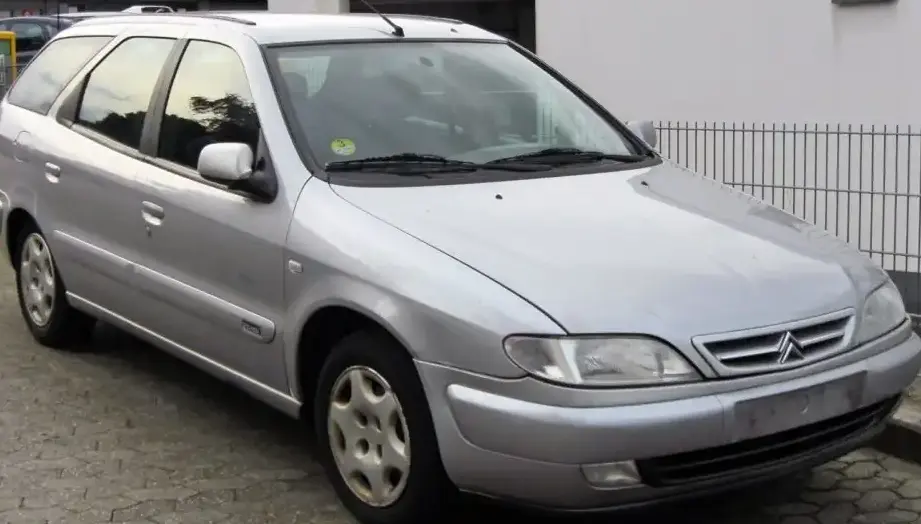
The Citroën Xsara Coupé VTS 2.0 HDi, produced between February 2003 and 2004, represents a compelling blend of sporty styling and diesel efficiency within the broader Xsara Coupé (N0, Phase III) range. Positioned as a mid-range offering, it aimed to provide a more economical and refined alternative to the petrol-powered VTS models while still delivering a respectable level of performance. This variant was primarily marketed in Europe, capitalizing on the growing demand for diesel engines that offered both fuel economy and torque. The Xsara Coupé itself was a distinctive three-door hatchback, designed to appeal to buyers seeking a more individualistic and stylish alternative to traditional family cars.
Technical Specifications
| Brand | Citroen |
| Model | Xsara |
| Generation | Xsara Coupe (N0, Phase III) |
| Type (Engine) | VTS 2.0 HDi (109 Hp) |
| Start of production | February, 2003 |
| End of production | 2004 |
| Powertrain Architecture | Internal Combustion engine |
| Body type | Coupe |
| Seats | 5 |
| Doors | 3 |
| Fuel consumption (urban) | 7 l/100 km (33.6 US mpg, 40.4 UK mpg, 14.3 km/l) |
| Fuel consumption (extra urban) | 4.2 l/100 km (56 US mpg, 67.3 UK mpg, 23.8 km/l) |
| Fuel consumption (combined) | 5.2 l/100 km (45.2 US mpg, 54.3 UK mpg, 19.2 km/l) |
| CO2 emissions | 138 g/km |
| Fuel Type | Diesel |
| Acceleration 0 – 100 km/h | 11.3 sec |
| Acceleration 0 – 62 mph | 11.3 sec |
| Acceleration 0 – 60 mph | 10.7 sec |
| Maximum speed | 195 km/h (121.17 mph) |
| Emission standard | Euro 3 |
| Weight-to-power ratio | 11.2 kg/Hp, 89.6 Hp/tonne |
| Weight-to-torque ratio | 4.9 kg/Nm, 205.6 Nm/tonne |
| Power | 109 Hp @ 4000 rpm |
| Power per litre | 54.6 Hp/l |
| Torque | 250 Nm @ 1750 rpm (184.39 lb.-ft. @ 1750 rpm) |
| Engine layout | Front, Transverse |
| Engine Model/Code | RHZ DW10ATED |
| Engine displacement | 1997 cm3 (121.86 cu. in.) |
| Number of cylinders | 4 |
| Engine configuration | Inline |
| Cylinder Bore | 85 mm (3.35 in.) |
| Piston Stroke | 88 mm (3.46 in.) |
| Compression ratio | 18:1 |
| Number of valves per cylinder | 2 |
| Fuel injection system | Diesel Commonrail |
| Engine aspiration | Turbocharger, Intercooler |
| Valvetrain | OHC |
| Engine oil capacity | 4.2 l (4.44 US qt | 3.7 UK qt) |
| Coolant | 5.8 l (6.13 US qt | 5.1 UK qt) |
| Kerb Weight | 1216 kg (2680.82 lbs.) |
| Max. weight | 1726 kg (3805.18 lbs.) |
| Max load | 510 kg (1124.36 lbs.) |
| Trunk (boot) space – minimum | 408 l (14.41 cu. ft.) |
| Trunk (boot) space – maximum | 1190 l (42.02 cu. ft.) |
| Fuel tank capacity | 54 l (14.27 US gal | 11.88 UK gal) |
| Max. roof load | 75 kg (165.35 lbs.) |
| Permitted trailer load with brakes (12%) | 1100 kg (2425.08 lbs.) |
| Permitted trailer load without brakes | 615 kg (1355.84 lbs.) |
| Permitted towbar download | 70 kg (154.32 lbs.) |
| Length | 4188 mm (164.88 in.) |
| Width | 1705 mm (67.13 in.) |
| Width including mirrors | 2014 mm (79.29 in.) |
| Height | 1405 mm (55.31 in.) |
| Wheelbase | 2540 mm (100 in.) |
| Front track | 1423 mm (56.02 in.) |
| Rear (Back) track | 1430 mm (56.3 in.) |
| Front overhang | 880 mm (34.65 in.) |
| Rear overhang | 768 mm (30.24 in.) |
| Minimum turning circle (turning diameter) | 11.5 m (37.73 ft.) |
| Drivetrain Architecture | The Internal combustion engine (ICE) drives the front wheels of the vehicle. |
| Drive wheel | Front wheel drive |
| Number of gears and type of gearbox | 5 gears, manual transmission |
| Front suspension | Independent, type McPherson with coil spring and anti-roll bar |
| Rear suspension | Torsion |
| Front brakes | Ventilated discs |
| Rear brakes | Drum |
| Assisting systems | ABS (Anti-lock braking system) |
| Steering type | Steering rack and pinion |
| Power steering | Hydraulic Steering |
| Tires size | 195/55 R15 |
| Wheel rims size | 6J x 15 |
Powertrain & Engine Architecture
The heart of the Xsara Coupé VTS 2.0 HDi is the DW10ATED engine, a 1997cc four-cylinder diesel engine. This engine, designated with the code RHZ, is a common rail direct injection (CRDI) unit. The common rail system, operating at extremely high pressures, allows for precise control of fuel delivery, resulting in improved combustion efficiency, reduced noise, and increased power output. The engine features an overhead camshaft (OHC) valvetrain with two valves per cylinder. A turbocharger with an intercooler is employed to boost power and torque, providing 109 horsepower at 4000 rpm and a substantial 250 Nm (184 lb-ft) of torque at just 1750 rpm. This torque characteristic is a hallmark of diesel engines, providing strong pulling power from low engine speeds. The engine is transversely mounted at the front of the vehicle. The transmission is a five-speed manual gearbox, chosen for its efficiency and driver engagement.
Driving Characteristics
The 2.0 HDi engine, coupled with the five-speed manual transmission, delivers a surprisingly capable driving experience. While not as overtly sporty as the petrol-powered VTS models, the HDi offers strong acceleration, achieving 0-60 mph in approximately 10.7 seconds and a top speed of 195 km/h (121 mph). The abundant low-end torque makes overtaking effortless, and the engine feels responsive even at lower speeds. The gear ratios are well-matched, providing good acceleration in each gear. Compared to the higher-output petrol versions, the HDi prioritizes fuel economy and relaxed cruising over outright performance. The manual transmission allows for greater driver control, but the engine’s torque characteristics mean that frequent gear changes aren’t necessary.
Equipment & Trim Levels
The VTS 2.0 HDi trim level typically included features such as alloy wheels, sports seats, and a leather-wrapped steering wheel. Air conditioning, electric windows, and central locking were also standard. Optional extras could include a sunroof, upgraded audio system, and metallic paint. The interior upholstery was generally cloth, with a sporty design. The dashboard layout was functional and driver-focused, with clear instrumentation. The VTS trim aimed to provide a balance between comfort and sportiness, appealing to buyers who wanted a stylish and well-equipped coupé without the higher price tag of the top-spec models.
Chassis & Braking
The Xsara Coupé VTS 2.0 HDi utilizes an independent McPherson strut suspension at the front, providing good handling and ride comfort. The rear suspension employs a torsion beam setup, which is a cost-effective and space-efficient solution. The braking system consists of ventilated discs at the front and drum brakes at the rear. Anti-lock Braking System (ABS) is standard, enhancing safety by preventing wheel lock-up during hard braking. The steering is a hydraulic power-assisted rack and pinion system, providing precise and responsive steering feel.
Market Reception & Comparison
The Citroën Xsara Coupé VTS 2.0 HDi was generally well-received by critics, who praised its fuel economy, strong torque, and comfortable ride. It was seen as a practical and stylish alternative to more expensive coupés. Compared to the petrol-powered VTS models, the HDi offered significantly better fuel economy, making it a more attractive option for drivers who covered long distances. However, the petrol versions provided more exhilarating performance. The HDi also compared favorably to other diesel coupés in its class, offering a good balance of performance, economy, and equipment.
Legacy
The DW10ATED engine, found in the Xsara Coupé VTS 2.0 HDi, is known for its durability and reliability, provided it is properly maintained. These engines can often reach high mileages with minimal major issues. In the used car market, the Xsara Coupé VTS 2.0 HDi represents a relatively affordable and practical option for buyers seeking a stylish and economical coupé. While not a particularly rare or collectible car, it remains a popular choice for those who appreciate its blend of French flair and diesel efficiency. Regular maintenance, including oil changes and timing belt replacements, is crucial to ensure the long-term reliability of this powertrain.