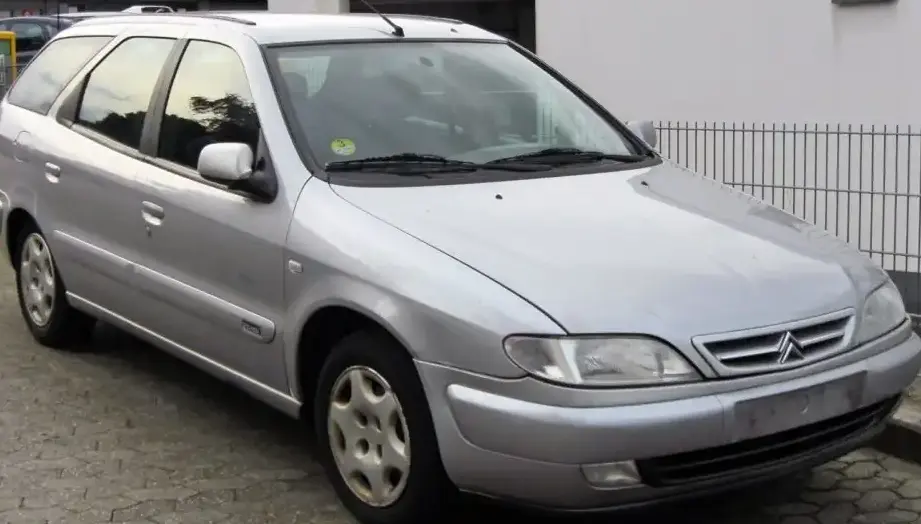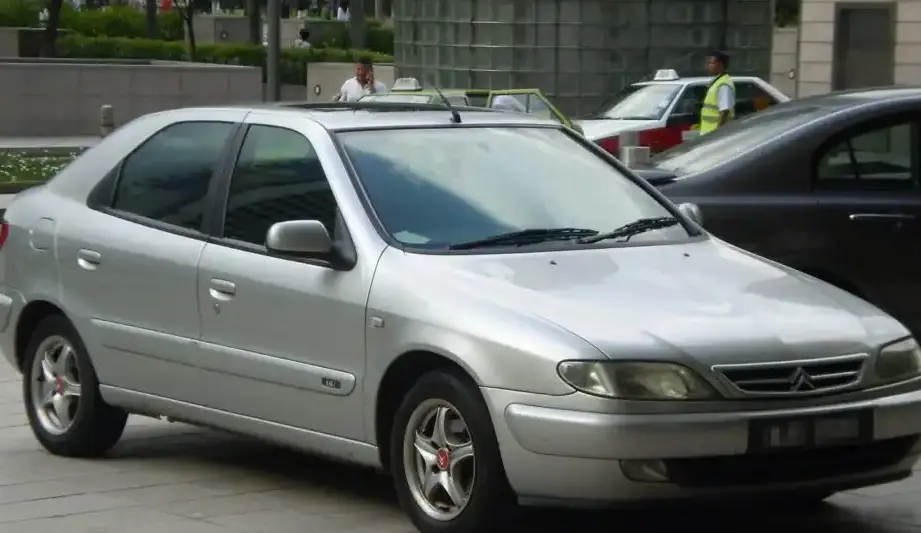
The Citroën Xsara 2.0 16V Automatic, produced between 1998 and 2000, represents a mid-range offering within the first generation (N1) Xsara lineup. Positioned above the base 1.4 and 1.6 liter models, and below the sportier variants, it aimed to provide a balance of performance and comfort for buyers seeking a more refined driving experience. This variant was primarily sold in Europe, where compact hatchbacks were – and continue to be – a dominant market segment. The N1 Xsara, built on the PSA Group’s Platform 2, shared many components with the Peugeot 306, offering a practical and relatively affordable family vehicle.
Technical Specifications
| Brand | Citroen |
| Model | Xsara |
| Generation | Xsara (N1, Phase I) |
| Type (Engine) | 2.0 16V (135 Hp) Automatic |
| Start of production | 1998 |
| End of production | 2000 |
| Powertrain Architecture | Internal Combustion engine |
| Body type | Hatchback |
| Seats | 5 |
| Doors | 5 |
| Fuel consumption (urban) | 13.7 l/100 km (17.2 US mpg, 20.6 UK mpg, 7.3 km/l) |
| Fuel consumption (extra urban) | 7.2 l/100 km (32.7 US mpg, 39.2 UK mpg, 13.9 km/l) |
| Fuel consumption (combined) | 9.6 l/100 km (24.5 US mpg, 29.4 UK mpg, 10.4 km/l) |
| CO2 emissions | 232 g/km |
| Fuel Type | Petrol (Gasoline) |
| Acceleration 0 – 100 km/h | 11.5 sec |
| Acceleration 0 – 62 mph | 11.5 sec |
| Acceleration 0 – 60 mph | 10.9 sec |
| Maximum speed | 200 km/h (124.27 mph) |
| Weight-to-power ratio | 8.8 kg/Hp, 114.2 Hp/tonne |
| Weight-to-torque ratio | 6.6 kg/Nm, 152.3 Nm/tonne |
| Power | 135 Hp @ 5500 rpm |
| Power per litre | 67.6 Hp/l |
| Torque | 180 Nm @ 4200 rpm (132.76 lb.-ft. @ 4200 rpm) |
| Engine layout | Front, Transverse |
| Engine Model/Code | RFV XU10J4R |
| Engine displacement | 1998 cm3 (121.93 cu. in.) |
| Number of cylinders | 4 |
| Engine configuration | Inline |
| Cylinder Bore | 86 mm (3.39 in.) |
| Piston Stroke | 86 mm (3.39 in.) |
| Compression ratio | 10.4:1 |
| Number of valves per cylinder | 4 |
| Fuel injection system | Multi-port manifold injection |
| Engine aspiration | Naturally aspirated engine |
| Valvetrain | DOHC |
| Engine oil capacity | 4.25 l (4.49 US qt | 3.74 UK qt) |
| Coolant | 7 l (7.4 US qt | 6.16 UK qt) |
| Kerb Weight | 1182 kg (2605.86 lbs.) |
| Max. weight | 1690 kg (3725.81 lbs.) |
| Max load | 508 kg (1119.95 lbs.) |
| Trunk (boot) space – minimum | 408 l (14.41 cu. ft.) |
| Trunk (boot) space – maximum | 1190 l (42.02 cu. ft.) |
| Fuel tank capacity | 54 l (14.27 US gal | 11.88 UK gal) |
| Max. roof load | 75 kg (165.35 lbs.) |
| Permitted trailer load with brakes (12%) | 1100 kg (2425.08 lbs.) |
| Permitted trailer load without brakes | 625 kg (1377.89 lbs.) |
| Permitted towbar download | 70 kg (154.32 lbs.) |
| Length | 4167 mm (164.06 in.) |
| Width | 1698 mm (66.85 in.) |
| Width including mirrors | 1975 mm (77.76 in.) |
| Height | 1405 mm (55.31 in.) |
| Wheelbase | 2540 mm (100 in.) |
| Front track | 1423 mm (56.02 in.) |
| Rear (Back) track | 1430 mm (56.3 in.) |
| Front overhang | 868 mm (34.17 in.) |
| Rear overhang | 759 mm (29.88 in.) |
| Minimum turning circle | 11.5 m (37.73 ft.) |
| Drivetrain | Front wheel drive |
| Number of gears and type of gearbox | 4 gears, automatic transmission |
| Front suspension | Independent, type McPherson with coil spring and anti-roll bar |
| Rear suspension | Torsion |
| Front brakes | Ventilated discs |
| Rear brakes | Disc |
| Assisting systems | ABS (Anti-lock braking system) |
| Steering type | Steering rack and pinion |
| Power steering | Hydraulic Steering |
| Tires size | 195/55 R15 |
| Wheel rims size | 15 |
Powertrain & Engine Architecture
The heart of the Xsara 2.0 16V Automatic is the RFV XU10J4R engine, a 1.998-liter inline-four cylinder gasoline engine. This engine is part of the XU series, developed by Peugeot-Citroën and used extensively across their model ranges. It features a double overhead camshaft (DOHC) valvetrain with four valves per cylinder, contributing to its relatively high power output for its displacement. Fuel delivery is managed by a multi-port fuel injection system. The engine’s 135 horsepower peak is achieved at 5500 rpm, while its 180 Nm (132.76 lb-ft) of torque is available at 4200 rpm. The automatic transmission is a four-speed unit, designed to provide smooth shifts and ease of driving, particularly in urban environments. While not known for its sportiness, this transmission was reliable and well-suited to the engine’s characteristics.
Driving Characteristics
The Xsara 2.0 16V Automatic offered a comfortable and relatively refined driving experience. The automatic transmission, while providing convenience, did impact acceleration compared to the five-speed manual version. The 0-60 mph time of around 10.9 seconds is respectable for its era, but noticeably slower than the manual counterpart. The gear ratios were tuned for fuel efficiency and smooth cruising, rather than outright performance. Power delivery is linear, with adequate torque for everyday driving and overtaking maneuvers. The suspension, a McPherson strut setup at the front and a torsion beam at the rear, provides a good balance between ride comfort and handling. It’s not a particularly sporty car, but it feels stable and predictable on the road.
Equipment & Trim Levels
The 2.0 16V Automatic trim typically included features such as power steering, central locking, electric front windows, and an RDS radio. Air conditioning was often an optional extra. Interior upholstery was usually cloth, with a relatively simple dashboard layout. Higher-spec versions could be equipped with features like alloy wheels, a sunroof, and upgraded audio systems. The overall interior ambiance was functional and practical, reflecting the car’s positioning as a mainstream family vehicle.
Chassis & Braking
The Xsara N1 utilized a front-wheel-drive layout. The front suspension employed independent McPherson struts with a coil spring and anti-roll bar, while the rear suspension used a torsion beam. This setup provided a reasonable compromise between ride comfort and handling. Braking duties were handled by ventilated discs at the front and solid discs at the rear. An Anti-lock Braking System (ABS) was standard, enhancing safety and control during emergency braking situations.
Market Reception & Comparison
The Citroën Xsara 2.0 16V Automatic was generally well-received by automotive critics as a competent and comfortable family car. However, the automatic transmission was often criticized for slightly diminishing the engine’s performance. Compared to the 1.8 16V and 1.6 16V models, the 2.0 offered a noticeable power increase, making it more suitable for long journeys and carrying a full load. Fuel economy, at around 24.5 US mpg combined, was reasonable for its class, but not exceptional. The 2.0L engine was more expensive to maintain than the smaller displacement engines due to the increased complexity and potential for issues with the timing belt.
Legacy
The RFV XU10J4R engine, while generally reliable, is known to require regular maintenance, particularly regarding the timing belt, which should be replaced at recommended intervals to prevent catastrophic engine damage. The automatic transmission, if properly maintained, is also relatively durable. Today, the Xsara 2.0 16V Automatic can be found as an affordable used car, appealing to those seeking a practical and comfortable hatchback. Parts availability is generally good, thanks to the engine’s widespread use across PSA Group vehicles. While not a collector’s item, well-maintained examples are becoming increasingly sought after by enthusiasts who appreciate their simplicity and reliability.