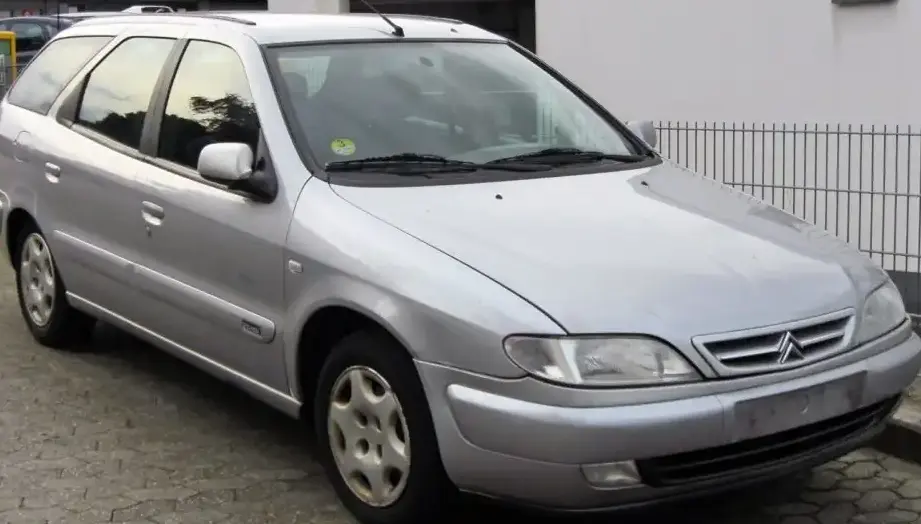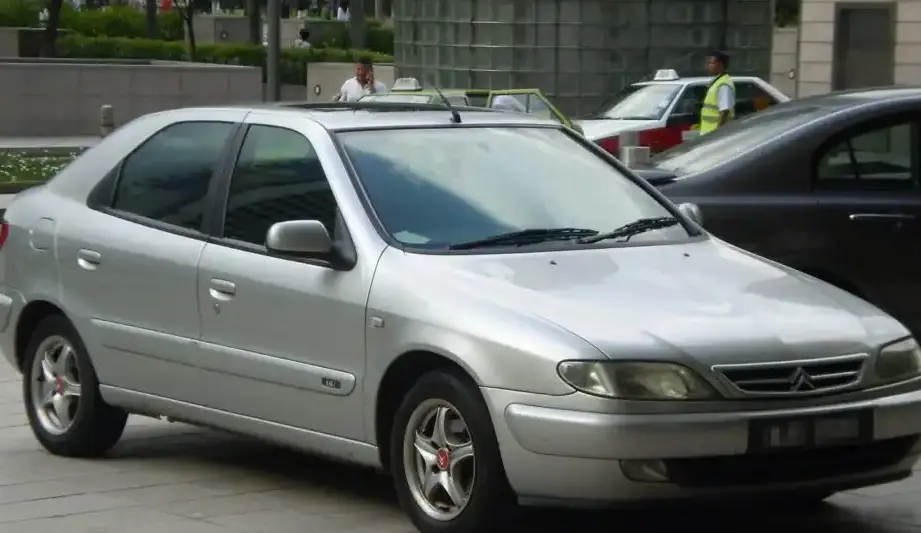
The Citroen Xsara 2.0 HDi (90 hp) represents a significant offering within the first generation (N1, Phase I) of the Xsara compact hatchback, produced between 1999 and 2000. Positioned as a diesel-powered variant, it aimed to provide a balance of fuel efficiency and practicality for European drivers. The N1 Xsara, launched in 1997, was Citroen’s entry into the increasingly competitive lower-medium segment, sharing its platform (PSA X4) with the Peugeot 306. This 2.0 HDi model specifically targeted buyers seeking the benefits of direct injection diesel technology – improved economy and torque – without the higher cost of more powerful engine options.
Technical Specifications
| Brand | Citroen |
| Model | Xsara |
| Generation | Xsara (N1, Phase I) |
| Type (Engine) | 2.0 HDi (90 Hp) |
| Start of production | 1999 |
| End of production | 2000 |
| Powertrain Architecture | Internal Combustion engine |
| Body type | Hatchback |
| Seats | 5 |
| Doors | 5 |
| Fuel consumption (urban) | 7 l/100 km (33.6 US mpg, 40.4 UK mpg, 14.3 km/l) |
| Fuel consumption (extra urban) | 4.4 l/100 km (53.5 US mpg, 64.2 UK mpg, 22.7 km/l) |
| Fuel consumption (combined) | 5.3 l/100 km (44.4 US mpg, 53.3 UK mpg, 18.9 km/l) |
| CO2 emissions | 143 g/km |
| Fuel Type | Diesel |
| Acceleration 0 – 100 km/h | 12.9 sec |
| Acceleration 0 – 62 mph | 12.9 sec |
| Acceleration 0 – 60 mph | 12.3 sec |
| Maximum speed | 180 km/h (111.85 mph) |
| Weight-to-power ratio | 12.9 kg/Hp, 77.3 Hp/tonne |
| Weight-to-torque ratio | 5.7 kg/Nm, 176 Nm/tonne |
| Power | 90 Hp @ 4000 rpm |
| Power per litre | 45.1 Hp/l |
| Torque | 205 Nm @ 1900 rpm (151.2 lb.-ft. @ 1900 rpm) |
| Engine layout | Front, Transverse |
| Engine Model/Code | RHY DW10TD |
| Engine displacement | 1997 cm3 (121.86 cu. in.) |
| Number of cylinders | 4 |
| Engine configuration | Inline |
| Cylinder Bore | 85 mm (3.35 in.) |
| Piston Stroke | 88 mm (3.46 in.) |
| Compression ratio | 18:1 |
| Number of valves per cylinder | 2 |
| Fuel injection system | Diesel Commonrail |
| Engine aspiration | Turbocharger, Intercooler |
| Valvetrain | OHC |
| Engine oil capacity | 4.25 l (4.49 US qt | 3.74 UK qt) |
| Coolant | 5.8 l (6.13 US qt | 5.1 UK qt) |
| Kerb Weight | 1165 kg (2568.39 lbs.) |
| Max. weight | 1690 kg (3725.81 lbs.) |
| Max load | 525 kg (1157.43 lbs.) |
| Trunk (boot) space – minimum | 408 l (14.41 cu. ft.) |
| Trunk (boot) space – maximum | 1190 l (42.02 cu. ft.) |
| Fuel tank capacity | 54 l (14.27 US gal | 11.88 UK gal) |
| Max. roof load | 75 kg (165.35 lbs.) |
| Permitted trailer load with brakes (12%) | 1100 kg (2425.08 lbs.) |
| Permitted trailer load without brakes | 620 kg (1366.87 lbs.) |
| Permitted towbar download | 70 kg (154.32 lbs.) |
| Length | 4167 mm (164.06 in.) |
| Width | 1698 mm (66.85 in.) |
| Width including mirrors | 1975 mm (77.76 in.) |
| Height | 1405 mm (55.31 in.) |
| Wheelbase | 2540 mm (100 in.) |
| Front track | 1423 mm (56.02 in.) |
| Rear (Back) track | 1430 mm (56.3 in.) |
| Front overhang | 868 mm (34.17 in.) |
| Rear overhang | 759 mm (29.88 in.) |
| Minimum turning circle | 11.5 m (37.73 ft.) |
| Drivetrain Architecture | The Internal combustion engine (ICE) drives the front wheels of the vehicle. |
| Drive wheel | Front wheel drive |
| Number of gears and type of gearbox | 5 gears, manual transmission |
| Front suspension | Independent, type McPherson with coil spring and anti-roll bar |
| Rear suspension | Torsion |
| Front brakes | Ventilated discs |
| Rear brakes | Disc |
| Assisting systems | ABS (Anti-lock braking system) |
| Steering type | Steering rack and pinion |
| Power steering | Hydraulic Steering |
| Tires size | 185/65 R14 |
Powertrain & Engine Architecture
The heart of the Xsara 2.0 HDi is the DW10TD engine, specifically the RHY variant. This 1997cc, four-cylinder diesel engine utilizes a common rail direct injection system, a relatively new technology at the time, offering improved fuel atomization and more precise control over the combustion process. The engine produces 90 horsepower at 4000 rpm and 205 Nm (151.2 lb-ft) of torque at a low 1900 rpm. A turbocharger with an intercooler is employed to boost power and efficiency. The engine features an overhead camshaft (OHC) valvetrain with two valves per cylinder. The 5-speed manual transmission was the standard offering for this variant, providing a balance between fuel economy and drivability.
Driving Characteristics
The 2.0 HDi engine in the Xsara delivers a characteristically torquey diesel experience. While not particularly fast – 0-60 mph takes around 12.3 seconds – the readily available torque makes it feel more responsive in everyday driving situations. The 5-speed gearbox is well-matched to the engine’s characteristics, allowing for comfortable cruising on highways. Compared to the petrol-powered Xsara variants, the 2.0 HDi offers significantly better fuel economy, but at the expense of outright performance. The manual transmission provides more driver engagement than the later available automatic options.
Equipment & Trim Levels
The 2.0 HDi variant of the Xsara typically came with a reasonable level of standard equipment. This included central locking, power steering, and an adjustable steering column. Interior upholstery was generally cloth, with a functional, if somewhat basic, dashboard layout. Optional extras included air conditioning, alloy wheels, and a radio/cassette player. The trim level was generally positioned as mid-range within the Xsara lineup, offering a step up from the base models in terms of comfort and features.
Chassis & Braking
The Xsara N1 utilizes a McPherson strut front suspension with a torsion beam rear suspension. This setup provides a comfortable ride quality, although it’s not particularly sporty. The front brakes are ventilated discs, while the rear brakes are solid discs. Anti-lock Braking System (ABS) was standard, enhancing safety. The suspension tuning was geared towards providing a balance between comfort and handling, suitable for everyday driving conditions.
Market Reception & Comparison
The Citroen Xsara 2.0 HDi was well-received in the European market as a practical and economical family car. Critics praised its fuel efficiency and comfortable ride. Compared to the petrol-powered Xsara variants, the HDi offered superior fuel economy, making it an attractive option for high-mileage drivers. However, some reviewers noted the engine could be somewhat noisy compared to its petrol counterparts. Against competitors like the Volkswagen Golf and Ford Focus, the Xsara offered a competitive package in terms of price and features.
Legacy
The DW10TD engine proved to be a robust and reliable unit, and many examples are still on the road today. The 2.0 HDi variant of the Xsara has developed a reputation for being a dependable and economical used car. While maintenance costs can increase with age, the engine’s inherent durability makes it a relatively affordable option for those seeking a practical and fuel-efficient hatchback. The introduction of common rail diesel technology in the Xsara 2.0 HDi marked a significant step forward in diesel engine development, paving the way for more refined and efficient diesel vehicles in the years to come.