Technical Specifications
| Brand | Citroen |
| Model | Xsara |
| Generation | Xsara (N1, Phase II) |
| Type (Engine) | 1.4 i (75 Hp) |
| Start of production | 2000 year |
| End of production | 2003 year |
| Powertrain Architecture | Internal Combustion engine |
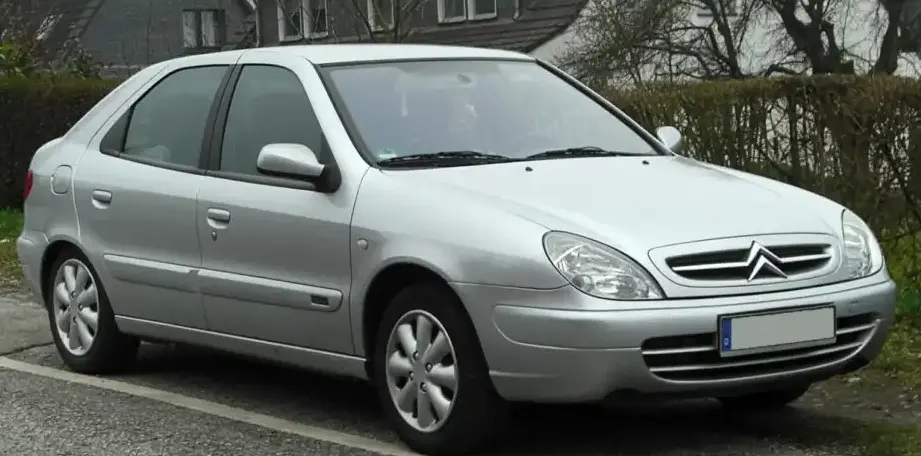
| Body type | Hatchback |
| Seats | 5 |
| Doors | 5 |
| Fuel consumption (urban) | 9.2 l/100 km (25.6 US mpg, 30.7 UK mpg, 10.9 km/l) |
| Fuel consumption (extra urban) | 5.4 l/100 km (43.6 US mpg, 52.3 UK mpg, 18.5 km/l) |
| Fuel consumption (combined) | 6.7 l/100 km (35.1 US mpg, 42.2 UK mpg, 14.9 km/l) |
| CO2 emissions | 159 g/km |
| Fuel Type | Petrol (Gasoline) |
| Acceleration 0 – 100 km/h | 14.8 sec |
| Acceleration 0 – 62 mph | 14.8 sec |
| Acceleration 0 – 60 mph | 14.1 sec |
| Maximum speed | 172 km/h (106.88 mph) |
| Emission standard | Euro 3 D4 |
| Weight-to-power ratio | 14.9 kg/Hp, 67.2 Hp/tonne |
| Weight-to-torque ratio | 9.3 kg/Nm, 107.5 Nm/tonne |
| Power | 75 Hp @ 5500 rpm |
| Power per litre | 55.1 Hp/l |
| Torque | 120 Nm @ 3400 rpm (88.51 lb.-ft. @ 3400 rpm) |
| Engine layout | Front, Transverse |
| Engine Model/Code | TU3JP |
| Engine displacement | 1360 cm3 (82.99 cu. in.) |
| Number of cylinders | 4 |
| Engine configuration | Inline |
| Cylinder Bore | 75 mm (2.95 in.) |
| Piston Stroke | 77 mm (3.03 in.) |
| Number of valves per cylinder | 2 |
| Fuel injection system | Multi-port manifold injection |
| Engine aspiration | Naturally aspirated engine |
| Valvetrain | SOHC |
| Engine oil capacity | 3 l (3.17 US qt | 2.64 UK qt) |
| Coolant | 6.5 l (6.87 US qt | 5.72 UK qt) |
| Kerb Weight | 1116 kg (2460.36 lbs.) |
| Max. weight | 1666 kg (3672.9 lbs.) |
| Max load | 550 kg (1212.54 lbs.) |
| Trunk (boot) space – minimum | 408 l (14.41 cu. ft.) |
| Trunk (boot) space – maximum | 1190 l (42.02 cu. ft.) |
| Fuel tank capacity | 54 l (14.27 US gal | 11.88 UK gal) |
| Max. roof load | 75 kg (165.35 lbs.) |
| Permitted trailer load with brakes (12%) | 1100 kg (2425.08 lbs.) |
| Permitted trailer load without brakes | 550 kg (1212.54 lbs.) |
| Permitted towbar download | 70 kg (154.32 lbs.) |
| Length | 4188 mm (164.88 in.) |
| Width | 1705 mm (67.13 in.) |
| Width including mirrors | 1976 mm (77.8 in.) |
| Height | 1405 mm (55.31 in.) |
| Wheelbase | 2540 mm (100 in.) |
| Front track | 1433 mm (56.42 in.) |
| Rear (Back) track | 1442 mm (56.77 in.) |
| Front overhang | 880 mm (34.65 in.) |
| Rear overhang | 768 mm (30.24 in.) |
| Minimum turning circle | 11.5 m (37.73 ft.) |
| Drivetrain Architecture | The Internal combustion engine (ICE) drives the front wheels of the vehicle. |
| Drive wheel | Front wheel drive |
| Number of gears and type of gearbox | 5 gears, manual transmission |
| Front suspension | Independent, type McPherson with coil spring and anti-roll bar |
| Rear suspension | Torsion |
| Front brakes | Ventilated discs |
| Rear brakes | Drum |
| Assisting systems | ABS (Anti-lock braking system) |
| Steering type | Steering rack and pinion |
| Power steering | Hydraulic Steering |
| Tires size | 195/55 R15 |
| Wheel rims size | 6J x 15 |
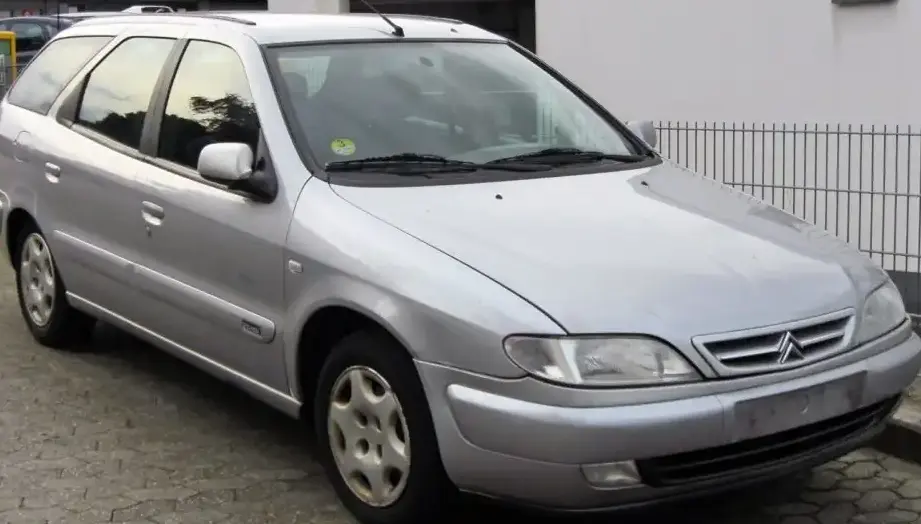
The Citroen Xsara 1.4 i, produced between 2000 and 2003 as part of the N1 Phase II generation, represented an entry-level offering within the Xsara hatchback range. Positioned as a practical and economical choice, this variant aimed at buyers prioritizing affordability and fuel efficiency over outright performance. It was built upon the PSA Group’s 1HX0 platform, shared with the Peugeot 306, and served as a key model in Citroen’s lineup during a period of increasing competition in the compact family car segment. This specific engine and transmission combination – the 1.4-liter petrol engine paired with a five-speed manual gearbox – was a popular choice for those seeking a no-frills, reliable vehicle for daily commuting and general transportation.
Powertrain & Engine Architecture
The heart of the Xsara 1.4 i is the TU3JP engine, a 1.4-liter inline-four cylinder petrol engine. This engine, a staple of PSA Group vehicles for many years, is known for its simplicity and durability. It features a single overhead camshaft (SOHC) valvetrain operating two valves per cylinder. Fuel delivery is managed by a multi-port fuel injection system, providing adequate, though not exceptional, combustion control. The engine produces 75 horsepower at 5500 rpm and 120 Nm (88.51 lb-ft) of torque at 3400 rpm. The five-speed manual transmission, a common unit in European compact cars of the era, provides a reasonable spread of gears for both urban and highway driving. The transmission’s ratios were geared towards economy rather than outright acceleration.
Driving Characteristics
The driving experience in the Xsara 1.4 i is best described as practical and unpretentious. Acceleration is modest, taking approximately 14.8 seconds to reach 62 mph (100 km/h). The engine feels strained when pushed hard, and overtaking maneuvers require careful planning. However, in normal driving conditions, the engine provides sufficient power for everyday tasks. The manual transmission is light and easy to use, and the gear ratios are well-matched to the engine’s characteristics. Compared to higher-output versions of the Xsara, such as the 1.6 or 2.0-liter models, the 1.4 i feels significantly slower. However, it offers a more economical and forgiving driving experience.
Equipment & Trim Levels
The 1.4 i variant of the Xsara typically came with a basic level of equipment. Standard features generally included power steering, central locking, front airbags, and an adjustable steering column. Interior upholstery was typically cloth, and the dashboard featured a simple, functional design. Optional extras, such as air conditioning, electric windows, and a radio/CD player, were available, but often added to the vehicle’s cost. The trim level was generally positioned as the entry point to the Xsara range, appealing to budget-conscious buyers.
Chassis & Braking
The Xsara 1.4 i utilizes a McPherson strut front suspension and a torsion beam rear suspension. This setup provides a comfortable ride quality, although it’s not particularly sporty. The front brakes are ventilated discs, while the rear brakes are drums. ABS (Anti-lock Braking System) was standard, enhancing safety during emergency braking situations. The suspension was tuned for comfort and practicality, prioritizing ride quality over handling precision.
Market Reception & Comparison
The Citroen Xsara 1.4 i was generally well-received as an affordable and reliable family car. Critics praised its fuel efficiency and practicality, but noted its lack of performance. Compared to other trims in the Xsara lineup, the 1.4 i offered the lowest purchase price and running costs. However, it lacked the refinement and performance of the higher-spec models. Against competitors like the Ford Focus and Volkswagen Golf, the Xsara 1.4 i offered a competitive price point and a comfortable ride, but often lagged behind in terms of driving dynamics and perceived quality.
Legacy
The TU3JP engine, found in the Xsara 1.4 i, is known for its robustness and longevity. With proper maintenance, these engines can reliably exceed 200,000 miles. The Xsara 1.4 i remains a popular choice in the used car market, particularly among buyers seeking an affordable and economical vehicle. While not a performance icon, the 1.4 i variant represents a practical and dependable option for those prioritizing value and reliability over driving thrills. Parts availability remains good, and maintenance costs are relatively low, making it a sensible choice for first-time car owners or those on a tight budget.