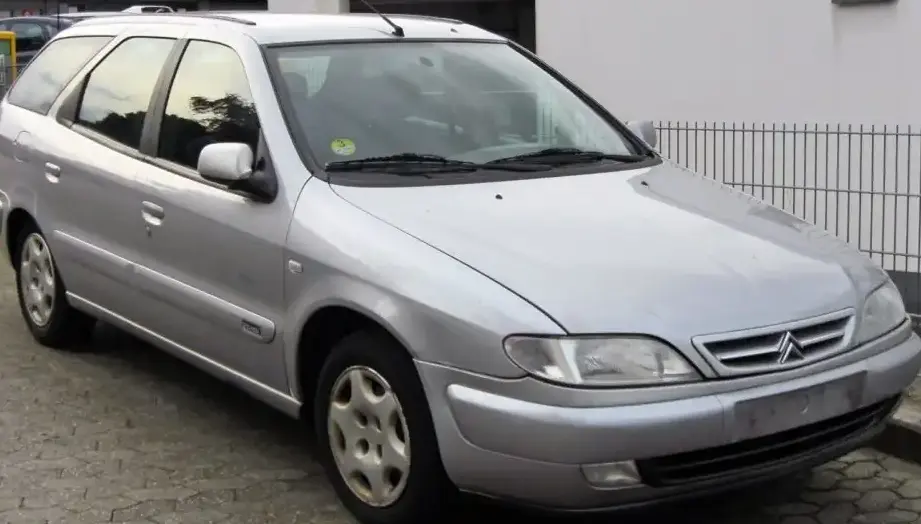
The Citroen Xsara Picasso 2.0 16V Automatic, produced between 2003 and 2004, represents a mid-range offering within the first generation (N68, Phase I) of Citroen’s popular compact minivan. Positioned above the base 1.6L engine options and below the diesel variants, this model aimed to provide a balance of performance and convenience for families seeking a comfortable and practical vehicle. The Xsara Picasso, launched in 1999, was a significant departure for Citroen, embracing a more modern and spacious interior design compared to its predecessor, the Xantia. This first generation model shared its platform (PSA Group’s Platform 2) with the Peugeot 307, contributing to economies of scale and a wide range of available components.
Technical Specifications
| Brand | Citroen |
| Model | Xsara |
| Generation | Xsara Picasso (N68, Phase I) |
| Type (Engine) | 2.0 16V (136 Hp) Automatic |
| Start of production | 2003 |
| End of production | 2004 |
| Powertrain Architecture | Internal Combustion engine |
| Body type | Minivan |
| Seats | 5 |
| Doors | 5 |
| Fuel consumption (urban) | 12.6 l/100 km (18.7 US mpg, 22.4 UK mpg, 7.9 km/l) |
| Fuel consumption (extra urban) | 6.3 l/100 km (37.3 US mpg, 44.8 UK mpg, 15.9 km/l) |
| Fuel consumption (combined) | 8.6 l/100 km (27.4 US mpg, 32.8 UK mpg, 11.6 km/l) |
| CO2 emissions | 205 g/km |
| Fuel Type | Petrol (Gasoline) |
| Acceleration 0 – 100 km/h | 12.5 sec |
| Acceleration 0 – 62 mph | 12.5 sec |
| Acceleration 0 – 60 mph | 11.9 sec |
| Maximum speed | 192 km/h (119.3 mph) |
| Emission standard | Euro 3 |
| Weight-to-power ratio | 9.8 kg/Hp, 102.6 Hp/tonne |
| Weight-to-torque ratio | 7 kg/Nm, 143.3 Nm/tonne |
| Power | 136 Hp @ 6000 rpm |
| Power per litre | 68.1 Hp/l |
| Torque | 190 Nm @ 4100 rpm (140.14 lb.-ft. @ 4100 rpm) |
| Engine layout | Front, Transverse |
| Engine Model/Code | RFN EW10J4 |
| Engine displacement | 1997 cm3 (121.86 cu. in.) |
| Number of cylinders | 4 |
| Engine configuration | Inline |
| Cylinder Bore | 85 mm (3.35 in.) |
| Piston Stroke | 88 mm (3.46 in.) |
| Compression ratio | 10.8:1 |
| Number of valves per cylinder | 4 |
| Fuel injection system | Multi-port manifold injection |
| Engine aspiration | Naturally aspirated engine |
| Engine oil capacity | 4.25 l (4.49 US qt | 3.74 UK qt) |
| Coolant | 7 l (7.4 US qt | 6.16 UK qt) |
| Kerb Weight | 1326 kg (2923.33 lbs.) |
| Max. weight | 1832 kg (4038.87 lbs.) |
| Max load | 506 kg (1115.54 lbs.) |
| Trunk (boot) space – minimum | 550 l (19.42 cu. ft.) |
| Trunk (boot) space – maximum | 2128 l (75.15 cu. ft.) |
| Fuel tank capacity | 55 l (14.53 US gal | 12.1 UK gal) |
| Max. roof load | 80 kg (176.37 lbs.) |
| Permitted trailer load with brakes (12%) | 1300 kg (2866.01 lbs.) |
| Permitted trailer load without brakes | 700 kg (1543.24 lbs.) |
| Permitted towbar download | 80 kg (176.37 lbs.) |
| Length | 4276 mm (168.35 in.) |
| Width | 1751 mm (68.94 in.) |
| Height | 1637 mm (64.45 in.) |
| Wheelbase | 2760 mm (108.66 in.) |
| Front track | 1434 mm (56.46 in.) |
| Rear (Back) track | 1452 mm (57.17 in.) |
| Front overhang | 838 mm (32.99 in.) |
| Rear overhang | 678 mm (26.69 in.) |
| Drivetrain Architecture | The Internal combustion engine (ICE) drives the front wheels of the vehicle. |
| Drive wheel | Front wheel drive |
| Number of gears and type of gearbox | 4 gears, automatic transmission |
| Front suspension | Independent, type McPherson with coil spring and anti-roll bar |
| Rear suspension | Semi-independent suspension, longitudinal arms with transverse torsion shafts |
| Front brakes | Ventilated discs |
| Rear brakes | Disc |
| Assisting systems | ABS (Anti-lock braking system) |
| Steering type | Steering rack and pinion |
| Power steering | Hydraulic Steering |
| Tires size | 185/65 R15 |
| Wheel rims size | 6J x 15 |
Powertrain & Engine Architecture
The heart of the Xsara Picasso 2.0 16V Automatic is the RFN (also sometimes EW10J4) engine, a 1.997-liter inline-four cylinder gasoline engine. This engine is part of the EW series developed by PSA Peugeot Citroën. It features a dual overhead camshaft (DOHC) design with four valves per cylinder, contributing to its relatively high output for its displacement. Fuel delivery is managed by a multi-point fuel injection system, providing precise fuel metering for optimal combustion. The engine’s 136 horsepower at 6000 rpm and 190 Nm (140 lb-ft) of torque at 4100 rpm were considered adequate for the vehicle’s weight and intended purpose. The automatic transmission is a four-speed unit, designed for smooth and convenient operation. While not offering the efficiency of modern transmissions, it provided a comfortable driving experience, particularly in urban environments.
Driving Characteristics
The 2.0 16V Automatic Xsara Picasso offered a noticeable step up in performance compared to the 1.6L versions. Acceleration to 60 mph took around 12.5 seconds, and the top speed was approximately 119 mph. However, the four-speed automatic transmission meant that the engine often felt strained during aggressive acceleration or when overtaking. The gear ratios were geared more towards comfort and fuel economy than outright performance. Compared to the manual transmission versions of the same engine, the automatic suffered a slight performance penalty due to the transmission’s inherent inefficiencies. The automatic also lacked the engine braking capabilities of a manual gearbox, requiring more reliance on the brakes during descents.
Equipment & Trim Levels
The 2.0 16V Automatic trim typically included features such as air conditioning, power windows, central locking, and an RDS radio. Higher-spec versions could be equipped with options like alloy wheels, a sunroof, and upgraded interior trim. Interior upholstery was generally cloth, with options for different patterns and colors. The dashboard layout was functional and ergonomically designed, prioritizing ease of use. Safety features included ABS brakes and driver and passenger airbags. The Picasso’s modular interior was a key selling point, with the rear seats capable of folding flat or being removed entirely to create a large cargo area.
Chassis & Braking
The Xsara Picasso utilized a McPherson strut front suspension and a semi-independent torsion beam rear suspension. This setup provided a comfortable ride quality, although it wasn’t particularly sporty. The front brakes were ventilated discs, while the rear brakes were solid discs. ABS (Anti-lock Braking System) was standard, enhancing braking performance and stability. The steering was hydraulic power-assisted, providing light and easy steering feel. The suspension was tuned to prioritize comfort and stability over handling precision, reflecting the vehicle’s role as a family transport.
Market Reception & Comparison
The Citroen Xsara Picasso 2.0 16V Automatic was generally well-received by critics as a practical and comfortable family vehicle. However, the automatic transmission was sometimes criticized for its lack of responsiveness and its impact on fuel economy. Compared to the 1.6L versions, the 2.0L offered a significant performance boost, but at a higher price point. The diesel variants, while more expensive initially, offered superior fuel economy and torque, making them popular with high-mileage drivers. The Picasso competed with other compact minivans such as the Renault Scenic, Opel/Vauxhall Zafira, and Volkswagen Touran.
Legacy
The RFN engine, while generally reliable, is known to be susceptible to timing belt failure if not maintained properly. Regular timing belt replacement is crucial to prevent catastrophic engine damage. The four-speed automatic transmission, while durable, can exhibit wear and tear over time, potentially leading to slipping or harsh shifting. Today, the Xsara Picasso 2.0 16V Automatic can be found as an affordable used car, offering a spacious and practical option for those seeking a budget-friendly family vehicle. Its relatively simple mechanical design makes it relatively easy and inexpensive to maintain, although finding parts may become increasingly challenging as the vehicle ages.