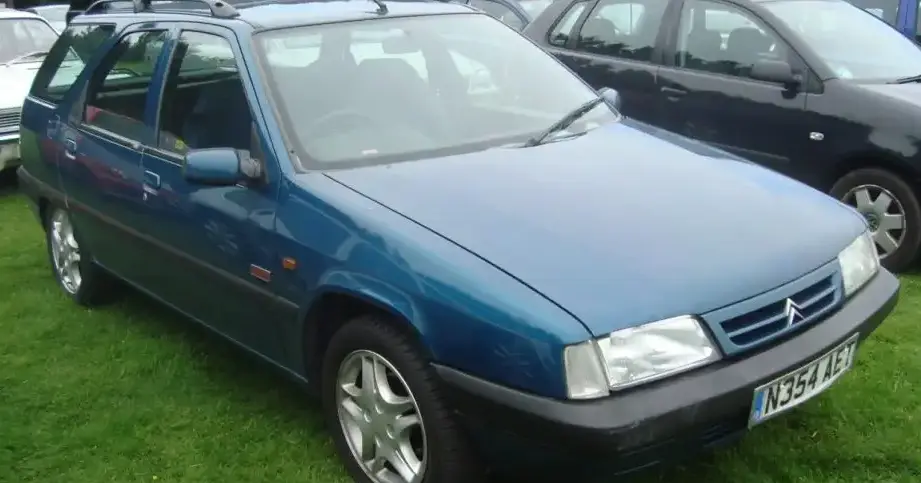
The Citroën ZX Break (N2, Phase II) 1.8 i 16V was a front-wheel-drive station wagon produced between 1996 and 1997. Positioned as a mid-range offering within the ZX Break lineup, it aimed to provide a balance between performance, practicality, and affordability. The ZX, launched in 1992, was Citroën’s replacement for the BX, and represented a move towards more conventional styling while retaining the company’s commitment to innovative suspension technology. The Break (estate) version offered increased cargo capacity, making it a popular choice for families. This particular 1.8L 16V variant was part of the Phase II refresh, which included minor cosmetic and mechanical updates.
Technical Specifications
| Brand | Citroen |
| Model | ZX |
| Generation | ZX Break (N2, Phase II) |
| Type (Engine) | 1.8 i 16V (110 Hp) |
| Start of production | 1996 |
| End of production | 1997 |
| Powertrain Architecture | Internal Combustion engine |
| Body type | Station wagon (estate) |
| Seats | 5 |
| Doors | 5 |
| Fuel Type | Petrol (Gasoline) |
| Power | 110 Hp @ 5500 rpm |
| Power per litre | 62.5 Hp/l |
| Torque | 158 Nm @ 4250 rpm (116.53 lb.-ft. @ 4250 rpm) |
| Engine layout | Front, Transverse |
| Engine Model/Code | LFY XU7JP4 |
| Engine displacement | 1761 cm3 (107.46 cu. in.) |
| Number of cylinders | 4 |
| Engine configuration | Inline |
| Cylinder Bore | 83 mm (3.27 in.) |
| Piston Stroke | 81.4 mm (3.2 in.) |
| Compression ratio | 10.4:1 |
| Number of valves per cylinder | 4 |
| Fuel injection system | Multi-port manifold injection |
| Engine aspiration | Naturally aspirated engine |
| Valvetrain | DOHC |
| Engine oil capacity | 4.25 l (4.49 US qt | 3.74 UK qt) |
| Coolant | 8 l (8.45 US qt | 7.04 UK qt) |
| Trunk (boot) space – minimum | 488 l (17.23 cu. ft.) |
| Trunk (boot) space – maximum | 1580 l (55.8 cu. ft.) |
| Fuel tank capacity | 54 l (14.27 US gal | 11.88 UK gal) |
| Max. roof load | 75 kg (165.35 lbs.) |
| Permitted towbar download | 70 kg (154.32 lbs.) |
| Length | 4260 mm (167.72 in.) |
| Width | 1705 mm (67.13 in.) |
| Height | 1457 mm (57.36 in.) |
| Wheelbase | 2540 mm (100 in.) |
| Front track | 1422 mm (55.98 in.) |
| Rear (Back) track | 1415 mm (55.71 in.) |
| Front overhang | 849 mm (33.43 in.) |
| Rear overhang | 871 mm (34.29 in.) |
| Minimum turning circle (turning diameter) | 11.1 m (36.42 ft.) |
| Drivetrain Architecture | The Internal combustion engine (ICE) drives the front wheels of the vehicle. |
| Drive wheel | Front wheel drive |
| Number of gears and type of gearbox | 5 gears, manual transmission |
| Front suspension | Independent type McPherson, Wishbone |
| Rear suspension | Hydro-pneumatic element, Trailing arm |
| Front brakes | Ventilated discs |
| Rear brakes | Drum |
| Steering type | Steering rack and pinion |
| Power steering | Hydraulic Steering |
| Tires size | 185/60 R14 |
| Wheel rims size | 5.5J x 14 |
Powertrain & Engine Architecture
The Citroën ZX Break 1.8 i 16V utilized the XU7JP4 engine, a 1.8-liter inline-four cylinder gasoline engine. This engine was a product of the PSA Peugeot Citroën group and was known for its relatively robust design. The ‘16V’ designation indicates a dual overhead camshaft (DOHC) valvetrain, featuring four valves per cylinder, enhancing breathing and contributing to improved power output. Fuel delivery was managed by a multi-port fuel injection system, providing precise fuel metering for optimal combustion. The engine produced 110 horsepower at 5500 rpm and 158 Nm (116.53 lb-ft) of torque at 4250 rpm. The engine’s transverse mounting and front-wheel-drive configuration were typical for European compact cars of the era. The engine was paired with a 5-speed manual transmission, offering a balance between fuel efficiency and driver control.
Driving Characteristics
The 1.8L 16V engine provided adequate performance for the ZX Break, though it wasn’t considered particularly sporty. Acceleration was reasonable for everyday driving, but it lacked the punch of the higher-output versions, such as those equipped with the 2.0L 16V engine. The 5-speed manual transmission allowed for effective gear selection, maximizing the engine’s power band. The gear ratios were tuned for a blend of fuel economy and usability, rather than outright performance. Compared to the diesel variants, the 1.8L offered quicker acceleration but at the expense of fuel efficiency. The ZX’s renowned hydropneumatic suspension system provided a remarkably comfortable ride, absorbing bumps and imperfections in the road surface with ease. This was a key differentiator for Citroën and contributed significantly to the car’s overall driving experience.
Equipment & Trim Levels
The 1.8 i 16V Break typically came with a reasonable level of standard equipment. This included power steering, central locking, electric front windows, and an adjustable steering column. Interior upholstery was generally cloth, with a functional and durable design. Optional extras included air conditioning, a sunroof, and upgraded audio systems. The dashboard layout was typical of Citroën designs of the period, with a focus on ergonomics and ease of use. Trim levels varied slightly depending on the market, but the 1.8 i 16V generally occupied a mid-range position, offering a good balance of features and price.
Chassis & Braking
The ZX Break featured an independent McPherson strut front suspension and a hydro-pneumatic rear suspension. The hydro-pneumatic system, a Citroën hallmark, provided self-leveling and adjustable ride height, contributing to exceptional ride comfort and handling. The front brakes were ventilated discs, providing good stopping power, while the rear brakes were drums. This combination was typical for cars in this class at the time. The steering was a rack-and-pinion system with hydraulic power assistance, offering precise and responsive steering feel. Stabilizer bars were fitted to both the front and rear axles to reduce body roll during cornering.
Market Reception & Comparison
The Citroën ZX Break 1.8 i 16V was generally well-received by automotive critics. It was praised for its comfortable ride, spacious interior, and practical estate car body style. However, some critics noted that the engine lacked the refinement and performance of some of its competitors. Compared to the 1.9 TDI diesel variant, the 1.8L offered more spirited acceleration but significantly lower fuel economy. The 2.0L 16V petrol version provided more power but came at a higher price point. The ZX Break competed with other European estate cars such as the Ford Mondeo Estate, Volkswagen Passat Variant, and Peugeot 406 Break.
Legacy
The XU7JP4 engine, found in the ZX Break 1.8 i 16V, is generally considered a reliable unit when properly maintained. Common issues include oil leaks and occasional sensor failures. The hydropneumatic suspension system requires periodic maintenance and can be expensive to repair if neglected. Today, the ZX Break 1.8 i 16V is a relatively rare sight on the roads, but it has gained a following among classic car enthusiasts who appreciate its unique blend of comfort, practicality, and innovative technology. Parts availability can be challenging, but a dedicated community of owners and specialists exists to support the preservation of these vehicles. The ZX Break represents a significant chapter in Citroën’s history, showcasing the company’s commitment to engineering excellence and distinctive design.