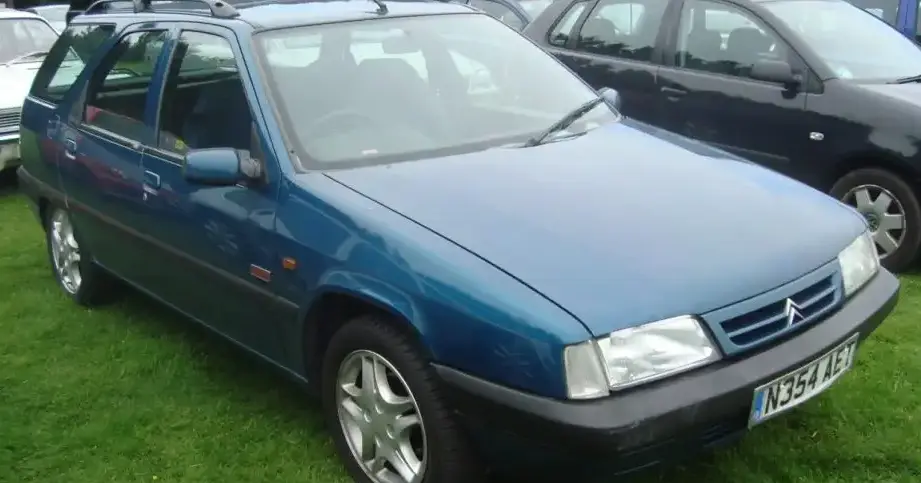
The Citroën ZX 1.6i, produced between 1991 and 1994, was a key variant within the N2 series of the ZX hatchback. Positioned as a mid-range offering, it aimed to provide a balance between affordability, practicality, and reasonable performance. The ZX, as a whole, represented Citroën’s attempt to move upmarket and offer a more contemporary alternative to rivals like the Ford Escort and Volkswagen Golf. This particular 1.6-liter, 88 horsepower version, typically paired with a manual transmission, was a popular choice for buyers seeking a comfortable and efficient family car. It played a significant role in establishing the ZX as a credible competitor in the crowded European C-segment.
Technical Specifications
| Brand | Citroen |
| Model | ZX |
| Generation | ZX (N2, Phase I) 5-door |
| Type (Engine) | 1.6 i (88 Hp) |
| Start of production | 1991 |
| End of production | 1994 |
| Powertrain Architecture | Internal Combustion engine |
| Body type | Hatchback |
| Seats | 5 |
| Doors | 5 |
| Fuel consumption (urban) | 9.3 l/100 km (25.3 US mpg, 30.4 UK mpg, 10.8 km/l) |
| Fuel consumption (extra urban) | 5.4 l/100 km (43.6 US mpg, 52.3 UK mpg, 18.5 km/l) |
| Fuel consumption (combined) | 7.1 l/100 km (33.1 US mpg, 39.8 UK mpg, 14.1 km/l) |
| Fuel Type | Petrol (Gasoline) |
| Acceleration 0 – 100 km/h | 11.8 sec |
| Acceleration 0 – 62 mph | 11.8 sec |
| Acceleration 0 – 60 mph | 11.2 sec |
| Maximum speed | 181 km/h (112.47 mph) |
| Weight-to-power ratio | 11.3 kg/Hp, 88.4 Hp/tonne |
| Weight-to-torque ratio | 7.5 kg/Nm, 132.7 Nm/tonne |
| Power | 88 Hp @ 6400 rpm |
| Power per litre | 55.7 Hp/l |
| Torque | 132 Nm @ 3000 rpm (97.36 lb.-ft. @ 3000 rpm) |
| Engine layout | Front, Transverse |
| Engine Model/Code | BDY XU5M3 L/Z |
| Engine displacement | 1580 cm3 (96.42 cu. in.) |
| Number of cylinders | 4 |
| Engine configuration | Inline |
| Cylinder Bore | 83 mm (3.27 in.) |
| Piston Stroke | 73 mm (2.87 in.) |
| Compression ratio | 8.95:1 |
| Number of valves per cylinder | 2 |
| Fuel injection system | Single-point injection |
| Engine aspiration | Naturally aspirated engine |
| Valvetrain | OHC |
| Engine oil capacity | 4.75 l (5.02 US qt | 4.18 UK qt) |
| Coolant | 7.5 l (7.93 US qt | 6.6 UK qt) |
| Kerb Weight | 995 kg (2193.6 lbs.) |
| Max. weight | 1540 kg (3395.12 lbs.) |
| Max load | 545 kg (1201.52 lbs.) |
| Trunk (boot) space – minimum | 343 l (12.11 cu. ft.) |
| Trunk (boot) space – maximum | 926 l (32.7 cu. ft.) |
| Fuel tank capacity | 56 l (14.79 US gal | 12.32 UK gal) |
| Length | 4071 mm (160.28 in.) |
| Width | 1702 mm (67.01 in.) |
| Height | 1404 mm (55.28 in.) |
| Wheelbase | 2540 mm (100 in.) |
| Front track | 1440 mm (56.69 in.) |
| Rear (Back) track | 1430 mm (56.3 in.) |
| Front overhang | 849 mm (33.43 in.) |
| Rear overhang | 682 mm (26.85 in.) |
| Minimum turning circle | 11.1 m (36.42 ft.) |
| Drivetrain Architecture | The Internal combustion engine (ICE) drives the front wheels of the vehicle. |
| Drive wheel | Front wheel drive |
| Number of gears | 5 gears, manual transmission |
| Front suspension | Independent type McPherson, Wishbone |
| Rear suspension | Hydro-pneumatic element, Trailing arm |
| Front brakes | Ventilated discs |
| Rear brakes | Drum |
| Steering type | Steering rack and pinion |
| Power steering | Hydraulic Steering |
| Tires size | 175/65 R14 |
| Wheel rims size | 5.5J x 14 |
Powertrain & Engine Architecture
The heart of the ZX 1.6i is the BDY (or sometimes ADZ) XU5M3 engine, a 1.6-liter inline-four cylinder petrol engine. This engine was a mainstay of Citroën and Peugeot vehicles throughout the 1980s and 1990s. It features a single overhead camshaft (OHC) operating two valves per cylinder. Fuel delivery is managed by a single-point fuel injection system, which, while less sophisticated than multi-point injection, contributed to reasonable fuel economy and acceptable performance for the time. The engine produces 88 horsepower at 6400 rpm and 132 Nm (97.36 lb-ft) of torque at 3000 rpm. The engine’s relatively simple design made it robust and relatively easy to maintain. The manual transmission typically paired with this engine is a five-speed unit, offering a good balance between fuel efficiency and drivability.
Driving Characteristics
The ZX 1.6i offered a comfortable, if not particularly sporty, driving experience. Acceleration from 0 to 60 mph took around 11.2 seconds, and the top speed was approximately 112 mph. Compared to the more powerful ZX 2.0i 16V, the 1.6i felt noticeably slower, especially when fully loaded or tackling uphill climbs. However, the 1.6i’s lighter weight and less stressed engine contributed to better fuel economy. The gear ratios in the five-speed manual transmission were well-chosen for everyday driving, providing adequate acceleration in each gear. The steering was light and precise, making the ZX easy to maneuver in urban environments. The hydro-pneumatic rear suspension, a Citroën hallmark, provided a remarkably smooth and comfortable ride, even on rough roads.
Equipment & Trim Levels
The ZX 1.6i typically came equipped with basic but functional features. Standard equipment included power steering, central locking, and a basic stereo system. Interior upholstery was typically cloth, and the dashboard featured a simple, functional design. Optional extras included electric windows, a sunroof, and upgraded stereo systems. The trim level could vary depending on the market, but generally, the 1.6i was positioned as the entry-level or mid-range model in the ZX lineup. It offered a good level of equipment for the price, making it an attractive option for budget-conscious buyers.
Chassis & Braking
The ZX featured an independent McPherson strut front suspension and a hydro-pneumatic trailing arm rear suspension. This combination provided a comfortable ride and good handling characteristics. The front brakes were ventilated discs, while the rear brakes were drums. This configuration was typical for cars in this class at the time. The ZX’s chassis was relatively lightweight, contributing to its good fuel economy and handling. The steering was a rack and pinion system with hydraulic power assistance, providing precise and effortless steering.
Market Reception & Comparison
The Citroën ZX 1.6i was generally well-received by automotive critics. It was praised for its comfortable ride, spacious interior, and good fuel economy. However, some critics noted that the engine lacked power, especially when compared to rivals like the Ford Escort and Volkswagen Golf. The ZX’s unique hydro-pneumatic suspension was a major selling point, offering a level of comfort that few other cars in its class could match. In terms of reliability, the ZX 1.6i proved to be a reasonably dependable car, although the hydro-pneumatic suspension could require occasional maintenance. Compared to the higher-output ZX 2.0i 16V, the 1.6i was more affordable to purchase and maintain, making it a popular choice for families and first-time car buyers.
Legacy
The Citroën ZX 1.6i remains a popular choice among classic car enthusiasts and budget-conscious buyers. The XU5M engine is known for its durability and relatively simple maintenance requirements. While parts availability can be a challenge, many components are still readily available. The ZX’s unique hydro-pneumatic suspension continues to be a major draw for those seeking a comfortable and distinctive driving experience. Today, well-maintained examples of the ZX 1.6i can be found for relatively low prices, making it an affordable and enjoyable classic car.