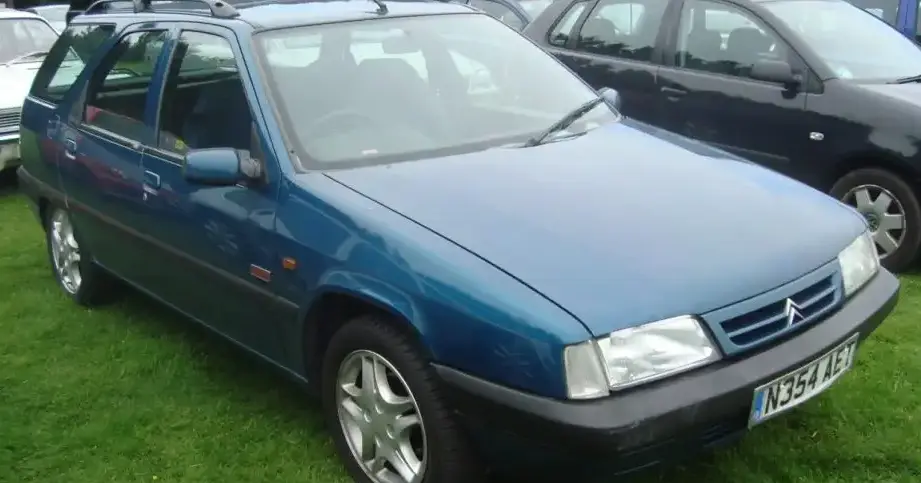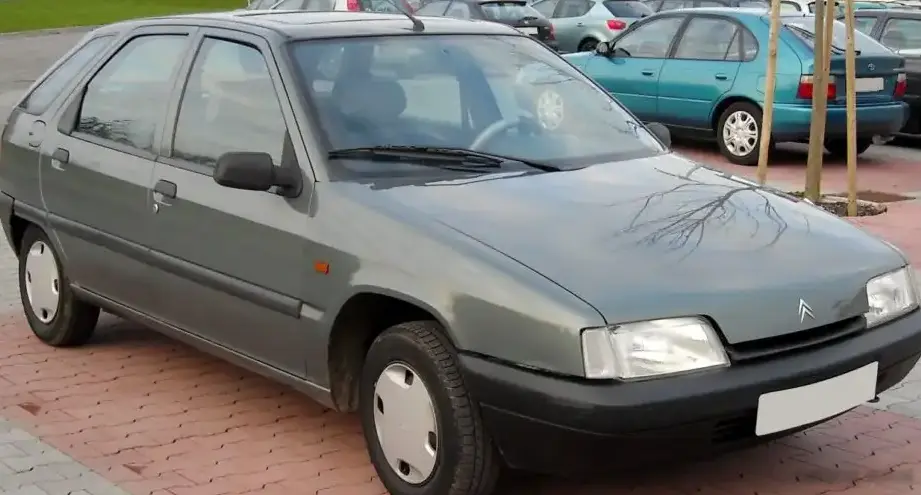
The Citroen ZX 1.8 D, produced between 1993 and 1994, represented an entry-level diesel offering within the broader ZX (N2, Phase I) range. Positioned as a practical and economical family hatchback, it aimed to provide affordable transportation within the European market. The ZX itself was Citroen’s replacement for the aging BX, utilizing the newer and more modern ‘N2’ platform, which would also underpin the Peugeot 405 and later, the Xantia. This particular 1.8 D variant was designed for buyers prioritizing fuel efficiency and low running costs over outright performance, making it a popular choice for high-mileage drivers.
Technical Specifications
| Brand | Citroen |
| Model | ZX |
| Generation | ZX (N2, Phase I) 5-door |
| Type (Engine) | 1.8 D (60 Hp) |
| Start of production | 1993 |
| End of production | 1994 |
| Powertrain Architecture | Internal Combustion engine |
| Body type | Hatchback |
| Seats | 5 |
| Doors | 5 |
| Fuel consumption (urban) | 6.5 l/100 km (36.2 US mpg, 43.5 UK mpg, 15.4 km/l) |
| Fuel consumption (extra urban) | 4.4 l/100 km (53.5 US mpg, 64.2 UK mpg, 22.7 km/l) |
| Fuel consumption (combined) | 5.9 l/100 km (39.9 US mpg, 47.9 UK mpg, 16.9 km/l) |
| Fuel Type | Diesel |
| Acceleration 0 – 100 km/h | 15.9 sec |
| Acceleration 0 – 62 mph | 15.9 sec |
| Acceleration 0 – 60 mph | 15.1 sec |
| Maximum speed | 157 km/h (97.56 mph) |
| Weight-to-power ratio | 17.3 kg/Hp, 58 Hp/tonne |
| Weight-to-torque ratio | 9.2 kg/Nm, 108.2 Nm/tonne |
| Power | 60 Hp @ 4600 rpm |
| Power per litre | 33.9 Hp/l |
| Torque | 112 Nm @ 2000 rpm (82.61 lb.-ft. @ 2000 rpm) |
| Engine layout | Front, Transverse |
| Engine Model/Code | A9A XUD7 |
| Engine displacement | 1769 cm3 (107.95 cu. in.) |
| Number of cylinders | 4 |
| Engine configuration | Inline |
| Cylinder Bore | 80 mm (3.15 in.) |
| Piston Stroke | 88 mm (3.46 in.) |
| Compression ratio | 23.5:1 |
| Number of valves per cylinder | 2 |
| Fuel injection system | Precombustion chamber injection |
| Engine aspiration | Naturally aspirated engine |
| Valvetrain | OHC |
| Engine oil capacity | 5 l (5.28 US qt | 4.4 UK qt) |
| Coolant | 9 l (9.51 US qt | 7.92 UK qt) |
| Kerb Weight | 1035 kg (2281.78 lbs.) |
| Max. weight | 1560 kg (3439.21 lbs.) |
| Max load | 525 kg (1157.43 lbs.) |
| Trunk (boot) space – minimum | 324 l (11.44 cu. ft.) |
| Trunk (boot) space – maximum | 926 l (32.7 cu. ft.) |
| Fuel tank capacity | 56 l (14.79 US gal | 12.32 UK gal) |
| Max. roof load | 75 kg (165.35 lbs.) |
| Permitted trailer load with brakes (12%) | 1000 kg (2204.62 lbs.) |
| Permitted trailer load without brakes | 515 kg (1135.38 lbs.) |
| Permitted towbar download | 70 kg (154.32 lbs.) |
| Length | 4071 mm (160.28 in.) |
| Width | 1688 mm (66.46 in.) |
| Height | 1399 mm (55.08 in.) |
| Wheelbase | 2540 mm (100 in.) |
| Front track | 1422 mm (55.98 in.) |
| Rear (Back) track | 1415 mm (55.71 in.) |
| Front overhang | 849 mm (33.43 in.) |
| Rear overhang | 682 mm (26.85 in.) |
| Minimum turning circle | 11.3 m (37.07 ft.) |
| Drivetrain Architecture | The Internal combustion engine (ICE) drives the front wheels of the vehicle. |
| Drive wheel | Front wheel drive |
| Number of gears and type of gearbox | 5 gears, manual transmission |
| Front suspension | Independent type McPherson, Trailing arm |
| Rear suspension | Hydro-pneumatic element, Wishbone |
| Front brakes | Disc |
| Rear brakes | Drum |
| Assisting systems | ABS (Anti-lock braking system) |
| Steering type | Steering rack and pinion |
| Tires size | 165/70 R13 |
Powertrain & Engine Architecture
The heart of the ZX 1.8 D was the XUD7 diesel engine, specifically the A9A variant. This 1.8-liter (1769cc) inline-four engine was a mainstay of Citroen and Peugeot vehicles throughout the 1980s and 1990s. It employed precombustion chamber injection, a system common in European diesels of the era. This system utilized a small precombustion chamber connected to the main cylinder, where fuel was injected and ignited, then transferred to the main chamber for complete combustion. The engine featured a single overhead camshaft (OHC) operating two valves per cylinder. The XUD7 was known for its robustness and relatively simple mechanical design. The 60 horsepower output was achieved at 4600 rpm, with a torque figure of 112 Nm (82.61 lb-ft) available at 2000 rpm. The engine was transversely mounted in the front of the vehicle, driving the front wheels. The transmission was a five-speed manual gearbox, chosen for its efficiency and cost-effectiveness.
Driving Characteristics
The ZX 1.8 D, with its modest 60 horsepower, was not designed for spirited driving. Acceleration was leisurely, taking approximately 15.9 seconds to reach 62 mph (100 km/h). However, the engine’s torque characteristics made it reasonably tractable for everyday driving. The five-speed gearbox allowed for efficient cruising, and the relatively low weight of the vehicle (1035 kg / 2281.78 lbs) helped to mitigate the lack of power. Compared to the more powerful ZX variants, such as the 1.9 GTI or the 2.0i 16V, the 1.8 D offered a significantly different driving experience. The GTI models prioritized performance, while the 1.8 D focused on economy and practicality. Even compared to other diesel versions of the ZX, like the later 1.9 TDI, the 1.8 D felt underpowered, but it offered a simpler, less complex engine.
Equipment & Trim Levels
The 1.8 D trim level of the ZX was typically the base model. Standard equipment included basic cloth upholstery, a simple dashboard layout, and manual windows and door locks. Power steering was often an optional extra. The interior was functional and durable, prioritizing practicality over luxury. Optional extras could include a sunroof, upgraded stereo system, and central locking. The exterior styling was consistent across the ZX range, with a wedge-shaped profile and distinctive rear end. The 1.8 D typically featured steel wheels with hubcaps, although alloy wheels were available as an option.
Chassis & Braking
The ZX featured an independent McPherson strut front suspension and a hydro-pneumatic rear suspension system, a Citroen hallmark. The hydro-pneumatic suspension provided a comfortable ride, absorbing bumps and irregularities in the road surface effectively. The front brakes were discs, while the rear brakes were drums, a cost-saving measure for the base model. Anti-lock braking system (ABS) was available as an option, enhancing safety. The steering was a rack and pinion system, providing precise and responsive handling. The tire size was typically 165/70 R13.
Market Reception & Comparison
The Citroen ZX 1.8 D was generally well-received as an affordable and economical family car. Critics praised its comfortable ride, thanks to the hydro-pneumatic suspension, and its fuel efficiency. However, the engine’s lack of power was a common criticism. Compared to competitors like the Renault 19 Diesel or the Peugeot 305 Diesel, the ZX 1.8 D offered a similar level of practicality and economy. The ZX’s distinctive styling and comfortable ride gave it an edge in terms of overall appeal. Fuel economy figures were competitive for the time, averaging around 39.9 US mpg (47.9 UK mpg).
Legacy
The XUD7 engine, found in the ZX 1.8 D, is renowned for its durability and longevity. Many examples of this engine are still in service today, testament to its robust design. However, age and mileage can lead to issues such as injector wear and oil leaks. The ZX 1.8 D has become a popular choice among classic car enthusiasts looking for an affordable and reliable vintage vehicle. Parts availability is generally good, although some specific components may be becoming increasingly difficult to find. On the used car market, these models are typically valued for their simplicity, fuel efficiency, and the unique driving experience offered by the hydro-pneumatic suspension.