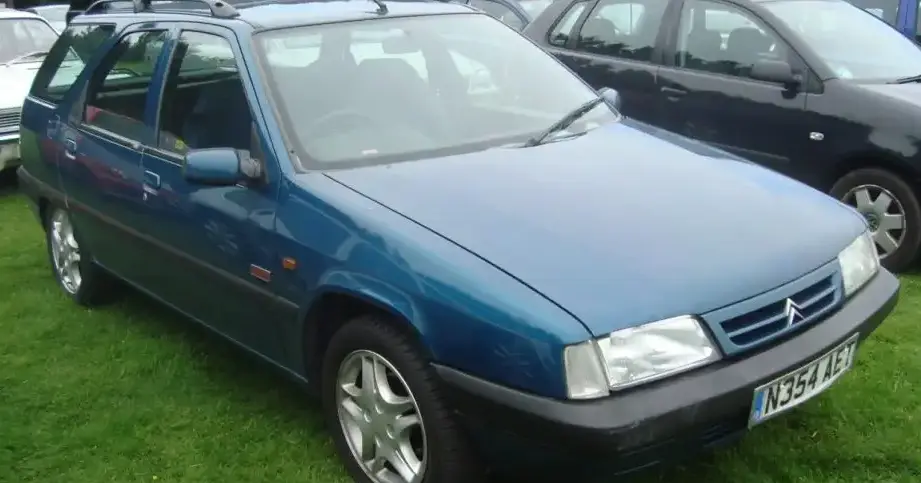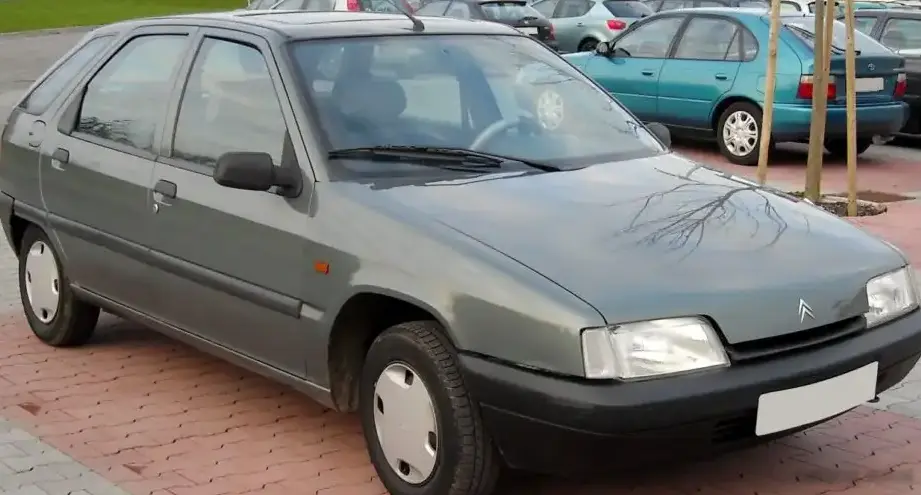
The Citroën ZX Volcane 1.9i, produced between 1991 and 1992, represented a sporty and well-equipped variant within the first phase (N2) of the ZX model range. Positioned as a premium offering, the Volcane 1.9i aimed to provide a more engaging driving experience than the base models while still maintaining Citroën’s reputation for comfort and innovation. The ZX itself was a significant vehicle for Citroën, intended to replace the aging BX and offer a modern, competitive hatchback in the C-segment, competing with vehicles like the Ford Escort and Volkswagen Golf. This particular variant, with its 1.9-liter engine and five-speed manual transmission, was a key part of the initial ZX lineup, offering a balance of performance and practicality.
Technical Specifications
| Brand | Citroen |
| Model | ZX |
| Generation | ZX (N2, Phase I) 5-door |
| Type (Engine) | Volcane 1.9 i (122 Hp) |
| Start of production | 1991 |
| End of production | 1992 |
| Powertrain Architecture | Internal Combustion engine |
| Body type | Hatchback |
| Seats | 5 |
| Doors | 5 |
| Fuel consumption (urban) | 10.1 l/100 km (23.3 US mpg, 28 UK mpg, 9.9 km/l) |
| Fuel consumption (extra urban) | 6.9 l/100 km (34.1 US mpg, 40.9 UK mpg, 14.5 km/l) |
| Fuel Type | Petrol (Gasoline) |
| Acceleration 0 – 100 km/h | 10.4 sec |
| Acceleration 0 – 62 mph | 10.4 sec |
| Acceleration 0 – 60 mph | 9.9 sec |
| Maximum speed | 201 km/h (124.9 mph) |
| Weight-to-power ratio | 8.6 kg/Hp, 115.6 Hp/tonne |
| Weight-to-torque ratio | 6.9 kg/Nm, 145 Nm/tonne |
| Power | 122 Hp @ 6000 rpm |
| Power per litre | 64 Hp/l |
| Torque | 153 Nm @ 3000 rpm (112.85 lb.-ft. @ 3000 rpm) |
| Engine layout | Front, Transverse |
| Engine Model/Code | DKZ XU9JAZ |
| Engine displacement | 1905 cm3 (116.25 cu. in.) |
| Number of cylinders | 4 |
| Engine configuration | Inline |
| Cylinder Bore | 83 mm (3.27 in.) |
| Piston Stroke | 88 mm (3.46 in.) |
| Compression ratio | 9.2:1 |
| Number of valves per cylinder | 2 |
| Fuel injection system | Multi-port manifold injection |
| Engine aspiration | Naturally aspirated engine |
| Valvetrain | OHC |
| Engine oil capacity | 5.4 l (5.71 US qt, 4.75 UK qt) |
| Coolant | 7.5 l (7.93 US qt, 6.6 UK qt) |
| Kerb Weight | 1055 kg (2325.88 lbs.) |
| Max. weight | 1570 kg (3461.26 lbs.) |
| Max load | 515 kg (1135.38 lbs.) |
| Trunk (boot) space – minimum | 324 l (11.44 cu. ft.) |
| Trunk (boot) space – maximum | 1146 l (40.47 cu. ft.) |
| Fuel tank capacity | 56 l (14.79 US gal, 12.32 UK gal) |
| Max. roof load | 75 kg (165.35 lbs.) |
| Permitted trailer load with brakes (12%) | 1100 kg (2425.08 lbs.) |
| Permitted trailer load without brakes | 510 kg (1124.36 lbs.) |
| Permitted towbar download | 70 kg (154.32 lbs.) |
| Length | 4085 mm (160.83 in.) |
| Width | 1707 mm (67.2 in.) |
| Height | 1386 mm (54.57 in.) |
| Wheelbase | 2540 mm (100 in.) |
| Front track | 1422 mm (55.98 in.) |
| Rear (Back) track | 1415 mm (55.71 in.) |
| Front overhang | 859 mm (33.82 in.) |
| Rear overhang | 686 mm (27.01 in.) |
| Ride height (ground clearance) | 120 mm (4.72 in.) |
| Drag coefficient (Cd) | 0.30 |
| Minimum turning circle (turning diameter) | 11.3 m (37.07 ft.) |
| Drivetrain Architecture | The Internal combustion engine (ICE) drives the front wheels of the vehicle. |
| Drive wheel | Front wheel drive |
| Number of gears and type of gearbox | 5 gears, manual transmission |
| Front suspension | Independent type McPherson, Wishbone |
| Rear suspension | Hydro-pneumatic element, Trailing arm |
| Front brakes | Ventilated discs |
| Rear brakes | Disc |
| Assisting systems | ABS (Anti-lock braking system) |
| Steering type | Steering rack and pinion |
| Power steering | Hydraulic Steering |
| Tires size | 185/60 R14 |
| Wheel rims size | 5.5J x 14 |
Powertrain & Engine Architecture
The heart of the Volcane 1.9i is the XU9JAZ engine, a 1.9-liter inline-four cylinder petrol engine. This engine is part of the XU series developed by Peugeot-Citroën, known for its robustness and relatively simple design. The DKZ engine code specifically denotes a version tuned for slightly higher performance. It features a single overhead camshaft (OHC) operating two valves per cylinder. Fuel delivery is managed by a multi-port fuel injection system, providing precise fuel metering for improved efficiency and power. The engine produces 122 horsepower at 6000 rpm and 153 Nm (113 lb-ft) of torque at 3000 rpm. The five-speed manual transmission, standard on the Volcane 1.9i, provides a good balance between acceleration and fuel economy. The transmission’s gear ratios are tuned to take advantage of the engine’s torque curve, offering responsive performance in everyday driving situations.
Driving Characteristics
The ZX Volcane 1.9i offered a noticeably more spirited driving experience compared to the lower-spec models. While not a true sports car, the 1.9-liter engine provided ample power for confident overtaking and comfortable cruising. The five-speed manual transmission allowed drivers to fully exploit the engine’s powerband. Acceleration from 0 to 60 mph took approximately 9.9 seconds, and the car could reach a top speed of 124.9 mph. The ZX’s independent front suspension (McPherson strut) and sophisticated hydro-pneumatic rear suspension contributed to a comfortable ride and good handling characteristics. The steering, aided by hydraulic power assistance, was precise and responsive. Compared to the base 1.6-liter models, the Volcane 1.9i felt significantly more powerful and capable, making it a popular choice for drivers who wanted a more engaging driving experience.
Equipment & Trim Levels
The Volcane trim level was positioned as a premium offering within the ZX range. Standard equipment included features such as alloy wheels, a more luxurious interior trim, and upgraded seats. The interior typically featured cloth upholstery with a distinctive pattern. Optional extras available for the Volcane 1.9i included a sunroof, air conditioning, and a more advanced audio system. The dashboard layout was functional and driver-focused, with clear instrumentation and logically placed controls. The Volcane also benefited from additional sound insulation, contributing to a quieter cabin environment.
Chassis & Braking
The ZX Volcane 1.9i utilized a robust chassis with independent suspension all around. The front suspension employed McPherson struts with a wishbone setup, while the rear suspension featured Citroën’s innovative hydro-pneumatic system. This system provided a remarkably smooth and comfortable ride, as well as self-leveling capabilities. Braking duties were handled by ventilated discs at the front and solid discs at the rear. An anti-lock braking system (ABS) was standard, enhancing safety and control during hard braking maneuvers. The steering system was a rack-and-pinion type with hydraulic power assistance, providing precise and responsive steering feel.
Market Reception & Comparison
The Citroën ZX Volcane 1.9i was generally well-received by automotive critics. It was praised for its comfortable ride, good handling, and responsive engine. Critics noted that the 1.9-liter engine provided a significant performance upgrade over the base models, making the Volcane a more enjoyable car to drive. Fuel economy was considered reasonable for a car of its class. Compared to rivals like the Ford Escort and Volkswagen Golf, the ZX offered a unique blend of comfort, innovation, and style. However, some critics pointed to the car’s somewhat unconventional styling as a potential drawback. The Volcane 1.9i offered a compelling alternative for buyers seeking a well-equipped and enjoyable hatchback.
Legacy
The XU9JAZ engine, found in the ZX Volcane 1.9i, is known for its durability and reliability. With proper maintenance, these engines can last for many years and accumulate high mileage. The hydro-pneumatic suspension system, while innovative, requires periodic maintenance and can be expensive to repair. Today, the ZX Volcane 1.9i is considered a desirable classic car, particularly among enthusiasts who appreciate its unique character and engineering. Well-maintained examples are becoming increasingly rare and are sought after by collectors. The car represents a high point in Citroën’s history, showcasing the company’s commitment to innovation and driving pleasure.