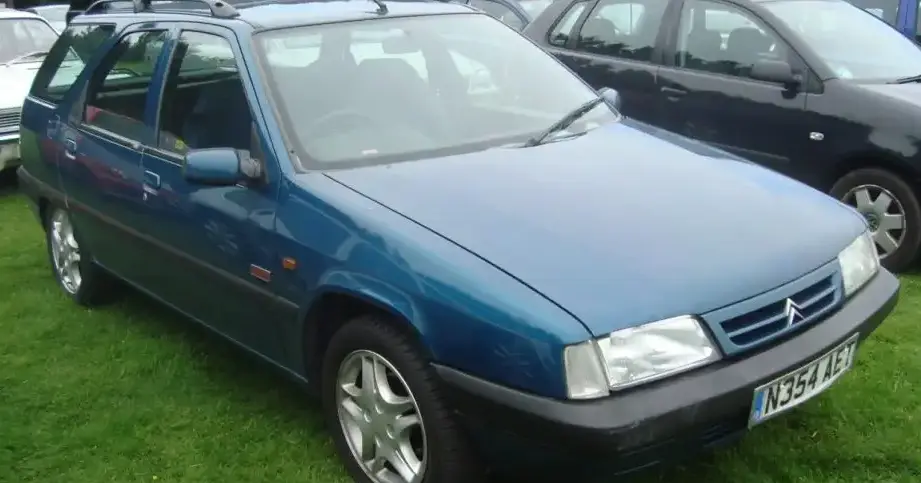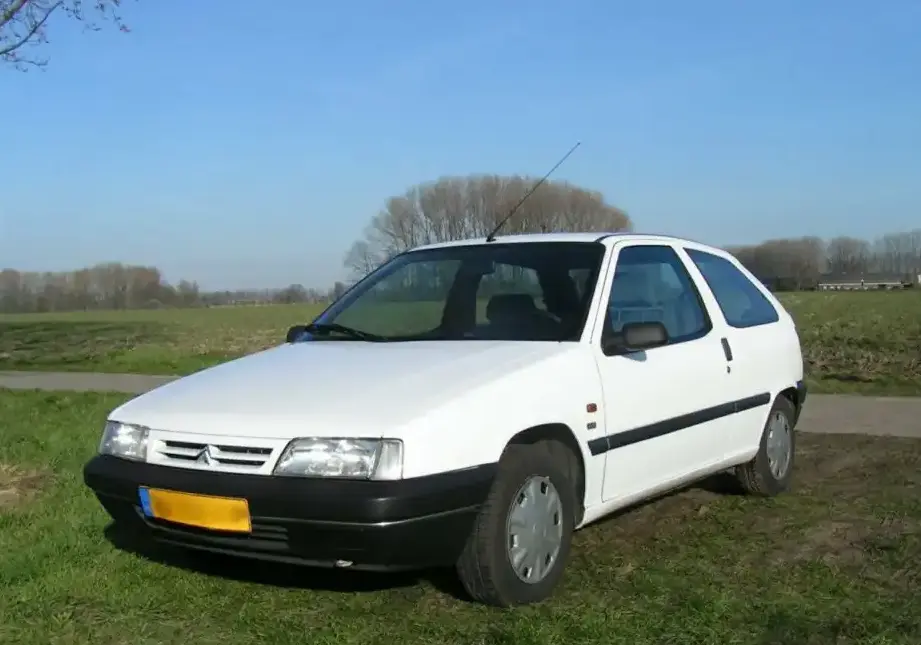
The Citroën ZX 1.6i, produced between 1994 and 1997, represented a key variant within the second phase (N2) of the ZX model range. This 3-door hatchback offered a balance between affordability and practicality, targeting buyers seeking a comfortable and efficient family vehicle. Positioned as a mid-range offering, it slotted below the more powerful 2.0i 16V models and above the base 1.4-liter variants. The ZX, as a whole, was Citroën’s replacement for the aging BX, aiming to provide a more modern and competitive vehicle in the compact family car segment, primarily in Europe.
Technical Specifications
| Brand | Citroen |
| Model | ZX |
| Generation | ZX (N2, Phase II) 3-door |
| Type (Engine) | 1.6 i (88 Hp) |
| Start of production | 1994 |
| End of production | 1997 |
| Powertrain Architecture | Internal Combustion engine |
| Body type | Hatchback |
| Seats | 5 |
| Doors | 3 |
| Fuel consumption (urban) | 11.8 l/100 km (19.9 US mpg, 23.9 UK mpg, 8.5 km/l) |
| Fuel consumption (extra urban) | 6.7 l/100 km (35.1 US mpg, 42.2 UK mpg, 14.9 km/l) |
| Fuel consumption (combined) | 8.7 l/100 km (27 US mpg, 32.5 UK mpg, 11.5 km/l) |
| Fuel Type | Petrol (Gasoline) |
| Maximum speed | 177 km/h (109.98 mph) |
| Weight-to-power ratio | 11.5 kg/Hp, 87.3 Hp/tonne |
| Weight-to-torque ratio | 7.6 kg/Nm, 131 Nm/tonne |
| Power | 88 Hp @ 6000 rpm |
| Power per litre | 55.7 Hp/l |
| Torque | 132 Nm @ 2600 rpm (97.36 lb.-ft. @ 2600 rpm) |
| Engine layout | Front, Transverse |
| Engine Model/Code | BFZ XU5JP L3 |
| Engine displacement | 1580 cm3 (96.42 cu. in.) |
| Number of cylinders | 4 |
| Engine configuration | Inline |
| Cylinder Bore | 83 mm (3.27 in.) |
| Piston Stroke | 73 mm (2.87 in.) |
| Compression ratio | 9.25:1 |
| Number of valves per cylinder | 2 |
| Fuel injection system | Multi-port manifold injection |
| Engine aspiration | Naturally aspirated engine |
| Valvetrain | OHC |
| Engine oil capacity | 4.5 l (4.76 US qt | 3.96 UK qt) |
| Coolant | 7.5 l (7.93 US qt | 6.6 UK qt) |
| Kerb Weight | 1008 kg (2222.26 lbs.) |
| Max. weight | 1550 kg (3417.17 lbs.) |
| Max load | 542 kg (1194.91 lbs.) |
| Trunk (boot) space – minimum | 324 l (11.44 cu. ft.) |
| Trunk (boot) space – maximum | 1146 l (40.47 cu. ft.) |
| Fuel tank capacity | 54 l (14.27 US gal | 11.88 UK gal) |
| Max. roof load | 75 kg (165.35 lbs.) |
| Permitted trailer load with brakes (12%) | 1000 kg (2204.62 lbs.) |
| Permitted trailer load without brakes | 500 kg (1102.31 lbs.) |
| Permitted towbar download | 70 kg (154.32 lbs.) |
| Length | 4071 mm (160.28 in.) |
| Width | 1702 mm (67.01 in.) |
| Height | 1404 mm (55.28 in.) |
| Wheelbase | 2540 mm (100 in.) |
| Front track | 1440 mm (56.69 in.) |
| Rear (Back) track | 1430 mm (56.3 in.) |
| Front overhang | 849 mm (33.43 in.) |
| Rear overhang | 682 mm (26.85 in.) |
| Minimum turning circle (turning diameter) | 11.1 m (36.42 ft.) |
| Drivetrain Architecture | The Internal combustion engine (ICE) drives the front wheels of the vehicle. |
| Drive wheel | Front wheel drive |
| Number of gears and type of gearbox | 5 gears, manual transmission |
| Front suspension | Independent type McPherson, Wishbone |
| Rear suspension | Hydro-pneumatic element, Trailing arm |
| Front brakes | Ventilated discs |
| Rear brakes | Drum |
| Steering type | Steering rack and pinion |
| Power steering | Hydraulic Steering |
| Tires size | 175/65 R14 |
| Wheel rims size | 5.5J x 14 |
Powertrain & Engine Architecture
The Citroën ZX 1.6i utilized the PSA XU5JP engine, specifically the BFZ variant. This 1.6-liter inline-four engine was a mainstay in many Peugeot and Citroën models of the era. It featured a single overhead camshaft (OHC) operating two valves per cylinder. Fuel delivery was managed by a multi-port fuel injection system, providing a balance between efficiency and performance. The engine produced 88 horsepower at 6000 rpm and 132 Nm (97.36 lb-ft) of torque at 2600 rpm. The engine’s design prioritized reliability and ease of maintenance. The XU series engines were known for their robust construction and relatively simple design, making them popular with mechanics and owners alike. The 5-speed manual transmission was the standard offering, providing adequate gear spacing for everyday driving.
Driving Characteristics
The 1.6i ZX offered a comfortable, if not particularly sporty, driving experience. With 88 hp propelling a vehicle weighing around 1008 kg (2222 lbs), acceleration was adequate for merging onto highways and overtaking, but it wasn’t a particularly quick car. The gear ratios in the 5-speed manual transmission were well-suited to cruising, but required frequent downshifts for quicker acceleration. Compared to the more powerful 2.0i 16V models, the 1.6i felt noticeably slower, especially at higher speeds. However, it offered better fuel economy and a more relaxed driving experience. The ZX’s renowned hydropneumatic suspension provided a remarkably smooth ride, absorbing bumps and imperfections in the road with ease. This was a key selling point for Citroën, and the 1.6i benefited from this technology just as much as its higher-spec siblings.
Equipment & Trim Levels
The 1.6i ZX typically came equipped with features considered standard for a mid-range family car in the mid-1990s. This included power steering, central locking, and a basic stereo system. Interior upholstery was typically cloth, with a relatively simple dashboard layout. Optional extras included air conditioning, electric windows, and a sunroof. The trim level could vary slightly depending on the market, but generally, the 1.6i offered a good level of equipment for its price point. The focus was on providing a practical and comfortable interior rather than luxurious appointments.
Chassis & Braking
The ZX featured an independent McPherson strut front suspension and a hydro-pneumatic trailing arm rear suspension. This combination provided excellent ride quality and handling. The front brakes were ventilated discs, offering good stopping power, while the rear brakes were drums. This configuration was typical for vehicles in this class at the time, balancing cost and performance. The steering was a rack and pinion system with hydraulic power assistance, providing precise and responsive steering feel. The suspension setup was tuned for comfort, prioritizing a smooth ride over sharp handling.
Market Reception & Comparison
The Citroën ZX 1.6i was generally well-received by automotive critics as a practical and comfortable family car. It was praised for its ride quality, spacious interior, and fuel efficiency. However, it was often criticized for its lack of outright performance compared to some of its rivals. Compared to the 2.0i 16V ZX, the 1.6i offered significantly better fuel economy, making it a more attractive option for drivers who prioritized running costs. The 1.4-liter ZX was even more economical but lacked the power of the 1.6i, making the 1.6i a good compromise between performance and efficiency.
Legacy
The XU5JP engine, found in the ZX 1.6i, is known for its durability and reliability. With proper maintenance, these engines can last for many years and high mileages. The ZX itself has developed a cult following among Citroën enthusiasts, who appreciate its unique styling and comfortable ride. Today, well-maintained examples of the ZX 1.6i are becoming increasingly rare, and are sought after by collectors and enthusiasts. While not a performance icon, the ZX 1.6i represents a solid and dependable family car from a bygone era, offering a unique blend of French engineering and practicality.