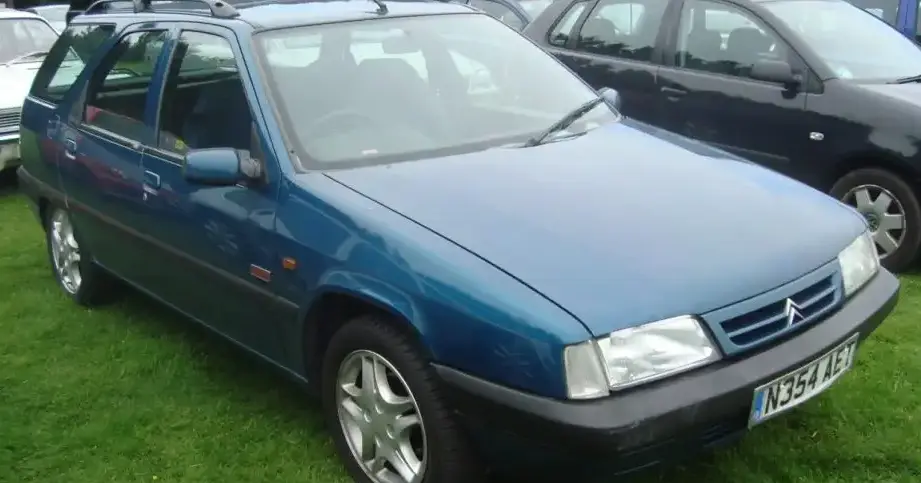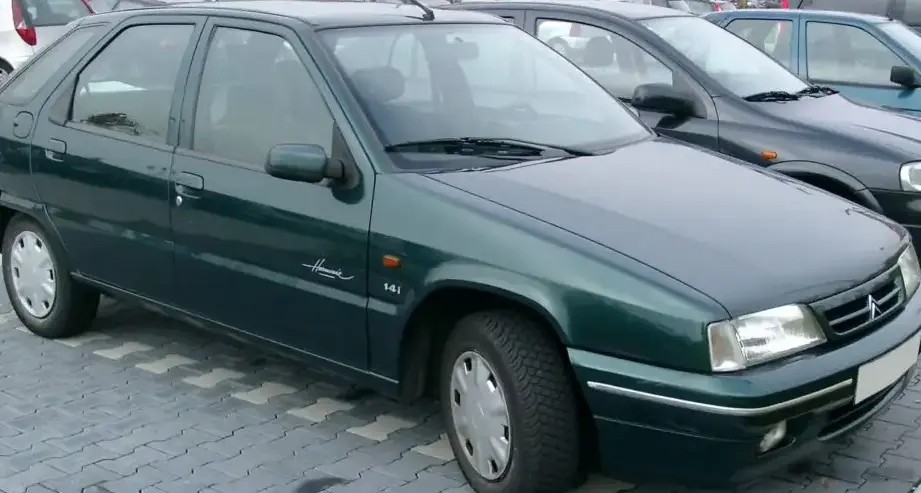
The Citroën ZX 2.0i 16V (N2, Phase II) was a performance-oriented variant of the ZX hatchback, produced between 1996 and 1997. Positioned as the flagship engine option within the ZX range, it offered a significant power upgrade over the more common 1.6 and 1.8 liter models. This variant aimed to provide a sporty driving experience while retaining the practicality of a five-door hatchback. It was part of the N2 series, representing the second phase of the ZX’s lifecycle, which included styling refinements and mechanical updates. The ZX itself was Citroën’s replacement for the BX, intended to offer a more modern and competitive package in the family car segment.
Technical Specifications
| Brand | Citroën |
| Model | ZX |
| Generation | ZX (N2, Phase II) 5-door |
| Type (Engine) | 2.0 i 16V (163 Hp) |
| Start of production | 1996 |
| End of production | 1997 |
| Powertrain Architecture | Internal Combustion engine |
| Body type | Hatchback |
| Seats | 5 |
| Doors | 5 |
| Fuel consumption (urban) | 13.6 l/100 km (17.3 US mpg, 20.8 UK mpg) |
| Fuel consumption (extra urban) | 7.1 l/100 km (33.1 US mpg, 39.8 UK mpg) |
| Fuel consumption (combined) | 9.4 l/100 km (25 US mpg, 30.1 UK mpg) |
| Fuel Type | Petrol (Gasoline) |
| Maximum speed | 219 km/h (136.08 mph) |
| Power | 163 Hp @ 6500 rpm |
| Power per litre | 81.6 Hp/l |
| Torque | 196 Nm @ 5500 rpm (144.56 lb.-ft. @ 5500 rpm) |
| Engine layout | Front, Transverse |
| Engine Model/Code | RFS XU10J4RS |
| Engine displacement | 1998 cm3 (121.93 cu. in.) |
| Number of cylinders | 4 |
| Engine configuration | Inline |
| Cylinder Bore | 86 mm (3.39 in.) |
| Piston Stroke | 86 mm (3.39 in.) |
| Compression ratio | 10.4:1 |
| Number of valves per cylinder | 4 |
| Fuel injection system | Multi-port manifold injection |
| Engine aspiration | Naturally aspirated engine |
| Valvetrain | DOHC |
| Engine oil capacity | 4.3 l (4.54 US qt | 3.78 UK qt) |
| Coolant | 8.5 l (8.98 US qt | 7.48 UK qt) |
| Trunk (boot) space (minimum) | 324 l (11.44 cu. ft.) |
| Trunk (boot) space (maximum) | 926 l (32.7 cu. ft.) |
| Fuel tank capacity | 54 l (14.27 US gal | 11.88 UK gal) |
| Length | 4071 mm (160.28 in.) |
| Width | 1688 mm (66.46 in.) |
| Height | 1399 mm (55.08 in.) |
| Wheelbase | 2540 mm (100 in.) |
| Front overhang | 849 mm (33.43 in.) |
| Rear overhang | 682 mm (26.85 in.) |
| Minimum turning circle | 11.3 m (37.07 ft.) |
| Drivetrain Architecture | Front wheel drive |
| Number of gears and type of gearbox | 5 gears, manual transmission |
| Front suspension | Independent type McPherson, Wishbone |
| Rear suspension | Hydro-pneumatic element, Trailing arm |
| Front brakes | Ventilated discs |
| Rear brakes | Drum |
| Steering type | Steering rack and pinion |
| Power steering | Hydraulic Steering |
Powertrain & Engine Architecture
The heart of the ZX 2.0i 16V is the RFS XU10J4RS engine, a 1998cc inline-four cylinder powerplant. This engine is part of the XU series, developed by Peugeot and Citroën, and known for its robust construction and potential for tuning. The “16V” designation indicates a four-valve-per-cylinder configuration, enhancing breathing and contributing to the engine’s higher power output. It utilizes multi-port fuel injection, delivering fuel directly to each intake port for precise control and efficient combustion. The engine features a double overhead camshaft (DOHC) valvetrain, further optimizing valve timing and airflow. The five-speed manual transmission was the only gearbox option available with this engine, chosen to complement its sporty character. The transmission’s gear ratios were tuned to maximize acceleration and provide a responsive driving experience.
Driving Characteristics
The ZX 2.0i 16V offered a noticeably more engaging driving experience compared to the lower-powered variants. With 163 horsepower, it provided brisk acceleration and a comfortable cruising speed. The engine delivered a strong mid-range punch, making it well-suited for overtaking maneuvers. While not a dedicated sports car, the ZX 2.0i 16V offered a good balance between performance and practicality. The suspension, featuring a McPherson strut front and a hydro-pneumatic rear setup, provided a comfortable ride while maintaining reasonable handling characteristics. The hydraulic power steering offered a good level of assistance without feeling overly isolated. Compared to the 1.8L models, the 2.0i 16V felt significantly more powerful, and the manual transmission allowed for greater driver control.
Equipment & Trim Levels
The ZX 2.0i 16V typically came with a higher level of standard equipment than the base models. This included features such as central locking, electric windows, power steering, and an upgraded interior trim. The interior often featured sport seats with enhanced bolstering for improved support during cornering. Optional extras included air conditioning, a sunroof, and upgraded audio systems. The dashboard layout was typical of Citroëns of the era, with a focus on functionality and ergonomics. The instrument cluster featured a comprehensive set of gauges, including a tachometer, speedometer, and fuel level indicator.
Chassis & Braking
The ZX’s chassis was designed to provide a good balance between comfort and handling. The front suspension utilized independent McPherson struts, while the rear suspension employed a sophisticated hydro-pneumatic system. This system allowed for self-leveling and adjustable ride height, contributing to a comfortable and controlled ride. The braking system featured ventilated discs on the front wheels and drum brakes on the rear. While adequate for most driving situations, the rear drum brakes were a point of criticism compared to the all-disc setups found on some competitors. The ZX 2.0i 16V typically featured a slightly thicker front stabilizer bar compared to the lower-powered models, further enhancing handling stability.
Market Reception & Comparison
The Citroën ZX 2.0i 16V was generally well-received by automotive critics, who praised its performance and handling. It was seen as a credible alternative to rivals such as the Ford Escort and Vauxhall/Opel Astra. However, some critics noted that the interior quality was not quite up to the standards of some competitors. Fuel economy was reasonable for a car of its performance, but not exceptional. Compared to the 1.8L and 1.6L ZX models, the 2.0i 16V offered a significant performance upgrade, but at a higher price point. The 1.9 TDI diesel variant offered comparable fuel economy and strong torque, but lacked the 2.0i 16V’s outright power and sporty character.
Legacy
The ZX 2.0i 16V has developed a cult following among enthusiasts, particularly those who appreciate its blend of performance, practicality, and unique Citroën character. The XU10J4RS engine is known for its durability and tunability, making it a popular choice for engine swaps and modifications. While not as common as some other classic hatchbacks, well-maintained examples of the ZX 2.0i 16V are sought after by collectors. The hydro-pneumatic suspension can require specialized maintenance, but when properly cared for, it provides a unique and comfortable driving experience. Today, the ZX 2.0i 16V represents a distinctive and enjoyable piece of automotive history.