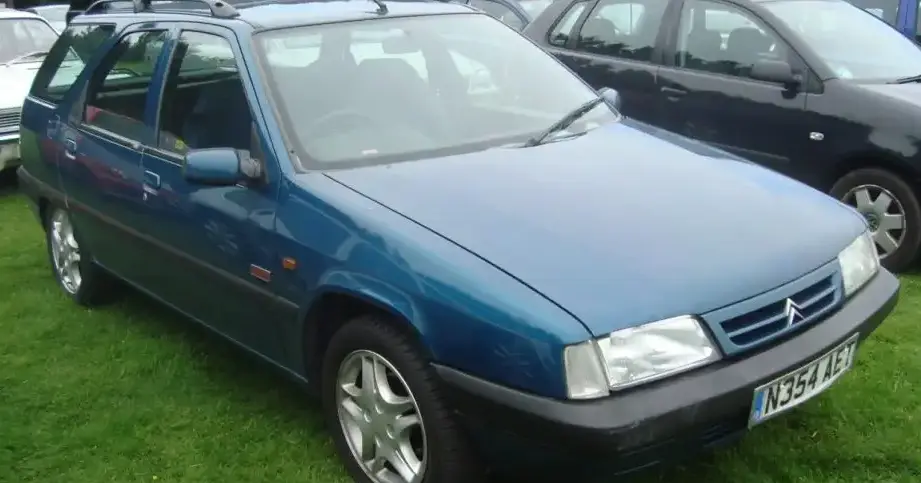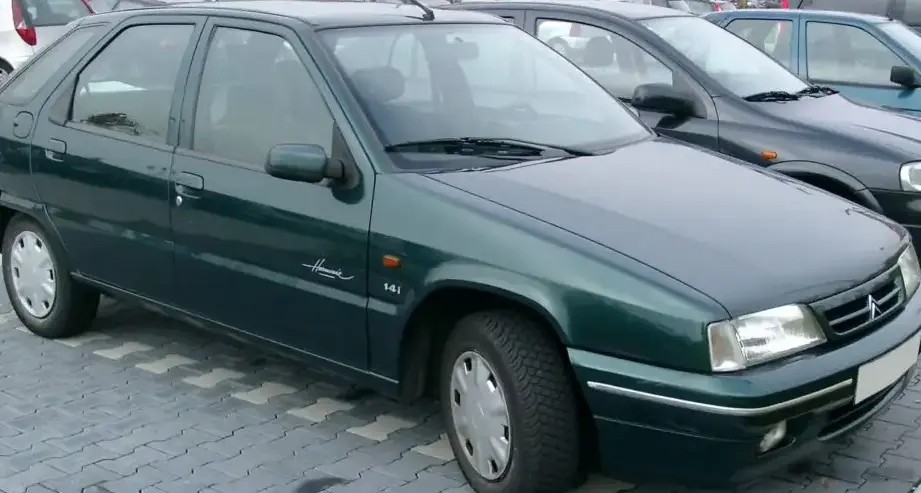
The Citroën ZX Volcane 2.0i, produced between 1994 and 1997, represented a performance-oriented variant within the second phase (N2) of the ZX model range. Positioned as a step up from the base models, the Volcane 2.0i aimed to offer a more engaging driving experience while retaining the ZX’s reputation for comfort and practicality. It was a key offering in the European C-segment hatchback market, competing with vehicles like the Ford Escort, Opel Astra, and Peugeot 306. The ZX, as a whole, was Citroën’s replacement for the popular BX, and the N2 phase brought significant refinements to the original design, including improved interior materials and updated engine options.
Technical Specifications
| Brand | Citroen |
| Model | ZX |
| Generation | ZX (N2, Phase II) 5-door |
| Type (Engine) | Volcane 2.0 i (121 Hp) |
| Start of production | 1994 |
| End of production | 1997 |
| Powertrain Architecture | Internal Combustion engine |
| Body type | Hatchback |
| Seats | 5 |
| Doors | 5 |
| Fuel consumption (urban) | 10.6 l/100 km (22.2 US mpg, 26.6 UK mpg, 9.4 km/l) |
| Fuel consumption (extra urban) | 6.1 l/100 km (38.6 US mpg, 46.3 UK mpg, 16.4 km/l) |
| Fuel consumption (combined) | 7.8 l/100 km (30.2 US mpg, 36.2 UK mpg, 12.8 km/l) |
| Fuel Type | Petrol (Gasoline) |
| Acceleration 0 – 100 km/h | 10.2 sec |
| Acceleration 0 – 62 mph | 10.2 sec |
| Acceleration 0 – 60 mph | 9.7 sec |
| Maximum speed | 202 km/h (125.52 mph) |
| Weight-to-power ratio | 9 kg/Hp, 110.9 Hp/tonne |
| Weight-to-torque ratio | 6.1 kg/Nm, 164.1 Nm/tonne |
| Power | 121 Hp @ 5750 rpm |
| Power per litre | 60.6 Hp/l |
| Torque | 179 Nm @ 2750 rpm (132.02 lb.-ft. @ 2750 rpm) |
| Engine layout | Front, Transverse |
| Engine Model/Code | RFX XU10J2C |
| Engine displacement | 1998 cm3 (121.93 cu. in.) |
| Number of cylinders | 4 |
| Engine configuration | Inline |
| Cylinder Bore | 86 mm (3.39 in.) |
| Piston Stroke | 86 mm (3.39 in.) |
| Compression ratio | 9.5:1 |
| Number of valves per cylinder | 2 |
| Fuel injection system | Multi-port manifold injection |
| Engine aspiration | Naturally aspirated engine |
| Engine oil capacity | 5.4 l (5.71 US qt | 4.75 UK qt) |
| Coolant | 8.5 l (8.98 US qt | 7.48 UK qt) |
| Kerb Weight | 1091 kg (2405.24 lbs.) |
| Max. weight | 1600 kg (3527.4 lbs.) |
| Max load | 509 kg (1122.15 lbs.) |
| Trunk (boot) space – minimum | 324 l (11.44 cu. ft.) |
| Trunk (boot) space – maximum | 926 l (32.7 cu. ft.) |
| Fuel tank capacity | 54 l (14.27 US gal | 11.88 UK gal) |
| Max. roof load | 75 kg (165.35 lbs.) |
| Permitted trailer load with brakes (12%) | 1100 kg (2425.08 lbs.) |
| Permitted trailer load without brakes | 545 kg (1201.52 lbs.) |
| Permitted towbar download | 70 kg (154.32 lbs.) |
| Length | 4085 mm (160.83 in.) |
| Width | 1705 mm (67.13 in.) |
| Height | 1385 mm (54.53 in.) |
| Wheelbase | 2540 mm (100 in.) |
| Front track | 1420 mm (55.91 in.) |
| Rear (Back) track | 1415 mm (55.71 in.) |
| Front overhang | 859 mm (33.82 in.) |
| Rear overhang | 686 mm (27.01 in.) |
| Minimum turning circle | 11.1 m (36.42 ft.) |
| Drivetrain Architecture | Front wheel drive |
| Number of gears and type of gearbox | 5 gears, manual transmission |
| Front suspension | Independent type McPherson, Wishbone |
| Rear suspension | Hydro-pneumatic element, Trailing arm |
| Front brakes | Ventilated discs |
| Rear brakes | Disc |
| Assisting systems | ABS (Anti-lock braking system) |
| Steering type | Steering rack and pinion |
| Power steering | Hydraulic Steering |
| Tires size | 185/60 R14 |
| Wheel rims size | 5.5J x 14 |
Powertrain & Engine Architecture
The heart of the ZX Volcane 2.0i was the RFX XU10J2C engine, a 1.998-liter (121.93 cubic inches) inline-four cylinder gasoline engine. This engine was part of the XU series, developed by Peugeot and Citroën, and known for its robustness and relatively simple design. It featured a cast iron block and an aluminum cylinder head with two valves per cylinder. Fuel delivery was handled by a multi-port fuel injection system, providing precise fuel metering for improved efficiency and performance. The engine produced 121 horsepower at 5750 rpm and 179 Nm (132 lb-ft) of torque at 2750 rpm. The engine’s design prioritized drivability and reliability over outright peak power. The transmission was a five-speed manual, offering a good balance between acceleration and fuel economy. While an automatic transmission was available on other ZX models, it wasn’t typically paired with the 2.0i Volcane, making the manual the standard and preferred choice for enthusiasts.
Driving Characteristics
The ZX Volcane 2.0i offered a noticeably more spirited driving experience than the lower-displacement ZX variants. The 2.0-liter engine provided ample power for everyday driving and confident overtaking maneuvers. Acceleration from 0 to 60 mph took approximately 9.7 seconds, and it could reach a top speed of 202 km/h (125.52 mph). The five-speed manual transmission allowed drivers to keep the engine in its optimal power band. The ZX’s renowned hydropneumatic suspension system, a Citroën hallmark, provided a remarkably comfortable ride, absorbing bumps and imperfections in the road with ease. However, the suspension could also be adjusted for a firmer, more sporty feel. Compared to the 1.6-liter models, the 2.0i offered significantly more torque, making it feel less strained when fully loaded or climbing hills. It also provided a more refined driving experience than the diesel variants, which prioritized fuel economy over performance.
Equipment & Trim Levels
The Volcane trim level was positioned as the premium offering within the ZX range. Standard equipment included power steering, ABS anti-lock brakes, central locking, electric front windows, and a height-adjustable steering wheel. The interior featured upgraded upholstery, often with a sporty fabric pattern, and a more comprehensive instrument cluster. Optional extras included a sunroof, air conditioning, and upgraded audio systems. The Volcane also featured distinctive exterior styling cues, such as alloy wheels, a rear spoiler, and body-colored bumpers. The interior dashboard configuration was typical of the era, with a functional layout and easy-to-read gauges.
Chassis & Braking
The ZX Volcane 2.0i utilized an independent McPherson strut front suspension and a hydro-pneumatic trailing arm rear suspension. This combination provided excellent ride comfort and handling characteristics. The front suspension featured a stabilizer bar to reduce body roll during cornering. Braking duties were handled by ventilated discs at the front and solid discs at the rear, providing adequate stopping power for the vehicle’s weight and performance. The ABS system further enhanced safety by preventing wheel lockup during hard braking.
Market Reception & Comparison
The Citroën ZX Volcane 2.0i was generally well-received by automotive critics. It was praised for its comfortable ride, engaging handling, and refined engine. However, some critics noted that the interior styling was somewhat dated compared to its rivals. Compared to the 1.6-liter ZX models, the 2.0i offered a significant performance boost, but at the cost of slightly higher fuel consumption. The diesel variants offered superior fuel economy but lacked the 2.0i’s responsiveness. The ZX Volcane 2.0i was considered a strong competitor in the European C-segment hatchback market, offering a unique blend of comfort, performance, and practicality.
Legacy
The XU10J2C engine, found in the ZX Volcane 2.0i, is known for its durability and reliability. With proper maintenance, these engines can withstand high mileage. Today, the ZX Volcane 2.0i is gaining recognition as a classic car, appreciated by enthusiasts for its unique character and engineering. Finding well-maintained examples can be challenging, but they offer a compelling alternative to more common hot hatches of the era. Parts availability is generally good, as many components are shared with other Peugeot and Citroën models. The hydropneumatic suspension, while offering exceptional comfort, requires periodic maintenance and can be a source of expense if neglected.