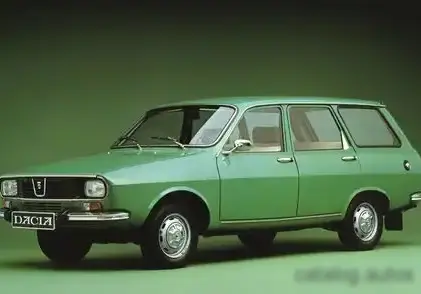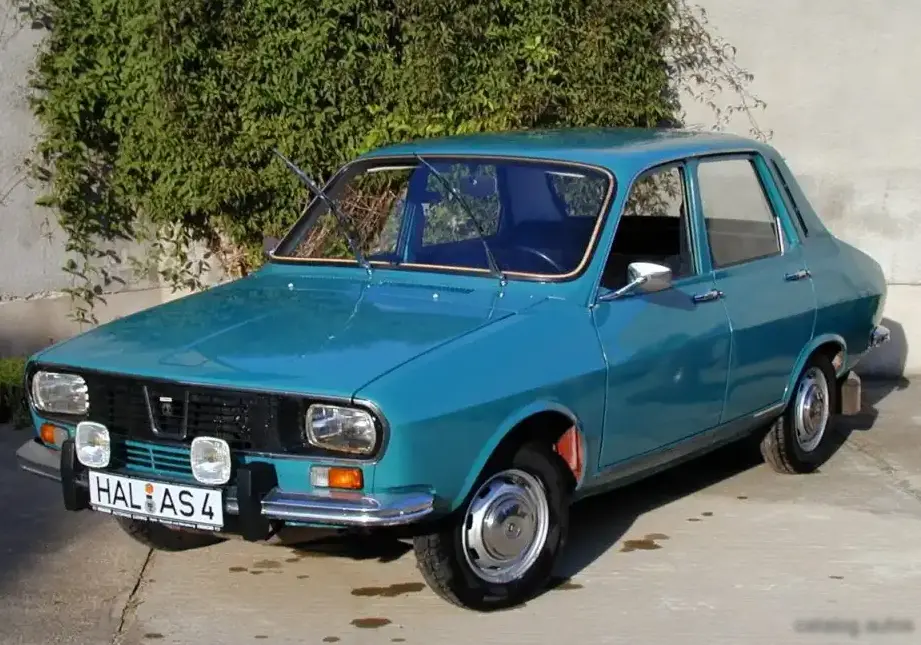
The Dacia 1300 1.3, producing 54 horsepower, represents a foundational model in the history of the Romanian automotive industry. Produced from 1969 to 2004, it was a mainstay of Romanian roads for over three decades, and a symbol of the country’s industrial capabilities during the communist era. The 1300 was based heavily on the Renault 12, a license-built version that underwent continuous, albeit incremental, improvements throughout its exceptionally long production run. This particular 1.3-liter variant served as the entry-level model for much of its lifespan, offering affordable transportation to a broad segment of the population. It was part of the initial 1300 series, preceding later iterations like the 1310 and 1320.
Technical Specifications
| Brand | Dacia |
| Model | 1300 |
| Generation | 1300 |
| Type (Engine) | 1.3 (54 Hp) |
| Start of production | 1969 |
| End of production | 2004 |
| Powertrain Architecture | Internal Combustion engine |
| Body type | Sedan |
| Seats | 5 |
| Doors | 4 |
| Fuel Type | Petrol (Gasoline) |
| Weight-to-power ratio | 16.5 kg/Hp, 60.7 Hp/tonne |
| Weight-to-torque ratio | 10.1 kg/Nm, 98.9 Nm/tonne |
| Power | 54 Hp @ 5250 rpm |
| Power per litre | 41.9 Hp/l |
| Torque | 88 Nm @ 3000 rpm (64.91 lb.-ft. @ 3000 rpm) |
| Engine layout | Front, Transverse |
| Engine displacement | 1289 cm3 (78.66 cu. in.) |
| Number of cylinders | 4 |
| Engine configuration | Inline |
| Cylinder Bore | 73 mm (2.87 in.) |
| Piston Stroke | 77 mm (3.03 in.) |
| Compression ratio | 8.5:1 |
| Number of valves per cylinder | 2 |
| Fuel injection system | Carburettor |
| Engine aspiration | Naturally aspirated engine |
| Kerb Weight | 890 kg (1962.11 lbs.) |
| Fuel tank capacity | 52 l (13.74 US gal | 11.44 UK gal) |
| Length | 4345 mm (171.06 in.) |
| Width | 1635 mm (64.37 in.) |
| Height | 1435 mm (56.5 in.) |
| Wheelbase | 2440 mm (96.06 in.) |
| Drivetrain Architecture | The Internal combustion engine (ICE) drives the front wheels of the vehicle. |
| Drive wheel | Front wheel drive |
| Number of gears and type of gearbox | 4 gears, manual transmission |
| Front suspension | Independent multi-link suspension |
| Front brakes | Disc |
| Rear brakes | Drum |
| Steering type | Steering rack and pinion |
| Tires size | 155/80 R13 |
Powertrain & Engine Architecture
The heart of the Dacia 1300 1.3 was a 1.3-liter inline-four cylinder engine. This engine, designated as a derivative of the Renault 12’s powerplant, featured a cast iron block and an aluminum cylinder head. It utilized a simple, yet robust, single overhead camshaft (SOHC) valvetrain with two valves per cylinder. Fuel delivery was managed by a single downdraft carburetor, a common feature for vehicles of this era. The engine’s 8.5:1 compression ratio was a compromise between performance and the quality of fuel available in Romania at the time. The engine was transversely mounted, driving the front wheels. The four-speed manual transmission was also sourced from Renault, and while not particularly sophisticated, it proved durable and reliable. Later versions of the 1300 would see minor carburetor adjustments and ignition system upgrades, but the fundamental engine architecture remained largely unchanged.
Driving Characteristics
The 1.3-liter engine in the Dacia 1300 delivered modest performance. With 54 horsepower, acceleration was leisurely, and highway passing required careful planning. The four-speed manual transmission featured relatively widely spaced gear ratios, prioritizing fuel economy over outright speed. The engine produced usable torque at lower RPMs, making it reasonably tractable around town. Compared to later, more powerful versions of the 1300 (like the 1.6-liter models), the 1.3 felt noticeably underpowered, especially when fully loaded with passengers and luggage. However, its simplicity and relatively low weight contributed to decent fuel economy for the time. The front-wheel-drive configuration provided predictable handling, although the suspension was tuned more for comfort than sporty driving.
Equipment & Trim Levels
The Dacia 1300 1.3 was typically offered with a fairly basic level of equipment. Standard features included cloth upholstery, a simple dashboard with analog gauges, and basic exterior trim. Power steering, air conditioning, and electric windows were not typically available on this base model. Optional extras, when available, might include a radio, upgraded seat covers, and a rear window defogger. The interior was functional and durable, designed to withstand the rigors of daily use. The exterior styling was largely dictated by the Renault 12 design, with a boxy sedan silhouette and relatively small bumpers.
Chassis & Braking
The Dacia 1300 utilized a relatively conventional chassis design. The front suspension consisted of independent multi-link suspension, providing a reasonable level of ride comfort. The rear suspension employed a solid axle with leaf springs, a cost-effective and durable solution. Braking was accomplished via disc brakes on the front wheels and drum brakes on the rear. The steering system was a rack and pinion setup, offering acceptable precision. The tires, typically 155/80 R13, were chosen for durability and affordability rather than high performance. Stabilizer bars were not standard equipment on the base 1.3 model, contributing to a slightly more pronounced body roll in corners.
Market Reception & Comparison
The Dacia 1300 1.3 was overwhelmingly well-received in Romania, where it filled a critical need for affordable and reliable transportation. It was praised for its durability, ease of maintenance, and relatively low operating costs. Compared to other vehicles available in the Eastern Bloc at the time, the 1300 offered a good balance of features and price. However, it was often criticized for its lack of power and its somewhat dated design. Compared to the later 1.6-liter versions of the 1300, the 1.3 offered lower performance but better fuel economy. It was also significantly cheaper to purchase and maintain. The 1.3 appealed to budget-conscious buyers and those who primarily used the vehicle for urban commuting.
Legacy
The Dacia 1300 1.3 holds a significant place in Romanian automotive history. Its long production run and widespread use made it a cultural icon. The powertrain, while simple, proved remarkably durable, and many examples remain on the road today. In the used car market, the 1300 1.3 is valued for its affordability and simplicity. Parts availability can be a challenge, but a dedicated community of enthusiasts continues to support the preservation of these classic vehicles. The 1300 laid the foundation for Dacia’s subsequent development and ultimately paved the way for the brand’s eventual success in the global automotive market. It represents a unique chapter in automotive history, a testament to Romanian engineering and adaptation.