Technical Specifications
| Brand | Dacia |
| Model | 1300 |
| Generation | 1300 Combi |
| Type (Engine) | 1.3 (54 Hp) |
| Start of production | 1969 |
| End of production | 2004 |
| Powertrain Architecture | Internal Combustion engine |
| Body type | Station wagon (estate) |
| Fuel Type | Petrol (Gasoline) |
| Power | 54 Hp @ 5250 rpm |
| Power per litre | 41.9 Hp/l |
| Torque | 88 Nm @ 3000 rpm / 64.91 lb.-ft. @ 3000 rpm |
| Engine layout | Front, Transverse |
| Engine displacement | 1289 cm3 / 78.66 cu. in. |
| Number of cylinders | 4 |
| Engine configuration | Inline |
| Cylinder Bore | 73 mm / 2.87 in. |
| Piston Stroke | 77 mm / 3.03 in. |
| Compression ratio | 8.5:1 |
| Number of valves per cylinder | 2 |
| Fuel injection system | Carburettor |
| Engine aspiration | Naturally aspirated engine |
| Length | 4410 mm / 173.62 in. |
| Width | 1635 mm / 64.37 in. |
| Height | 1435 mm / 56.5 in. |
| Wheelbase | 2440 mm / 96.06 in. |
| Drivetrain Architecture | The Internal combustion engine (ICE) drives the front wheels of the vehicle. |
| Drive wheel | Front wheel drive |
| Number of gears and type of gearbox | 4 gears, manual transmission |
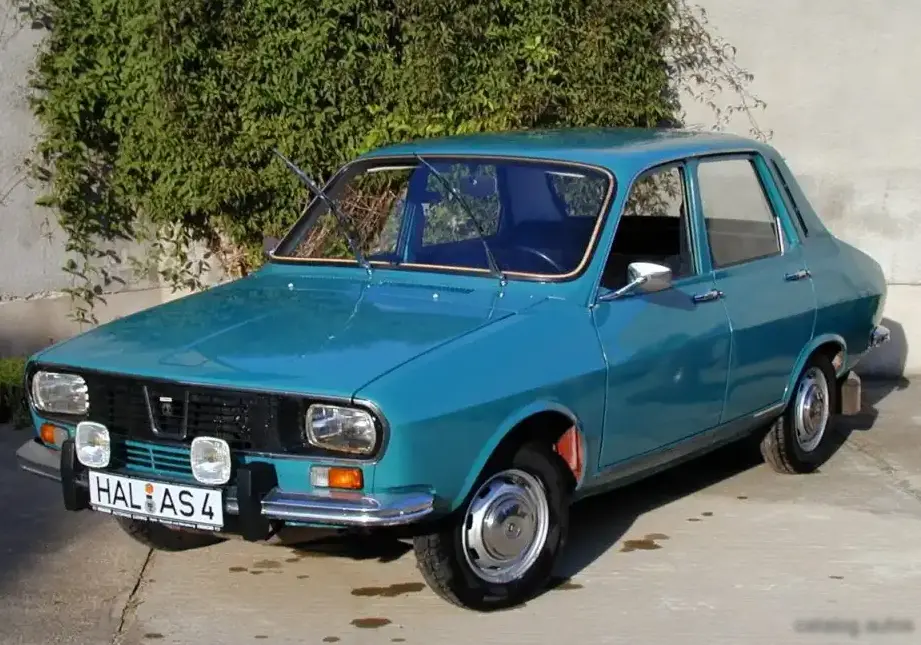
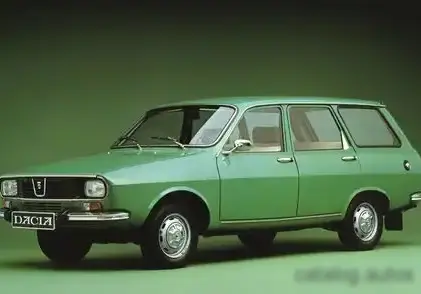
The Dacia 1300 Combi 1.3 (54 hp) was a practical and affordable station wagon produced by Dacia, a Romanian manufacturer. Introduced as an extension of the original 1300 saloon, the Combi offered significantly increased cargo capacity, making it popular with families, farmers, and small businesses. The 1300 series itself was heavily based on the Renault 12, a relationship stemming from Dacia’s licensing agreement with Renault in the late 1960s. The Combi body style was introduced relatively early in the 1300’s lifespan and remained in production alongside the saloon until the model’s eventual discontinuation in 2004, making it one of the longest-running automotive designs in history. This particular 1.3-liter, 54 hp variant represented a later evolution, often found in models produced during the 1980s and 1990s, as Dacia sought to balance affordability with increasingly stringent emissions regulations.
Powertrain & Engine Architecture
The heart of the Dacia 1300 Combi 1.3 is a 1289cc inline-four cylinder engine. This engine, designated internally with various codes depending on the production year, is a relatively simple, pushrod-operated design with two valves per cylinder. Fuel delivery is managed by a single, down-draft carburetor – typically a Solex or similar unit. The engine’s 8.5:1 compression ratio was a compromise between performance and the quality of fuel available in Romania and export markets. The engine’s transverse mounting and front-wheel drive configuration, inherited from the Renault 12, was relatively modern for its time. The 4-speed manual transmission is a robust, if unsophisticated, unit, designed for durability rather than sporty driving. The transmission’s gear ratios are geared towards maximizing fuel economy and providing adequate torque for everyday driving conditions.
Driving Characteristics
The 1.3-liter, 54 hp engine in the Dacia 1300 Combi delivers modest performance. Acceleration is leisurely, and overtaking requires careful planning. The car is best suited for relaxed cruising and urban driving. Compared to the earlier 1.4-liter versions, the 1.3 offered slightly reduced power but improved fuel economy. The 4-speed manual transmission, while not particularly refined, is easy to operate. The gear ratios are spaced to provide reasonable acceleration in lower gears and comfortable cruising at highway speeds, although maintaining higher speeds requires the engine to work relatively hard. The Combi’s suspension, while simple (typically consisting of independent front suspension and a leaf-sprung rear axle), provides a reasonably comfortable ride, even when fully loaded. The steering is light but lacks precision.
Equipment & Trim Levels
The Dacia 1300 Combi 1.3 was typically offered with a fairly basic level of equipment. Standard features generally included cloth upholstery, vinyl floor covering, and a simple dashboard with basic instrumentation (speedometer, fuel gauge, and temperature gauge). Later models might have included a basic radio as standard. Optional extras were limited but could include upgraded upholstery, a sunroof, and occasionally, more sophisticated radios. The interior was functional and durable, designed to withstand the rigors of daily use. Trim levels were not extensively differentiated; the primary variations were related to optional equipment and paint color.
Chassis & Braking
The Dacia 1300 Combi utilizes a body-on-frame construction, contributing to its robustness. The front suspension features independent coil springs and wishbones, while the rear suspension employs a leaf spring setup. This configuration prioritizes load-carrying capacity over sophisticated handling. Braking is typically accomplished with drum brakes on all four wheels, although some later models may have featured front disc brakes. The braking system is adequate for the car’s performance, but lacks the stopping power of more modern vehicles. Steering is a recirculating ball system, providing light steering effort but limited feedback.
Market Reception & Comparison
The Dacia 1300 Combi 1.3 was generally well-received in its target market – Romania and other Eastern European countries. It was praised for its affordability, practicality, and durability. Critics often noted its lack of refinement and modest performance, but these were considered acceptable trade-offs for its low price. Compared to other vehicles in its class, such as the Skoda 120 or the Yugo, the Dacia 1300 Combi offered a more spacious interior and a more robust construction. Fuel economy was reasonable for the time, although not exceptional. Reliability was generally good, thanks to the engine’s simple design and the availability of spare parts.
Legacy
The Dacia 1300 Combi 1.3, and the 1300 series as a whole, holds a significant place in Romanian automotive history. Its exceptionally long production run and widespread use made it a cultural icon. Today, the 1300 Combi is gaining popularity among classic car enthusiasts, particularly those seeking an affordable and easily maintainable vintage vehicle. The 1.3-liter engine is generally considered reliable, although age and maintenance history are crucial factors. Spare parts are still relatively available, although sourcing specific components can sometimes be challenging. The Dacia 1300 Combi 1.3 represents a bygone era of automotive simplicity and affordability, and its enduring appeal is a testament to its practical design and robust construction.