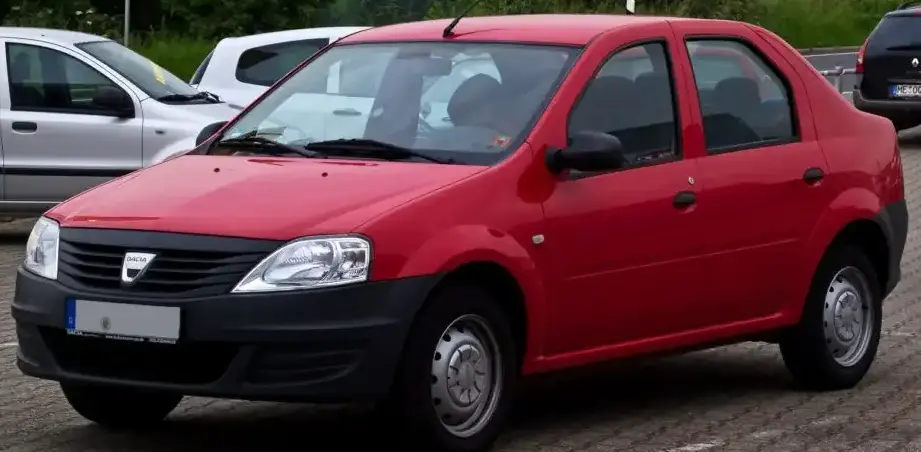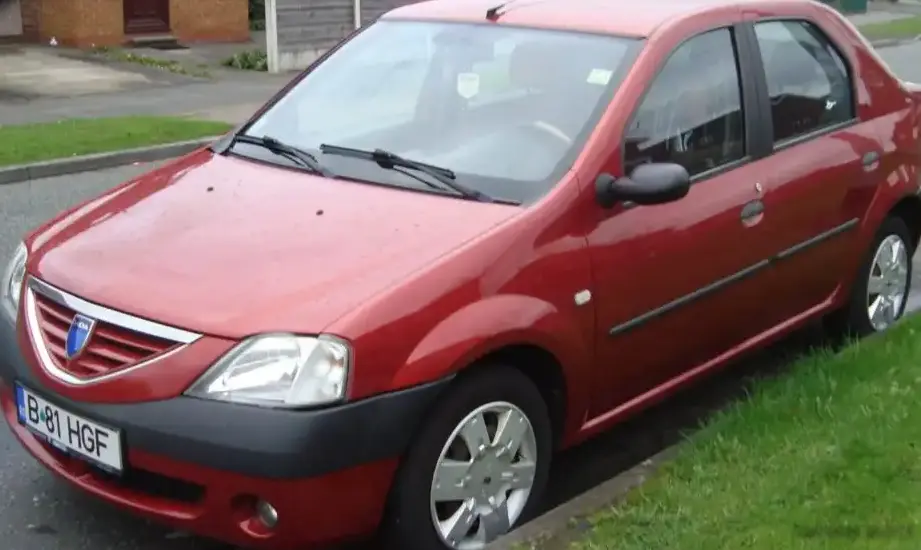
The Dacia Logan I 1.5 dCi, producing 65 horsepower, was a key variant in the initial lineup of the Logan, a sedan introduced by Romanian automaker Dacia in 2005. Positioned as the entry-level diesel offering, it played a crucial role in establishing the Logan as an affordable and practical vehicle, particularly in Eastern European and emerging markets. The Logan I, built on the X90 platform, represented Dacia’s first major foray into modern automotive design after decades of producing largely outdated models under Renault ownership. This specific 1.5 dCi 65 hp version was produced from 2005 through 2008, and was designed to appeal to budget-conscious buyers prioritizing fuel efficiency over outright performance.
Technical Specifications
| Brand | Dacia |
| Model | Logan |
| Generation | Logan I |
| Type (Engine) | 1.5 dCi (65 Hp) |
| Start of production | 2005 |
| End of production | 2008 |
| Powertrain Architecture | Internal Combustion engine |
| Body type | Sedan |
| Seats | 5 |
| Doors | 4 |
| Fuel consumption (urban) | 5.8 l/100 km (40.6 US mpg, 48.7 UK mpg, 17.2 km/l) |
| Fuel consumption (extra urban) | 4.3 l/100 km (54.7 US mpg, 65.7 UK mpg, 23.3 km/l) |
| Fuel Type | Diesel |
| Acceleration 0 – 100 km/h | 15.5 sec |
| Acceleration 0 – 62 mph | 15.5 sec |
| Acceleration 0 – 60 mph | 14.7 sec |
| Maximum speed | 155 km/h (96.31 mph) |
| Weight-to-power ratio | 16.4 kg/Hp, 61 Hp/tonne |
| Weight-to-torque ratio | 6.7 kg/Nm, 150.2 Nm/tonne |
| Power | 65 Hp @ 4000 rpm |
| Power per litre | 44.5 Hp/l |
| Torque | 160 Nm @ 2000 rpm (118.01 lb.-ft. @ 2000 rpm) |
| Engine layout | Front, Transverse |
| Engine Model/Code | K9K 790 |
| Engine displacement | 1461 cm3 (89.16 cu. in.) |
| Number of cylinders | 4 |
| Engine configuration | Inline |
| Cylinder Bore | 76 mm (2.99 in.) |
| Piston Stroke | 80.5 mm (3.17 in.) |
| Compression ratio | 18.3:1 |
| Number of valves per cylinder | 2 |
| Fuel injection system | Diesel Commonrail |
| Engine aspiration | Turbocharger, Intercooler |
| Engine oil capacity | 4.5 l (4.76 US qt | 3.96 UK qt) |
| Coolant capacity | 4.5 l (4.76 US qt | 3.96 UK qt) |
| Kerb Weight | 1065 kg (2347.92 lbs.) |
| Max. weight | 1600 kg (3527.4 lbs.) |
| Max load | 535 kg (1179.47 lbs.) |
| Trunk (boot) space – maximum | 510 l (18.01 cu. ft.) |
| Fuel tank capacity | 50 l (13.21 US gal | 11 UK gal) |
| Length | 4250 mm (167.32 in.) |
| Width | 1735 mm (68.31 in.) |
| Height | 1525 mm (60.04 in.) |
| Wheelbase | 2630 mm (103.54 in.) |
| Front track | 1466 mm (57.72 in.) |
| Rear (Back) track | 1456 mm (57.32 in.) |
| Drivetrain Architecture | The Internal combustion engine (ICE) drives the front wheels of the vehicle. |
| Drive wheel | Front wheel drive |
| Number of gears and type of gearbox | 5 gears, manual transmission |
| Front suspension | Coil spring |
| Rear suspension | Coil spring |
| Front brakes | Disc |
| Rear brakes | Drum |
| Tires size | 185/65R15 |
Powertrain & Engine Architecture
The heart of this Logan variant was the K9K 790 engine, a 1.5-liter inline-four cylinder diesel engine. This engine was developed jointly by Renault and Nissan and was widely used across various models within the Renault-Nissan-Dacia alliance. The K9K featured a common rail direct injection system, delivering fuel at high pressure directly into the combustion chamber for improved efficiency and reduced emissions. A turbocharger with an intercooler was employed to boost power output, despite the relatively small displacement. The engine utilized a two-valve per cylinder configuration (SOHC) and a compression ratio of 18.3:1, typical for diesel engines. The 65 horsepower output was achieved at 4000 rpm, while peak torque of 160 Nm (118 lb-ft) was available from 2000 rpm. The engine was paired with a five-speed manual transmission, chosen for its simplicity and cost-effectiveness. This transmission was a standard unit used across many Renault and Dacia models of the period.
Driving Characteristics
The 1.5 dCi 65 hp Logan was not designed for spirited driving. Acceleration was modest, taking approximately 15.5 seconds to reach 62 mph (100 km/h). The focus was firmly on fuel economy and practicality. The engine provided adequate torque for everyday driving, making it suitable for urban commutes and highway cruising, although overtaking required careful planning. The five-speed gearbox was well-matched to the engine’s characteristics, with relatively short gear ratios to keep the engine within its optimal torque band. Compared to higher-output versions of the Logan, such as the 1.6-liter petrol engine, the diesel offered significantly better fuel economy but lacked the same level of responsiveness. The manual transmission provided a more engaging driving experience than the later available automated manual gearbox options.
Equipment & Trim Levels
The 65 hp 1.5 dCi Logan typically represented the base trim level. Standard equipment was deliberately kept minimal to maintain affordability. This generally included power steering, central locking, and a basic audio system. Interior upholstery was typically cloth, and the dashboard featured a functional but spartan design. Optional extras included air conditioning, electric front windows, and an upgraded audio system. Safety features were also basic, with driver and passenger airbags being standard, but ABS brakes were often an optional extra depending on the market. The overall interior ambiance was focused on durability and practicality rather than luxury.
Chassis & Braking
The Logan I featured a simple but robust chassis design. Front suspension utilized coil springs and MacPherson struts, while the rear suspension employed a torsion beam axle with coil springs. This setup prioritized ride comfort and cost-effectiveness over handling precision. Brakes were disc brakes at the front and drum brakes at the rear, a common configuration for vehicles in this price segment. Stabilizer bars were typically absent on the base trim level, further emphasizing the focus on affordability. The tires were typically 185/65R15, chosen for their balance of comfort and fuel efficiency.
Market Reception & Comparison
The Dacia Logan I 1.5 dCi 65 hp was generally well-received by critics and consumers alike, particularly in markets where affordability was a primary concern. It was praised for its spacious interior, fuel efficiency, and low purchase price. However, it was also criticized for its basic interior, lack of refinement, and modest performance. Compared to other diesel-powered vehicles in its class, such as the Peugeot 206 HDi or the Fiat Punto JTD, the Logan offered more interior space but lacked the same level of driving sophistication. Its fuel economy was competitive, and its reliability proved to be generally good, making it a popular choice for fleet operators and budget-conscious buyers.
Legacy
The 1.5 dCi K9K engine proved to be remarkably durable and reliable, and many examples are still on the road today. While the Logan I has been superseded by newer generations, the first-generation model remains a popular choice in the used car market, particularly for those seeking an affordable and practical vehicle. The K9K engine, in its various iterations, continued to be used in numerous Renault, Nissan, and Dacia models for many years, cementing its reputation as a robust and fuel-efficient powerplant. The Logan I 1.5 dCi 65 hp played a significant role in establishing Dacia as a major player in the European automotive market, demonstrating that a new, affordable car could be successful even in a highly competitive landscape.