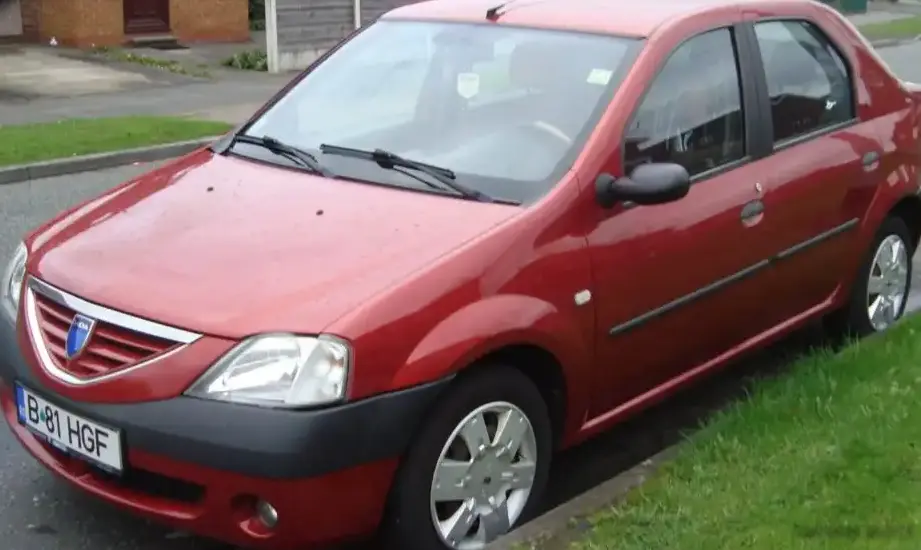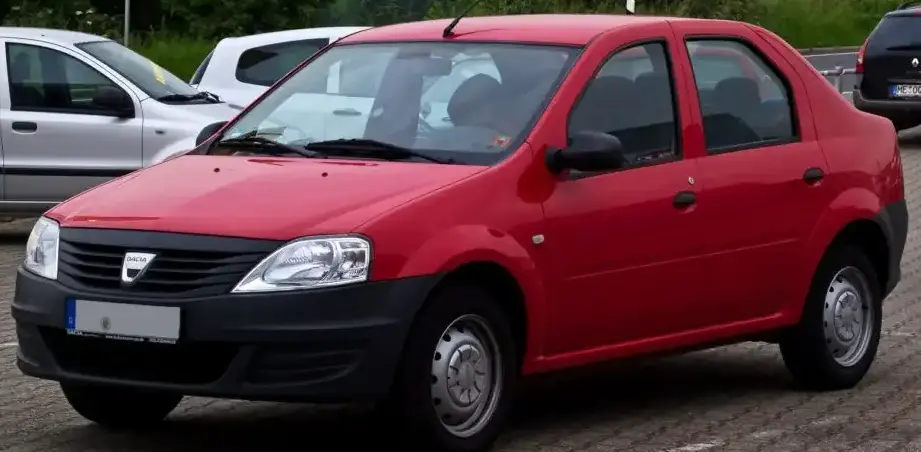
The Dacia Logan I (facelift, produced from July 2008 to December 2009) equipped with the 1.4 MPI 75 horsepower engine represents an entry-level offering within the broader Logan I range. Introduced as a budget-friendly sedan, the Logan aimed to provide practical transportation to a wider audience, particularly in emerging markets. This specific variant, with its modest power output and focus on affordability, served as the gateway to the Logan lineup, appealing to buyers prioritizing economy over performance. It was positioned below the 1.6L variants and significantly below any diesel options available at the time.
Technical Specifications
| Brand | Dacia |
| Model | Logan |
| Generation | Logan I (facelift 2008) |
| Type (Engine) | 1.4 MPI (75 Hp) |
| Start of production | July, 2008 |
| End of production | December, 2009 |
| Powertrain Architecture | Internal Combustion engine |
| Body type | Sedan |
| Seats | 5 |
| Doors | 4 |
| Fuel consumption (urban) | 9.6 l/100 km (24.5 US mpg, 29.4 UK mpg, 10.4 km/l) |
| Fuel consumption (extra urban) | 5.4 l/100 km (43.6 US mpg, 52.3 UK mpg, 18.5 km/l) |
| Fuel consumption (combined) | 7 l/100 km (33.6 US mpg, 40.4 UK mpg, 14.3 km/l) |
| CO2 emissions | 165 g/km |
| Fuel Type | Petrol (Gasoline) |
| Acceleration 0 – 100 km/h | 13 sec |
| Acceleration 0 – 62 mph | 13 sec |
| Acceleration 0 – 60 mph | 12.4 sec |
| Maximum speed | 162 km/h (100.66 mph) |
| Emission standard | Euro 4 |
| Weight-to-power ratio | 13 kg/Hp, 76.9 Hp/tonne |
| Weight-to-torque ratio | 8.7 kg/Nm, 114.9 Nm/tonne |
| Power | 75 Hp @ 5500 rpm |
| Power per litre | 54 Hp/l |
| Torque | 112 Nm @ 3000 rpm (82.61 lb.-ft. @ 3000 rpm) |
| Engine layout | Front, Transverse |
| Engine Model/Code | K7J 710 |
| Engine displacement | 1390 cm3 (84.82 cu. in.) |
| Number of cylinders | 4 |
| Engine configuration | Inline |
| Cylinder Bore | 79.5 mm (3.13 in.) |
| Piston Stroke | 70 mm (2.76 in.) |
| Compression ratio | 9.5:1 |
| Number of valves per cylinder | 2 |
| Fuel injection system | Multi-port manifold injection |
| Engine aspiration | Naturally aspirated |
| Engine oil capacity | 3.3 l (3.49 US qt | 2.9 UK qt) |
| Coolant capacity | 4.5 l (4.76 US qt | 3.96 UK qt) |
| Kerb Weight | 975 kg (2149.51 lbs.) |
| Max. weight | 1535 kg (3384.1 lbs.) |
| Max load | 560 kg (1234.59 lbs.) |
| Trunk (boot) space (minimum) | 510 l (18.01 cu. ft.) |
| Fuel tank capacity | 50 l (13.21 US gal | 11 UK gal) |
| Permitted trailer load (with brakes) | 1100 kg (2425.08 lbs.) |
| Permitted trailer load (without brakes) | 525 kg (1157.43 lbs.) |
| Length | 4290 mm (168.9 in.) |
| Width | 1740 mm (68.5 in.) |
| Width including mirrors | 1989 mm (78.31 in.) |
| Height | 1525 mm (60.04 in.) |
| Wheelbase | 2630 mm (103.54 in.) |
| Front track | 1483 mm (58.39 in.) |
| Rear track | 1470 mm (57.87 in.) |
| Front overhang | 800 mm (31.5 in.) |
| Rear overhang | 858 mm (33.78 in.) |
| Ride height (ground clearance) | 155 mm (6.1 in.) |
| Drag coefficient (Cd) | 0.36 |
| Minimum turning circle | 10.5 m (34.45 ft.) |
| Drivetrain Architecture | Front wheel drive |
| Number of gears | 5 |
| Gearbox type | Manual transmission |
| Front suspension | Independent type McPherson |
| Rear suspension | Torsion |
| Front brakes | Disc, 259 mm |
| Rear brakes | Drum, 203.2 mm |
| Assisting systems | ABS (Anti-lock braking system) |
| Steering type | Steering rack and pinion |
| Tires size | 185/65 R15 |
| Wheel rims size | 6.0J x 15 |
Powertrain & Engine Architecture
The heart of this Logan variant is the K7J 710 engine, a 1.4-liter inline-four cylinder petrol engine. This engine, developed by Renault, is known for its simplicity and robustness. It utilizes a multi-point fuel injection system, delivering fuel to each cylinder individually. The engine features a single overhead camshaft (SOHC) operating two valves per cylinder. The 75 horsepower output is achieved at 5500 rpm, while peak torque of 112 Nm (82.61 lb-ft) arrives at 3000 rpm. The engine’s relatively low compression ratio of 9.5:1 contributes to its ability to run on a wide range of fuel qualities. The engine is transversely mounted, driving the front wheels through a five-speed manual transmission. This transmission was chosen for its cost-effectiveness and reliability, although it lacks the sophistication of more modern gearboxes.
Driving Characteristics
The 1.4 MPI Logan is not a performance-oriented vehicle. Acceleration from 0 to 100 km/h (0-62 mph) takes approximately 13 seconds, and top speed is limited to 162 km/h (100.66 mph). The engine feels strained when pushed hard, particularly when overtaking or climbing hills. The five-speed manual transmission is adequately spaced, but the long shift throws and lack of precision can detract from the driving experience. Compared to the 1.6L versions, the 1.4L feels noticeably slower and less responsive. However, the 1.4L offers a smoother, more forgiving driving experience for those prioritizing ease of use over outright performance. The gear ratios are optimized for fuel efficiency rather than rapid acceleration.
Equipment & Trim Levels
The 1.4 MPI Logan typically came with a basic level of equipment. Standard features generally included power steering, central locking, and an adjustable steering column. Interior upholstery was typically cloth, and the dashboard featured a simple, functional design. Air conditioning was often an optional extra, as were power windows and a radio/CD player. The focus was on providing essential features at the lowest possible cost. Higher trim levels, available with the 1.6L engines, offered features like alloy wheels, upgraded interior trim, and more sophisticated audio systems.
Chassis & Braking
The Logan I utilizes a McPherson strut front suspension and a torsion beam rear suspension. This setup provides a comfortable ride, but handling is not particularly sharp. The front brakes are disc brakes, while the rear brakes are drum brakes. ABS (Anti-lock Braking System) was typically standard, enhancing safety. The suspension is tuned for comfort and durability, prioritizing ride quality over sporty handling. The relatively lightweight nature of the 1.4L variant helps to mitigate the limitations of the basic suspension setup.
Market Reception & Comparison
The Dacia Logan, and specifically the 1.4 MPI variant, was well-received in markets where affordability was a primary concern. Critics praised its spacious interior, practical design, and low price point. However, the engine was often criticized for its lack of power and refinement. Compared to the 1.6L versions, the 1.4L offered significantly lower fuel economy, but at a lower purchase price. The 1.4L was also more reliable than some of the more complex engine options, requiring less frequent maintenance. It was a popular choice for first-time car buyers and those seeking a no-frills, dependable vehicle.
Legacy
The 1.4 MPI Logan I remains a common sight on the used car market, particularly in Eastern Europe and other regions where it was widely sold. The K7J 710 engine is known for its durability and relatively low maintenance costs. While not a particularly exciting vehicle, the 1.4 MPI Logan provided a valuable service as an affordable and reliable means of transportation. Its simplicity and robust construction have ensured its longevity, and it continues to be a practical choice for budget-conscious buyers today. Parts availability remains good, and the engine is relatively easy to repair, making it a cost-effective option for those seeking a basic, dependable vehicle.