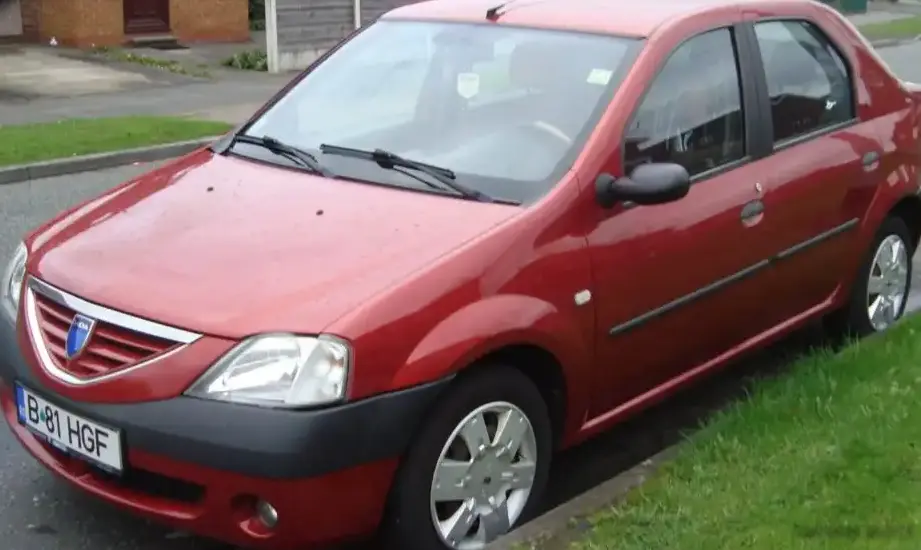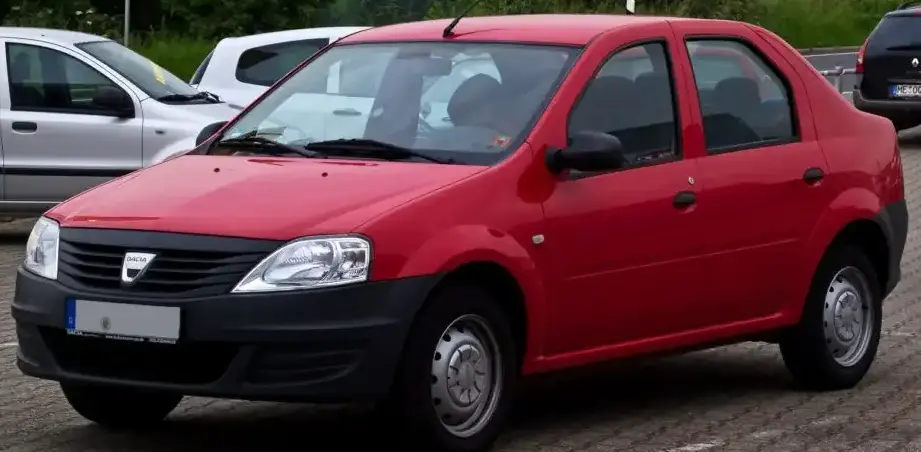
The Dacia Logan I (facelift, produced 2008-2012) 1.5 dCi 75 hp variant with a Diesel Particulate Filter (DPF) represented a key offering in Dacia’s budget-focused lineup. Introduced as part of the Logan’s mid-life refresh, this model aimed to provide economical transportation with reduced emissions, particularly appealing to European markets with increasingly stringent environmental regulations. It sat as an entry-level diesel option, positioned below the more powerful 85 hp and 105 hp versions of the 1.5 dCi engine. The Logan I, launched in 2004, was Dacia’s first new model under Renault ownership and was designed as a no-frills, practical sedan aimed at emerging markets and cost-conscious buyers. This facelifted version, and specifically this engine trim, sought to broaden its appeal with improved refinement and emissions compliance.
Technical Specifications
| Brand | Dacia |
| Model | Logan |
| Generation | Logan I (facelift 2008) |
| Type (Engine) | 1.5 dCi (75 Hp) FAP |
| Start of production | 2010 |
| End of production | 2012 |
| Powertrain Architecture | Internal Combustion engine |
| Body type | Sedan |
| Seats | 5 |
| Doors | 4 |
| Fuel consumption (urban) | 4.9 l/100 km (48 US mpg, 57.6 UK mpg, 20.4 km/l) |
| Fuel consumption (extra urban) | 3.6 l/100 km (65.3 US mpg, 78.5 UK mpg, 27.8 km/l) |
| Fuel consumption (combined) | 4 l/100 km (58.8 US mpg, 70.6 UK mpg, 25 km/l) |
| Fuel Type | Diesel |
| Acceleration 0 – 100 km/h | 14.2 sec |
| Acceleration 0 – 62 mph | 14.2 sec |
| Acceleration 0 – 60 mph | 13.5 sec |
| Maximum speed | 162 km/h (100.66 mph) |
| Weight-to-power ratio | 14.3 kg/Hp, 69.8 Hp/tonne |
| Weight-to-torque ratio | 6 kg/Nm, 167.4 Nm/tonne |
| Power | 75 Hp @ 4000 rpm |
| Power per litre | 51.3 Hp/l |
| Torque | 180 Nm @ 1750 rpm (132.76 lb.-ft. @ 1750 rpm) |
| Engine layout | Front, Transverse |
| Engine Model/Code | K9K 892 |
| Engine displacement | 1461 cm3 (89.16 cu. in.) |
| Number of cylinders | 4 |
| Engine configuration | Inline |
| Number of valves per cylinder | 2 |
| Fuel injection system | Diesel Commonrail |
| Engine aspiration | Turbocharger, Intercooler |
| Engine oil capacity | 4.5 l (4.76 US qt | 3.96 UK qt) |
| Coolant capacity | 4.5 l (4.76 US qt | 3.96 UK qt) |
| Kerb Weight | 1075 kg (2369.97 lbs.) |
| Max. weight | 1540 kg (3395.12 lbs.) |
| Max load | 465 kg (1025.15 lbs.) |
| Fuel tank capacity | 50 l (13.21 US gal | 11 UK gal) |
| Length | 4288 mm (168.82 in.) |
| Width | 1740 mm (68.5 in.) |
| Height | 1534 mm (60.39 in.) |
| Wheelbase | 2630 mm (103.54 in.) |
| Drivetrain Architecture | Front wheel drive |
| Number of gears | 5 |
| Gearbox type | Manual transmission |
| Assisting systems | ABS (Anti-lock braking system) |
| Steering type | Steering rack and pinion |
| Tires size | 185/65 R15 |
| Wheel rims size | 15 |
Powertrain & Engine Architecture
The heart of this Logan variant is the Renault-sourced K9K 892 1.5-liter inline-four diesel engine. This engine is a common sight in many Renault, Dacia, and Nissan vehicles of the period. The 75 hp output was achieved through a slightly detuned calibration of the engine management system compared to the 85 hp version. The engine utilizes a second-generation common rail direct injection system, providing precise fuel delivery for improved efficiency and reduced emissions. A turbocharger with an intercooler is employed to boost power and torque. The engine features a simple two-valve per cylinder configuration, contributing to its robustness and ease of maintenance. The inclusion of a Diesel Particulate Filter (DPF) was crucial for meeting Euro 4 emissions standards, capturing soot particles from the exhaust. This variant was exclusively offered with a five-speed manual transmission, chosen for its simplicity and cost-effectiveness. The transmission’s gear ratios were optimized for fuel economy rather than outright performance.
Driving Characteristics
The 1.5 dCi 75 hp Logan offered modest but adequate performance for everyday driving. Acceleration was leisurely, with a 0-60 mph time of around 13.5 seconds. The engine’s 180 Nm (132.76 lb-ft) of torque, available from 1750 rpm, provided sufficient pulling power for cruising and overtaking, although it required downshifting for more spirited maneuvers. Compared to the 85 hp version, the 75 hp model felt noticeably slower, particularly when fully loaded. The five-speed manual transmission had relatively long gearing, further prioritizing fuel economy. The ride quality was generally comfortable, typical of the Logan, but handling was unremarkable. The focus was firmly on practicality and affordability rather than driving enjoyment.
Equipment & Trim Levels
The 1.5 dCi 75 hp FAP Logan typically came with a basic level of equipment. Standard features generally included power steering, central locking, and an adjustable steering column. Interior upholstery was typically cloth, and the dashboard featured a functional but utilitarian design. Air conditioning was often an optional extra, as were electric windows and a radio/CD player. Higher trim levels, if available, might have added features like alloy wheels, fog lights, and upgraded interior trim. The overall emphasis was on providing essential features at the lowest possible cost.
Chassis & Braking
The Logan I utilized a relatively simple chassis design. Front suspension consisted of MacPherson struts, while the rear employed a torsion beam axle. This setup provided a comfortable ride but didn’t offer particularly engaging handling. Braking was typically accomplished with disc brakes on the front wheels and drum brakes on the rear. ABS (Anti-lock Braking System) was standard, enhancing safety. The suspension components were tuned for durability and cost-effectiveness rather than sporty performance. Stabilizer bars were often omitted or relatively thin to keep costs down.
Market Reception & Comparison
The Dacia Logan I 1.5 dCi 75 hp FAP was well-received in markets where fuel economy and affordability were paramount. Critics praised its low price point and practical design. However, the engine’s modest power output and basic interior were often noted. Compared to the 85 hp and 105 hp versions of the 1.5 dCi, the 75 hp model offered lower running costs but at the expense of performance. It was often seen as a sensible choice for urban commuters and those who prioritized fuel efficiency over driving excitement. Its fuel economy figures of around 4.0 l/100 km (58.8 US mpg) were highly competitive for its class.
Legacy
The K9K 892 engine, in its various iterations, proved to be a reliable and durable powerplant. The 75 hp version, while not the most powerful, is generally considered to be robust and relatively trouble-free. Common issues, when they arise, often relate to the DPF, which can become clogged with soot if the vehicle is primarily used for short trips. In the used car market, these Logans are still relatively affordable and represent a practical option for budget-conscious buyers. Their simplicity and low running costs continue to appeal to those seeking economical transportation. The Logan I, and this specific variant, played a significant role in establishing Dacia as a major player in the European automotive market.