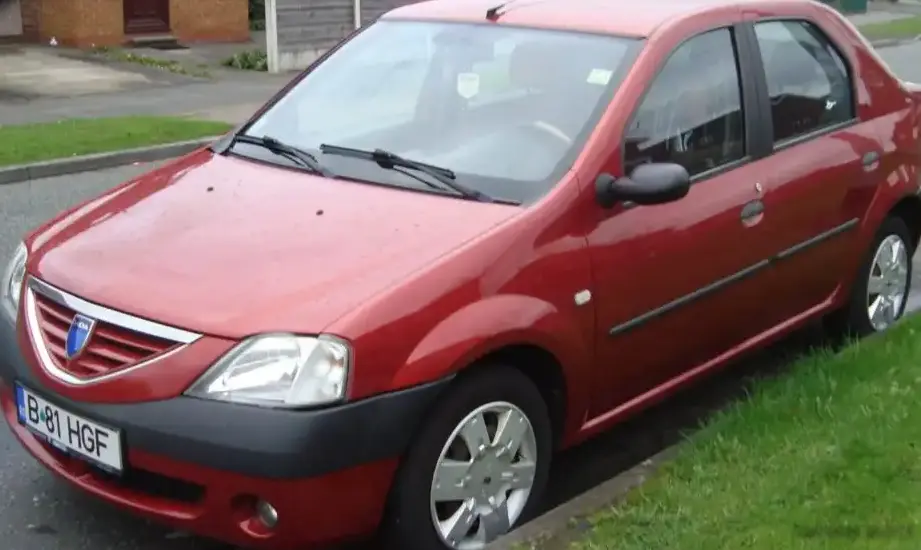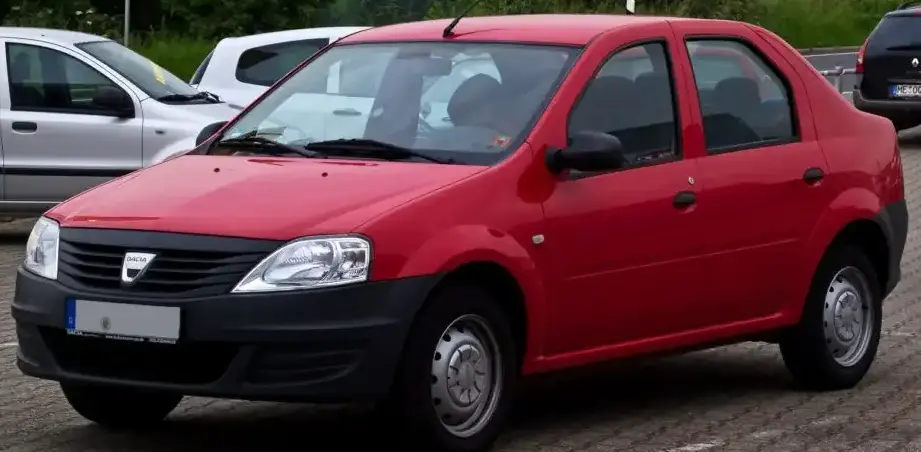
The Dacia Logan I (facelift, produced 2008-2010) equipped with the 1.6-liter 85 horsepower engine represented a core offering within the Logan range. Introduced as a budget-friendly sedan, the Logan aimed to provide practical transportation at an accessible price point, primarily targeting emerging markets and value-conscious buyers in Europe. This facelifted version, building upon the initial Logan launched in 2004, incorporated minor cosmetic and mechanical updates. The 1.6L 85 hp variant served as a mid-range option, positioned between the base 1.4-liter engine and the slightly more powerful 1.6-liter 105 hp version. It was generally offered with a five-speed manual transmission, though an automated manual gearbox (often referred to as a 2/3 pedal automatic) was also available in some markets.
Technical Specifications
| Brand | Dacia |
| Model | Logan |
| Generation | Logan I (facelift 2008) |
| Type (Engine) | 1.6 (85 Hp) |
| Start of production | 2008 |
| End of production | 2010 |
| Powertrain Architecture | Internal Combustion engine |
| Body type | Sedan |
| Seats | 5 |
| Doors | 4 |
| Fuel consumption (urban) | 9.3 l/100 km (25.3 US mpg) |
| Fuel consumption (extra urban) | 5.4 l/100 km (43.6 US mpg) |
| Fuel consumption (combined) | 6.7 l/100 km (35.1 US mpg) |
| Fuel Type | Petrol (Gasoline) |
| Acceleration 0 – 100 km/h | 12.9 sec |
| Acceleration 0 – 62 mph | 12.9 sec |
| Acceleration 0 – 60 mph | 12.3 sec |
| Maximum speed | 169 km/h (105.01 mph) |
| Weight-to-power ratio | 11.5 kg/Hp |
| Weight-to-torque ratio | 7.3 kg/Nm |
| Power | 85 Hp @ 5250 rpm |
| Torque | 135 Nm @ 3000 rpm (99.57 lb.-ft. @ 3000 rpm) |
| Engine layout | Front, Transverse |
| Engine Model/Code | K7M 710 |
| Engine displacement | 1598 cm3 (97.52 cu. in.) |
| Number of cylinders | 4 |
| Engine configuration | Inline |
| Number of valves per cylinder | 2 |
| Fuel injection system | Multi-port manifold injection |
| Engine aspiration | Naturally aspirated |
| Engine oil capacity | 3.3 l (3.49 US qt | 2.9 UK qt) |
| Coolant capacity | 4.5 l (4.76 US qt | 3.96 UK qt) |
| Kerb Weight | 980 kg (2160.53 lbs) |
| Max. weight | 1540 kg (3395.12 lbs) |
| Max load | 560 kg (1234.59 lbs) |
| Fuel tank capacity | 50 l (13.21 US gal | 11 UK gal) |
| Length | 4288 mm (168.82 in) |
| Width | 1740 mm (68.5 in) |
| Height | 1534 mm (60.39 in) |
| Wheelbase | 2630 mm (103.54 in) |
| Drivetrain Architecture | Front wheel drive |
| Number of gears | 5 |
| Type of gearbox | Manual transmission |
| Assisting systems | ABS (Anti-lock braking system) |
| Steering type | Steering rack and pinion |
| Tires size | 185/65 R15 |
| Wheel rims size | 15 |
Powertrain & Engine Architecture
The heart of this Logan variant is the Renault-sourced K7M 710 1.6-liter inline-four cylinder engine. This engine, a staple in many Renault and Dacia models, is known for its simplicity and robustness. It features a cast iron block and aluminum cylinder head, with two valves per cylinder operated by a single overhead camshaft. Fuel delivery is managed by a multi-point fuel injection system, providing adequate, though not particularly sophisticated, control over the air-fuel mixture. The K7M engine produces 85 horsepower at 5250 rpm and 135 Nm (99.57 lb-ft) of torque at 3000 rpm. The five-speed manual transmission, also a common Renault unit, is relatively straightforward in its operation. The automated manual transmission option, while offering some convenience, was often criticized for its slow and jerky shifts compared to traditional automatic transmissions.
Driving Characteristics
The 1.6L 85 hp Logan offered a practical, if uninspiring, driving experience. Acceleration was modest, taking around 12.9 seconds to reach 62 mph (100 km/h). The engine felt strained when pushed hard, particularly when fully loaded with passengers and luggage. The five-speed manual transmission helped to keep the engine in its optimal power band, but the gear ratios were spaced to prioritize fuel economy over performance. Compared to the 1.4-liter version, the 1.6L provided noticeably more power and responsiveness, making it a better choice for highway driving and overtaking. However, it lacked the punch of the 1.6L 105 hp variant, which benefited from a slightly higher compression ratio and revised engine management system.
Equipment & Trim Levels
The 1.6L 85 hp Logan typically came with a basic level of equipment. Standard features generally included power steering, central locking, and an adjustable steering column. Interior upholstery was typically cloth, and the dashboard featured a functional, but spartan, design. Air conditioning, power windows, and a radio/CD player were often available as optional extras, depending on the specific market and trim level. Higher trim levels might have included features like alloy wheels, fog lights, and a more comprehensive audio system.
Chassis & Braking
The Logan’s chassis was designed for durability and cost-effectiveness. It utilized a MacPherson strut front suspension and a torsion beam rear suspension. The rear brakes were typically drum brakes, while the front brakes were disc brakes. The suspension setup provided a comfortable ride, but handling was not particularly sharp. The steering was light and easy to use, but lacked feedback. Stabilizer bars were often included, but their effectiveness was limited by the overall suspension design.
Market Reception & Comparison
The Dacia Logan, and specifically the 1.6L 85 hp variant, was well-received in markets where affordability was a primary concern. Critics praised its spacious interior, practical design, and low price. However, it was often criticized for its basic interior materials, unrefined engine, and lackluster driving dynamics. Compared to other vehicles in its class, such as the Renault Clio or Peugeot 206, the Logan offered more interior space and a lower price, but at the expense of refinement and performance. Fuel economy was a strong point, with combined fuel consumption figures around 6.7 l/100 km (35.1 US mpg).
Legacy
The Dacia Logan I, including the 1.6L 85 hp version, played a significant role in establishing Dacia as a major player in the European automotive market. The K7M engine proved to be a reliable and durable unit, and many examples are still on the road today. While not known for its performance or luxury, the Logan offered a practical and affordable transportation solution for a wide range of buyers. In the used car market, these Logans are often sought after by those looking for a cheap and reliable vehicle, though potential buyers should be aware of the potential for age-related wear and tear. The Logan’s success paved the way for subsequent Dacia models, further solidifying the brand’s reputation for value and practicality.