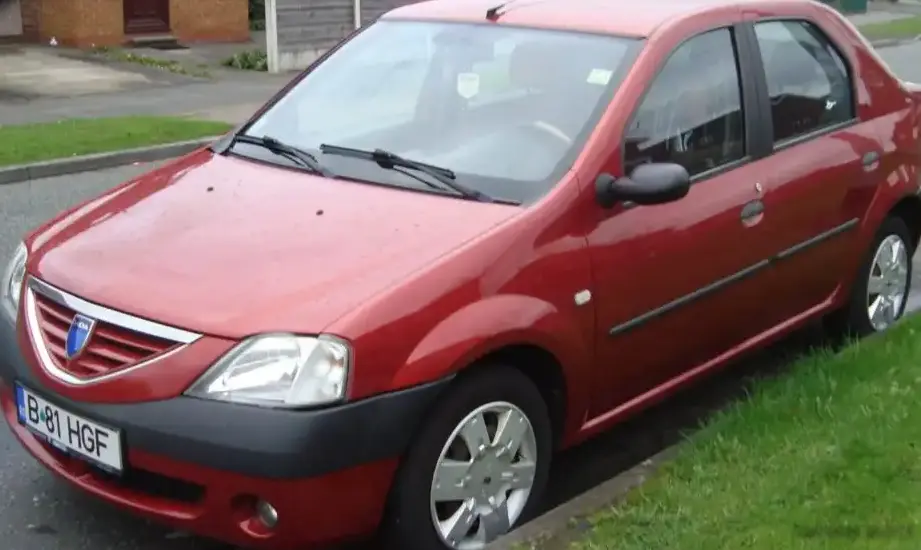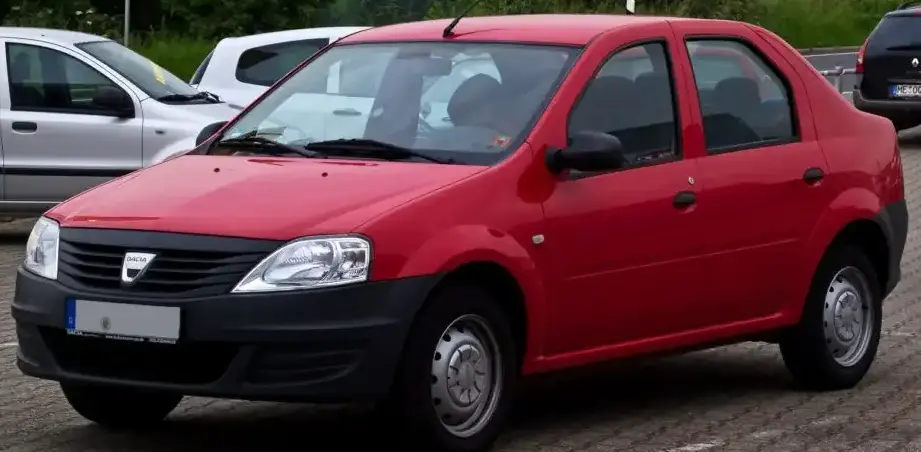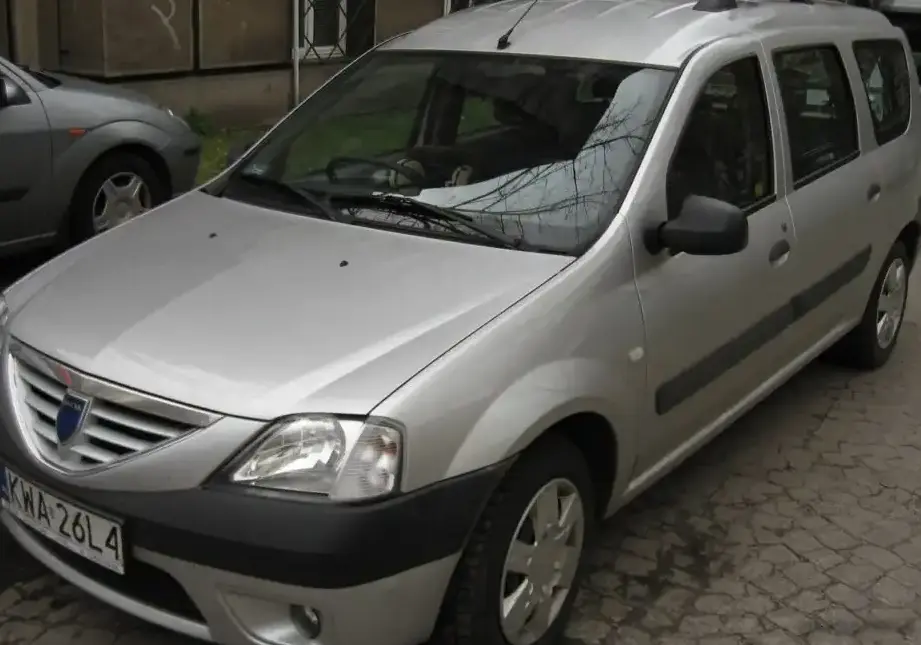
The Dacia Logan I MCV 1.6 MPI 8V (87 hp) 7-seat variant, produced between 2006 and 2008, represents a unique configuration within the first generation Logan MCV (Multi-Capacity Vehicle) lineup. Positioned as a budget-friendly family vehicle, the MCV – essentially a station wagon – aimed to provide maximum practicality and space at an accessible price point. This particular version, with its 1.6-liter engine and seven-seat capability, targeted families needing affordable transport with flexible seating arrangements. It was built upon the Dacia/Renault X90 platform, also known as the 1HX0 series, and played a significant role in establishing Dacia as a major player in the European entry-level car market.
Technical Specifications
| Brand | Dacia |
| Model | Logan |
| Generation | Logan I MCV |
| Type (Engine) | 1.6 MPI 8V (87 Hp) 7 Seats |
| Start of production | 2006 |
| End of production | 2008 |
| Powertrain Architecture | Internal Combustion engine |
| Body type | Station wagon (estate) |
| Seats | 7 |
| Doors | 5 |
| Fuel consumption (urban) | 10.6 l/100 km (22.2 US mpg, 26.6 UK mpg, 9.4 km/l) |
| Fuel consumption (extra urban) | 6.5 l/100 km (36.2 US mpg, 43.5 UK mpg, 15.4 km/l) |
| Fuel consumption (combined) | 8 l/100 km (29.4 US mpg, 35.3 UK mpg, 12.5 km/l) |
| CO2 emissions | 189 g/km |
| Fuel Type | Petrol (Gasoline) |
| Acceleration 0 – 100 km/h | 13.7 sec |
| Acceleration 0 – 62 mph | 13.7 sec |
| Acceleration 0 – 60 mph | 13 sec |
| Maximum speed | 167 km/h (103.77 mph) |
| Emission standard | Euro 4 |
| Weight-to-power ratio | 13.7 kg/Hp, 72.8 Hp/tonne |
| Weight-to-torque ratio | 9.3 kg/Nm, 107.1 Nm/tonne |
| Power | 87 Hp @ 5500 rpm |
| Power per litre | 54.4 Hp/l |
| Torque | 128 Nm @ 3000 rpm (94.41 lb.-ft. @ 3000 rpm) |
| Engine layout | Front, Transverse |
| Engine Model/Code | K7M 710 |
| Engine displacement | 1598 cm3 (97.52 cu. in.) |
| Number of cylinders | 4 |
| Engine configuration | Inline |
| Cylinder Bore | 79.5 mm (3.13 in.) |
| Piston Stroke | 80.5 mm (3.17 in.) |
| Compression ratio | 9.5:1 |
| Number of valves per cylinder | 2 |
| Fuel injection system | Multi-port manifold injection |
| Engine aspiration | Naturally aspirated |
| Valvetrain | SOHC |
| Engine oil capacity | 3.3 l (3.49 US qt | 2.9 UK qt) |
| Coolant capacity | 4.5 l (4.76 US qt | 3.96 UK qt) |
| Kerb Weight | 1195 kg (2634.52 lbs.) |
| Max. weight | 1810 kg (3990.37 lbs.) |
| Max load | 615 kg (1355.84 lbs.) |
| Trunk (boot) space – minimum | 198 l (6.99 cu. ft.) |
| Trunk (boot) space – maximum | 2350 l (82.99 cu. ft.) |
| Fuel tank capacity | 50 l (13.21 US gal | 11 UK gal) |
| Max. roof load | 80 kg (176.37 lbs.) |
| Permitted trailer load with brakes (12%) | 1300 kg (2866.01 lbs.) |
| Permitted trailer load without brakes | 635 kg (1399.94 lbs.) |
| Permitted towbar download | 75 kg (165.35 lbs.) |
| Length | 4450 mm (175.2 in.) |
| Width | 1740 mm (68.5 in.) |
| Width including mirrors | 1993 mm (78.46 in.) |
| Height | 1674 mm (65.91 in.) |
| Wheelbase | 2905 mm (114.37 in.) |
| Front track | 1481 mm (58.31 in.) |
| Rear track | 1458 mm (57.4 in.) |
| Ride height (ground clearance) | 160 mm (6.3 in.) |
| Minimum turning circle | 11.25 m (36.91 ft.) |
| Drivetrain Architecture | Front wheel drive |
| Number of gears and type of gearbox | 5 gears, manual transmission |
| Front suspension | Independent, type McPherson with coil spring and anti-roll bar |
| Rear suspension | Coil spring, Torsion |
| Front brakes | Ventilated discs, 259 mm |
| Rear brakes | Drum, 203 mm |
| Assisting systems | ABS (Anti-lock braking system) |
| Steering type | Steering rack and pinion |
| Power steering | Hydraulic |
| Tires size | 185/65 R15 |
| Wheel rims size | 6J x 15 |
Powertrain & Engine Architecture
The heart of this Logan MCV variant is the K7M 710 engine, a 1.6-liter inline-four cylinder petrol engine. This engine, a product of Renault’s engineering, is known for its simplicity and robustness. It features a single overhead camshaft (SOHC) valvetrain with two valves per cylinder. Fuel delivery is managed by a multi-point fuel injection system, providing adequate, though not exceptional, fuel atomization. The engine produces 87 horsepower at 5500 rpm and 128 Nm (94.41 lb-ft) of torque at 3000 rpm. The engine’s design prioritizes reliability and low-cost maintenance over outright performance. The transmission is a five-speed manual gearbox, chosen for its affordability and efficiency. While an automated manual transmission (AMT) was available on some Logan models, it wasn’t typically paired with the 7-seat configuration.
Driving Characteristics
The 1.6-liter engine, coupled with the five-speed manual transmission, provides adequate, but not exhilarating, performance. Acceleration from 0 to 60 mph takes around 13 seconds, and the top speed is approximately 103.77 mph. The gear ratios are tuned for economy rather than sporty driving, with a focus on providing sufficient torque for everyday driving situations. The 7-seat configuration adds weight, further impacting acceleration and overall responsiveness. Compared to the higher-output 1.6 16V engine, this 8V version feels noticeably less powerful, especially when fully loaded with passengers and cargo. The manual transmission allows for greater driver control compared to the available automated manual, but it lacks the smoothness of more modern automatic gearboxes.
Equipment & Trim Levels
The 7-seat Logan MCV 1.6 MPI 8V typically came with a basic level of equipment, reflecting its budget-oriented positioning. Standard features generally included power steering, central locking, and an anti-lock braking system (ABS). Interior upholstery was typically cloth, and the dashboard featured a functional, if somewhat spartan, design. Optional extras could include air conditioning, power windows, and a radio/CD player. The trim level was generally considered entry-level, focusing on providing essential features at the lowest possible price. The third row of seats, while offering additional passenger capacity, was best suited for occasional use or smaller passengers due to limited legroom.
Chassis & Braking
The Logan MCV utilizes a McPherson strut front suspension and a torsion beam rear suspension. This setup provides a comfortable ride, prioritizing practicality over sporty handling. The front brakes are ventilated discs, while the rear brakes are drums. This configuration was chosen to minimize cost and complexity. The suspension is tuned to handle the increased weight associated with the 7-seat configuration and the potential for carrying a full load of passengers and cargo. Stabilizer bars were included to reduce body roll during cornering, but the overall handling characteristics are best described as safe and predictable rather than dynamic.
Market Reception & Comparison
The Dacia Logan I MCV 1.6 MPI 8V 7-seat variant was generally well-received in markets where affordability was a primary concern. Critics praised its spacious interior, practical design, and low price point. However, the engine’s lack of power and the somewhat basic interior were often cited as drawbacks. Compared to other trims in the Logan lineup, such as the 1.6 16V, this version offered lower performance but greater fuel efficiency. It also provided the unique benefit of seven-seat capacity, making it a compelling option for larger families on a tight budget. Compared to competitors like the Renault Modus or Opel Meriva, the Logan MCV offered significantly more space for a similar price.
Legacy
The K7M engine, used in this Logan MCV, is known for its durability and relatively low maintenance costs. While not a high-performance engine, it has proven to be reliable over the long term. In the used car market, these Logan MCVs are often sought after by buyers looking for an affordable and practical vehicle. Common issues include wear and tear on suspension components and potential for oil leaks as the engine ages. However, parts are readily available and relatively inexpensive, making repairs straightforward. The 7-seat configuration remains a desirable feature for families, and well-maintained examples continue to provide reliable transportation.