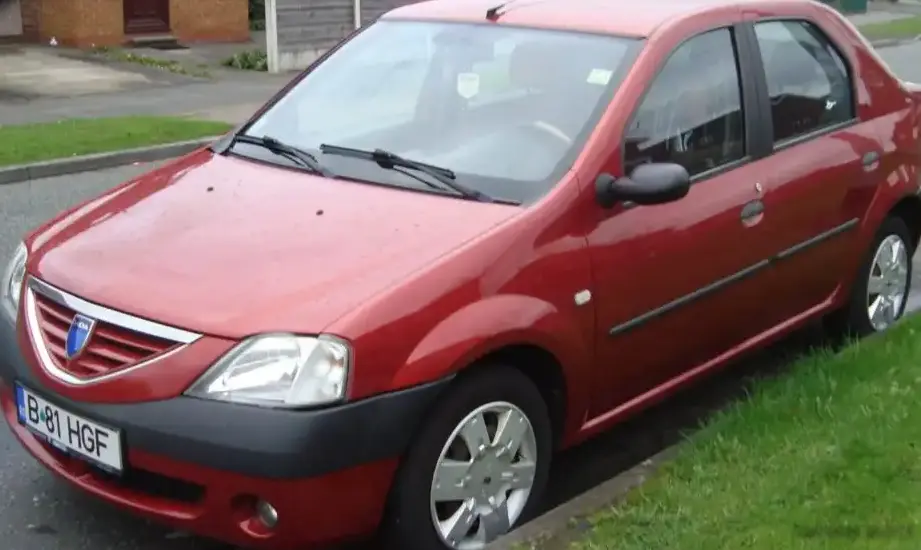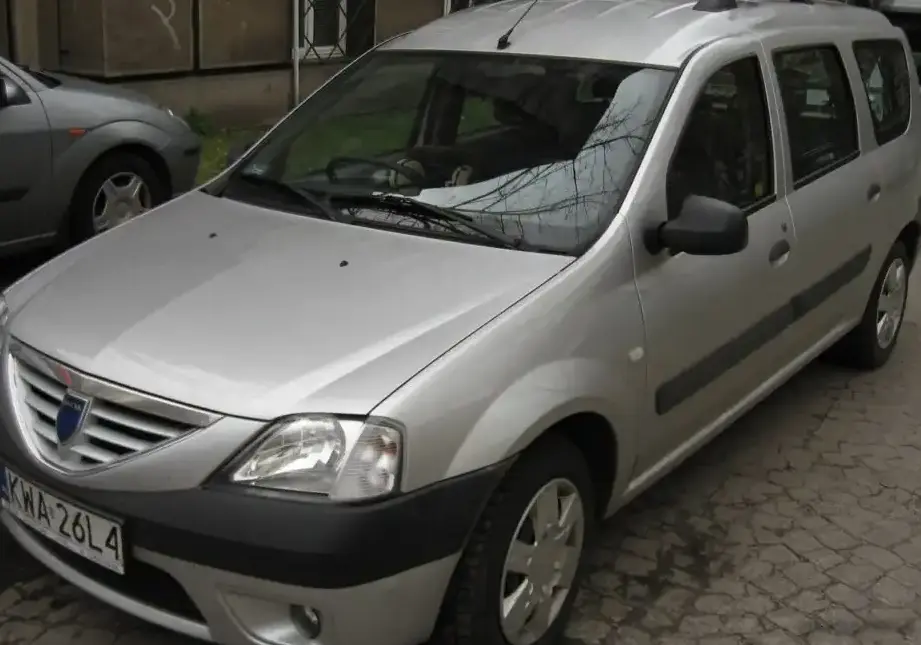
The Dacia Logan I MCV 1.6 MPI 8V (87/84 hp) LPG, produced between 2006 and 2008, represents a practical and affordable station wagon option within the first generation Logan MCV (Multi-Capacity Vehicle) lineup. Positioned as a mid-range offering, it combined a relatively economical 1.6-liter gasoline engine with the flexibility of LPG conversion, targeting budget-conscious buyers needing ample cargo space. This variant played a significant role in establishing the Logan MCV as a popular choice in Eastern European markets and as an increasingly visible budget option in Western Europe. It was built on the Dacia/Renault X90 platform, also known as the 1HX0 series.
Technical Specifications
| Brand | Dacia |
| Model | Logan |
| Generation | Logan I MCV |
| Type (Engine) | 1.6 MPI 8V (87/84 Hp) LPG |
| Start of production | 2006 |
| End of production | 2008 |
| Powertrain Architecture | Internal Combustion engine |
| Body type | Station wagon (estate) |
| Seats | 5 |
| Doors | 5 |
| Fuel consumption (economy) – urban (NEDC) | 10.4 l/100 km (22.6 US mpg, 27.2 UK mpg, 9.6 km/l) |
| Fuel consumption (economy) – urban (LPG) (NEDC) | 12 l/100 km |
| Fuel consumption (economy) – extra urban (NEDC) | 6.3 l/100 km (37.3 US mpg, 44.8 UK mpg, 15.9 km/l) |
| Fuel consumption (economy) – extra urban (LPG) (NEDC) | 6.9 l/100 km |
| Fuel consumption (economy) – combined (NEDC) | 7.8 l/100 km (30.2 US mpg, 36.2 UK mpg, 12.8 km/l) |
| Fuel consumption (economy) – combined (LPG) (NEDC) | 8.8 l/100 km |
| CO2 emissions (NEDC) | 184 g/km |
| CO2 emissions (LPG) (NEDC) | 156 g/km |
| Fuel Type | Petrol / LPG |
| Acceleration 0 – 100 km/h | 13.4 sec |
| Acceleration 0 – 62 mph | 13.4 sec |
| Acceleration 0 – 100 km/h (LPG) | 13.65 sec |
| Acceleration 0 – 60 mph (Calculated) | 12.7 sec |
| Maximum speed | 167 km/h (103.77 mph) |
| Maximum speed (LPG) | 165 km/h |
| Emission standard | Euro 4 |
| Power | 87 Hp @ 5500 rpm |
| Power per litre | 54.4 Hp/l |
| Power (LPG) | 84 Hp @ 5500 rpm |
| Power per litre (LPG) | 52.6 Hp/l |
| Torque | 128 Nm @ 3000 rpm (94.41 lb.-ft. @ 3000 rpm) |
| Torque (LPG) | 124 Nm @ 3550 rpm |
| Engine layout | Front, Transverse |
| Engine Model/Code | K7M 718 |
| Engine displacement | 1598 cm3 (97.52 cu. in.) |
| Number of cylinders | 4 |
| Engine configuration | Inline |
| Cylinder Bore | 79.5 mm (3.13 in.) |
| Piston Stroke | 80.5 mm (3.17 in.) |
| Compression ratio | 9.5:1 |
| Number of valves per cylinder | 2 |
| Fuel injection system | Multi-port manifold injection |
| Engine aspiration | Naturally aspirated |
| Valvetrain | SOHC |
| Engine oil capacity | 3.3 l (3.49 US qt, 2.9 UK qt) |
| Coolant capacity | 4.5 l (4.76 US qt, 3.96 UK qt) |
| Trunk (boot) space – minimum | 700 l (24.72 cu. ft.) |
| Trunk (boot) space – maximum | 2350 l (82.99 cu. ft.) |
| Fuel tank capacity | 50 l (13.21 US gal, 11 UK gal) |
| Fuel tank capacity (LPG) | 40 l |
| Length | 4450 mm (175.2 in.) |
| Width with mirrors folded | 1740 mm (68.5 in.) |
| Width including mirrors | 1993 mm (78.46 in.) |
| Height | 1674 mm (65.91 in.) |
| Wheelbase | 2905 mm (114.37 in.) |
| Front track | 1481 mm (58.31 in.) |
| Rear track | 1458 mm (57.4 in.) |
| Ride height (ground clearance) | 160 mm (6.3 in.) |
| Minimum turning circle | 11.25 m (36.91 ft.) |
| Drivetrain Architecture | Front wheel drive |
| Drive wheel | Front wheel drive |
| Number of gears and type of gearbox | 5 gears, manual transmission |
| Front suspension | Independent type McPherson, Transverse stabilizer |
| Rear suspension | Coil spring, Torsion |
| Front brakes | Ventilated discs, 259 mm |
| Rear brakes | Drum, 203 mm |
| Assisting systems | ABS (Anti-lock braking system) |
| Steering type | Steering rack and pinion |
| Power steering | Hydraulic Steering |
| Tires size | 185/65 R15 |
| Wheel rims size | 6J x 15 |
INTRODUCTION
The Dacia Logan I MCV 1.6 MPI 8V (87/84 hp) LPG is a five-door station wagon that was part of the first generation Logan MCV range, produced from 2006 to 2008. The MCV (Multi Capacity Vehicle) variant significantly expanded the Logan’s practicality with a substantially larger cargo area compared to the standard saloon. This particular version combined the proven 1.6-liter engine with a factory-installed or converted LPG system, offering a cost-effective alternative to pure gasoline operation, particularly appealing in regions with higher fuel prices or LPG infrastructure. It was a key model in Dacia’s strategy of providing affordable, no-frills transportation to a broad customer base.
Powertrain & Engine Architecture
The heart of this Logan MCV variant is the K7M 718 engine, a 1.598-liter inline-four cylinder gasoline engine. This engine is known for its simplicity and robustness, having been used in various Renault and Dacia models. It features a single overhead camshaft (SOHC) valvetrain with two valves per cylinder. Fuel delivery is managed by a multi-point fuel injection system. The LPG system operates in parallel with the gasoline system, allowing the driver to switch between fuels. When running on LPG, the engine produces slightly less horsepower (84 hp compared to 87 hp on gasoline) due to the lower energy density of LPG. The engine’s design prioritizes reliability and ease of maintenance over outright performance. The transmission is a five-speed manual gearbox, chosen for its affordability and efficiency.
Driving Characteristics
The 1.6-liter engine, paired with the five-speed manual transmission, delivers modest performance. Acceleration from 0-60 mph takes around 12.7 seconds, and the top speed is approximately 103.77 mph. The engine feels somewhat underpowered when fully loaded or tackling steep inclines. The gear ratios are tuned for economy rather than sporty driving, with a noticeable emphasis on maximizing fuel efficiency. The LPG system provides a noticeable reduction in running costs, but also a slight decrease in power and a marginally different engine note. Handling is predictable but not particularly engaging, reflecting the Logan MCV’s focus on practicality and affordability. The suspension is tuned for comfort, absorbing bumps reasonably well, but body roll is noticeable in corners.
Equipment & Trim Levels
The 1.6 MPI 8V LPG variant typically came with a basic level of equipment. Standard features generally included power steering, central locking, and an immobilizer. Interior upholstery was typically cloth, and the dashboard featured a functional but utilitarian design. Air conditioning was often an optional extra, as were electric windows. The trim level was generally considered entry-level to mid-range within the Logan MCV lineup. The focus was on providing essential features at a low price point, rather than luxury or advanced technology.
Chassis & Braking
The Logan MCV utilizes a McPherson strut front suspension and a torsion beam rear suspension. This setup provides a reasonable balance between ride comfort and handling. The front brakes are ventilated discs, while the rear brakes are drums. ABS (Anti-lock Braking System) was typically standard, enhancing safety. The chassis is designed for durability and cost-effectiveness, prioritizing robustness over sophisticated engineering. The relatively simple suspension and braking systems contribute to the Logan MCV’s low maintenance costs.
Market Reception & Comparison
The Dacia Logan I MCV 1.6 MPI 8V LPG was generally well-received by critics and buyers seeking an affordable and practical station wagon. It was praised for its spacious interior, large cargo capacity, and low running costs, especially when utilizing the LPG system. Compared to the standard 1.6-liter gasoline version, the LPG variant offered a significant fuel cost advantage. Compared to higher-trim Logan MCV models with more powerful engines, this variant was less refined and offered lower performance, but it appealed to a different segment of the market – those prioritizing economy and practicality above all else. It was often compared to other budget-oriented station wagons available in Eastern Europe, consistently offering a competitive price-to-space ratio.
Legacy
The K7M engine, found in this Logan MCV, has proven to be remarkably durable and reliable. Many examples are still on the road today, testament to its robust design. The LPG conversion, when properly maintained, adds to the engine’s longevity. In the used car market, the 1.6 MPI 8V LPG variant remains a popular choice for budget-conscious buyers seeking a practical and economical vehicle. While not known for its performance or refinement, its affordability, spaciousness, and proven reliability continue to make it a viable option for those needing a no-frills workhorse.