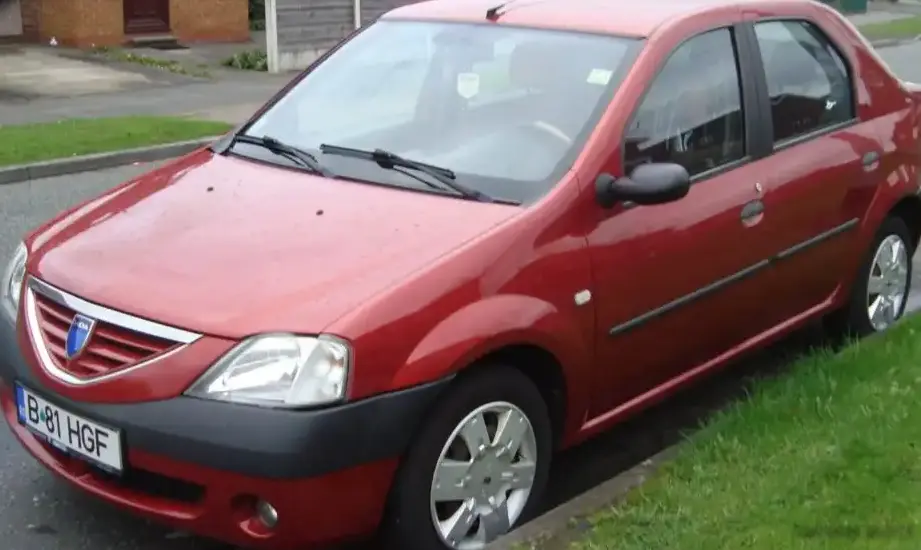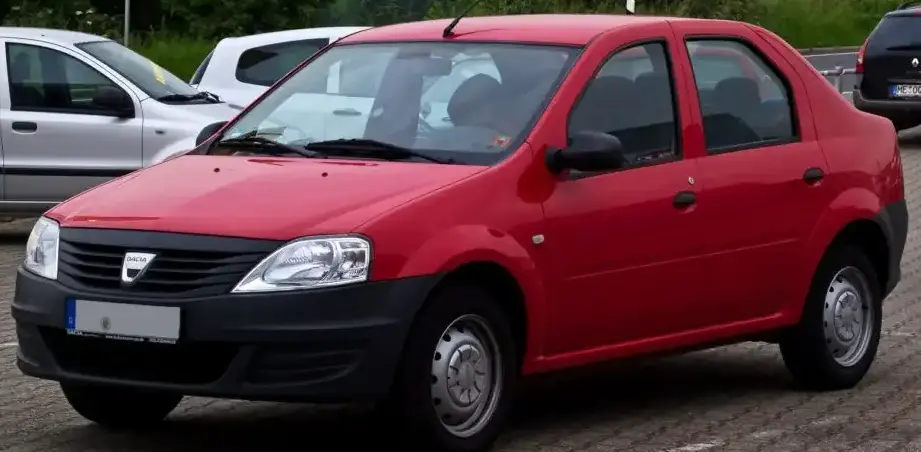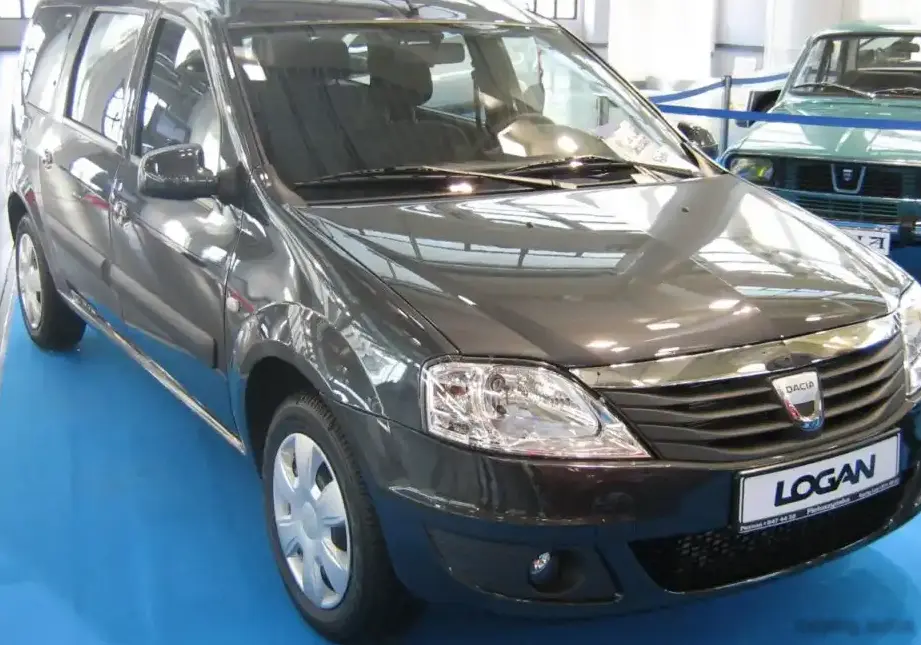
The Dacia Logan I MCV (facelift, 2008) 1.5 dCi, producing 86 horsepower, represents a significant iteration within the first generation of Dacia’s popular estate (station wagon) model. Introduced as part of a mid-cycle refresh, this variant was primarily aimed at the European market, offering an affordable and practical vehicle for families and commercial users. Production ran from 2008 to 2010, building upon the foundation laid by the original Logan MCV launched in 2007. This specific engine and transmission combination occupied the lower-mid range of the Logan MCV lineup, positioned as a fuel-efficient and economical option compared to higher-powered versions.
Technical Specifications
| Brand | Dacia |
| Model | Logan |
| Generation | Logan I MCV (facelift 2008) |
| Type (Engine) | 1.5 dCi (86 Hp) |
| Start of production | 2008 |
| End of production | 2010 |
| Powertrain Architecture | Internal Combustion engine |
| Body type | Station wagon (estate) |
| Seats | 5 |
| Doors | 5 |
| Fuel consumption (urban) | 5.9 l/100 km (39.9 US mpg, 47.9 UK mpg, 16.9 km/l) |
| Fuel consumption (extra urban) | 4.8 l/100 km (49 US mpg, 58.9 UK mpg, 20.8 km/l) |
| Fuel consumption (combined) | 5.2 l/100 km (45.2 US mpg, 54.3 UK mpg, 19.2 km/l) |
| CO2 emissions | 137 g/km |
| Fuel Type | Diesel |
| Acceleration 0 – 100 km/h | 14.3 sec |
| Acceleration 0 – 62 mph | 14.3 sec |
| Acceleration 0 – 60 mph | 13.6 sec |
| Maximum speed | 161 km/h (100.04 mph) |
| Emission standard | Euro 4 |
| Weight-to-power ratio | 14 kg/Hp, 71.4 Hp/tonne |
| Weight-to-torque ratio | 6 kg/Nm, 166 Nm/tonne |
| Power | 86 Hp @ 3750 rpm |
| Power per litre | 58.9 Hp/l |
| Torque | 200 Nm @ 1900 rpm (147.51 lb.-ft. @ 1900 rpm) |
| Engine layout | Front, Transverse |
| Engine Model/Code | K9K 796 |
| Engine displacement | 1461 cm3 (89.16 cu. in.) |
| Number of cylinders | 4 |
| Engine configuration | Inline |
| Cylinder Bore | 76 mm (2.99 in.) |
| Piston Stroke | 80.5 mm (3.17 in.) |
| Compression ratio | 17.9:1 |
| Number of valves per cylinder | 2 |
| Fuel injection system | Diesel Commonrail |
| Engine aspiration | Turbocharger, Intercooler |
| Valvetrain | SOHC |
| Engine oil capacity | 4.5 l (4.76 US qt | 3.96 UK qt) |
| Coolant capacity | 4.5 l (4.76 US qt | 3.96 UK qt) |
| Kerb Weight | 1205 kg (2656.57 lbs.) |
| Max. weight | 1806 kg (3981.55 lbs.) |
| Max load | 601 kg (1324.98 lbs.) |
| Trunk (boot) space – minimum | 700 l (24.72 cu. ft.) |
| Trunk (boot) space – maximum | 2350 l (82.99 cu. ft.) |
| Fuel tank capacity | 50 l (13.21 US gal | 11 UK gal) |
| Max. roof load | 80 kg (176.37 lbs.) |
| Permitted trailer load with brakes (12%) | 1300 kg (2866.01 lbs.) |
| Permitted trailer load without brakes | 640 kg (1410.96 lbs.) |
| Permitted towbar download | 75 kg (165.35 lbs.) |
| Length | 4473 mm (176.1 in.) |
| Width | 1740 mm (68.5 in.) |
| Width including mirrors | 1993 mm (78.46 in.) |
| Height | 1640 mm (64.57 in.) |
| Wheelbase | 2905 mm (114.37 in.) |
| Front track | 1469 mm (57.83 in.) |
| Rear track | 1466 mm (57.72 in.) |
| Front overhang | 797 mm (31.38 in.) |
| Rear overhang | 771 mm (30.35 in.) |
| Ride height (ground clearance) | 160 mm (6.3 in.) |
| Drag coefficient (Cd) | 0.36 |
| Minimum turning circle | 11.25 m (36.91 ft.) |
| Drivetrain Architecture | ICE, Front wheel drive |
| Number of gears | 5 |
| Gearbox type | Manual transmission |
| Front suspension | Independent type McPherson, Transverse stabilizer |
| Rear suspension | Coil spring, Torsion |
| Front brakes | Ventilated discs, 259 mm |
| Rear brakes | Drum, 203 mm |
| Assisting systems | ABS (Anti-lock braking system) |
| Steering type | Steering rack and pinion |
| Power steering | Hydraulic Steering |
| Tires size | 185/65 R15 |
| Wheel rims size | 6J x 15 |
Powertrain & Engine Architecture
The heart of this Logan MCV variant is the Renault-sourced 1.5 dCi engine, specifically the K9K 796 code. This engine is a four-cylinder, inline diesel utilizing a common rail direct injection system. The K9K engine family is renowned for its robustness and fuel efficiency, and was widely used across the Renault-Nissan-Dacia alliance. The 86 horsepower output is achieved at 3750 rpm, while peak torque of 200 Nm (147.51 lb.-ft.) is delivered at a relatively low 1900 rpm. This characteristic provides good low-end grunt, suitable for everyday driving and load-carrying. The engine features a single overhead camshaft (SOHC) valvetrain and is equipped with a turbocharger and intercooler to enhance performance. The transmission is a five-speed manual gearbox, chosen for its simplicity and cost-effectiveness. This combination prioritizes fuel economy over outright performance.
Driving Characteristics
The 1.5 dCi 86 hp Logan MCV offers a practical, if not particularly exciting, driving experience. Acceleration is modest, taking around 14.3 seconds to reach 62 mph (100 km/h). The focus is on usability and fuel efficiency. The engine’s torque delivery makes it reasonably capable for overtaking maneuvers, but requires downshifting for more spirited driving. The five-speed manual gearbox is well-matched to the engine’s characteristics, with gear ratios optimized for economy. Compared to higher-powered Logan MCV variants, such as those with the 1.6 petrol engine, this diesel version provides significantly better fuel economy but sacrifices acceleration and overall responsiveness. The suspension is tuned for comfort, absorbing bumps and imperfections in the road reasonably well, although it can feel somewhat soft when carrying a full load.
Equipment & Trim Levels
The 1.5 dCi 86 hp Logan MCV typically came with a basic level of equipment, reflecting its position as an affordable vehicle. Standard features generally included power steering, central locking, and an adjustable steering column. Interior upholstery was typically cloth, and the dashboard featured a functional, if somewhat utilitarian, design. Optional extras could include air conditioning, electric front windows, and a radio/CD player. Higher trim levels, if selected, might add features like alloy wheels, fog lights, and upgraded interior trim. The emphasis was on providing essential features at a competitive price point.
Chassis & Braking
The Logan MCV’s chassis is a traditional body-on-frame construction, prioritizing cost-effectiveness and durability. The front suspension utilizes an independent McPherson strut setup, while the rear employs a coil spring and torsion beam arrangement. This setup provides a reasonable balance between ride comfort and handling. Braking is handled by ventilated discs on the front wheels and drum brakes on the rear. Anti-lock Braking System (ABS) was standard, enhancing safety. The braking system is adequate for the vehicle’s weight and performance, but lacks the stopping power of more sophisticated setups found in higher-performance cars.
Market Reception & Comparison
The Dacia Logan I MCV 1.5 dCi 86 hp was well-received in the European market as a practical and affordable estate car. Critics praised its spacious interior, large boot capacity, and fuel efficiency. However, it was often criticized for its basic interior, unrefined engine noise, and modest performance. Compared to other diesel estate cars in its class, such as the Skoda Fabia Estate or Peugeot 307 SW, the Logan MCV offered a lower price point but lacked the refinement and features of its competitors. Its fuel economy was competitive, and its reliability proved to be generally good.
Legacy
The 1.5 dCi engine, in various iterations, became a mainstay of the Dacia lineup and proved to be remarkably durable. The Logan MCV, and this specific variant, established Dacia as a major player in the budget car market. Today, used examples of the 2008-2010 Logan MCV 1.5 dCi are still relatively common and represent an affordable option for those seeking a practical and economical estate car. While maintenance costs are generally low, potential buyers should be aware of the typical wear and tear associated with diesel engines, such as injector issues and turbocharger wear. The K9K engine’s reputation for reliability, however, means that well-maintained examples can provide many years of service.