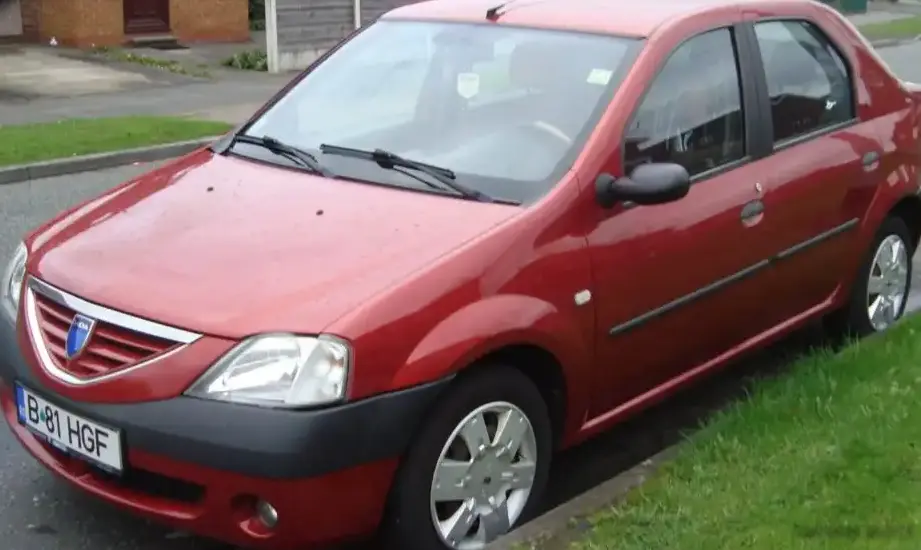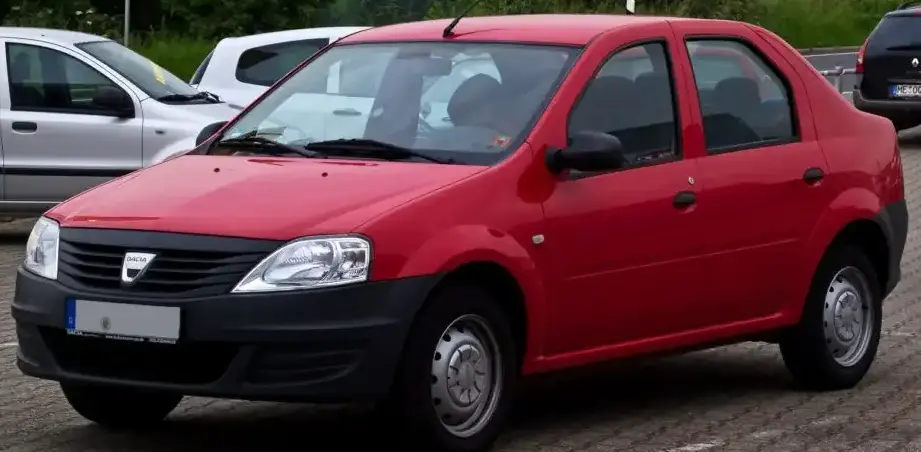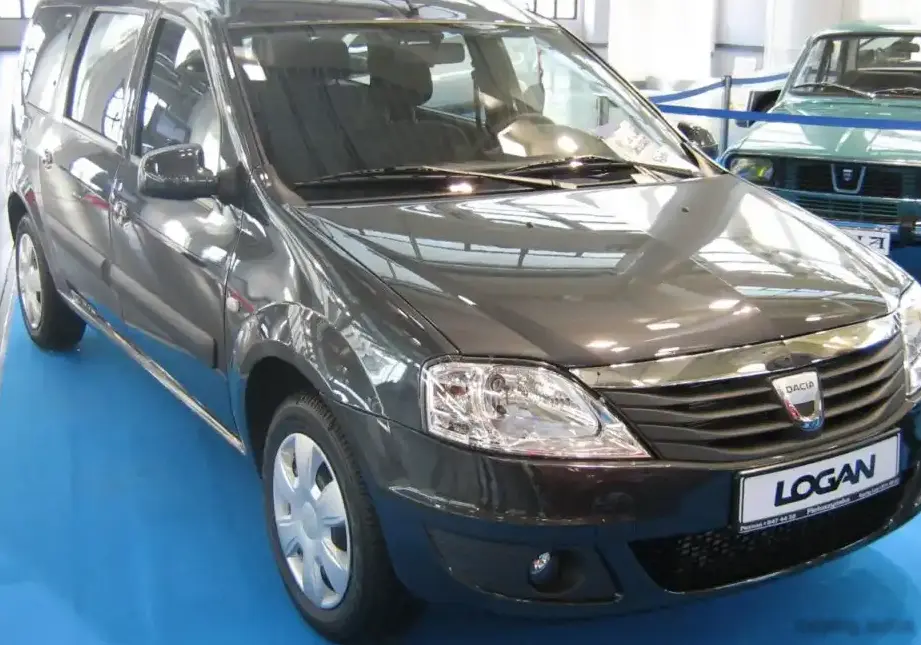
The Dacia Logan I MCV (facelift, produced 2008-2010) 1.6 16V, generating 105 horsepower, represented a significant offering in the budget-focused station wagon segment, particularly within European markets. Positioned as a mid-range trim within the Logan MCV lineup, it aimed to provide a balance between affordability, practicality, and reasonable performance. The MCV, standing for “Multi Capacity Vehicle,” was Dacia’s answer to the growing demand for affordable, spacious family cars. This facelifted version, building upon the initial Logan MCV launched in 2007, incorporated minor cosmetic and equipment upgrades. It was built on the 1HX0/A3 platform, shared with the Renault Symbol and other models within the Renault-Nissan alliance.
Technical Specifications
| Brand | Dacia |
| Model | Logan |
| Generation | Logan I MCV (facelift 2008) |
| Type (Engine) | 1.6 16V (105 Hp) |
| Start of production | 2008 |
| End of production | 2010 |
| Powertrain Architecture | Internal Combustion engine |
| Body type | Station wagon (estate) |
| Seats | 5 |
| Doors | 5 |
| Fuel consumption (urban) | 9.8 l/100 km (24 US mpg, 28.8 UK mpg, 10.2 km/l) |
| Fuel consumption (extra urban) | 6.3 l/100 km (37.3 US mpg, 44.8 UK mpg, 15.9 km/l) |
| Fuel consumption (combined) | 7.5 l/100 km (31.4 US mpg, 37.7 UK mpg, 13.3 km/l) |
| CO2 emissions | 178 g/km |
| Fuel Type | Petrol (Gasoline) |
| Acceleration 0 – 100 km/h | 11.8 sec |
| Acceleration 0 – 62 mph | 11.8 sec |
| Acceleration 0 – 60 mph | 11.2 sec |
| Maximum speed | 174 km/h (108.12 mph) |
| Emission standard | Euro 4 |
| Weight-to-power ratio | 11.4 kg/Hp, 87.9 Hp/tonne |
| Weight-to-torque ratio | 8.1 kg/Nm, 123.8 Nm/tonne |
| Power | 105 Hp @ 5750 rpm |
| Power per litre | 65.7 Hp/l |
| Torque | 148 Nm @ 3750 rpm (109.16 lb.-ft. @ 3750 rpm) |
| Engine layout | Front, Transverse |
| Engine Model/Code | K4M 690 |
| Engine displacement | 1598 cm3 (97.52 cu. in.) |
| Number of cylinders | 4 |
| Engine configuration | Inline |
| Cylinder Bore | 79.5 mm (3.13 in.) |
| Piston Stroke | 80.5 mm (3.17 in.) |
| Compression ratio | 9.8:1 |
| Number of valves per cylinder | 4 |
| Fuel injection system | Multi-port manifold injection |
| Engine aspiration | Naturally aspirated engine |
| Valvetrain | DOHC |
| Engine oil capacity | 4.8 l (5.07 US qt | 4.22 UK qt) |
| Coolant capacity | 4.5 l (4.76 US qt | 3.96 UK qt) |
| Kerb Weight | 1195 kg (2634.52 lbs.) |
| Max. weight | 1770 kg (3902.18 lbs.) |
| Max load | 575 kg (1267.66 lbs.) |
| Trunk (boot) space – minimum | 700 l (24.72 cu. ft.) |
| Trunk (boot) space – maximum | 2350 l (82.99 cu. ft.) |
| Fuel tank capacity | 50 l (13.21 US gal | 11 UK gal) |
| Max. roof load | 80 kg (176.37 lbs.) |
| Permitted trailer load with brakes (12%) | 1300 kg (2866.01 lbs.) |
| Permitted trailer load without brakes | 635 kg (1399.94 lbs.) |
| Permitted towbar download | 75 kg (165.35 lbs.) |
| Length | 4473 mm (176.1 in.) |
| Width | 1740 mm (68.5 in.) |
| Width including mirrors | 1993 mm (78.46 in.) |
| Height | 1640 mm (64.57 in.) |
| Wheelbase | 2905 mm (114.37 in.) |
| Front track | 1469 mm (57.83 in.) |
| Rear track | 1466 mm (57.72 in.) |
| Front overhang | 797 mm (31.38 in.) |
| Rear overhang | 771 mm (30.35 in.) |
| Ride height (ground clearance) | 160 mm (6.3 in.) |
| Drag coefficient (Cd) | 0.36 |
| Minimum turning circle | 11.25 m (36.91 ft.) |
| Drivetrain Architecture | The Internal combustion engine (ICE) drives the front wheels of the vehicle. |
| Drive wheel | Front wheel drive |
| Number of gears and type of gearbox | 5 gears, manual transmission |
| Front suspension | Independent type McPherson, Transverse stabilizer |
| Rear suspension | Coil spring, Torsion |
| Front brakes | Ventilated discs, 259 mm |
| Rear brakes | Drum, 203 mm |
| Assisting systems | ABS (Anti-lock braking system) |
| Steering type | Steering rack and pinion |
| Power steering | Hydraulic Steering |
| Tires size | 185/65 R15 |
| Wheel rims size | 6J x 15 |
Powertrain & Engine Architecture
The heart of this Logan MCV variant was the K4M 690 engine, a 1.6-liter inline-four cylinder gasoline engine. This engine was a staple within the Renault-Nissan alliance, known for its relative simplicity and durability. It featured a dual overhead camshaft (DOHC) valvetrain with four valves per cylinder, contributing to its respectable power output for its displacement. Fuel delivery was handled by a multi-point fuel injection system. The engine’s 9.8:1 compression ratio was a compromise between efficiency and performance. The engine was transversely mounted, driving the front wheels. The transmission was a standard five-speed manual gearbox, chosen for its cost-effectiveness and widespread availability. While an automated manual transmission was offered on some Logan models, it wasn’t typically paired with this specific engine and power output.
Driving Characteristics
The 105 hp 1.6L engine, coupled with the five-speed manual transmission, provided adequate, though not exhilarating, performance. Acceleration from 0-60 mph took around 11.2 seconds, and top speed was approximately 108 mph. The engine felt relatively responsive in the mid-range, making it suitable for everyday driving and highway cruising. However, it lacked the punch of higher-output variants. The gear ratios were tuned for fuel economy and practicality rather than outright speed. Compared to the more economical 1.5 dCi diesel versions, the 1.6L offered smoother operation and a more linear power delivery, but at the cost of fuel efficiency. The manual transmission allowed for greater driver control compared to the optional automated manual, which was often criticized for its sluggish shifts.
Equipment & Trim Levels
The 1.6 16V trim typically included basic amenities such as power steering, central locking, and an adjustable steering column. Interior upholstery was typically cloth, with a functional, if somewhat spartan, dashboard layout. Air conditioning was often an optional extra, as were features like electric windows and a radio/CD player. Safety equipment included ABS brakes and driver/passenger airbags. Higher trim levels added features like alloy wheels, fog lights, and upgraded interior trim.
Chassis & Braking
The Logan MCV utilized a McPherson strut front suspension and a torsion beam rear suspension. This setup prioritized cost-effectiveness and simplicity over sophisticated handling. The front brakes were ventilated discs, providing adequate stopping power, while the rear brakes were drums, a cost-saving measure. ABS was standard, enhancing braking performance in emergency situations. The suspension was tuned for comfort, providing a reasonably compliant ride, although it could feel somewhat unsettled on uneven surfaces.
Market Reception & Comparison
The Dacia Logan I MCV 1.6 16V was generally well-received as a practical and affordable family car. Critics praised its spacious interior, large trunk capacity, and low price point. However, the engine was sometimes criticized for being underpowered, particularly when the vehicle was fully loaded. Fuel economy was respectable, but not class-leading, falling between the more efficient diesel options and the less economical petrol variants. Compared to rivals like the Skoda Fabia Estate or Renault Clio Estate, the Logan MCV offered more interior space for a similar price, but lacked the refinement and driving dynamics of those competitors.
Legacy
The K4M engine, in its various iterations, proved to be a reliable and durable powerplant. The Logan I MCV, and this 1.6L variant specifically, established Dacia as a major player in the budget car market. Today, used examples of the Logan MCV 1.6 16V are still relatively common, and are often sought after by buyers looking for an affordable and practical vehicle. Maintenance costs are generally low, and parts availability is good. While not a performance icon, the Logan MCV 1.6 16V remains a testament to Dacia’s commitment to providing functional and affordable transportation.