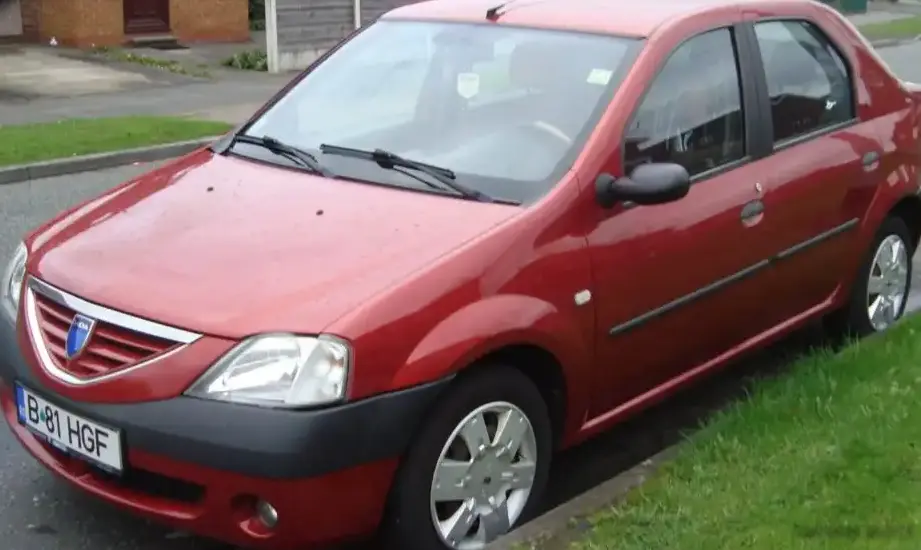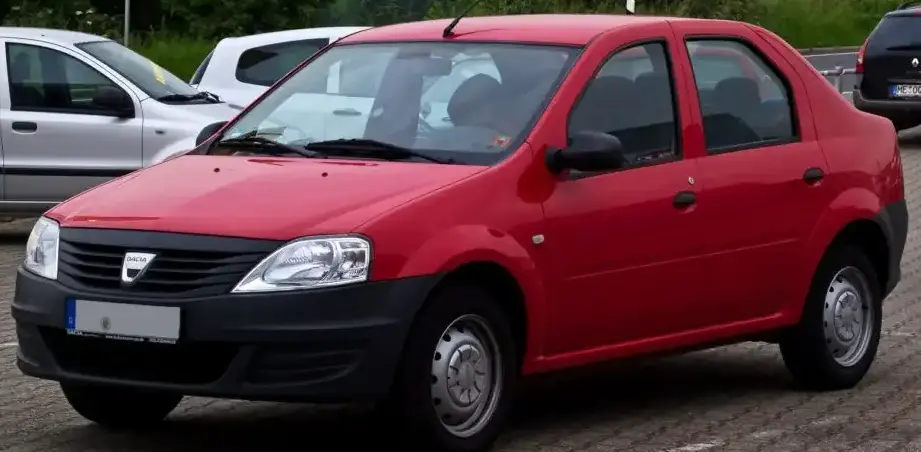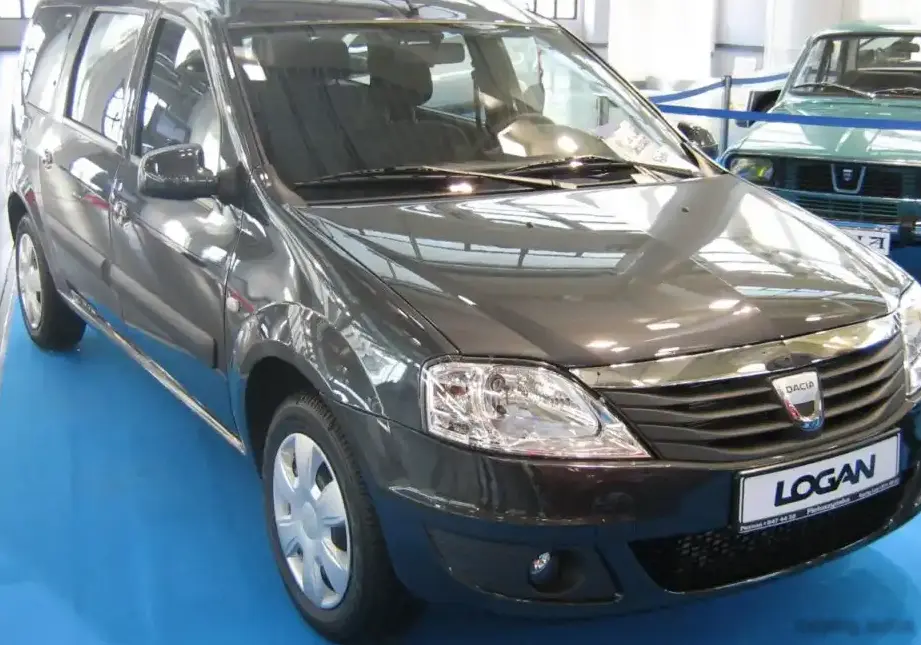
The Dacia Logan I MCV (facelift 2008) 1.6 MPI 8V, producing 84 horsepower, was a key variant within the first generation of Dacia’s popular station wagon. Introduced in 2010 and continuing through 2013, this model represented an affordable and practical option for families and commercial users, particularly in European markets. The MCV (Multi-Capacity Vehicle) body style significantly expanded the Logan’s utility, offering a substantial cargo area at a competitive price point. This specific 1.6-liter, 8-valve engine paired with a manual transmission was positioned as a mainstream offering, balancing cost-effectiveness with reasonable performance for everyday driving needs.
Technical Specifications
| Brand | Dacia |
| Model | Logan |
| Generation | Logan I MCV (facelift 2008) |
| Type (Engine) | 1.6 MPI 8V (84 Hp) |
| Start of production | 2010 |
| End of production | 2013 |
| Powertrain Architecture | Internal Combustion engine |
| Body type | Station wagon (estate) |
| Seats | 5 |
| Doors | 5 |
| Fuel consumption (urban) | 9.8 l/100 km (24 US mpg, 28.8 UK mpg, 10.2 km/l) |
| Fuel consumption (extra urban) | 6.1 l/100 km (38.6 US mpg, 46.3 UK mpg, 16.4 km/l) |
| Fuel consumption (combined) | 7.3 l/100 km (32.2 US mpg, 38.7 UK mpg, 13.7 km/l) |
| CO2 emissions | 169 g/km |
| Fuel Type | Petrol (Gasoline) |
| Acceleration 0 – 100 km/h | 14.3 sec |
| Acceleration 0 – 62 mph | 14.3 sec |
| Acceleration 0 – 60 mph | 13.6 sec |
| Maximum speed | 163 km/h (101.28 mph) |
| Emission standard | Euro 5 |
| Weight-to-power ratio | 13.9 kg/Hp, 72.1 Hp/tonne |
| Weight-to-torque ratio | 8.6 kg/Nm, 115.9 Nm/tonne |
| Power | 84 Hp @ 5250 rpm |
| Power per litre | 52.6 Hp/l |
| Torque | 135 Nm @ 3000 rpm (99.57 lb.-ft. @ 3000 rpm) |
| Engine layout | Front, Transverse |
| Engine Model/Code | K7M 800 |
| Engine displacement | 1598 cm3 (97.52 cu. in.) |
| Number of cylinders | 4 |
| Engine configuration | Inline |
| Cylinder Bore | 79.5 mm (3.13 in.) |
| Piston Stroke | 80.5 mm (3.17 in.) |
| Compression ratio | 9.5:1 |
| Number of valves per cylinder | 2 |
| Fuel injection system | Multi-port manifold injection |
| Engine aspiration | Naturally aspirated engine |
| Valvetrain | SOHC |
| Engine oil capacity | 3.3 l (3.49 US qt | 2.9 UK qt) |
| Coolant capacity | 4.5 l (4.76 US qt | 3.96 UK qt) |
| Kerb Weight | 1165 kg (2568.39 lbs.) |
| Max. weight | 1740 kg (3836.04 lbs.) |
| Max load | 575 kg (1267.66 lbs.) |
| Trunk (boot) space – minimum | 700 l (24.72 cu. ft.) |
| Trunk (boot) space – maximum | 2350 l (82.99 cu. ft.) |
| Fuel tank capacity | 50 l (13.21 US gal | 11 UK gal) |
| Max. roof load | 80 kg (176.37 lbs.) |
| Permitted trailer load with brakes (12%) | 1300 kg (2866.01 lbs.) |
| Permitted trailer load without brakes | 620 kg (1366.87 lbs.) |
| Permitted towbar download | 75 kg (165.35 lbs.) |
| Length | 4473 mm (176.1 in.) |
| Width | 1740 mm (68.5 in.) |
| Width including mirrors | 1993 mm (78.46 in.) |
| Height | 1640 mm (64.57 in.) |
| Wheelbase | 2905 mm (114.37 in.) |
| Front track | 1469 mm (57.83 in.) |
| Rear track | 1466 mm (57.72 in.) |
| Front overhang | 797 mm (31.38 in.) |
| Rear overhang | 771 mm (30.35 in.) |
| Ride height (ground clearance) | 160 mm (6.3 in.) |
| Drag coefficient (Cd) | 0.36 |
| Minimum turning circle | 11.25 m (36.91 ft.) |
| Drivetrain Architecture | The Internal combustion engine (ICE) drives the front wheels of the vehicle. |
| Drive wheel | Front wheel drive |
| Number of gears and type of gearbox | 5 gears, manual transmission |
| Front suspension | Independent type McPherson, Transverse stabilizer |
| Rear suspension | Coil spring, Torsion |
| Front brakes | Ventilated discs, 259 mm |
| Rear brakes | Drum, 203 mm |
| Assisting systems | ABS (Anti-lock braking system) |
| Steering type | Steering rack and pinion |
| Power steering | Hydraulic Steering |
| Tires size | 185/65 R15 |
| Wheel rims size | 6J x 15 |
INTRODUCTION
The Dacia Logan I MCV (facelift 2008) 1.6 MPI 8V (84 Hp) represents a practical and affordable station wagon option introduced as part of the Logan’s first generation. The facelift in 2008 brought subtle styling updates and improvements to the interior. The MCV, standing for “Multi-Capacity Vehicle,” was designed to offer significantly increased cargo space compared to the standard Logan sedan, making it a popular choice for families and small businesses. This 1.6-liter engine variant, producing 84 horsepower, was a mainstay of the lineup, offering a balance between fuel economy and usability. It was primarily sold in European markets where the demand for budget-friendly, spacious vehicles was high.
Powertrain & Engine Architecture
The heart of this Logan MCV variant is the K7M 800 engine, a 1.6-liter inline-four cylinder petrol engine. This engine is a relatively simple design, featuring an 8-valve SOHC (Single Overhead Camshaft) valvetrain and multi-port fuel injection. The K7M engine is known for its robustness and relative simplicity, making it relatively easy and inexpensive to maintain. The engine’s architecture is a traditional naturally aspirated setup, meaning it doesn’t utilize a turbocharger or supercharger. The 5-speed manual transmission was the standard offering for this trim level, providing a direct connection between the engine and the front wheels. The transmission’s gear ratios were tuned for fuel efficiency and everyday drivability rather than outright performance.
Driving Characteristics
The 84 horsepower output of the 1.6-liter engine translates to modest, but adequate, performance. Acceleration from 0-60 mph takes around 13.6 seconds, and top speed is approximately 101 mph. The engine delivers its peak torque of 135 Nm (99.57 lb-ft) at 3000 rpm, meaning that it requires a degree of engine revving to achieve optimal acceleration. Compared to higher-output versions of the Logan, or those equipped with diesel engines, this variant feels noticeably slower. However, the manual transmission allows for greater driver control and engagement. The gear ratios are spaced to prioritize fuel economy, resulting in a comfortable, if not exhilarating, driving experience. The focus is on practicality and ease of use rather than sporty handling.
Equipment & Trim Levels
The 1.6 MPI 8V variant of the Logan MCV typically came with a basic, but functional, equipment list. Standard features generally included power steering, central locking, and an adjustable steering column. Interior upholstery was typically cloth, and the dashboard featured a simple, utilitarian design. Optional extras could include air conditioning, an upgraded audio system, and electric front windows. This trim level was positioned as an entry-level or mid-range option, offering essential features at an affordable price. It was designed to appeal to buyers who prioritized practicality and value over luxury and advanced technology.
Chassis & Braking
The Logan MCV’s chassis utilizes a McPherson strut independent suspension setup at the front and a coil spring torsion beam arrangement at the rear. This suspension configuration provides a comfortable ride quality, although it’s not particularly sporty. The braking system consists of ventilated discs at the front and drum brakes at the rear. ABS (Anti-lock Braking System) was standard, enhancing safety during emergency braking situations. The relatively lightweight construction of the Logan MCV helps to offset the modest engine output, contributing to reasonable handling characteristics.
Market Reception & Comparison
The Dacia Logan I MCV 1.6 MPI 8V was generally well-received by critics as a value-for-money proposition. It was praised for its spacious interior, large cargo capacity, and low purchase price. However, the engine’s performance was often criticized as being underpowered, particularly when the vehicle was fully loaded. Compared to diesel-powered Logan MCV variants, the 1.6-liter petrol engine offered lower fuel economy and less torque. However, it was generally considered more refined and quieter than the diesel options. The petrol version also benefited from potentially lower maintenance costs due to the simpler engine design.
Legacy
The Dacia Logan I MCV 1.6 MPI 8V has proven to be a reliable and durable vehicle, with many examples still on the road today. The K7M engine is known for its longevity, and parts availability remains good. In the used car market, this variant represents an affordable and practical option for buyers seeking a spacious and dependable station wagon. While it may not offer the performance or refinement of more modern vehicles, its simplicity and robustness continue to appeal to those who prioritize value and practicality.