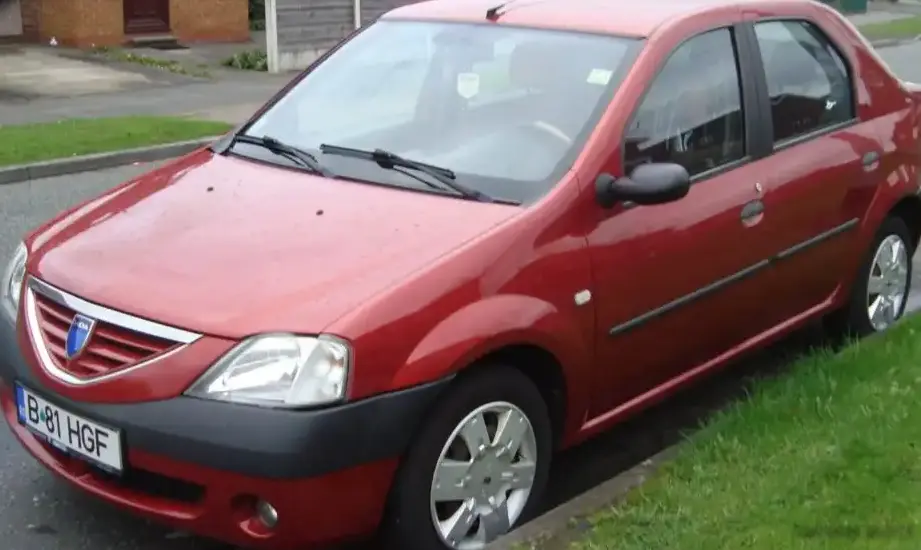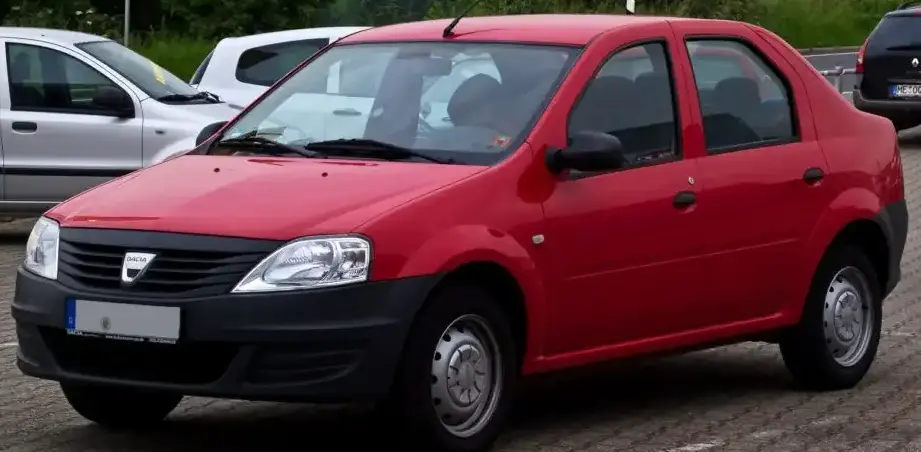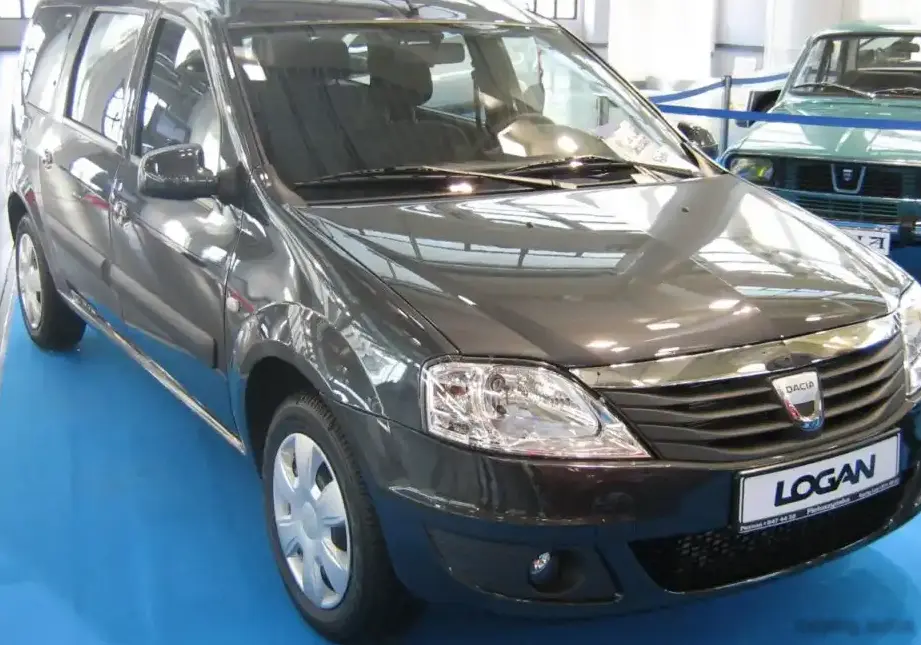
The Dacia Logan I MCV (facelift 2008) 1.6 MPI 8V (84/82 hp) LPG represents a practical and affordable station wagon option produced between 2010 and 2013. Positioned as a mid-range offering within the Logan MCV lineup, it catered to buyers seeking a spacious and economical vehicle, particularly in markets where LPG conversions were popular. This variant built upon the foundation of the original Logan MCV, a vehicle designed to provide basic transportation at a low cost, and the 2008 facelift brought subtle styling updates and improvements to interior quality. The MCV, standing for “Multi-Capacity Vehicle,” emphasized the Logan’s generous cargo space, making it a popular choice for families and commercial users.
Technical Specifications
| Brand | Dacia |
| Model | Logan |
| Generation | Logan I MCV (facelift 2008) |
| Type (Engine) | 1.6 MPI 8V (84/82 Hp) LPG |
| Start of production | 2010 year |
| End of production | 2013 year |
| Powertrain Architecture | Internal Combustion engine |
| Body type | Station wagon (estate) |
| Seats | 5 |
| Doors | 5 |
| Fuel consumption (economy) – urban (NEDC) | 9.8 l/100 km (24 US mpg, 28.8 UK mpg, 10.2 km/l) |
| Fuel consumption (economy) – urban (LPG) (NEDC) | 12.8 l/100 km |
| Fuel consumption (economy) – extra urban (NEDC) | 6.1 l/100 km (38.6 US mpg, 46.3 UK mpg, 16.4 km/l) |
| Fuel consumption (economy) – extra urban (LPG) (NEDC) | 7.7 l/100 km |
| Fuel consumption (economy) – combined (NEDC) | 7.3 l/100 km (32.2 US mpg, 38.7 UK mpg, 13.7 km/l) |
| Fuel consumption (economy) – combined (LPG) (NEDC) | 9.3 l/100 km |
| CO2 emissions (NEDC) | 169 g/km |
| CO2 emissions (LPG) (NEDC) | 149 g/km |
| Fuel Type | Petrol / LPG |
| Acceleration 0 – 100 km/h | 14.8 sec |
| Acceleration 0 – 62 mph | 14.8 sec |
| Acceleration 0 – 100 km/h (LPG) | 15.3 sec |
| Acceleration 0 – 60 mph (Calculated by Auto-Data.net) | 14.1 sec |
| Maximum speed | 160 km/h (99.42 mph) |
| Emission standard | Euro 5 |
| Weight-to-power ratio | 14.3 kg/Hp, 69.7 Hp/tonne |
| Weight-to-torque ratio | 8.9 kg/Nm, 112 Nm/tonne |
| Power | 84 Hp @ 5250 rpm |
| Power per litre | 52.6 Hp/l |
| Power (LPG) | 82 Hp @ 5250 rpm |
| Power per litre (LPG) | 51.3 Hp/l |
| Torque | 135 Nm @ 3000 rpm (99.57 lb.-ft. @ 3000 rpm) |
| Torque (LPG) | 131 Nm @ 3000 rpm |
| Engine layout | Front, Transverse |
| Engine Model/Code | K7M 818 |
| Engine displacement | 1598 cm3 (97.52 cu. in.) |
| Number of cylinders | 4 |
| Engine configuration | Inline |
| Cylinder Bore | 79.5 mm (3.13 in.) |
| Piston Stroke | 80.5 mm (3.17 in.) |
| Compression ratio | 9.5:1 |
| Number of valves per cylinder | 2 |
| Fuel injection system | Multi-port manifold injection |
| Engine aspiration | Naturally aspirated engine |
| Valvetrain | SOHC |
| Engine oil capacity | 3.3 l (3.49 US qt, 2.9 UK qt) |
| Coolant | 4.5 l (4.76 US qt, 3.96 UK qt) |
| Kerb Weight | 1205 kg (2656.57 lbs.) |
| Max. weight | 1740 kg (3836.04 lbs.) |
| Max load | 535 kg (1179.47 lbs.) |
| Trunk (boot) space – minimum | 700 l (24.72 cu. ft.) |
| Trunk (boot) space – maximum | 2350 l (82.99 cu. ft.) |
| Fuel tank capacity | 50 l (13.21 US gal, 11 UK gal) |
| Fuel tank capacity (LPG) | 42 l |
| Max. roof load | 80 kg (176.37 lbs.) |
| Permitted trailer load with brakes (12%) | 1250 kg (2755.78 lbs.) |
| Permitted trailer load without brakes | 640 kg (1410.96 lbs.) |
| Permitted towbar download | 75 kg (165.35 lbs.) |
| Length | 4473 mm (176.1 in.) |
| Width | 1740 mm (68.5 in.) |
| Width including mirrors | 1993 mm (78.46 in.) |
| Height | 1640 mm (64.57 in.) |
| Wheelbase | 2905 mm (114.37 in.) |
| Front track | 1469 mm (57.83 in.) |
| Rear (Back) track | 1466 mm (57.72 in.) |
| Front overhang | 797 mm (31.38 in.) |
| Rear overhang | 771 mm (30.35 in.) |
| Ride height (ground clearance) | 160 mm (6.3 in.) |
| Drag coefficient (Cd) | 0.36 |
| Minimum turning circle (turning diameter) | 11.25 m (36.91 ft.) |
| Drivetrain Architecture | The Internal combustion engine (ICE) drives the front wheels of the vehicle. |
| Drive wheel | Front wheel drive |
| Number of gears and type of gearbox | 5 gears, manual transmission |
| Front suspension | Independent type McPherson, Transverse stabilizer |
| Rear suspension | Coil spring, Torsion |
| Front brakes | Ventilated discs, 259 mm |
| Rear brakes | Drum, 203 mm |
| Assisting systems | ABS (Anti-lock braking system) |
| Steering type | Steering rack and pinion |
| Power steering | Hydraulic Steering |
| Tires size | 185/65 R15 |
| Wheel rims size | 6J x 15 |
INTRODUCTION
The Dacia Logan I MCV (facelift 2008) 1.6 MPI 8V (84/82 hp) LPG, produced from 2010 to 2013, was a key variant within the second-generation Logan MCV range. Built on the 1HX0/A3 platform, the MCV (Multi Capacity Vehicle) body style offered significantly increased cargo volume compared to the standard Logan sedan. The 1.6-liter engine, coupled with the option for LPG conversion, aimed to provide a balance of affordability, practicality, and reasonable running costs, particularly appealing to budget-conscious buyers and those seeking to reduce fuel expenses. This model was primarily sold in Europe and other markets where Dacia had established a presence, offering a compelling alternative to more expensive estate cars.
Powertrain & Engine Architecture
At the heart of this Logan MCV variant lies the K7M 818 1.6-liter inline-four cylinder engine. This engine, a mainstay of the Renault/Dacia lineup for many years, is known for its simplicity and robustness. It features a single overhead camshaft (SOHC) valvetrain operating two valves per cylinder. Fuel delivery is managed by a multi-port fuel injection system, providing adequate, though not exceptional, performance. The engine produces 84 horsepower at 5250 rpm and 135 Nm (99.57 lb-ft) of torque at 3000 rpm. When running on LPG, power output dips slightly to 82 hp. The engine’s design prioritizes durability and ease of maintenance over outright performance. The five-speed manual transmission was standard, offering a relatively conventional gear ratio spread designed for fuel efficiency and everyday driving.
Driving Characteristics
The 1.6-liter engine and five-speed manual transmission combination in the Logan MCV delivered modest, but adequate, performance. Acceleration from 0 to 100 km/h (0-62 mph) took approximately 14.8 seconds, and top speed was limited to 160 km/h (99.42 mph). The engine felt somewhat strained when fully loaded or climbing hills, requiring frequent downshifts to maintain momentum. Compared to higher-output versions of the Logan, such as those equipped with the 1.5 dCi diesel engine, this variant lacked significant punch. However, the LPG conversion offered a cost-effective alternative fuel source, albeit with a slight reduction in power and potentially increased fuel consumption depending on LPG prices. The suspension, tuned for comfort rather than sporty handling, provided a reasonably smooth ride, even on uneven surfaces.
Equipment & Trim Levels
The 1.6 MPI 8V LPG variant of the Logan MCV typically came with a basic level of equipment, reflecting its position as a value-oriented model. Standard features generally included power steering, central locking, and an immobilizer. Interior upholstery was typically cloth, and the dashboard featured a functional, if somewhat utilitarian, design. Optional extras, depending on the market, could include air conditioning, electric front windows, and a radio/CD player. Higher trim levels offered additional features such as alloy wheels, fog lights, and upgraded interior trim.
Chassis & Braking
The Logan MCV’s chassis was designed for practicality and cost-effectiveness. It utilized an independent McPherson strut suspension at the front and a torsion beam suspension at the rear. The front brakes were ventilated discs, providing adequate stopping power, while the rear brakes were drums. ABS (Anti-lock Braking System) was standard, enhancing safety. The suspension setup prioritized ride comfort over sharp handling, making it suitable for everyday driving and carrying loads. The relatively simple braking system was reliable but lacked the sophistication of more advanced setups found in higher-priced vehicles.
Market Reception & Comparison
The Dacia Logan I MCV 1.6 MPI 8V LPG was generally well-received by critics as a practical and affordable family car. Its spacious interior and large cargo capacity were particularly praised. However, the engine’s performance was often criticized as being underpowered, especially when the vehicle was fully loaded. Compared to the diesel-powered Logan MCV models, the 1.6-liter petrol version offered lower fuel economy but a quieter and smoother driving experience. The LPG conversion provided a cost-effective alternative fuel option, but it also reduced power output slightly. The Logan MCV consistently undercut competitors in terms of price, making it an attractive option for budget-conscious buyers.
Legacy
The K7M engine, found in this Logan MCV variant, has proven to be remarkably durable and reliable over the years. While not known for its performance, it is relatively easy and inexpensive to maintain. In the used car market, these Logan MCV models are often sought after for their practicality and affordability. The LPG conversion, if properly maintained, can provide significant fuel savings. However, potential buyers should be aware of the potential for increased maintenance costs associated with the LPG system. Overall, the Dacia Logan I MCV 1.6 MPI 8V LPG remains a viable option for those seeking a spacious, economical, and reliable station wagon.