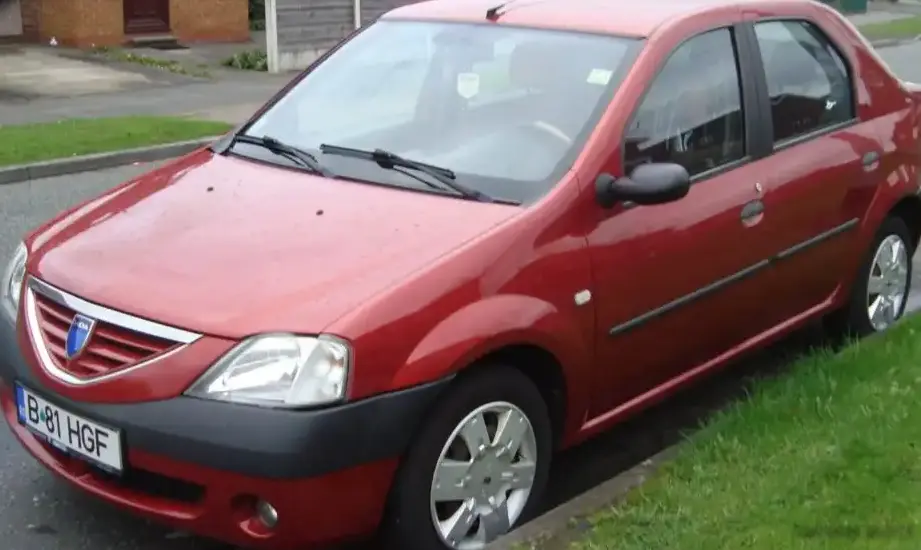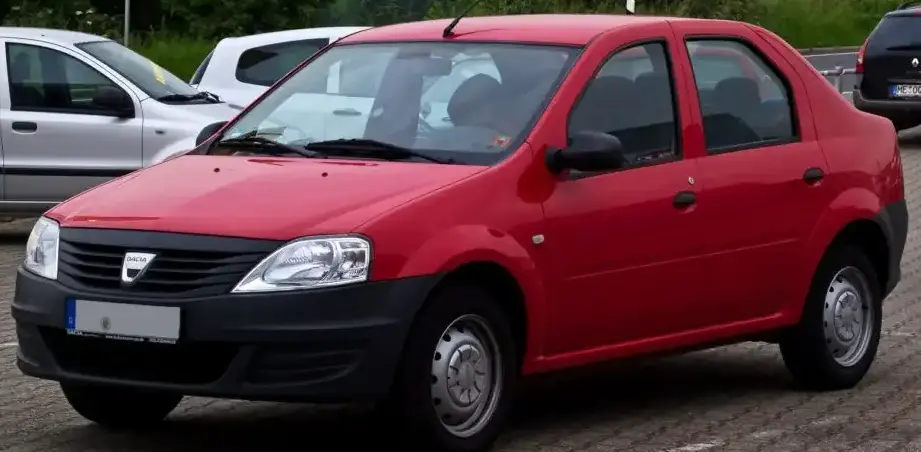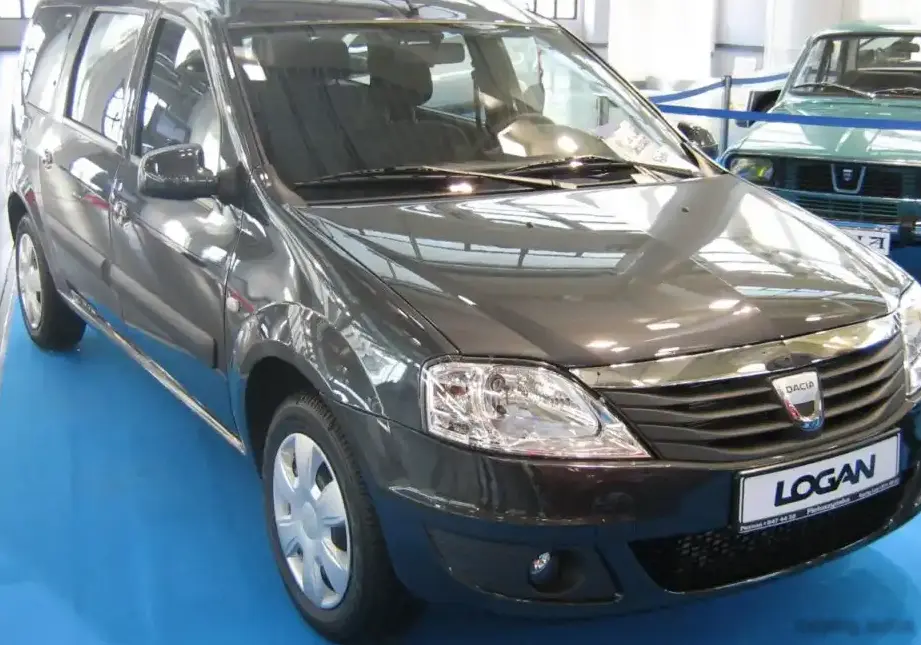
The Dacia Logan I MCV (facelift, produced 2008-2010) 1.6 MPI 8V, generating 87 horsepower, represented an important iteration within the first generation of Dacia’s popular estate car. Introduced as a more practical variant of the Logan sedan, the MCV (Multi-Capacity Vehicle) aimed to provide affordable, spacious transportation for families and businesses. The 2008 facelift brought subtle cosmetic updates and refinements to the original Logan MCV, solidifying its position as a budget-friendly workhorse in European markets. This particular 1.6-liter engine and five-speed manual transmission combination occupied a middle ground in the Logan MCV lineup, offering a balance between fuel economy and acceptable performance for everyday use.
Technical Specifications
| Brand | Dacia |
| Model | Logan |
| Generation | Logan I MCV (facelift 2008) |
| Type (Engine) | 1.6 MPI 8V (87 Hp) |
| Start of production | 2008 |
| End of production | 2010 |
| Powertrain Architecture | Internal Combustion engine |
| Body type | Station wagon (estate) |
| Seats | 5 |
| Doors | 5 |
| Fuel consumption (urban) | 10.2 l/100 km (23.1 US mpg, 27.7 UK mpg, 9.8 km/l) |
| Fuel consumption (extra urban) | 6.1 l/100 km (38.6 US mpg, 46.3 UK mpg, 16.4 km/l) |
| Fuel consumption (combined) | 7.6 l/100 km (30.9 US mpg, 37.2 UK mpg, 13.2 km/l) |
| CO2 emissions | 180 g/km |
| Fuel Type | Petrol (Gasoline) |
| Acceleration 0 – 100 km/h | 13.4 sec |
| Acceleration 0 – 62 mph | 13.4 sec |
| Acceleration 0 – 60 mph | 12.7 sec |
| Maximum speed | 167 km/h (103.77 mph) |
| Emission standard | Euro 4 |
| Weight-to-power ratio | 13.4 kg/Hp, 74.7 Hp/tonne |
| Weight-to-torque ratio | 9.1 kg/Nm, 109.9 Nm/tonne |
| Power | 87 Hp @ 5500 rpm |
| Power per litre | 54.4 Hp/l |
| Torque | 128 Nm @ 3000 rpm (94.41 lb.-ft. @ 3000 rpm) |
| Engine layout | Front, Transverse |
| Engine Model/Code | K7M 710 |
| Engine displacement | 1598 cm3 (97.52 cu. in.) |
| Number of cylinders | 4 |
| Engine configuration | Inline |
| Cylinder Bore | 79.5 mm (3.13 in.) |
| Piston Stroke | 80.5 mm (3.17 in.) |
| Compression ratio | 9.5:1 |
| Number of valves per cylinder | 2 |
| Fuel injection system | Multi-port manifold injection |
| Engine aspiration | Naturally aspirated engine |
| Valvetrain | SOHC |
| Engine oil capacity | 3.3 l (3.49 US qt | 2.9 UK qt) |
| Coolant capacity | 4.5 l (4.76 US qt | 3.96 UK qt) |
| Kerb Weight | 1165 kg (2568.39 lbs.) |
| Max. weight | 1740 kg (3836.04 lbs.) |
| Max load | 575 kg (1267.66 lbs.) |
| Trunk (boot) space – minimum | 700 l (24.72 cu. ft.) |
| Trunk (boot) space – maximum | 2350 l (82.99 cu. ft.) |
| Fuel tank capacity | 50 l (13.21 US gal | 11 UK gal) |
| Max. roof load | 80 kg (176.37 lbs.) |
| Permitted trailer load with brakes (12%) | 1300 kg (2866.01 lbs.) |
| Permitted trailer load without brakes | 620 kg (1366.87 lbs.) |
| Permitted towbar download | 75 kg (165.35 lbs.) |
| Length | 4473 mm (176.1 in.) |
| Width | 1740 mm (68.5 in.) |
| Width including mirrors | 1993 mm (78.46 in.) |
| Height | 1640 mm (64.57 in.) |
| Wheelbase | 2905 mm (114.37 in.) |
| Front track | 1469 mm (57.83 in.) |
| Rear track | 1466 mm (57.72 in.) |
| Front overhang | 797 mm (31.38 in.) |
| Rear overhang | 771 mm (30.35 in.) |
| Ride height (ground clearance) | 160 mm (6.3 in.) |
| Drag coefficient (Cd) | 0.36 |
| Minimum turning circle | 11.25 m (36.91 ft.) |
| Drivetrain Architecture | The Internal combustion engine (ICE) drives the front wheels of the vehicle. |
| Drive wheel | Front wheel drive |
| Number of gears and type of gearbox | 5 gears, manual transmission |
| Front suspension | Independent type McPherson, Transverse stabilizer |
| Rear suspension | Coil spring, Torsion |
| Front brakes | Ventilated discs, 259 mm |
| Rear brakes | Drum, 203 mm |
| Assisting systems | ABS (Anti-lock braking system) |
| Steering type | Steering rack and pinion |
| Power steering | Hydraulic Steering |
| Tires size | 185/65 R15 |
| Wheel rims size | 6J x 15 |
INTRODUCTION
The Dacia Logan I MCV 1.6 MPI 8V (87 Hp) was a key model in Dacia’s strategy to offer affordable, practical vehicles to a broad European audience. Production of this specific variant ran from 2008 to 2010, following the initial launch of the Logan MCV and incorporating the styling and minor mechanical updates of the 2008 facelift. Built on the 1HX0/A3 platform, the Logan MCV distinguished itself from the sedan version with its significantly increased cargo capacity, making it a popular choice for families, small businesses, and those needing a versatile vehicle. This 1.6-liter engine option, paired with a five-speed manual transmission, was positioned as a sensible compromise between performance and economy within the Logan MCV range.
Powertrain & Engine Architecture
The heart of this Logan MCV variant is the K7M 710 1.6-liter inline-four cylinder engine. This engine, a mainstay in Renault and Dacia vehicles for many years, is known for its simplicity and robustness. It features a single overhead camshaft (SOHC) operating two valves per cylinder. Fuel delivery is managed by a multi-port fuel injection system, providing adequate atomization for efficient combustion. The 87 horsepower output is achieved at 5500 rpm, while peak torque of 128 Nm (94.41 lb.-ft.) arrives at 3000 rpm. The five-speed manual transmission is a conventional design, offering a straightforward and reliable shifting experience. The transmission’s gear ratios are tuned for fuel efficiency and everyday drivability rather than outright performance.
Driving Characteristics
The 1.6-liter, 87 hp Logan MCV is not a performance car. Acceleration from 0-100 km/h takes approximately 13.4 seconds, and top speed is around 167 km/h (103.77 mph). However, it provides sufficient power for typical driving conditions, especially when unladen. The engine feels relatively responsive at lower speeds, making it suitable for city driving and commuting. On the highway, overtaking requires planning, and the engine can feel strained when climbing hills or carrying a full load. Compared to higher-output versions of the Logan MCV, this variant offers a more relaxed driving experience, prioritizing fuel economy over spirited acceleration. The manual transmission allows for greater driver control, but the gear ratios are spaced to maximize efficiency rather than provide aggressive downshifts.
Equipment & Trim Levels
The Logan I MCV 1.6 MPI 8V typically came with a fairly basic level of equipment, reflecting its budget-oriented positioning. Standard features generally included power steering, central locking, and an adjustable steering column. Interior upholstery was typically cloth, and the dashboard featured a functional, if somewhat utilitarian, design. Optional extras could include air conditioning, electric front windows, and a radio/CD player. Higher trim levels, if selected, might add features like alloy wheels, fog lights, and upgraded interior trim. The focus was on providing essential features at an affordable price point.
Chassis & Braking
The Logan MCV utilizes a McPherson strut independent suspension setup at the front, providing a reasonable level of ride comfort and handling. The rear suspension employs a coil spring and torsion beam arrangement, which is cost-effective and provides adequate stability. Braking duties are handled by ventilated discs at the front and drum brakes at the rear. Anti-lock Braking System (ABS) was standard, enhancing safety during emergency braking situations. The chassis is designed for durability and practicality, prioritizing load-carrying capacity over sporty handling characteristics.
Market Reception & Comparison
The Dacia Logan I MCV 1.6 MPI 8V was generally well-received by critics and consumers alike, particularly for its exceptional value for money. It offered a significantly larger cargo capacity than many of its competitors at a comparable price point. Compared to other Logan MCV trims, the 1.6-liter version provided a good balance between fuel economy and performance. The 1.5 dCi diesel variants offered superior fuel economy but came at a higher initial cost. The higher-powered 1.6-liter engine provided more performance but consumed more fuel. Reliability was generally considered good, although the basic interior and lack of advanced features were sometimes criticized.
Legacy
The Dacia Logan I MCV 1.6 MPI 8V has proven to be a durable and reliable vehicle, and many examples are still on the road today. The K7M engine is known for its longevity, and with regular maintenance, it can provide years of dependable service. In the used car market, these Logan MCVs are highly sought after by those looking for an affordable and practical estate car. While not a particularly exciting vehicle to drive, its simplicity, spaciousness, and low running costs make it a compelling option for budget-conscious buyers. The Logan MCV, and this 1.6 MPI variant in particular, played a significant role in establishing Dacia as a major player in the European automotive market.