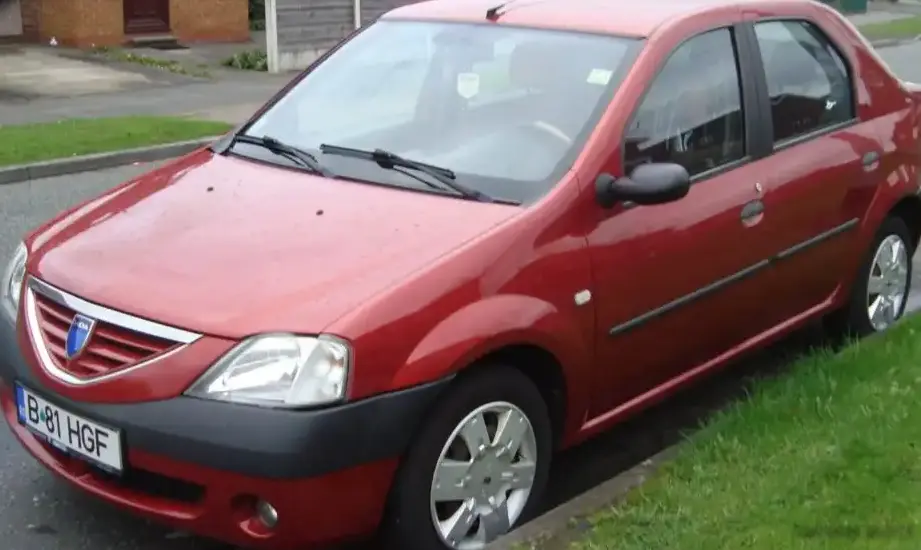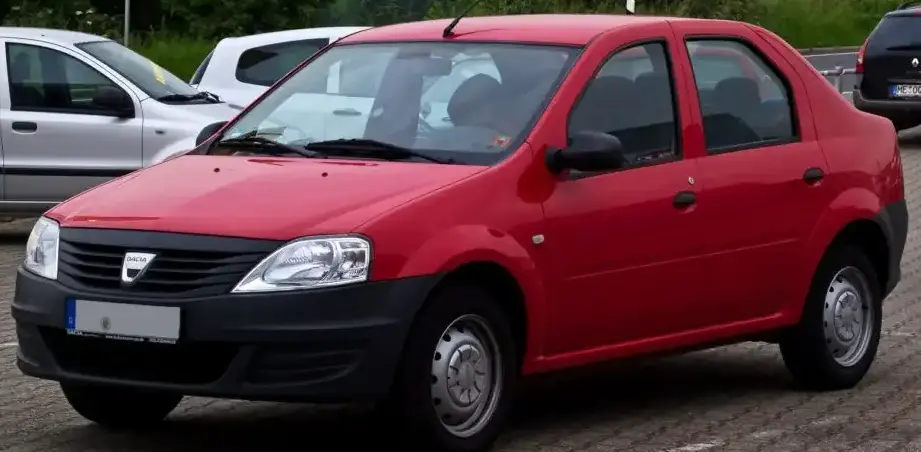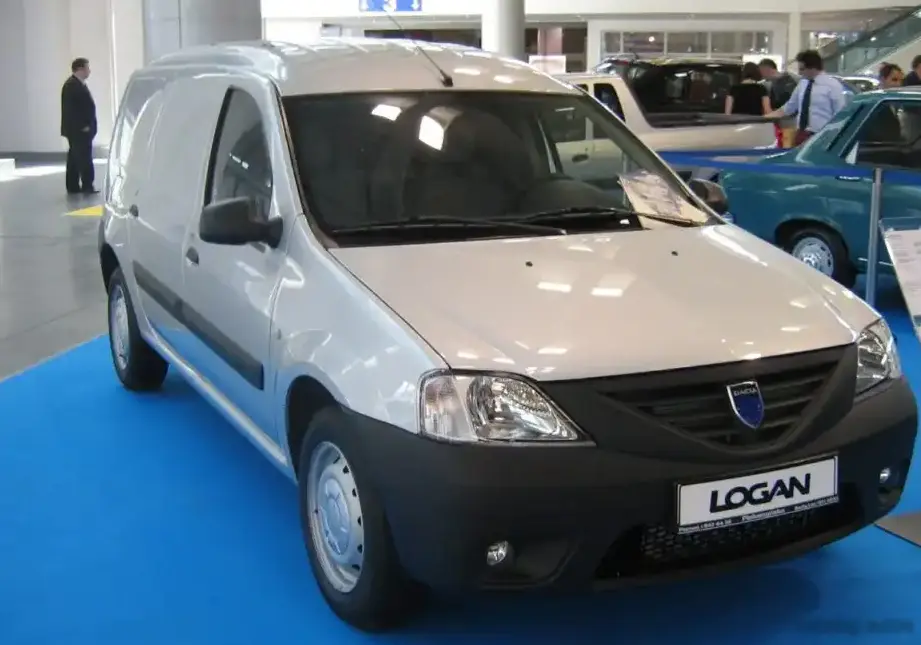
The Dacia Logan I Van 1.4 (75 hp) was a practical and affordable commercial vehicle produced between January 2007 and August 2012. Positioned as the entry-level variant of the Logan Van range, it catered to businesses and individuals needing a spacious, no-frills cargo carrier. Based on the first generation Logan (Logan I), which itself utilized the shared 1HX0/A3 platform developed under Renault’s influence, the Van version offered a significantly expanded cargo area compared to the passenger Logan sedan. This model was primarily sold in European markets, where its low purchase price and robust construction made it a popular choice for small businesses, tradespeople, and fleet operators.
Technical Specifications
| Brand | Dacia |
| Model | Logan |
| Generation | Logan I Van |
| Type (Engine) | 1.4 (75 Hp) |
| Start of production | January, 2007 |
| End of production | August, 2012 |
| Powertrain Architecture | Internal Combustion engine |
| Body type | Station wagon (estate) |
| Doors | 5 |
| Fuel consumption (urban) | 10 l/100 km (23.5 US mpg) |
| Fuel consumption (extra urban) | 6.2 l/100 km (37.9 US mpg) |
| Fuel consumption (combined) | 7.6 l/100 km (30.9 US mpg) |
| Fuel Type | Petrol (Gasoline) |
| Acceleration 0 – 100 km/h | 15.6 sec |
| Acceleration 0 – 62 mph | 15.6 sec |
| Acceleration 0 – 60 mph | 14.8 sec |
| Maximum speed | 155 km/h (96.31 mph) |
| Emission standard | Euro 4 |
| Weight-to-power ratio | 16.5 kg/Hp |
| Weight-to-torque ratio | 11.1 kg/Nm |
| Power | 75 Hp @ 5500 rpm |
| Torque | 112 Nm @ 3000 rpm (82.61 lb.-ft. @ 3000 rpm) |
| Engine layout | Front, Transverse |
| Engine Model/Code | K7J 710 |
| Engine displacement | 1390 cm3 (84.82 cu. in.) |
| Number of cylinders | 4 |
| Engine configuration | Inline |
| Cylinder Bore | 79.5 mm (3.13 in.) |
| Piston Stroke | 70 mm (2.76 in.) |
| Compression ratio | 9.5:1 |
| Number of valves per cylinder | 2 |
| Fuel injection system | Multi-port manifold injection |
| Engine aspiration | Naturally aspirated engine |
| Valvetrain | OHC |
| Engine oil capacity | 3.3 l (3.49 US qt | 2.9 UK qt) |
| Coolant capacity | 4.5 l (4.76 US qt | 3.96 UK qt) |
| Kerb Weight | 1240 kg (2733.73 lbs.) |
| Max. weight | 1740 kg (3836.04 lbs.) |
| Max load | 500 kg (1102.31 lbs.) |
| Trunk (boot) space – maximum | 2350 l (82.99 cu. ft.) |
| Fuel tank capacity | 50 l (13.21 US gal | 11 UK gal) |
| Length | 4450 mm (175.2 in.) |
| Width | 1740 mm (68.5 in.) |
| Height | 1636 mm (64.41 in.) |
| Wheelbase | 2900 mm (114.17 in.) |
| Drivetrain Architecture | The Internal combustion engine (ICE) drives the front wheels of the vehicle. |
| Drive wheel | Front wheel drive |
| Number of gears and type of gearbox | 5 gears, manual transmission |
| Front brakes | Disc |
| Rear brakes | Drum |
| Assisting systems | ABS (Anti-lock braking system) |
| Tires size | 185/65 R15 |
Powertrain & Engine Architecture
The Dacia Logan I Van 1.4 utilized the K7J 710 engine, a 1.4-liter inline-four cylinder gasoline engine. This engine was a mainstay in many Renault and Dacia models of the period. It featured a single overhead camshaft (OHC) valvetrain with two valves per cylinder. Fuel delivery was handled by a multi-point fuel injection system, providing adequate, though not exceptional, combustion control. The engine produced 75 horsepower at 5500 rpm and 112 Nm (82.61 lb-ft) of torque at 3000 rpm. The engine’s relatively simple design prioritized reliability and low manufacturing costs over outright performance. The engine was paired with a five-speed manual transmission, chosen for its affordability and efficiency. An automatic transmission was not offered with this engine variant.
Driving Characteristics
The 1.4-liter engine in the Logan Van provided adequate power for urban and suburban driving, but performance was noticeably limited when fully loaded or traveling on inclines. Acceleration from 0 to 100 km/h (0-62 mph) took approximately 15.6 seconds, and the top speed was limited to 155 km/h (96 mph). The five-speed manual transmission offered a reasonable spread of gears, but the engine lacked the low-end torque found in larger displacement engines, requiring frequent downshifts to maintain speed. Compared to the 1.6-liter versions of the Logan, the 1.4 felt significantly less responsive. The focus was on fuel economy and practicality rather than spirited driving.
Equipment & Trim Levels
The Logan I Van 1.4 was deliberately spartan in its equipment levels, reflecting its commercial vehicle focus. Standard features typically included a basic dashboard, cloth upholstery, and steel wheels. Power steering was often an optional extra. Air conditioning, central locking, and electric windows were generally not standard, but could be added as options. The interior was designed for durability and ease of cleaning, with hard-wearing plastics and minimal ornamentation. The primary emphasis was on providing a functional and robust workspace.
Chassis & Braking
The Logan I Van utilized a simple yet effective chassis design. The front suspension consisted of MacPherson struts, while the rear suspension employed a torsion beam axle. This setup provided a comfortable ride, particularly when the vehicle was lightly loaded. The braking system featured disc brakes on the front wheels and drum brakes on the rear. Anti-lock Braking System (ABS) was included as standard, enhancing safety. The relatively light weight of the 1.4-liter variant helped to compensate for the limited braking power.
Market Reception & Comparison
The Dacia Logan I Van 1.4 was well-received in markets where affordability was a primary concern. Critics praised its spacious cargo area, robust construction, and low running costs. However, the engine’s lack of power was a common criticism. Compared to the 1.6-liter Logan Van, the 1.4 offered lower fuel consumption but significantly reduced performance. The 1.5 dCi diesel variants, while more expensive, provided superior torque and fuel economy, making them a popular choice for long-distance hauling. The 1.4L version was often chosen by businesses that prioritized initial purchase price over performance.
Legacy
The Dacia Logan I Van 1.4, while not known for its performance, proved to be a reliable and durable workhorse. The K7J engine, despite its age, is generally considered to be a robust unit, capable of high mileage with proper maintenance. In the used car market, these vans remain relatively affordable and are often sought after by small businesses and tradespeople looking for a budget-friendly cargo carrier. Parts availability is generally good, and the simple mechanical design makes it relatively easy to repair. The Logan I Van 1.4 represents a pragmatic approach to commercial vehicle design, prioritizing functionality and affordability over luxury and performance.