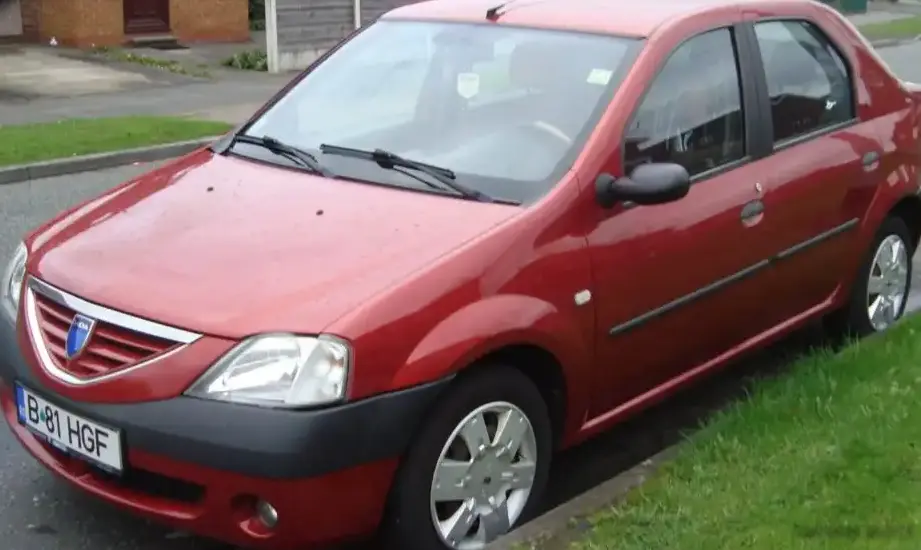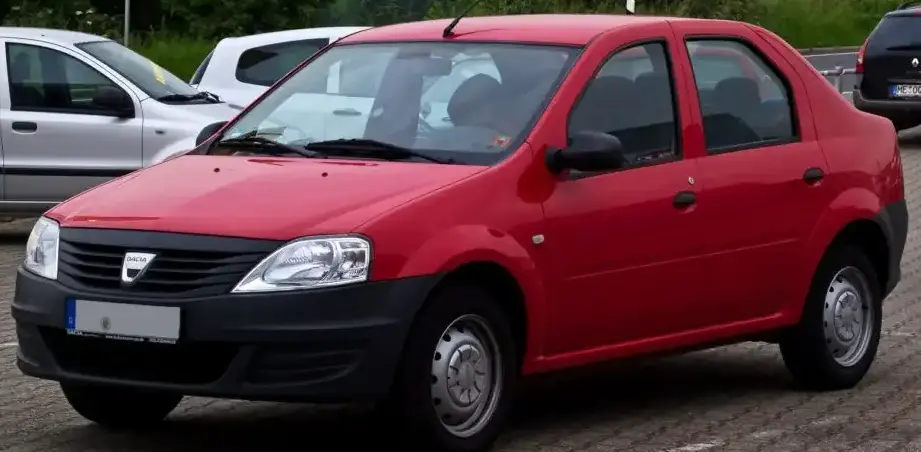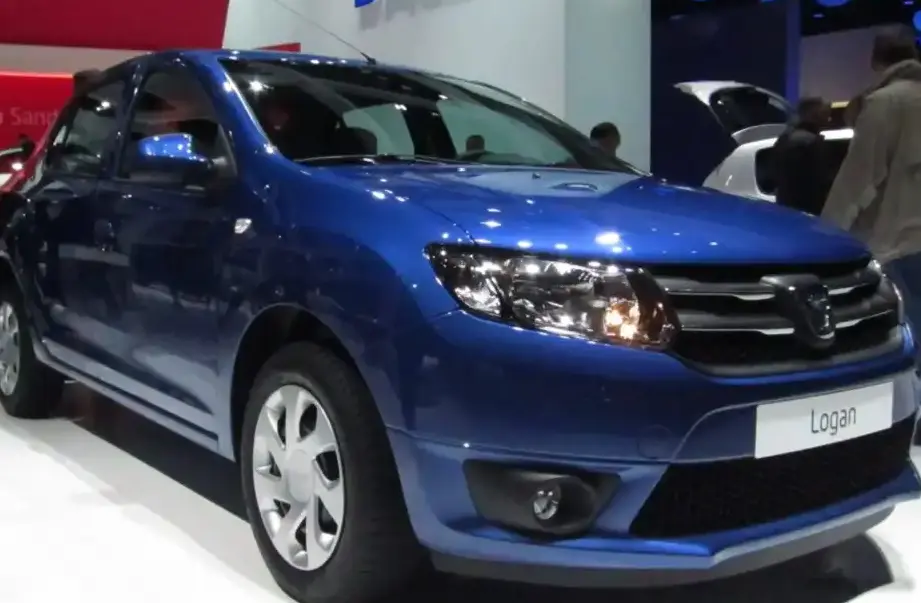
The Dacia Logan II 0.9 TCe (90 hp) Start&Stop Easy-R, introduced in 2016, represents a significant entry point into the second generation of Dacia’s popular Logan sedan. Positioned as an affordable and fuel-efficient option, this variant aimed to broaden the Logan’s appeal, particularly in European markets where compact sedans remained a practical choice. The Logan II, built on the 1HX0/A3 platform, was designed to offer a no-frills, spacious, and reliable vehicle at a competitive price point. This specific 0.9 TCe engine and Easy-R transmission combination was intended to balance acceptable performance with low running costs, targeting budget-conscious buyers and those prioritizing fuel economy.
Technical Specifications
| Brand | Dacia |
| Model | Logan |
| Generation | Logan II |
| Type (Engine) | 0.9 TCe (90 Hp) Start&Stop Easy-R |
| Start of production | 2016 |
| End of production | 2016 |
| Powertrain Architecture | Internal Combustion engine |
| Body type | Sedan |
| Seats | 5 |
| Doors | 4 |
| Fuel consumption (urban) | 5.7 l/100 km (41.3 US mpg, 49.6 UK mpg, 17.5 km/l) |
| Fuel consumption (extra urban) | 4.5 l/100 km (52.3 US mpg, 62.8 UK mpg, 22.2 km/l) |
| Fuel consumption (combined) | 4.9 l/100 km (48 US mpg, 57.6 UK mpg, 20.4 km/l) |
| CO2 emissions | 110 g/km |
| Fuel Type | Petrol (Gasoline) |
| Acceleration 0 – 100 km/h | 11 sec |
| Acceleration 0 – 62 mph | 11 sec |
| Acceleration 0 – 60 mph | 10.5 sec |
| Maximum speed | 175 km/h (108.74 mph) |
| Emission standard | Euro 6b |
| Weight-to-power ratio | 11.3 kg/Hp, 88.8 Hp/tonne |
| Weight-to-torque ratio | 7.2 kg/Nm, 138.2 Nm/tonne |
| Power | 90 Hp @ 5000 rpm |
| Power per litre | 100.2 Hp/l |
| Torque | 140 Nm @ 2250 rpm (103.26 lb.-ft. @ 2250 rpm) |
| Engine layout | Front, Transverse |
| Engine Model/Code | H4B 408 |
| Engine displacement | 898 cm3 (54.8 cu. in.) |
| Number of cylinders | 3 |
| Engine configuration | Inline |
| Cylinder Bore | 72.2 mm (2.84 in.) |
| Piston Stroke | 73.1 mm (2.88 in.) |
| Number of valves per cylinder | 4 |
| Fuel injection system | Multi-port manifold injection |
| Engine aspiration | Turbocharger, Intercooler |
| Engine oil capacity | 4.1 l (4.33 US qt | 3.61 UK qt) |
| Coolant capacity | 4.5 l (4.76 US qt | 3.96 UK qt) |
| Kerb Weight | 1013 kg (2233.28 lbs.) |
| Max. weight | 1515 kg (3340 lbs.) |
| Max load | 502 kg (1106.72 lbs.) |
| Trunk (boot) space – minimum | 510 l (18.01 cu. ft.) |
| Trunk (boot) space – maximum | 1250 l (44.14 cu. ft.) |
| Fuel tank capacity | 50 l (13.21 US gal | 11 UK gal) |
| Permitted trailer load with brakes (12%) | 1090 kg (2403.04 lbs.) |
| Permitted trailer load without brakes | 540 kg (1190.5 lbs.) |
| Length | 4346 mm (171.1 in.) |
| Width | 1733 mm (68.23 in.) |
| Height | 1517 mm (59.72 in.) |
| Wheelbase | 2634 mm (103.7 in.) |
| Ride height (ground clearance) | 155 mm (6.1 in.) |
| Minimum turning circle | 10.82 m (35.5 ft.) |
| Drivetrain Architecture | The Internal combustion engine (ICE) drives the front wheels of the vehicle. |
| Drive wheel | Front wheel drive |
| Number of gears and type of gearbox | 5 gears, automatic transmission Easy-R |
| Front suspension | Independent type McPherson, Transverse stabilizer |
| Rear suspension | Coil spring, Torsion |
| Front brakes | Ventilated discs |
| Rear brakes | Drum |
| Assisting systems | ABS (Anti-lock braking system) |
| Steering type | Steering rack and pinion |
| Power steering | Electric Steering |
| Tires size | 185/65 R15 |
| Wheel rims size | 6J x 15 |
Powertrain & Engine Architecture
The heart of this Logan variant is the H4B 408, a 0.9-liter turbocharged three-cylinder gasoline engine. This engine is part of Renault’s TCe (Turbo Control Efficiency) family and was designed to deliver improved fuel economy and reduced emissions compared to larger displacement engines. The H4B 408 utilizes multi-point fuel injection and a single turbocharger with an intercooler to boost power output. The engine’s compact size and lightweight construction contribute to the Logan’s overall efficiency. The engine is transversely mounted in the front of the vehicle.
Paired with the engine is the Easy-R automated manual transmission, a five-speed unit. This transmission is essentially a conventional manual gearbox with robotic actuators controlling the clutch and gear changes. While marketed as an automatic, it lacks a traditional torque converter and can exhibit slightly jerky shifts compared to conventional automatics. The Easy-R transmission was chosen for its cost-effectiveness and contribution to fuel efficiency, but it doesn’t offer the smoothness of a fully automatic transmission.
Driving Characteristics
The 90 hp output and 140 Nm of torque provide adequate, but not exhilarating, performance. Acceleration from 0 to 60 mph takes around 10.5 seconds, and top speed is rated at 175 km/h (108.74 mph). The turbocharger provides a noticeable boost in power at lower engine speeds, helping with everyday driving situations. However, the Easy-R transmission can sometimes feel hesitant during quick acceleration or when attempting to overtake. Compared to the more powerful 1.5 dCi diesel variants, the 0.9 TCe feels less responsive, but it offers a quieter and smoother driving experience. The gear ratios are tuned for fuel economy, meaning the engine can feel strained when climbing hills or carrying a full load.
Equipment & Trim Levels
The 0.9 TCe Easy-R typically came with a base level of equipment, reflecting its position as an entry-level trim. Standard features generally included power steering, central locking, electric front windows, and an ABS anti-lock braking system. Air conditioning was often an optional extra. Interior upholstery was typically cloth, and the dashboard featured a simple, functional design. Higher trim levels offered additional features such as alloy wheels, a more sophisticated audio system, and upgraded interior trim.
Chassis & Braking
The Logan II utilizes a McPherson strut front suspension and a torsion beam rear suspension. This setup provides a comfortable ride quality, although it’s not particularly sporty. The front brakes are ventilated discs, while the rear brakes are drums. This configuration is typical for vehicles in this price segment. The electric power steering provides light and easy steering, making it suitable for urban driving. Stabilizer bars were included to reduce body roll during cornering.
Market Reception & Comparison
The Dacia Logan II 0.9 TCe (90 hp) Start&Stop Easy-R was generally well-received by critics for its affordability and fuel efficiency. However, the Easy-R transmission was often criticized for its jerky shifts and lack of refinement. Compared to the 1.5 dCi diesel variants, the 0.9 TCe offered lower running costs but less performance. The petrol engine was also considered more refined and quieter than the diesel. Fuel economy figures of around 4.9 l/100 km (48 US mpg) were competitive in its class.
Legacy
The H4B 408 engine and Easy-R transmission have proven to be relatively reliable, although the Easy-R transmission can be prone to wear and tear if not properly maintained. In the used car market, the 0.9 TCe Logan II represents a budget-friendly option for those seeking a practical and economical sedan. Regular maintenance, including oil changes and transmission servicing, is crucial to ensure the longevity of this powertrain. While not the most exciting vehicle to drive, the Logan II 0.9 TCe continues to offer a compelling value proposition for buyers prioritizing affordability and fuel efficiency.