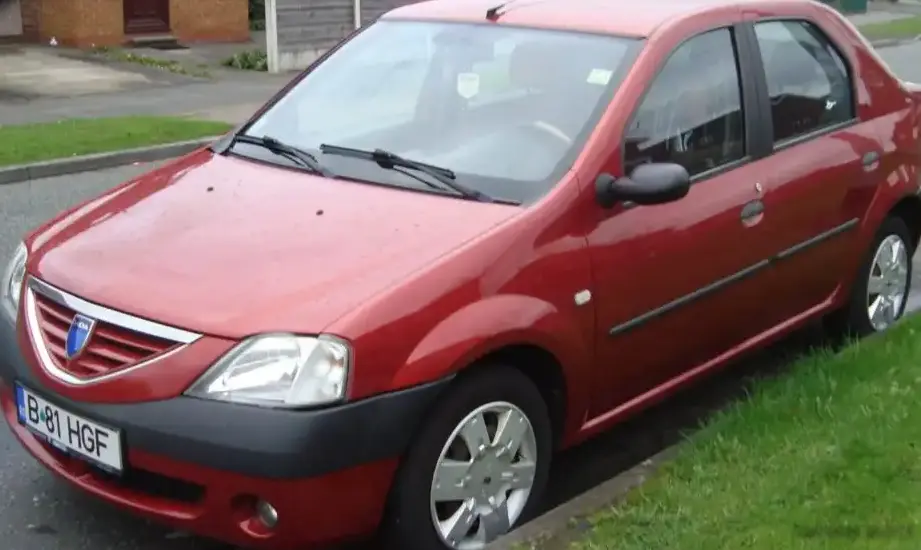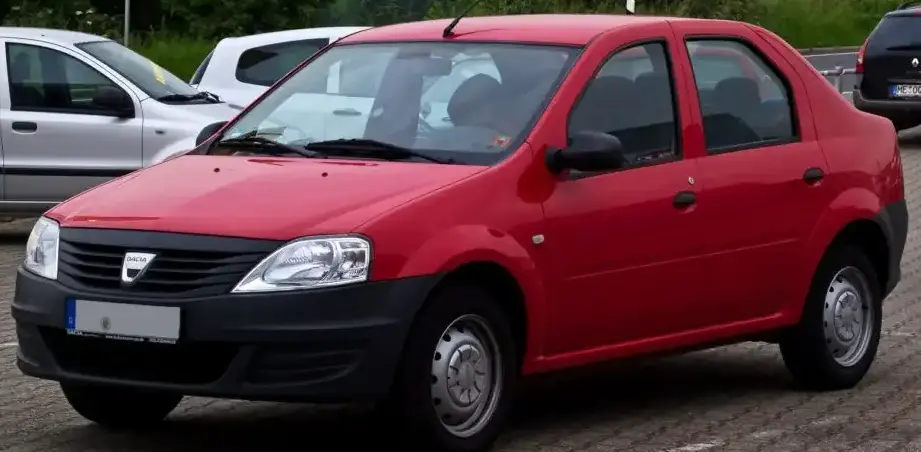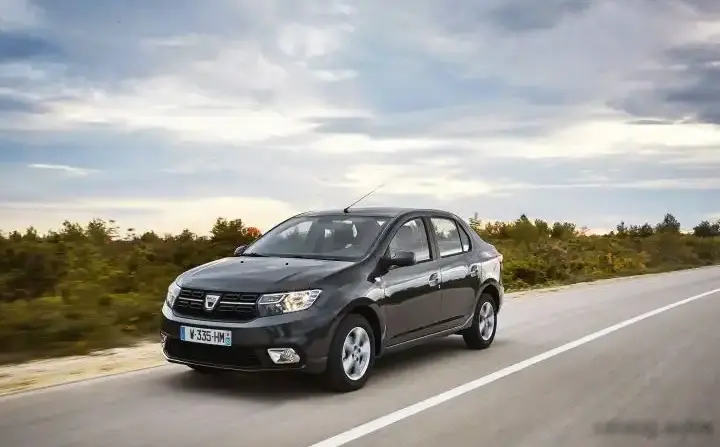
The Dacia Logan II (facelift 2016) 1.5 dCi 90 hp variant represents a significant iteration within the second generation of Dacia’s popular budget sedan. Produced from 2016 to 2018, this model aimed to provide economical and practical transportation, primarily targeting price-sensitive markets in Europe and beyond. Positioned as a mid-range offering within the Logan II lineup, it slotted between the base engine options and the more powerful, though less fuel-efficient, variants. The facelift brought styling updates and minor equipment revisions to the already successful second-generation Logan, further solidifying its position as a value leader.
Technical Specifications
| Brand | Dacia |
| Model | Logan |
| Generation | Logan II (facelift 2016) |
| Type (Engine) | 1.5 dCi (90 Hp) |
| Start of production | 2016 |
| End of production | 2018 |
| Powertrain Architecture | Internal Combustion engine |
| Body type | Sedan |
| Seats | 5 |
| Doors | 4 |
| Fuel consumption (urban) | 3.7 l/100 km (63.6 US mpg, 76.3 UK mpg, 27 km/l) |
| Fuel consumption (extra urban) | 3.6 l/100 km (65.3 US mpg, 78.5 UK mpg, 27.8 km/l) |
| Fuel consumption (combined) | 3.6 l/100 km (65.3 US mpg, 78.5 UK mpg, 27.8 km/l) |
| CO2 emissions | 93 g/km |
| Fuel Type | Diesel |
| Acceleration 0 – 100 km/h | 11.8 sec |
| Acceleration 0 – 62 mph | 11.8 sec |
| Acceleration 0 – 60 mph | 11.2 sec |
| Maximum speed | 173 km/h (107.5 mph) |
| Emission standard | Euro 6 |
| Weight-to-power ratio | 12.8 kg/Hp, 77.9 Hp/tonne |
| Weight-to-torque ratio | 5.3 kg/Nm, 190.5 Nm/tonne |
| Power | 90 Hp @ 4000 rpm |
| Power per litre | 61.6 Hp/l |
| Torque | 220 Nm @ 1750 rpm (162.26 lb.-ft. @ 1750 rpm) |
| Engine layout | Front, Transverse |
| Engine Model/Code | K9K 626 |
| Engine displacement | 1461 cm3 (89.16 cu. in.) |
| Number of cylinders | 4 |
| Engine configuration | Inline |
| Cylinder Bore | 76 mm (2.99 in.) |
| Piston Stroke | 80.5 mm (3.17 in.) |
| Compression ratio | 15.5:1 |
| Number of valves per cylinder | 2 |
| Fuel injection system | Direct injection |
| Engine aspiration | Turbocharger, Intercooler |
| Engine oil capacity | 4.5 l (4.76 US qt | 3.96 UK qt) |
| Coolant capacity | 4.5 l (4.76 US qt | 3.96 UK qt) |
| Kerb Weight | 1155 kg (2546.34 lbs.) |
| Max. weight | 1590 kg (3505.35 lbs.) |
| Max load | 435 kg (959.01 lbs.) |
| Trunk (boot) space – minimum | 510 l (18.01 cu. ft.) |
| Trunk (boot) space – maximum | 1257 l (44.39 cu. ft.) |
| Fuel tank capacity | 50 l (13.21 US gal | 11 UK gal) |
| Permitted trailer load with brakes (8%) | 1090 kg (2403.04 lbs.) |
| Permitted trailer load without brakes | 575 kg (1267.66 lbs.) |
| Length | 4358 mm (171.57 in.) |
| Width | 1733 mm (68.23 in.) |
| Width including mirrors | 1994 mm (78.5 in.) |
| Height | 1517 mm (59.72 in.) |
| Wheelbase | 2635 mm (103.74 in.) |
| Front track | 1497 mm (58.94 in.) |
| Rear (Back) track | 1486 mm (58.5 in.) |
| Front overhang | 827 mm (32.56 in.) |
| Rear overhang | 896 mm (35.28 in.) |
| Ride height (ground clearance) | 145 mm (5.71 in.) |
| Drivetrain Architecture | The Internal combustion engine (ICE) drives the front wheels of the vehicle. |
| Drive wheel | Front wheel drive |
| Number of gears and type of gearbox | 5 gears, manual transmission |
| Front brakes | Ventilated discs |
| Rear brakes | Disc |
| Assisting systems | ABS (Anti-lock braking system) |
| Steering type | Steering rack and pinion |
| Power steering | Electric Steering |
| Tires size | 185/65 R15; 195/55 R16 |
| Wheel rims size | 15; 16 |
Powertrain & Engine Architecture
The heart of this Logan variant is the Renault-sourced 1.5 dCi (K9K 626) engine. This four-cylinder diesel engine, a mainstay in the Renault-Nissan-Dacia alliance, is known for its fuel efficiency and relatively robust design. The K9K engine family has been in production for many years, undergoing continuous refinement. The 90 hp version utilizes a turbocharger with an intercooler to boost power output. Fuel is delivered via a common-rail direct injection system, contributing to improved combustion efficiency and reduced emissions. The engine features two valves per cylinder and a compression ratio of 15.5:1. The engine is transversely mounted at the front of the vehicle. The 5-speed manual transmission, while not particularly sophisticated, is durable and well-matched to the engine’s torque characteristics.
Driving Characteristics
The 1.5 dCi 90 hp Logan offers a practical, if not exhilarating, driving experience. Acceleration is modest, taking around 11.8 seconds to reach 62 mph. However, the engine’s 220 Nm (162 lb-ft) of torque, available from a low 1750 rpm, provides adequate pulling power for everyday driving and overtaking maneuvers. The gear ratios are geared towards fuel economy, meaning the engine can feel strained at higher speeds. Compared to higher-output versions of the Logan II, this variant prioritizes fuel efficiency over outright performance. The manual transmission allows for driver control, but the shift quality isn’t particularly sporty. The focus is on usability and minimizing running costs.
Equipment & Trim Levels
The 1.5 dCi 90 hp Logan typically came equipped with basic, but functional, features. Standard equipment generally included power steering, central locking, electric front windows, and an ABS anti-lock braking system. Interior upholstery was typically cloth, and the dashboard featured a simple, utilitarian design. Optional extras could include air conditioning, a radio/CD player, and alloy wheels. Trim levels varied by market, but this engine was often found in mid-range specifications, offering a balance between affordability and comfort.
Chassis & Braking
The Logan II utilizes a relatively simple chassis design, prioritizing cost-effectiveness. The front suspension consists of MacPherson struts, while the rear suspension employs a torsion beam axle. This setup provides a comfortable ride, but doesn’t offer the same level of handling precision as more sophisticated suspension systems. Brakes are ventilated discs at the front and solid discs at the rear. The braking system is adequate for the vehicle’s weight and performance, but lacks advanced features like electronic brakeforce distribution (EBD) in some markets.
Market Reception & Comparison
The Dacia Logan II 1.5 dCi 90 hp was well-received in markets where affordability was a key consideration. Critics praised its fuel economy and low running costs. However, some reviewers noted the engine’s lack of refinement and the somewhat basic interior. Compared to the petrol-powered Logan II variants, the 1.5 dCi offered significantly better fuel economy, making it a popular choice for high-mileage drivers. Against competitors like the Skoda Fabia or Volkswagen Polo, the Logan offered a lower price point, but with compromises in terms of build quality and features.
Legacy
The K9K engine, in its various iterations, has proven to be a reliable and durable powertrain. While not without its potential issues (such as turbocharger wear and potential injector problems), the engine is generally considered robust and relatively inexpensive to maintain. The Logan II 1.5 dCi 90 hp remains a popular choice in the used car market, particularly for buyers seeking an economical and practical vehicle. Its simplicity and readily available parts contribute to its continued appeal. The Logan II, and this variant in particular, helped establish Dacia as a major player in the European budget car market, demonstrating that affordable transportation doesn’t necessarily have to mean sacrificing basic functionality.