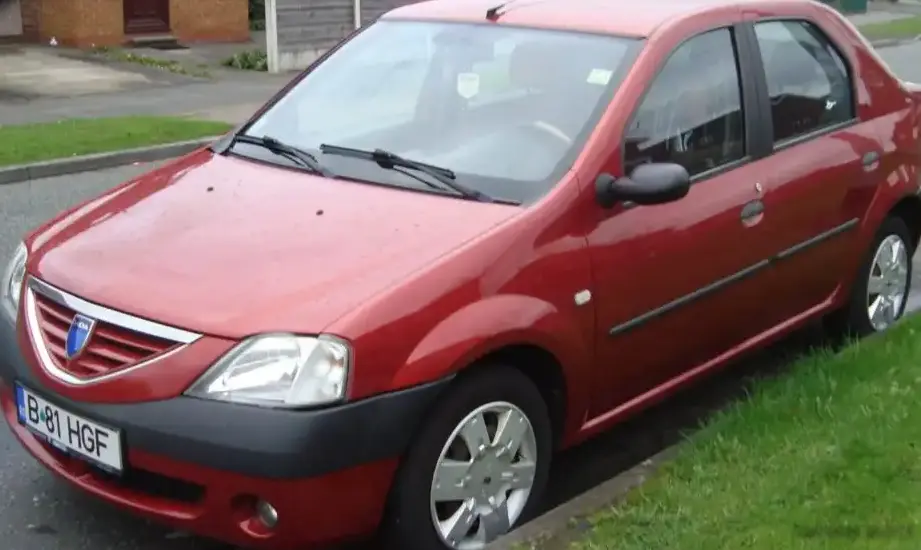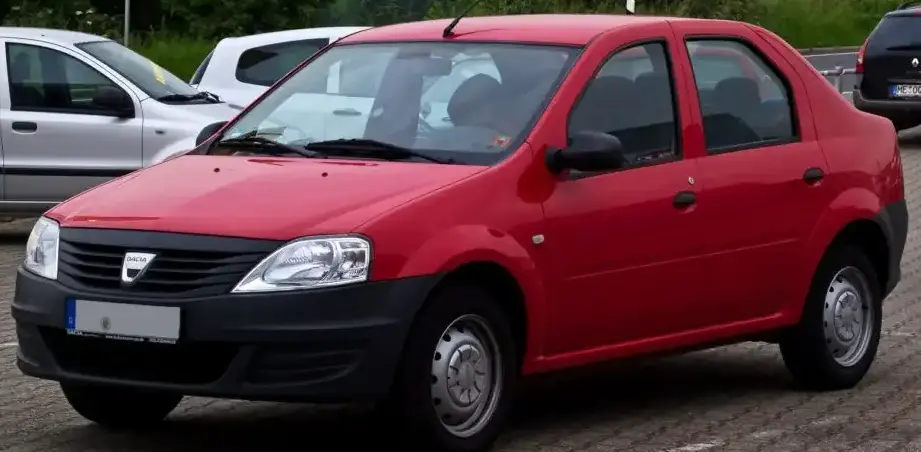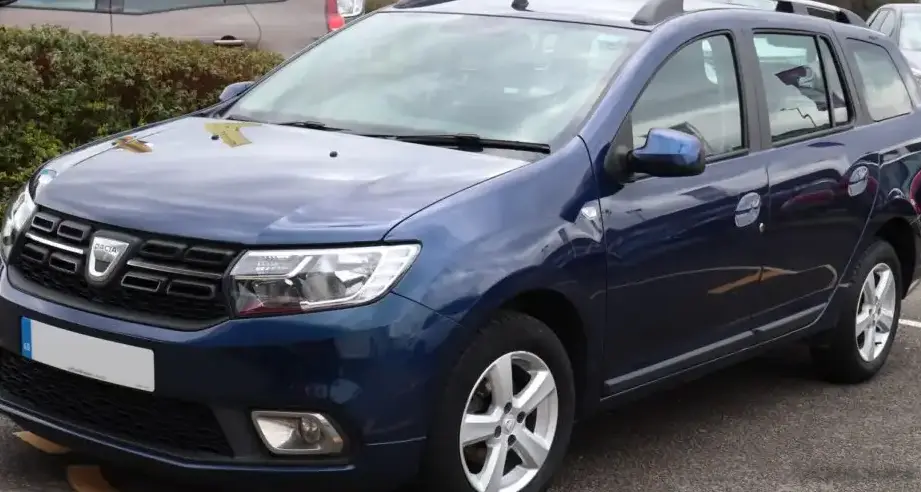
The Dacia Logan II MCV (facelift 2017) 1.5 dCi 90 hp represents a practical and economical station wagon option within the broader Dacia Logan II range. Introduced as part of the facelift in 2017 and continuing through 2018, this variant aimed to provide a balance between fuel efficiency, affordability, and cargo capacity for families and budget-conscious buyers. It’s built on the 1HX0/A3 platform, shared with other Renault-Nissan-Dacia models. This particular engine and transmission combination occupied the lower-mid range of the Logan MCV lineup, positioned above the base engine options but below the more powerful diesel variants.
Technical Specifications
| Brand | Dacia |
| Model | Logan |
| Generation | Logan II MCV (facelift 2017) |
| Type (Engine) | 1.5 dCi (90 Hp) |
| Start of production | 2017 |
| End of production | 2018 |
| Powertrain Architecture | Internal Combustion engine |
| Body type | Station wagon (estate) |
| Seats | 5 |
| Doors | 5 |
| Fuel consumption (urban) | 3.7 l/100 km (63.6 US mpg, 76.3 UK mpg, 27 km/l) |
| Fuel consumption (extra urban) | 3.4 l/100 km (69.2 US mpg, 83.1 UK mpg, 29.4 km/l) |
| Fuel consumption (combined) | 3.5 l/100 km (67.2 US mpg, 80.7 UK mpg, 28.6 km/l) |
| CO2 emissions | 90 g/km |
| Fuel Type | Diesel |
| Acceleration 0 – 100 km/h | 12.1 sec |
| Acceleration 0 – 62 mph | 12.1 sec |
| Acceleration 0 – 60 mph | 11.5 sec |
| Maximum speed | 173 km/h (107.5 mph) |
| Emission standard | Euro 6 |
| Weight-to-power ratio | 12.1 kg/Hp, 82.6 Hp/tonne |
| Weight-to-torque ratio | 5 kg/Nm, 201.8 Nm/tonne |
| Power | 90 Hp @ 4000 rpm |
| Power per litre | 61.6 Hp/l |
| Torque | 220 Nm @ 1750 rpm (162.26 lb.-ft. @ 1750 rpm) |
| Engine layout | Front, Transverse |
| Engine Model/Code | K9K 626 |
| Engine displacement | 1461 cm3 (89.16 cu. in.) |
| Number of cylinders | 4 |
| Engine configuration | Inline |
| Cylinder Bore | 76 mm (2.99 in.) |
| Piston Stroke | 80.5 mm (3.17 in.) |
| Compression ratio | 15.5:1 |
| Number of valves per cylinder | 2 |
| Fuel injection system | Diesel Commonrail |
| Engine aspiration | Turbocharger, Intercooler |
| Valvetrain | SOHC |
| Engine oil capacity | 4.5 l (4.76 US qt | 3.96 UK qt) |
| Coolant | 4.5 l (4.76 US qt | 3.96 UK qt) |
| Kerb Weight | 1090 kg (2403.04 lbs.) |
| Max. weight | 1670 kg (3681.72 lbs.) |
| Max load | 580 kg (1278.68 lbs.) |
| Trunk (boot) space – minimum | 573 l (20.24 cu. ft.) |
| Trunk (boot) space – maximum | 1518 l (53.61 cu. ft.) |
| Fuel tank capacity | 50 l (13.21 US gal | 11 UK gal) |
| Permitted trailer load with brakes (12%) | 1110 kg (2447.13 lbs.) |
| Permitted trailer load without brakes | 580 kg (1278.68 lbs.) |
| Length | 4501 mm (177.2 in.) |
| Width | 1733 mm (68.23 in.) |
| Width including mirrors | 1994 mm (78.5 in.) |
| Height | 1552 mm (61.1 in.) |
| Wheelbase | 2635 mm (103.74 in.) |
| Front track | 1497 mm (58.94 in.) |
| Rear (Back) track | 1486 mm (58.5 in.) |
| Front overhang | 827 mm (32.56 in.) |
| Rear overhang | 1039 mm (40.91 in.) |
| Ride height (ground clearance) | 128 mm (5.04 in.) |
| Minimum turning circle (turning diameter) | 10.82 m (35.5 ft.) |
| Drivetrain Architecture | The Internal combustion engine (ICE) drives the front wheels of the vehicle. |
| Drive wheel | Front wheel drive |
| Number of gears and type of gearbox | 5 gears, manual transmission |
| Front suspension | Independent type McPherson |
| Rear suspension | Semi-independent, coil spring |
| Front brakes | Ventilated discs |
| Rear brakes | Drum |
| Assisting systems | ABS (Anti-lock braking system) |
| Steering type | Steering rack and pinion |
| Power steering | Electric Steering |
| Tires size | 185/65 R15 |
| Wheel rims size | 6.0J x 15 |
Powertrain & Engine Architecture
The heart of this Logan MCV variant is the Renault-sourced 1.5 dCi (K9K 626) engine. This is a four-cylinder, inline diesel engine utilizing a common rail direct injection system. The K9K engine family is renowned for its robustness and fuel efficiency, and has been widely used across the Renault-Nissan-Dacia range. The 90 horsepower output is achieved at 4000 rpm, while peak torque of 220 Nm (162 lb-ft) is delivered at a low 1750 rpm, providing good low-end grunt for everyday driving. The engine features a single overhead camshaft (SOHC) valvetrain and is equipped with a turbocharger and intercooler to enhance performance. The 5-speed manual transmission was the standard offering for this trim level, chosen for its simplicity and contribution to fuel economy. The transmission’s gear ratios are geared towards maximizing fuel efficiency rather than outright acceleration.
Driving Characteristics
The 1.5 dCi 90 hp engine, paired with the 5-speed manual transmission, delivers a practical, if not particularly exhilarating, driving experience. Acceleration from 0-100 km/h (0-62 mph) takes around 12.1 seconds. The engine’s strength lies in its mid-range torque, making it suitable for overtaking and maintaining comfortable cruising speeds on highways. Compared to higher-output diesel versions of the Logan MCV, this variant feels noticeably less powerful, especially when fully loaded. However, it offers a smoother and more refined driving experience than the base petrol engines. The gear ratios are well-suited for fuel-efficient cruising, but require more frequent shifting when accelerating or climbing hills. The steering is light and easy to use, making it well-suited for urban driving.
Equipment & Trim Levels
The 1.5 dCi 90 hp Logan MCV typically came with a reasonable level of standard equipment. This included power steering, central locking, electric front windows, and an ABS anti-lock braking system. Interior upholstery was typically cloth, with a functional and durable design. Optional extras included air conditioning, a radio/CD player, and alloy wheels. The trim level often dictated the availability of features like front fog lights, a trip computer, and upgraded interior trim. This variant was generally positioned as a mid-range offering, appealing to buyers who prioritized fuel economy and practicality over luxury features.
Chassis & Braking
The Logan MCV’s chassis features a MacPherson strut independent suspension at the front and a semi-independent coil spring suspension at the rear. This setup provides a comfortable ride quality, although it’s not particularly sporty. The front brakes are ventilated discs, providing adequate stopping power, while the rear brakes are drums. This configuration was common for vehicles in this price segment. The electric power steering offers light and easy steering, making it convenient for maneuvering in tight spaces.
Market Reception & Comparison
The Dacia Logan II MCV 1.5 dCi 90 hp was generally well-received by critics for its affordability, fuel efficiency, and spaciousness. It was often praised as a sensible and practical choice for families and budget-conscious buyers. Compared to the petrol versions, the diesel variant offered significantly better fuel economy. However, it was criticized for its relatively low power output and somewhat basic interior. Compared to other station wagons in the market, the Logan MCV offered a compelling value proposition, undercutting many competitors on price while providing a generous amount of space and practicality.
Legacy
The K9K engine, found in this Logan MCV, has proven to be a reliable and durable powertrain. While not without its potential issues (such as turbocharger wear and injector problems with age), it’s generally considered a robust engine when properly maintained. On the used car market, the 1.5 dCi 90 hp Logan MCV remains a popular choice for buyers seeking an affordable and economical station wagon. Its simplicity and relatively low running costs make it an attractive option for those looking for a practical and reliable vehicle.