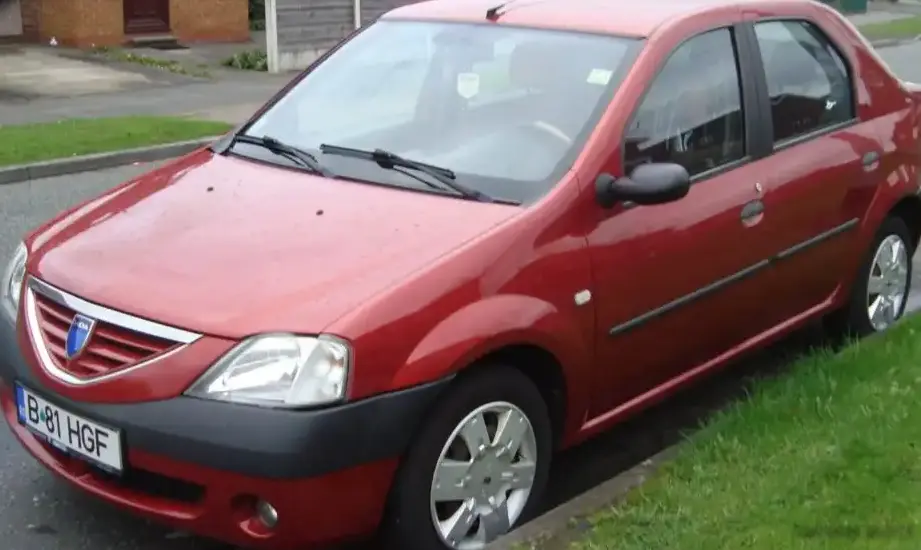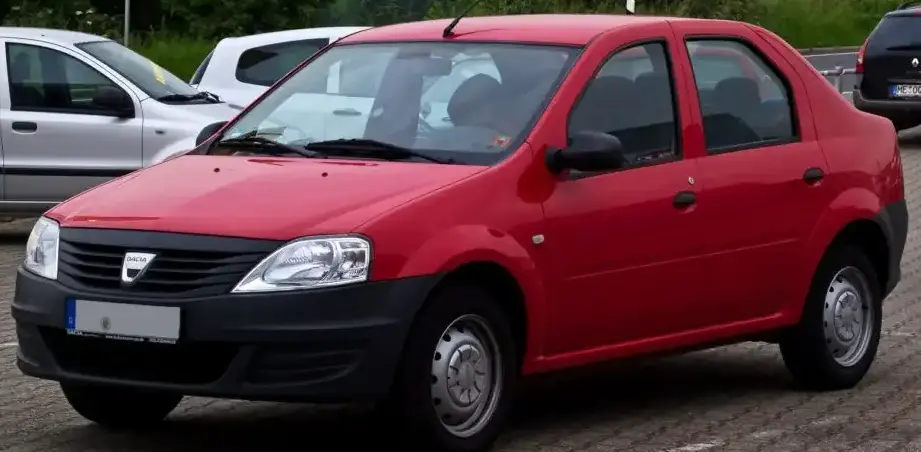
The Dacia Logan III 1.0 ECO-G (101 hp) LPG, produced from September 2020 to 2022, represents a significant offering in the budget-conscious sedan segment. Positioned as an entry-level to mid-range trim within the broader Logan III range, this variant combined a small-displacement turbocharged engine with the flexibility of both gasoline and LPG fuel options. It was primarily marketed in Europe, where demand for affordable and fuel-efficient vehicles, particularly those capable of utilizing readily available LPG infrastructure, is substantial. The Logan III, built on the shared Renault-Nissan CMF-B platform, aimed to provide practical transportation with a focus on value and low running costs.
Technical Specifications
| Brand | Dacia |
| Model | Logan |
| Generation | Logan III |
| Type (Engine) | 1.0 ECO-G (101 Hp) LPG |
| Start of production | September, 2020 |
| End of production | 2022 |
| Powertrain Architecture | Internal Combustion engine |
| Body type | Sedan |
| Seats | 5 |
| Doors | 4 |
| Fuel consumption (economy) – urban (LPG) | 8.4 l/100 km |
| Fuel consumption (economy) – extra urban (LPG) | 5.3-5.4 l/100 km |
| Fuel consumption (economy) – combined (LPG) | 6.5 l/100 km |
| CO2 emissions (LPG) | 101-102 g/km |
| Fuel Type | Petrol / LPG |
| Maximum speed | 186 km/h (115.58 mph) |
| Emission standard | Euro 6 |
| Weight-to-power ratio | 11.1 kg/Hp, 89.9 Hp/tonne |
| Weight-to-torque ratio | 6.6 kg/Nm, 151.2 Nm/tonne |
| Power | 101 Hp |
| Power per litre | 101.1 Hp/l |
| Torque | 170 Nm (125.39 lb.-ft.) |
| Engine layout | Front, Transverse |
| Engine Model/Code | H4D 480 |
| Engine displacement | 999 cm3 (60.96 cu. in.) |
| Number of cylinders | 3 |
| Engine configuration | Inline |
| Number of valves per cylinder | 4 |
| Fuel injection system | Multi-port manifold injection |
| Engine aspiration | Turbocharger |
| Engine oil capacity | 4.1 l (4.33 US qt | 3.61 UK qt) |
| Kerb Weight | 1124-1146 kg (2478 – 2526.5 lbs.) |
| Max. weight | 1605 kg (3538.42 lbs.) |
| Max load | 459-481 kg (1011.92 – 1060.42 lbs.) |
| Trunk (boot) space – minimum | 528 l (18.65 cu. ft.) |
| Trunk (boot) space – maximum | 1361 l (48.06 cu. ft.) |
| Fuel tank capacity | 50 l (13.21 US gal | 11 UK gal) |
| Fuel tank capacity (LPG) | 40 l |
| Permitted trailer load with brakes (12%) | 1100 kg (2425.08 lbs.) |
| Permitted trailer load without brakes | 610 kg (1344.82 lbs.) |
| Length | 4396 mm (173.07 in.) |
| Width | 1848 mm (72.76 in.) |
| Width including mirrors | 2007 mm (79.02 in.) |
| Height | 1501 mm (59.09 in.) |
| Wheelbase | 2649 mm (104.29 in.) |
| Front track | 1533 mm (60.35 in.) |
| Rear (Back) track | 1519 mm (59.8 in.) |
| Front overhang | 819 mm (32.24 in.) |
| Rear overhang | 928 mm (36.54 in.) |
| Ride height (ground clearance) | 161 mm (6.34 in.) |
| Drivetrain Architecture | The Internal combustion engine (ICE) drives the front wheels of the vehicle. |
| Drive wheel | Front wheel drive |
| Number of gears and type of gearbox | 6 gears, manual transmission |
| Front brakes | Disc |
| Rear brakes | Drum |
| Assisting systems | ABS (Anti-lock braking system) |
| Steering type | Steering rack and pinion |
| Tires size | 185/65 R15; 195/55 R16 |
Powertrain & Engine Architecture
The heart of the Logan III 1.0 ECO-G is the H4D 480 engine, a 999cc inline three-cylinder unit. This engine is part of Renault’s ‘Energy’ family, designed for efficiency and reduced emissions. It features a single-scroll turbocharger and multi-point fuel injection. The engine’s relatively small displacement is compensated for by the turbocharger, which provides a boost in power and torque. The LPG conversion is a factory-installed system, integrating seamlessly with the gasoline engine management. The system switches between fuels automatically, optimizing for cost and availability. The engine produces 101 horsepower and 170 Nm (125 lb-ft) of torque. The engine is paired with a six-speed manual transmission, chosen for its efficiency and affordability. An automatic transmission was not offered with this specific engine configuration.
Driving Characteristics
The 1.0 ECO-G powertrain delivers adequate performance for everyday driving. Acceleration is not brisk, but sufficient for merging onto highways and navigating urban traffic. The turbocharger provides a noticeable boost in power at higher RPMs, but the engine can feel somewhat strained when fully loaded or climbing hills. The six-speed manual transmission helps to keep the engine in its optimal power band. Fuel economy is a key strength, particularly when running on LPG, where running costs are significantly reduced. The suspension is tuned for comfort, providing a relatively smooth ride, but handling is not particularly sporty. Compared to higher-output versions of the Logan III, such as those with the 1.3 TCe engine, the 1.0 ECO-G offers a more economical but less dynamic driving experience.
Equipment & Trim Levels
The 1.0 ECO-G trim typically included standard features such as air conditioning, power steering, electric front windows, and a basic audio system with USB connectivity. Safety equipment included ABS, ESC (Electronic Stability Control), and airbags. Higher trim levels offered additional features like alloy wheels, a touchscreen infotainment system, rear parking sensors, and cruise control. Interior upholstery was typically cloth, with a functional and durable design. The dashboard layout was straightforward and user-friendly, prioritizing practicality over luxury.
Chassis & Braking
The Logan III utilizes a MacPherson strut front suspension and a torsion beam rear suspension. This setup provides a good balance between comfort and handling. The front brakes are disc brakes, while the rear brakes are drum brakes – a cost-saving measure common in this segment. ABS (Anti-lock Braking System) is standard, enhancing braking performance and safety. The steering is a rack-and-pinion system, providing precise and responsive steering feel. The relatively lightweight nature of the 1.0 ECO-G variant contributes to its agility and fuel efficiency.
Market Reception & Comparison
The Dacia Logan III 1.0 ECO-G was well-received in markets where LPG was widely available and affordable. Critics praised its fuel efficiency, low running costs, and practicality. However, some reviewers noted the engine’s lack of refinement and limited power. Compared to other trims in the Logan III lineup, the 1.0 ECO-G offered the lowest purchase price and the best fuel economy, making it an attractive option for budget-conscious buyers. It competed with other entry-level sedans such as the Skoda Rapid and the Hyundai Accent, offering a compelling value proposition.
Legacy
The H4D 480 engine, while not known for being a powerhouse, has proven to be relatively reliable. The LPG conversion, when properly maintained, adds to the engine’s longevity. In the used car market, the Logan III 1.0 ECO-G remains a popular choice for those seeking an affordable and economical vehicle. Its simple design and readily available parts contribute to its low maintenance costs. The combination of gasoline and LPG capability provides owners with flexibility and the potential for significant fuel savings, ensuring its continued relevance in the years to come.