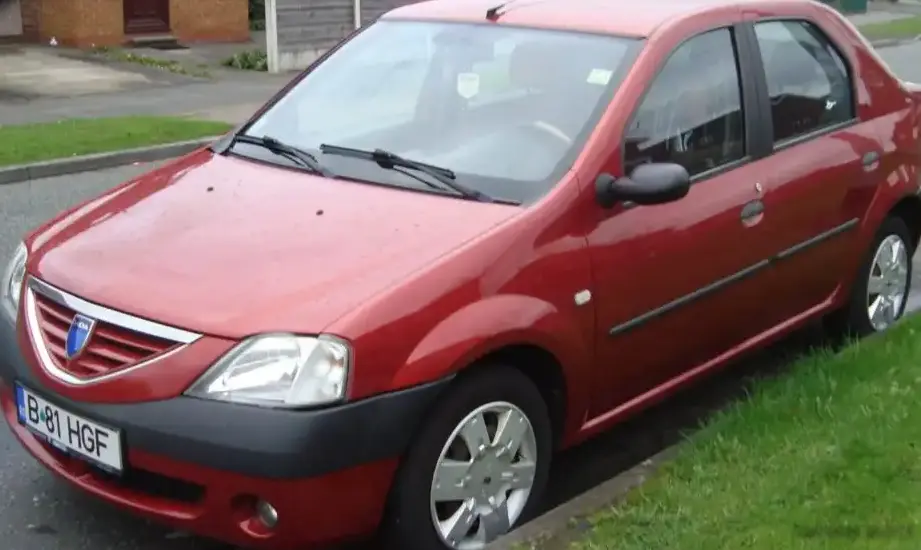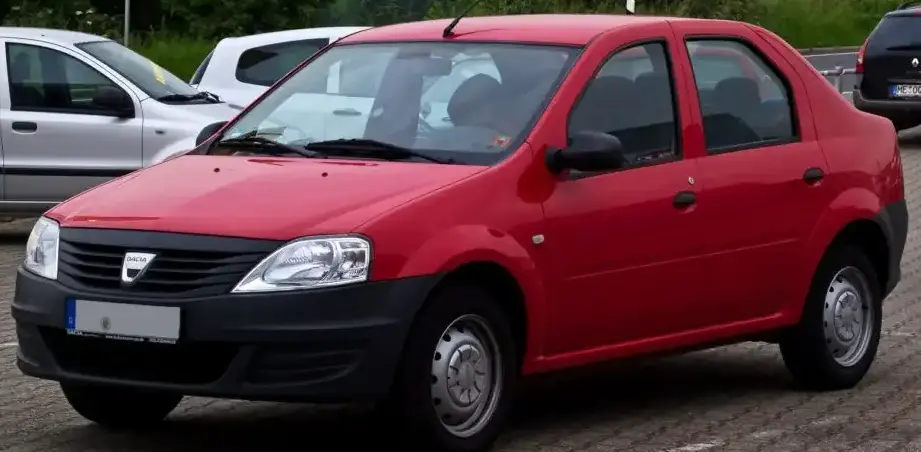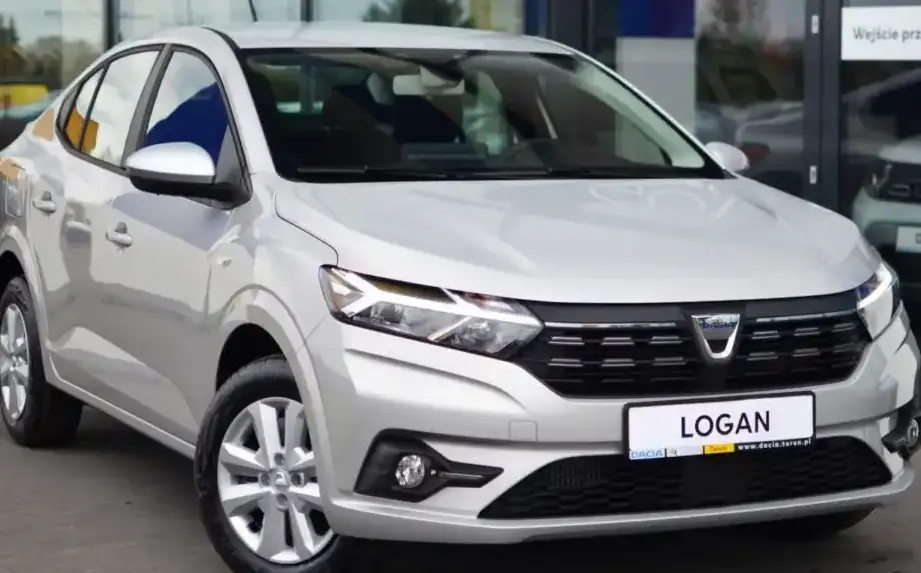
The Dacia Logan III 1.0 TCe (91 hp) CVT, produced from September 2020 to 2022, represents an entry-level offering within the third generation of Dacia’s popular Logan sedan. Positioned as a fuel-efficient and affordable option, this variant aimed to broaden the Logan’s appeal to buyers prioritizing economy and ease of driving over outright performance. It slots into the lineup below the more powerful engine options, offering a Continuously Variable Transmission (CVT) as its sole transmission choice. The Logan III, built on the updated and improved platform from its predecessors, continued Dacia’s mission of providing practical, no-frills transportation at a competitive price point, primarily targeting markets in Europe and developing regions.
Technical Specifications
| Brand | Dacia |
| Model | Logan |
| Generation | Logan III |
| Type (Engine) | 1.0 TCe (91 Hp) CVT |
| Start of production | September, 2020 |
| End of production | 2022 |
| Powertrain Architecture | Internal Combustion engine |
| Body type | Sedan |
| Seats | 5 |
| Doors | 4 |
| Fuel consumption (urban) | 5.9 l/100 km (39.9 US mpg, 47.9 UK mpg, 16.9 km/l) |
| Fuel consumption (extra urban) | 4.4 l/100 km (53.5 US mpg, 64.2 UK mpg, 22.7 km/l) |
| Fuel consumption (combined) | 5 l/100 km (47 US mpg, 56.5 UK mpg, 20 km/l) |
| CO2 emissions | 113 g/km |
| Fuel Type | Petrol (Gasoline) |
| Maximum speed | 172 km/h (106.88 mph) |
| Emission standard | Euro 6 |
| Weight-to-power ratio | 12.3 kg/Hp, 81.5 Hp/tonne |
| Weight-to-torque ratio | 7.9 kg/Nm, 127.2 Nm/tonne |
| Power | 91 Hp |
| Power per litre | 91.1 Hp/l |
| Torque | 142 Nm (104.73 lb.-ft.) |
| Engine layout | Front, Transverse |
| Engine Model/Code | H4Dt |
| Engine displacement | 999 cm3 (60.96 cu. in.) |
| Number of cylinders | 3 |
| Engine configuration | Inline |
| Number of valves per cylinder | 4 |
| Fuel injection system | Multi-port manifold injection |
| Engine aspiration | Turbocharger, Intercooler |
| Engine oil capacity | 4.1 l (4.33 US qt, 3.61 UK qt) |
| Kerb Weight | 1116 kg (2460.36 lbs.) |
| Max. weight | 1589 kg (3503.15 lbs.) |
| Max load | 473 kg (1042.79 lbs.) |
| Trunk (boot) space – minimum | 528 l (18.65 cu. ft.) |
| Trunk (boot) space – maximum | 1361 l (48.06 cu. ft.) |
| Fuel tank capacity | 50 l (13.21 US gal, 11 UK gal) |
| Permitted trailer load (braked) | 1100 kg (2425.08 lbs.) |
| Permitted trailer load (unbraked) | 595 kg (1311.75 lbs.) |
| Length | 4396 mm (173.07 in.) |
| Width | 1848 mm (72.76 in.) |
| Width including mirrors | 2007 mm (79.02 in.) |
| Height | 1501 mm (59.09 in.) |
| Wheelbase | 2649 mm (104.29 in.) |
| Front track | 1533 mm (60.35 in.) |
| Rear track | 1519 mm (59.8 in.) |
| Drivetrain | Front wheel drive, CVT Automatic |
| Front brakes | Disc |
| Rear brakes | Drum |
Powertrain & Engine Architecture
The heart of the Logan III 1.0 TCe CVT is the Renault-sourced H4Dt engine, a 999cc, three-cylinder turbocharged petrol unit. This engine is part of Renault’s ‘Energy’ family, designed for efficiency and reduced emissions. It utilizes a single-scroll turbocharger with an intercooler to boost power output. Fuel is delivered via multi-point fuel injection, and the engine features four valves per cylinder. The engine’s relatively small displacement and turbocharging contribute to its responsiveness, although peak torque of 142 Nm (104.73 lb.-ft.) is available from 4,000 rpm. The engine is paired exclusively with a Continuously Variable Transmission (CVT), which prioritizes smooth acceleration and fuel efficiency over sporty driving dynamics. This CVT is a conventional belt-driven type, offering a wide range of gear ratios to keep the engine operating in its optimal power band.
Driving Characteristics
The 1.0 TCe CVT Logan offers a comfortable and undemanding driving experience. The CVT eliminates the need for gear changes, resulting in smooth acceleration, particularly in urban environments. However, the engine’s modest 91 hp output means that acceleration is not particularly brisk. Overtaking maneuvers require planning, and the engine can feel strained when climbing hills or carrying a full load. Compared to the more powerful 1.3 TCe or diesel variants, the 1.0 TCe feels noticeably slower. The CVT’s programming is tuned for economy, which can sometimes result in the engine ‘holding’ at higher RPMs during acceleration, creating a droning sound. The suspension is tuned for comfort, providing a compliant ride on most road surfaces, but it doesn’t offer the same level of handling precision as sportier alternatives.
Equipment & Trim Levels
The 1.0 TCe CVT trim typically represents a mid-range offering in the Logan III lineup. Standard equipment generally includes air conditioning, power steering, electric front windows, a basic audio system with USB connectivity, and ABS brakes. Safety features such as ESC (Electronic Stability Control) and Hill Start Assist are also commonly included. Higher trim levels add features like alloy wheels, a touchscreen infotainment system with smartphone integration, rear parking sensors, and cruise control. Interior upholstery is typically cloth, with a functional and durable design. The dashboard layout is straightforward and user-friendly, prioritizing practicality over aesthetics.
Chassis & Braking
The Logan III utilizes a MacPherson strut front suspension and a torsion beam rear suspension. This setup provides a good balance between comfort and handling for a budget-oriented sedan. The front brakes are disc brakes, while the rear brakes are drum brakes – a cost-saving measure common in this segment. The steering is a rack-and-pinion system, providing adequate feedback and precision. Tire sizes typically range from 185/65 R15 to 195/55 R16, depending on the trim level. The chassis is designed to provide a stable and predictable driving experience, prioritizing comfort and safety over sporty handling.
Market Reception & Comparison
The Dacia Logan III 1.0 TCe CVT was generally well-received by critics as a practical and affordable option. Its fuel economy was a major selling point, with combined fuel consumption figures around 5 liters per 100 km (47 US mpg). However, its performance was often criticized as being underwhelming, particularly when compared to more powerful engine options. Compared to the 1.3 TCe, the 1.0 TCe offered lower running costs but sacrificed performance. The diesel variants provided even better fuel economy but came with a higher purchase price and potential maintenance costs. The CVT transmission was praised for its smoothness but criticized for its lack of engagement.
Legacy
The 1.0 TCe engine, while not known for its blistering performance, has proven to be a relatively reliable unit in the Logan III. The CVT transmission, when properly maintained, is also generally dependable. In the used car market, the 1.0 TCe CVT Logan represents a good value proposition for buyers seeking an affordable and fuel-efficient sedan. However, potential buyers should be aware of the engine’s limited power output and the CVT’s potential for long-term maintenance costs. The Logan III, as a whole, has cemented Dacia’s reputation as a provider of practical and affordable transportation, and the 1.0 TCe CVT variant played a significant role in expanding the model’s appeal to a wider range of buyers.