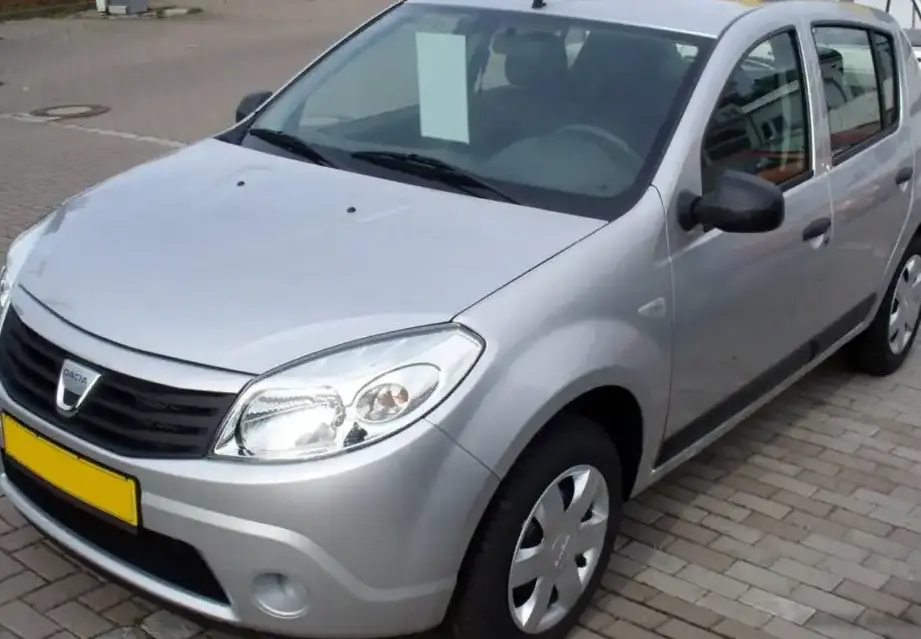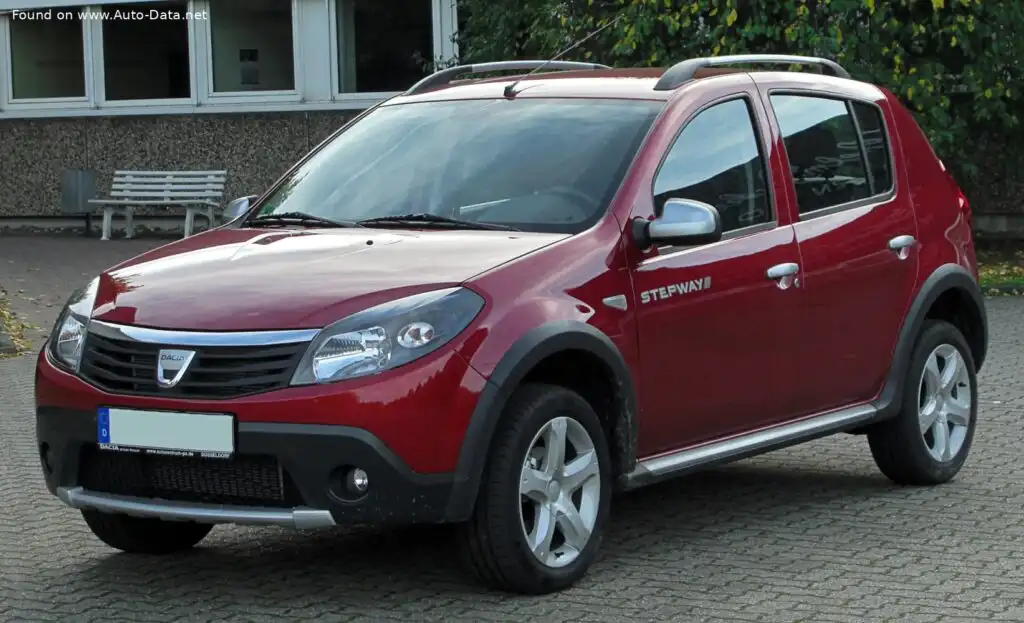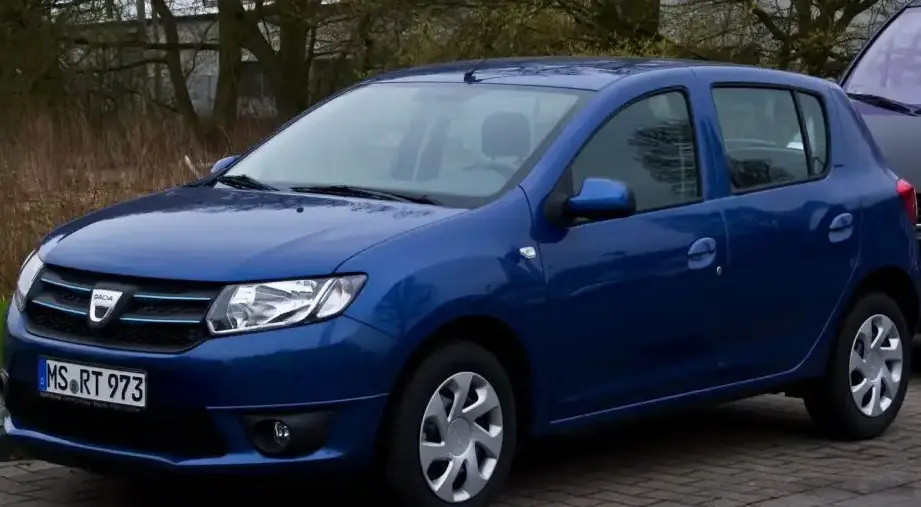
The Dacia Sandero II 1.2 (75 hp) represents an entry-level offering within the second generation of Dacia’s popular Sandero hatchback, produced from 2012 to 2015. Positioned as the most affordable variant in the lineup, it aimed to provide basic, reliable transportation at a competitive price point, primarily targeting cost-conscious buyers in European markets. This model played a significant role in establishing the Sandero II as a best-selling vehicle in several countries, leveraging Dacia’s reputation for value. It was built on the Dacia/Renault X90 platform, also known as the B0 platform.
Technical Specifications
| Brand | Dacia |
| Model | Sandero |
| Generation | Sandero II |
| Type (Engine) | 1.2 (75 Hp) |
| Start of production | 2012 |
| End of production | 2015 |
| Powertrain Architecture | Internal Combustion engine |
| Body type | Hatchback |
| Seats | 5 |
| Doors | 5 |
| Fuel consumption (economy) – urban (NEDC) | 7.6 l/100 km (30.9 US mpg, 37.2 UK mpg, 13.2 km/l) |
| Fuel consumption (economy) – extra urban (NEDC) | 4.9 l/100 km (48 US mpg, 57.6 UK mpg, 20.4 km/l) |
| Fuel consumption (economy) – combined (NEDC) | 5.8 l/100 km (40.6 US mpg, 48.7 UK mpg, 17.2 km/l) |
| CO2 emissions (NEDC) | 135 g/km |
| Fuel Type | Petrol (Gasoline) |
| Acceleration 0 – 100 km/h | 14.5 sec |
| Acceleration 0 – 62 mph | 14.5 sec |
| Acceleration 0 – 60 mph | 13.8 sec |
| Maximum speed | 162 km/h (100.66 mph) |
| Emission standard | Euro 5 |
| Weight-to-power ratio | 12.5 kg/Hp, 79.7 Hp/tonne |
| Weight-to-torque ratio | 8.8 kg/Nm, 113.7 Nm/tonne |
| Power | 75 Hp @ 5500 rpm |
| Power per litre | 65.3 Hp/l |
| Torque | 107 Nm @ 4250 rpm (78.92 lb.-ft. @ 4250 rpm) |
| Engine layout | Front, Transverse |
| Engine Model/Code | D4F 732 |
| Engine displacement | 1149 cm3 (70.12 cu. in.) |
| Number of cylinders | 4 |
| Engine configuration | Inline |
| Cylinder Bore | 69 mm (2.72 in.) |
| Piston Stroke | 76.8 mm (3.02 in.) |
| Compression ratio | 9.8:1 |
| Number of valves per cylinder | 4 |
| Fuel injection system | Multi-port manifold injection |
| Engine aspiration | Naturally aspirated engine |
| Valvetrain | SOHC |
| Engine oil capacity | 4 l (4.23 US qt | 3.52 UK qt) |
| Coolant | 4.5 l (4.76 US qt | 3.96 UK qt) |
| Kerb Weight | 941 kg (2074.55 lbs.) |
| Max. weight | 1500 kg (3306.93 lbs.) |
| Max load | 559 kg (1232.38 lbs.) |
| Trunk (boot) space – minimum | 320 l (11.3 cu. ft.) |
| Trunk (boot) space – maximum | 1200 l (42.38 cu. ft.) |
| Fuel tank capacity | 50 l (13.21 US gal | 11 UK gal) |
| Max. roof load | 80 kg (176.37 lbs.) |
| Permitted trailer load with brakes (12%) | 1100 kg (2425.08 lbs.) |
| Permitted trailer load without brakes | 505 kg (1113.33 lbs.) |
| Permitted towbar download | 75 kg (165.35 lbs.) |
| Length | 4057 mm (159.72 in.) |
| Width | 1733 mm (68.23 in.) |
| Width including mirrors | 1984 mm (78.11 in.) |
| Height | 1523 mm (59.96 in.) |
| Wheelbase | 2589 mm (101.93 in.) |
| Front track | 1497 mm (58.94 in.) |
| Rear (Back) track | 1486 mm (58.5 in.) |
| Front overhang | 818 mm (32.2 in.) |
| Rear overhang | 650 mm (25.59 in.) |
| Ride height (ground clearance) | 163 mm (6.42 in.) |
| Minimum turning circle (turning diameter) | 10.68 m (35.04 ft.) |
| Drivetrain Architecture | The Internal combustion engine (ICE) drives the front wheels of the vehicle. |
| Drive wheel | Front wheel drive |
| Number of gears and type of gearbox | 5 gears, manual transmission |
| Front suspension | Independent type McPherson, Transverse stabilizer |
| Rear suspension | Coil spring, Torsion |
| Front brakes | Ventilated discs, 258×22 mm |
| Rear brakes | Drum, 203 mm |
| Assisting systems | ABS (Anti-lock braking system) |
| Steering type | Steering rack and pinion |
| Power steering | Electric Steering |
| Tires size | 185/65 R15 |
| Wheel rims size | 6J x 15 |
INTRODUCTION
The Dacia Sandero II 1.2 (75 hp) was introduced in 2012 as part of the second-generation Sandero lineup. Built on the Renault-Dacia X90 (B0) platform, it represented a significant update over the first-generation model, offering improved styling, interior quality, and safety features. This particular variant, powered by the 1.2-liter engine, served as the entry point to the Sandero II range, appealing to buyers prioritizing affordability and fuel efficiency. It was primarily sold in European markets, where Dacia had established a strong foothold as a budget-friendly brand.
Powertrain & Engine Architecture
The heart of the Sandero II 1.2 (75 hp) is the D4F 732 engine, a 1.2-liter inline-four cylinder petrol engine. This engine is a naturally aspirated unit utilizing a single overhead camshaft (SOHC) valvetrain and multi-point fuel injection. The engine produces 75 horsepower at 5500 rpm and 107 Nm (78.92 lb-ft) of torque at 4250 rpm. The engine’s design prioritizes fuel economy and reliability over outright performance. The 5-speed manual transmission was standard, designed to maximize fuel efficiency and provide adequate acceleration for everyday driving. The transmission is a conventional setup with synchromesh gears and a cable-operated shift mechanism.
Driving Characteristics
The Sandero II 1.2 (75 hp) offers modest performance. Acceleration from 0 to 100 km/h (0-62 mph) takes approximately 14.5 seconds, and the top speed is around 162 km/h (100.66 mph). The engine feels somewhat underpowered, especially when fully loaded or tackling steep inclines. The 5-speed manual transmission is well-matched to the engine’s characteristics, with gear ratios optimized for fuel efficiency. Compared to higher-output versions of the Sandero II, such as those equipped with the 0.9 TCe turbocharged engine, the 1.2-liter model feels significantly slower and less responsive. However, its simplicity and predictable power delivery make it easy to drive in urban environments.
Equipment & Trim Levels
The 1.2 (75 hp) variant typically came with a basic level of equipment. Standard features generally included power steering, central locking, front electric windows, and an ABS anti-lock braking system. Interior upholstery was typically cloth, and the dashboard featured a simple, functional design. Optional extras, depending on the market, could include air conditioning, a radio/CD player, and alloy wheels. The trim level was generally positioned as the base model, offering essential features at the lowest possible price. It was designed to appeal to buyers who prioritized practicality and affordability over luxury and advanced technology.
Chassis & Braking
The Sandero II 1.2 (75 hp) utilizes a McPherson strut front suspension and a torsion beam rear suspension. This setup provides a comfortable ride quality, although it’s not particularly sporty. The front brakes are ventilated discs, while the rear brakes are drums. This configuration is typical for vehicles in this price segment. The steering is electrically assisted, providing light and easy steering feel. The suspension is tuned for comfort and stability, rather than dynamic handling. Stabilizer bars are present to reduce body roll during cornering, but the overall handling characteristics are best described as safe and predictable.
Market Reception & Comparison
The Dacia Sandero II 1.2 (75 hp) received generally positive reviews for its affordability and fuel efficiency. Critics acknowledged its lack of performance but praised its practicality and low running costs. Compared to other trims in the Sandero II lineup, the 1.2-liter model offered the lowest price point but also the least amount of power and refinement. The 0.9 TCe turbocharged engine, while more expensive, provided significantly better performance and fuel economy. However, the 1.2-liter model remained a popular choice for buyers on a tight budget.
Legacy
The Dacia Sandero II 1.2 (75 hp) has proven to be a reliable and durable vehicle. The D4F engine is known for its simplicity and robustness, and the manual transmission is also generally trouble-free. In the used car market, these models are often sought after for their affordability and low maintenance costs. While not a performance car, the Sandero II 1.2 (75 hp) provides a practical and economical transportation solution for those seeking a budget-friendly hatchback. Its enduring popularity is a testament to Dacia’s commitment to providing value for money.