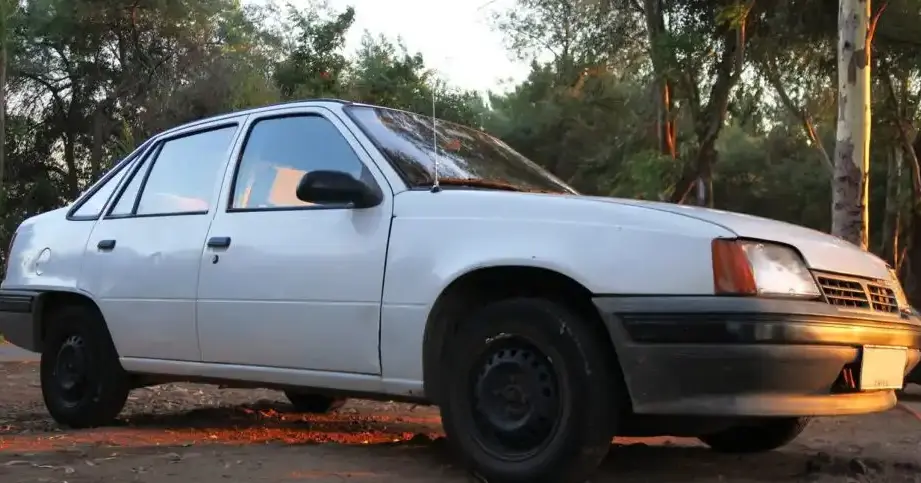
The Daewoo Racer Sedan 1.5 i, producing 75 horsepower, was a key model in Daewoo’s lineup during its 1993-1995 production run. Positioned as an entry-level offering, it represented Daewoo’s attempt to establish a foothold in the competitive compact sedan market, particularly in regions outside of North America where the brand had a stronger presence. The Racer Sedan was based on the Tico platform, offering a relatively affordable and practical transportation solution. This variant, with its 1.5-liter engine and five-speed manual transmission, aimed to balance fuel efficiency with acceptable performance for everyday driving.
Technical Specifications
| Brand | Daewoo |
| Model | Racer |
| Generation | Racer Sedan |
| Type (Engine) | 1.5 i (75 Hp) |
| Start of production | 1993 |
| End of production | 1995 |
| Powertrain Architecture | Internal Combustion engine |
| Body type | Sedan |
| Seats | 5 |
| Doors | 4 |
| Fuel consumption (urban) | 9.3 l/100 km (25.3 US mpg) |
| Fuel consumption (extra urban) | 5.1 l/100 km (46.1 US mpg) |
| Fuel consumption (combined) | 6.3 l/100 km (37.3 US mpg) |
| Fuel Type | Petrol (Gasoline) |
| Acceleration 0 – 100 km/h | 12.5 sec |
| Acceleration 0 – 62 mph | 12.5 sec |
| Acceleration 0 – 60 mph | 11.9 sec |
| Maximum speed | 163 km/h (101.28 mph) |
| Weight-to-power ratio | 12.9 kg/Hp |
| Weight-to-torque ratio | 7.9 kg/Nm |
| Power | 75 Hp @ 5400 rpm |
| Power per litre | 50.1 Hp/l |
| Torque | 123 Nm @ 3200 rpm (90.72 lb.-ft. @ 3200 rpm) |
| Engine layout | Front, Transverse |
| Engine displacement | 1498 cm3 (91.41 cu. in.) |
| Number of cylinders | 4 |
| Engine configuration | Inline |
| Cylinder Bore | 76.5 mm (3.01 in.) |
| Piston Stroke | 81.5 mm (3.21 in.) |
| Compression ratio | 9.5:1 |
| Number of valves per cylinder | 2 |
| Fuel injection system | Single-point injection |
| Engine aspiration | Naturally aspirated |
| Valvetrain | OHC |
| Kerb Weight | 969 kg (2136.28 lbs.) |
| Max. weight | 1460 kg (3218.75 lbs.) |
| Max load | 491 kg (1082.47 lbs.) |
| Trunk (boot) space | 530 l (18.72 cu. ft.) |
| Fuel tank capacity | 50 l (13.21 US gal | 11 UK gal) |
| Length | 4482 mm (176.46 in.) |
| Width | 1662 mm (65.43 in.) |
| Height | 1394 mm (54.88 in.) |
| Wheelbase | 2520 mm (99.21 in.) |
| Front track | 1400 mm (55.12 in.) |
| Rear track | 1406 mm (55.35 in.) |
| Drivetrain Architecture | Front wheel drive |
| Number of gears | 5 gears, manual transmission |
| Front suspension | Wishbone |
| Rear suspension | Suspension with traction connecting levers |
| Front brakes | Ventilated discs |
| Rear brakes | Drum |
| Steering type | Steering rack and pinion |
| Power steering | Hydraulic |
| Tires size | 175/70 R13 |
| Wheel rims size | 13 |
Powertrain & Engine Architecture
The heart of the Racer Sedan 1.5 i was the 1498cc inline-four cylinder engine. This engine, often referred to by its internal code, utilized a single-point fuel injection system – a relatively common technology for the early 1990s, but less sophisticated than multi-point injection. The single injector delivered fuel into the intake manifold, rather than directly into each cylinder. The engine featured an overhead camshaft (OHC) valvetrain with two valves per cylinder. This configuration was chosen for its simplicity and cost-effectiveness. The 75 horsepower output at 5400 rpm and 90.72 lb-ft of torque at 3200 rpm were modest, but adequate for the vehicle’s weight and intended purpose. The five-speed manual transmission was the standard offering, providing a reasonable spread of gears for both city and highway driving. The transmission was designed for durability rather than sporty performance, with relatively long gear ratios.
Driving Characteristics
The 1.5-liter Racer Sedan with the five-speed manual offered a predictable, if uninspiring, driving experience. Acceleration from 0-60 mph took around 11.9 seconds, and top speed was approximately 101 mph. The engine felt somewhat strained at higher speeds, and passing maneuvers required careful planning. The long gear ratios in the manual transmission meant that downshifting was often necessary to maintain momentum when climbing hills or overtaking. Compared to potential higher-trim versions (which were not widely available in many markets), the 1.5i lacked the punch needed for more spirited driving. However, the light weight of the vehicle helped to mitigate the engine’s limitations. The steering was reasonably precise, and the suspension provided a comfortable, if somewhat soft, ride.
Equipment & Trim Levels
The Racer Sedan 1.5 i was typically equipped with basic amenities. Standard features generally included cloth upholstery, a simple dashboard layout, and manual windows and door locks. Air conditioning was often an optional extra, as were features like a radio/cassette player. The interior was functional and durable, but lacked the refinement of more expensive competitors. Trim levels were often limited, with the 1.5i representing the base model. Optional extras were usually bundled into packages, offering a limited degree of customization.
Chassis & Braking
The Racer Sedan utilized a front-wheel-drive layout with a relatively simple chassis design. The front suspension employed a wishbone configuration, while the rear suspension featured a setup with traction connecting levers. The braking system consisted of ventilated discs at the front and drum brakes at the rear. The drum brakes on the rear were a cost-saving measure, and offered less stopping power than disc brakes. Power steering was standard, making the vehicle easier to maneuver at low speeds. The tires were typically 175/70 R13, providing a reasonable balance of grip and ride comfort.
Market Reception & Comparison
The Daewoo Racer Sedan 1.5 i was generally viewed as a practical and affordable option in its segment. Critics praised its fuel efficiency and low price point, but noted its lack of refinement and modest performance. Compared to competitors like the Toyota Corolla or Honda Civic, the Racer Sedan offered less power and a less sophisticated interior. However, it often undercut those rivals in price. Fuel economy was a strong point, with combined figures around 37.3 US mpg. Reliability was generally considered acceptable, although parts availability could be an issue in some markets.
Legacy
The Daewoo Racer Sedan 1.5 i, while not a groundbreaking vehicle, played a role in establishing Daewoo as a competitor in the global automotive market. The 1.5-liter engine and five-speed manual transmission proved to be reasonably durable, and many examples remain on the road today. In the used car market, these Racers are often sought after by enthusiasts looking for an affordable and simple classic. While not known for its performance or luxury, the Racer Sedan 1.5 i represents a snapshot of early 1990s automotive engineering, offering a glimpse into a period when affordability and practicality were paramount.