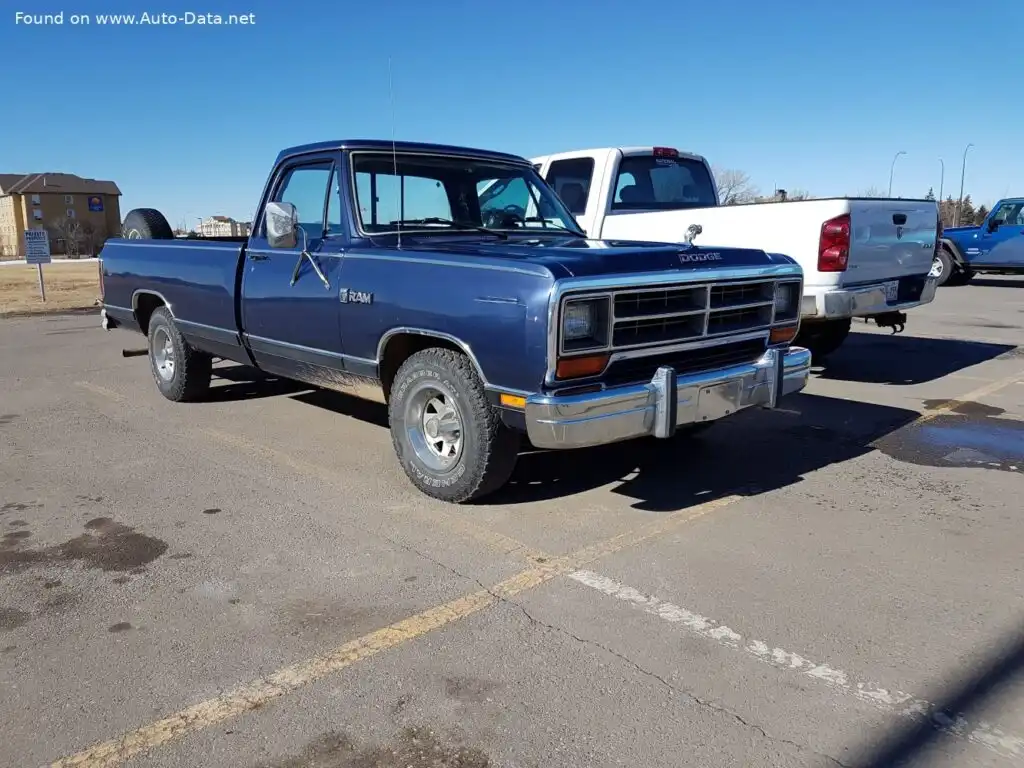
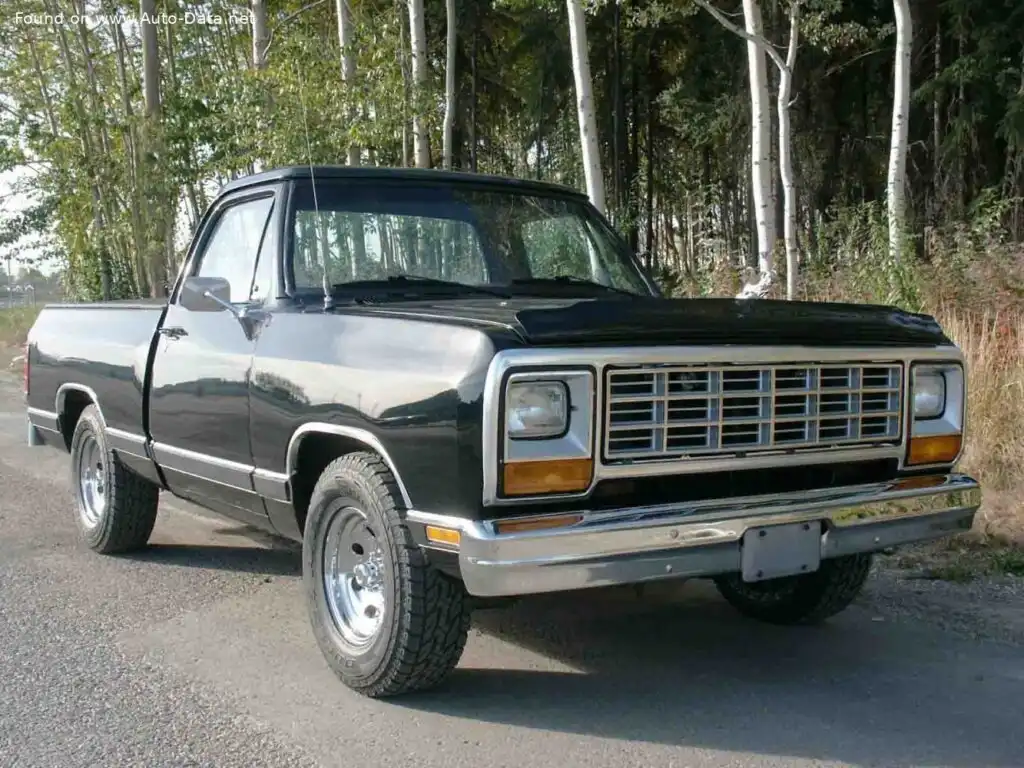
The Dodge Ram 1500 Club Cab Long Bed (BR/BE) with the 5.2 V8 engine and four-speed automatic transmission was a mainstay of Dodge’s full-size pickup truck lineup from 1994 through 1998. Representing the second generation of the Ram, these trucks (designated BR and BE depending on production year and minor updates) offered a blend of work-truck capability and increasing comfort features. This particular configuration, combining the robust 318 cubic inch V8 with the convenience of an automatic transmission and four-wheel drive, was a popular choice for buyers needing a versatile vehicle for both daily driving and demanding tasks. It occupied a middle ground in the 1500 lineup, offering more power and capability than the base 3.9L V6 models, but remaining more affordable than the heavier-duty 2500 and 3500 series trucks.
Technical Specifications
| Brand | Dodge |
| Model | RAM |
| Generation | Ram 1500 Club Cab Long Bed (BR/BE) |
| Type (Engine) | 5.2 V8 (220 Hp) 4×4 Automatic |
| Start of production | 1994 |
| End of production | 1998 |
| Powertrain Architecture | Internal Combustion engine |
| Body type | Pick-up |
| Seats | 6 |
| Doors | 2 |
| Fuel Type | Petrol (Gasoline) |
| Power | 220 Hp @ 4400 rpm |
| Power per litre | 42.2 Hp/l |
| Torque | 407 Nm @ 3200 rpm / 300.19 lb.-ft. @ 3200 rpm |
| Engine layout | Front, Longitudinal |
| Engine Model/Code | 318 Magnum V8 |
| Engine displacement | 5211 cm3 / 317.99 cu. in. |
| Number of cylinders | 8 |
| Engine configuration | V-engine |
| Fuel injection system | Multi-port manifold injection |
| Engine aspiration | Naturally aspirated engine |
| Engine oil capacity | 4.7 l / 4.97 US qt | 4.14 UK qt |
| Coolant | 19 l / 20.08 US qt | 16.72 UK qt |
| Max. weight | 2903 kg / 6400.02 lbs |
| Permitted trailer load with brakes (12%) | 3538 kg / 7799.95 lbs |
| Length | 6198 mm / 244.02 in |
| Width including mirrors | 2017 mm / 79.41 in |
| Height | 1892 mm / 74.49 in |
| Wheelbase | 3937 mm / 155 in |
| Approach angle | 30.6° |
| Departure angle | 24.7° |
| Ramp-over (brakeover) angle | 17.1° |
| Drivetrain Architecture | The Internal combustion engine (ICE) drives the rear wheels permanently, and the front wheels are driven through an electrically or mechanically operated clutch if necessary. |
| Drive wheel | All wheel drive (4×4) |
| Number of gears and type of gearbox | 4 gears, automatic transmission |
| Front suspension | Dependent spring suspension with anti-roll bar |
| Rear suspension | Rigid axle suspension, Leaf spring |
| Front brakes | Disc |
| Rear brakes | Drum |
| Assisting systems | ABS (Anti-lock braking system) |
| Steering type | Steering rack and pinion |
| Power steering | Hydraulic Steering |
| Tires size | 225/75 R15 |
| Wheel rims size | 7J x 16 |
Powertrain & Engine Architecture
The heart of this Ram 1500 variant was the 318 Magnum V8 engine, internally designated as the 318 cubic inch (5.2L) powerplant. This engine, a member of the LA engine family, was known for its durability and relatively simple design. It featured a cast iron block and cylinder heads, a two-barrel carburetor (later models transitioned to multi-port fuel injection), and a hydraulic lifter camshaft. The multi-port fuel injection system, introduced in later years of this generation, improved fuel efficiency and throttle response compared to the earlier carbureted versions. The 42RE four-speed automatic transmission was the standard pairing for the 5.2L V8. This transmission was a robust unit designed to handle the engine’s torque output, but it wasn’t known for its refinement or fuel efficiency by modern standards. The 4×4 system employed a part-time transfer case, allowing the driver to switch between two-wheel drive and four-wheel drive as needed.
Driving Characteristics
The 5.2L V8, producing 220 horsepower and 300 lb-ft of torque, provided adequate power for most tasks. However, it wasn’t a particularly quick truck. Acceleration was leisurely, and passing maneuvers required planning. The four-speed automatic transmission, while reliable, had relatively wide gear ratios, contributing to a less-than-sporty driving experience. Compared to the manual transmission versions of the Ram 1500, the automatic suffered a slight performance penalty. The automatic also felt less responsive, particularly when downshifting. The 4×4 system provided enhanced traction in slippery conditions, making it suitable for light off-road use and inclement weather. The long wheelbase of the Club Cab Long Bed configuration contributed to a comfortable ride, but also made the truck feel large and cumbersome in tight spaces.
Equipment & Trim Levels
The Club Cab configuration offered a small rear seat, increasing passenger capacity to six. Standard features typically included air conditioning, a basic AM/FM radio, and cloth upholstery. The BR/BE models saw incremental improvements in interior materials and features over their production run. Optional extras included power windows and locks, a cassette player, upgraded sound systems, and a sliding rear window. The trim level could vary, with some models offering color-matched exterior trim and upgraded interior appointments. The long bed provided ample cargo space, making it ideal for hauling materials or equipment.
Chassis & Braking
The Ram 1500 BR/BE utilized a body-on-frame construction, providing a robust and durable platform. The front suspension consisted of a solid axle with leaf springs and an anti-roll bar. The rear suspension was a traditional leaf spring setup. This suspension configuration prioritized load-carrying capacity over ride comfort. Braking duties were handled by disc brakes in the front and drum brakes in the rear. An anti-lock braking system (ABS) was available, but not standard on all models. The steering system was a hydraulic power-assisted rack and pinion setup, providing reasonable steering feel and maneuverability.
Market Reception & Comparison
The Dodge Ram 1500 BR/BE with the 5.2L V8 and automatic transmission was generally well-received by buyers seeking a capable and affordable full-size pickup. Critics praised the truck’s robust construction and comfortable ride, but noted its lack of refinement compared to some competitors. Compared to the 3.9L V6 models, the 5.2L offered a significant performance boost, making it a more suitable choice for towing and hauling. However, the 5.2L consumed more fuel. The 5.2L was also a simpler and generally more reliable engine than the later, more complex engines offered in subsequent Ram generations. The 5.2L automatic combination offered a good balance of capability and affordability, making it a popular choice for both personal and commercial use.
Legacy
The 318 Magnum V8 and 42RE automatic transmission combination proved to be a durable and reliable powertrain. Many of these trucks remain on the road today, a testament to their robust construction. While not particularly fuel-efficient by modern standards, the 5.2L V8 is relatively easy to maintain and repair. In the used car market, these Ram 1500s are often sought after by enthusiasts and those needing a dependable work truck. Parts availability is generally good, and the relatively simple design makes them accessible to DIY mechanics. The BR/BE generation Ram 1500, particularly with the 5.2L V8, represents a solid and dependable era in American pickup truck history.