
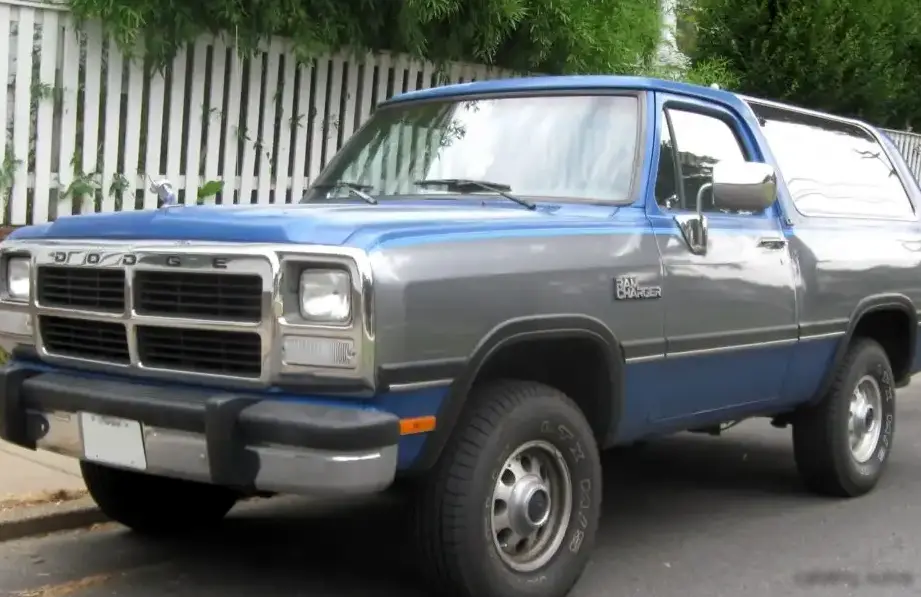
The Dodge Ramcharger 5.2i V8, produced from 1988 to 1993, represents a significant iteration of the second-generation Ramcharger (1974-1993). This variant, equipped with the LA series 318 cubic inch (5.2 liter) V8 engine producing 172 horsepower, occupied a middle ground in the Ramcharger lineup, offering a balance between affordability and capability. The Ramcharger, a full-size two-door SUV, was Dodge’s answer to the Chevrolet K5 Blazer and Ford Bronco, primarily aimed at the North American market where large, body-on-frame SUVs were highly popular for both work and recreational use. This particular engine and transmission combination was a common choice for buyers seeking a robust and reliable vehicle for towing, off-roading, and general transportation.
Technical Specifications
| Brand | Dodge |
| Model | Ramcharger |
| Generation | Ramcharger (Second Generation) |
| Type (Engine) | 5.2 i V8 (172 Hp) |
| Start of production | 1988 |
| End of production | 1993 |
| Powertrain Architecture | Internal Combustion engine |
| Body type | SUV |
| Seats | 5 |
| Doors | 3 |
| Fuel consumption (urban) | 25 l/100 km (9.4 US mpg, 11.3 UK mpg, 4 km/l) |
| Fuel consumption (extra urban) | 14 l/100 km (16.8 US mpg, 20.2 UK mpg, 7.1 km/l) |
| Fuel Type | Petrol (Gasoline) |
| Maximum speed | 160 km/h (99.42 mph) |
| Weight-to-power ratio | 10.5 kg/Hp (95.6 Hp/tonne) |
| Weight-to-torque ratio | 5.1 kg/Nm (196.1 Nm/tonne) |
| Power | 172 Hp @ 4000 rpm |
| Power per litre | 33 Hp/l |
| Torque | 353 Nm @ 2500 rpm (260.36 lb.-ft. @ 2500 rpm) |
| Engine displacement | 5210 cm3 (317.93 cu. in.) |
| Number of cylinders | 8 |
| Engine configuration | V-engine |
| Cylinder Bore | 99.31 mm (3.91 in.) |
| Piston Stroke | 84.07 mm (3.31 in.) |
| Compression ratio | 9.2:1 |
| Number of valves per cylinder | 2 |
| Fuel injection system | Single-point injection |
| Engine aspiration | Naturally aspirated engine |
| Engine oil capacity | 4.25 l (4.49 US qt, 3.74 UK qt) |
| Coolant capacity | 16.1 l (17.01 US qt, 14.17 UK qt) |
| Kerb Weight | 1800 kg (3968.32 lbs.) |
| Max. weight | 2500 kg (5511.56 lbs.) |
| Max load | 700 kg (1543.24 lbs.) |
| Fuel tank capacity | 129 l (34.08 US gal, 28.38 UK gal) |
| Length | 4690 mm (184.65 in.) |
| Width | 2020 mm (79.53 in.) |
| Height | 1770 mm (69.69 in.) |
| Wheelbase | 2690 mm (105.91 in.) |
| Front track | 1610 mm (63.39 in.) |
| Rear track | 1610 mm (63.39 in.) |
| Drivetrain Architecture | Rear wheel drive |
| Number of gears | 4 |
| Gearbox type | Manual transmission |
| Front suspension | Coil spring |
| Rear suspension | Coil spring |
| Front brakes | Disc |
| Rear brakes | Disc |
| Assisting systems | ABS (Anti-lock braking system) |
| Power steering | Hydraulic Steering |
| Tires size | 235/75 R15 |
Powertrain & Engine Architecture
The heart of the Ramcharger 5.2i was the LA 318 engine, a robust and relatively simple V8. This engine, a member of the LA series small-block V8 family, was known for its durability and ease of maintenance. The 5.2-liter displacement was achieved with a 3.91-inch bore and a 3.31-inch stroke. The engine utilized a cast iron block and cylinder heads, and featured a two-valve-per-cylinder configuration operated by a hydraulic lifter camshaft. Fuel delivery was handled by a single-point fuel injection system (throttle body injection), which was a cost-effective solution compared to multi-port fuel injection. The 172 horsepower output, while not exceptionally high by modern standards, provided adequate power for the Ramcharger’s substantial weight. The standard transmission for this variant was a four-speed manual, offering drivers direct control over the engine’s power.
Driving Characteristics
The Ramcharger 5.2i with the manual transmission offered a fairly utilitarian driving experience. Acceleration was adequate, but not brisk, with the 353 lb-ft of torque providing more usable power for towing and climbing hills than outright speed. The four-speed manual transmission featured relatively widely spaced gear ratios, prioritizing low-end grunt over high-speed cruising. Compared to the higher-output 360 cubic inch (5.9 liter) V8 option, the 5.2i felt less powerful, particularly at higher speeds. However, it also offered better fuel economy and a slightly more manageable driving experience. Compared to the diesel options, the 5.2i provided smoother and quieter operation, but lacked the diesel’s exceptional low-end torque and fuel efficiency.
Equipment & Trim Levels
The Ramcharger 5.2i typically came with a fairly basic level of equipment. Standard features generally included a vinyl interior, manual windows and locks, and a basic AM/FM radio. Air conditioning was a popular option, as was a tilt steering wheel. Higher trim levels, such as the LE (Luxury Edition), offered upgrades like cloth upholstery, upgraded sound systems, and additional exterior trim. The Ramcharger’s interior was functional and durable, designed to withstand the rigors of off-road use and everyday life.
Chassis & Braking
The Ramcharger was built on a rugged body-on-frame chassis, providing a solid foundation for both on-road and off-road driving. The suspension consisted of coil springs at all four corners, offering a comfortable ride, although it could be somewhat bouncy when unloaded. Braking duties were handled by disc brakes on all four wheels, providing adequate stopping power for the vehicle’s weight. An optional anti-lock braking system (ABS) was available, improving braking performance in slippery conditions. The Ramcharger’s relatively high ground clearance and robust suspension made it a capable off-road vehicle, particularly when equipped with four-wheel drive (which was an optional upgrade).
Market Reception & Comparison
The Dodge Ramcharger 5.2i V8 was generally well-received by buyers looking for a capable and affordable full-size SUV. Critics praised its durability and reliability, but noted its relatively basic interior and lackluster fuel economy. Compared to the Chevrolet K5 Blazer and Ford Bronco, the Ramcharger offered a similar level of capability at a competitive price. The 5.2i engine was considered a good compromise between power and fuel efficiency, making it a popular choice for buyers who didn’t need the extra power of the 360 V8. However, the single-point fuel injection system was seen as somewhat outdated compared to the multi-port fuel injection systems offered by some competitors.
Legacy
The Dodge Ramcharger, and specifically the 5.2i V8 variant, has developed a loyal following among collectors and enthusiasts. The LA 318 engine is known for its longevity and relatively simple maintenance requirements, making it a reliable powerplant for classic truck and SUV owners. Today, well-maintained Ramchargers are sought after for their retro styling and rugged capabilities. While fuel economy is poor by modern standards, the Ramcharger’s robust construction and simple design continue to appeal to those who appreciate a classic American SUV. Parts availability remains reasonably good, ensuring that these vehicles can be kept on the road for years to come.
