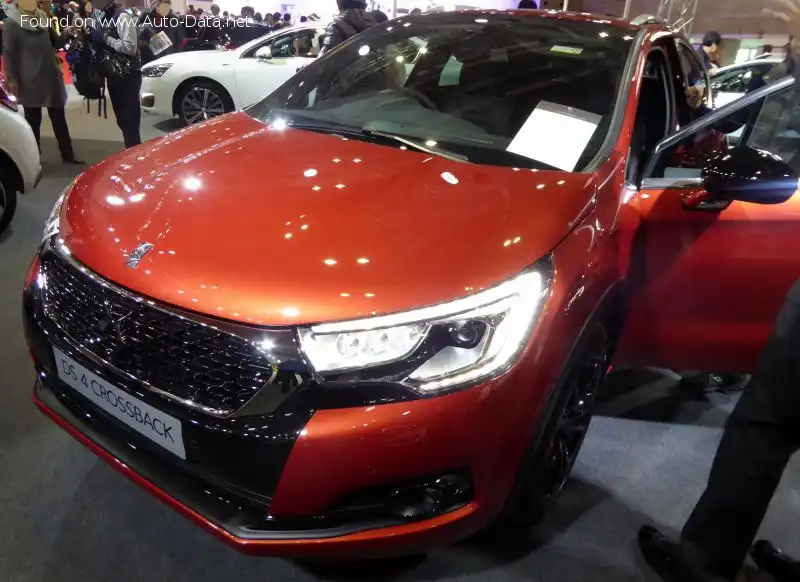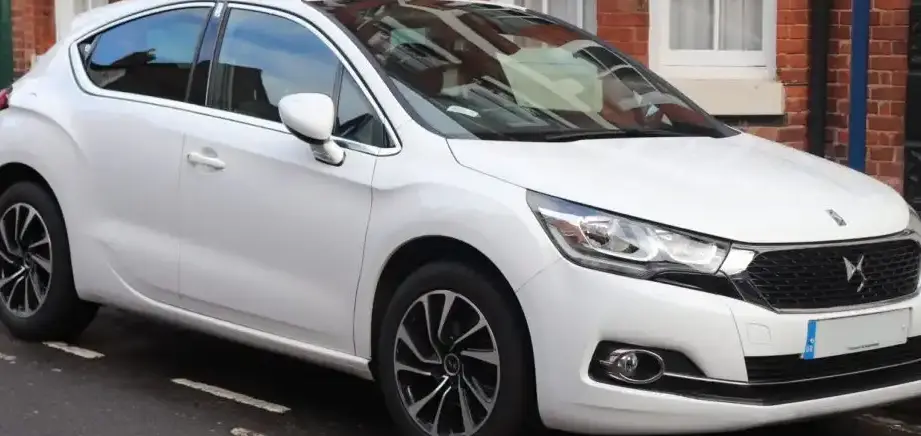
The DS 4 1.6 BlueHDi 120 Stop&Start is a front-wheel-drive compact hatchback produced by the French manufacturer DS Automobiles between 2015 and 2018. Positioned as a mid-range offering within the DS 4 lineup, it aimed to provide a balance of fuel efficiency, reasonable performance, and comfort. This variant was part of the first generation of the DS 4, which itself was based on the PSA Group’s EMP2 platform, shared with models like the Peugeot 308 and Citroën C4 Cactus. The BlueHDi engine family represented PSA’s advanced diesel technology, focusing on reducing emissions and improving fuel economy.
Technical Specifications
| Brand | DS |
| Model | 4 |
| Generation | 4 |
| Type (Engine) | 1.6 BlueHDi (120 Hp) Stop&Start |
| Start of production | 2015 |
| End of production | 2018 |
| Powertrain Architecture | Internal Combustion engine |
| Body type | Hatchback |
| Seats | 5 |
| Doors | 5 |
| Fuel consumption (urban) | 4.3-4.5 l/100 km (54.7 – 52.3 US mpg) |
| Fuel consumption (extra urban) | 3.4-3.6 l/100 km (69.2 – 65.3 US mpg) |
| Fuel consumption (combined) | 3.7-3.9 l/100 km (63.6 – 60.3 US mpg) |
| CO2 emissions | 97-103 g/km |
| Fuel Type | Diesel |
| Acceleration 0 – 100 km/h | 12-12.3 sec |
| Acceleration 0 – 62 mph | 12-12.3 sec |
| Acceleration 0 – 60 mph | 11.4 sec |
| Maximum speed | 189-193 km/h (117.44 – 119.92 mph) |
| Emission standard | Euro 6 |
| Weight-to-power ratio | 10.8 kg/Hp |
| Weight-to-torque ratio | 4.3 kg/Nm |
| Power | 120 Hp @ 3500 rpm |
| Torque | 300 Nm @ 1750 rpm (221.27 lb.-ft. @ 1750 rpm) |
| Engine layout | Front, Transverse |
| Engine Model/Code | BHZ DV6FC |
| Engine displacement | 1560 cm3 (95.2 cu. in.) |
| Number of cylinders | 4 |
| Engine configuration | Inline |
| Cylinder Bore | 75 mm (2.95 in.) |
| Piston Stroke | 88.3 mm (3.48 in.) |
| Number of valves per cylinder | 2 |
| Fuel injection system | Diesel Commonrail |
| Engine aspiration | Turbocharger, Intercooler |
| Engine oil capacity | 3.75 l (3.96 US qt | 3.3 UK qt) |
| Kerb Weight | 1290-1408 kg (2843.96 – 3104.11 lbs.) |
| Max. weight | 1860 kg (4100.6 lbs.) |
| Max load | 452-570 kg (996.49 – 1256.63 lbs.) |
| Trunk (boot) space – minimum | 359 l (12.68 cu. ft.) |
| Fuel tank capacity | 60 l (15.85 US gal | 13.2 UK gal) |
| Permitted trailer load with brakes (12%) | 1550 kg (3417.17 lbs.) |
| Permitted trailer load without brakes | 680 kg (1499.14 lbs.) |
| Permitted towbar download | 75 kg (165.35 lbs.) |
| Length | 4284 mm (168.66 in.) |
| Width | 1810 mm (71.26 in.) |
| Width including mirrors | 2052 mm (80.79 in.) |
| Height | 1497-1502 mm (58.94 – 59.13 in.) |
| Wheelbase | 2612 mm (102.83 in.) |
| Front track | 1532 mm (60.31 in.) |
| Rear track | 1527 mm (60.12 in.) |
| Front overhang | 933 mm (36.73 in.) |
| Rear overhang | 739 mm (29.09 in.) |
| Minimum turning circle | 10.7 m (35.1 ft.) |
| Drivetrain Architecture | Front wheel drive |
| Number of gears and type of gearbox | 6 gears, manual transmission |
| Front suspension | Independent type McPherson |
| Rear suspension | Semi-independent, coil spring |
| Front brakes | Ventilated discs |
| Rear brakes | Disc |
| Tires size | 215/60 R16; 215/55 R17; 225/45 R18 |
| Wheel rims size | 16; 17; 18 |
INTRODUCTION
The DS 4 1.6 BlueHDi 120 Stop&Start, launched in 2015, represented DS Automobiles’ attempt to carve out a niche in the premium compact segment. It was positioned as a more stylish and sophisticated alternative to mainstream rivals like the Volkswagen Golf and Ford Focus. The “BlueHDi” designation signified the use of PSA’s advanced diesel engine technology, designed to meet stringent Euro 6 emissions standards. The Stop&Start system further enhanced fuel efficiency by automatically shutting off the engine when the vehicle was stationary. This particular variant, with its 120 horsepower output, was a popular choice for buyers seeking a balance between performance and economy.
Powertrain & Engine Architecture
At the heart of the DS 4 1.6 BlueHDi 120 was the DV6FC engine, a 1.6-liter inline-four cylinder diesel. This engine, identified by the code BHZ, featured a turbocharger with an intercooler to boost power and efficiency. It utilized a common-rail direct fuel injection system, delivering fuel directly into the combustion chamber at extremely high pressure for optimized combustion. The engine also incorporated a particulate filter to trap soot particles, reducing harmful emissions. The 120 horsepower peak was achieved at 3500 rpm, while the 300 Nm (221 lb-ft) of torque was available from as low as 1750 rpm, providing good low-end responsiveness. The engine was paired with a six-speed manual transmission, which was the standard offering for this trim level. The transmission was chosen for its efficiency and driver engagement, although an optional six-speed automatic transmission was available.
Driving Characteristics
The DS 4 1.6 BlueHDi 120 offered a comfortable and refined driving experience. While not particularly sporty, the engine provided adequate power for everyday driving and highway cruising. Acceleration from 0 to 60 mph took around 11.4 seconds, and top speed was approximately 118 mph. The turbocharger provided a noticeable boost in power during acceleration, but the engine could feel slightly strained at higher speeds. The six-speed manual transmission offered precise shifts, and the gear ratios were well-suited to the engine’s torque curve. Compared to the more powerful DS 4 variants, such as those equipped with larger engines, the 1.6 BlueHDi 120 prioritized fuel economy over outright performance. The suspension was tuned for comfort, absorbing bumps and imperfections in the road effectively.
Equipment & Trim Levels
The DS 4 1.6 BlueHDi 120 typically came equipped with a respectable level of standard features. These included air conditioning, a touchscreen infotainment system with Bluetooth connectivity, alloy wheels, and a leather-wrapped steering wheel. Higher trim levels offered additional features such as automatic climate control, parking sensors, a reversing camera, and upgraded upholstery. Optional extras included a panoramic sunroof, xenon headlights, and a premium sound system. Interior materials were generally of good quality, reflecting the DS brand’s focus on luxury and refinement. The dashboard layout was modern and ergonomic, with controls logically arranged for ease of use.
Chassis & Braking
The DS 4 1.6 BlueHDi 120 featured a McPherson strut front suspension and a semi-independent coil spring rear suspension. This setup provided a good balance of ride comfort and handling. The front brakes were ventilated discs, while the rear brakes were solid discs. Anti-lock Braking System (ABS) was standard, enhancing safety and stability during braking. The steering was electrically assisted, providing light and precise steering feel. The chassis was designed to be relatively lightweight, contributing to the vehicle’s fuel efficiency and agility.
Market Reception & Comparison
The DS 4 1.6 BlueHDi 120 was generally well-received by automotive critics. It was praised for its fuel efficiency, comfortable ride, and stylish design. However, some critics noted that the engine could feel underpowered at times, particularly when fully loaded or driving uphill. Compared to other trims in the DS 4 lineup, the 1.6 BlueHDi 120 offered the best fuel economy but the least amount of performance. It was a popular choice for buyers who prioritized economy and practicality over sporty driving dynamics. Against competitors like the Volkswagen Golf TDI and Ford Focus EcoBoost, the DS 4 offered a more distinctive design and a more luxurious interior.
Legacy
The 1.6 BlueHDi engine proved to be a reliable and durable powertrain, although, like all diesel engines, it required regular maintenance, including oil changes and filter replacements. The Stop&Start system, while beneficial for fuel economy, could potentially be prone to failure over time. In the used car market, the DS 4 1.6 BlueHDi 120 remains a relatively affordable and practical option. Its fuel efficiency and comfortable ride continue to appeal to buyers seeking a stylish and economical compact hatchback. However, potential buyers should be aware of the potential maintenance costs associated with diesel engines and the Stop&Start system.