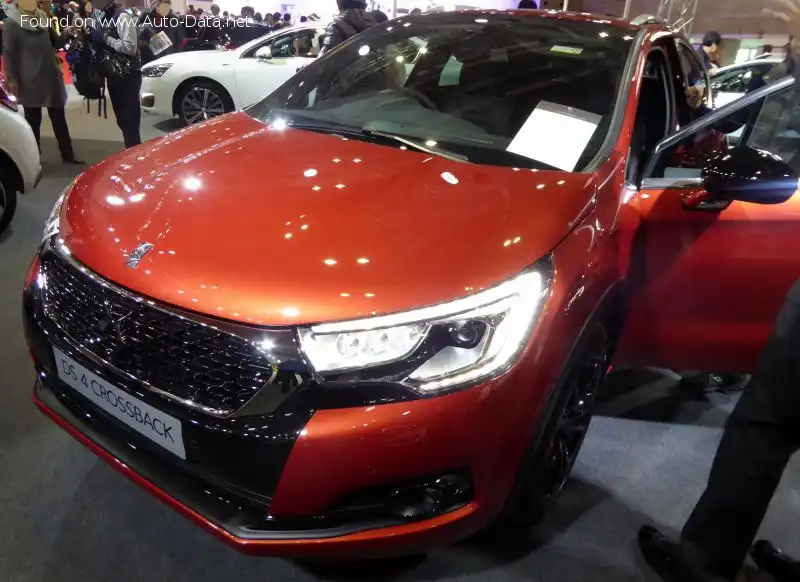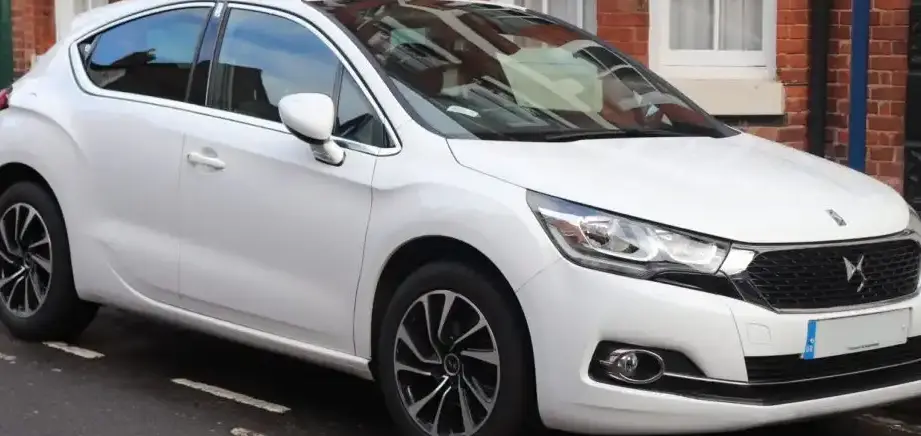
The DS 4 1.6 THP 210 Stop&Start, produced from 2015 to 2018, represents a performance-oriented variant within the second generation of the DS 4 hatchback. Positioned as a mid-to-high trim level, it aimed to offer a blend of sporty driving dynamics and relatively efficient fuel consumption within the compact premium segment. This model was a key part of DS Automobiles’ initial efforts to establish a distinct brand identity separate from Citroën, focusing on French luxury and technology. It competed with vehicles like the Audi A3, BMW 1 Series, and Volkswagen Golf, offering a unique alternative with its distinctive styling and advanced features.
Technical Specifications
| Brand | DS |
| Model | 4 |
| Generation | 4 |
| Type (Engine) | 1.6 THP (210 Hp) Stop&Start |
| Start of production | 2015 |
| End of production | 2018 |
| Powertrain Architecture | Internal Combustion engine |
| Body type | Hatchback |
| Seats | 5 |
| Doors | 5 |
| Fuel consumption (urban) | 7.6 l/100 km (30.9 US mpg, 37.2 UK mpg, 13.2 km/l) |
| Fuel consumption (extra urban) | 5 l/100 km (47 US mpg, 56.5 UK mpg, 20 km/l) |
| Fuel consumption (combined) | 5.9 l/100 km (39.9 US mpg, 47.9 UK mpg, 16.9 km/l) |
| CO2 emissions | 138 g/km |
| Fuel Type | Petrol (Gasoline) |
| Acceleration 0 – 100 km/h | 8.4 sec |
| Acceleration 0 – 62 mph | 8.4 sec |
| Acceleration 0 – 60 mph | 8 sec |
| Maximum speed | 235 km/h (146.02 mph) |
| Emission standard | Euro 6 |
| Weight-to-power ratio | 6.3 kg/Hp, 159.9 Hp/tonne |
| Weight-to-torque ratio | 4.6 kg/Nm, 217.1 Nm/tonne |
| Power | 210 Hp @ 6000 rpm |
| Power per litre | 131.4 Hp/l |
| Torque | 285 Nm @ 1750 rpm (210.21 lb.-ft. @ 1750 rpm) |
| Engine layout | Front, Transverse |
| Engine Model/Code | 5GM EP6FDTX |
| Engine displacement | 1598 cm3 (97.52 cu. in.) |
| Number of cylinders | 4 |
| Engine configuration | Inline |
| Cylinder Bore | 77 mm (3.03 in.) |
| Piston Stroke | 85.8 mm (3.38 in.) |
| Number of valves per cylinder | 4 |
| Fuel injection system | Direct injection |
| Engine aspiration | Turbocharger, Intercooler |
| Engine oil capacity | 4.25 l (4.49 US qt | 3.74 UK qt) |
| Kerb Weight | 1313-1387 kg (2894.67 – 3057.81 lbs.) |
| Max. weight | 1845 kg (4067.53 lbs.) |
| Max load | 458-532 kg (1009.72 – 1172.86 lbs.) |
| Trunk (boot) space – minimum | 359 l (12.68 cu. ft.) |
| Fuel tank capacity | 60 l (15.85 US gal | 13.2 UK gal) |
| Permitted trailer load with brakes (12%) | 1250 kg (2755.78 lbs.) |
| Permitted trailer load without brakes | 655 kg (1444.03 lbs.) |
| Permitted towbar download | 75 kg (165.35 lbs.) |
| Length | 4284 mm (168.66 in.) |
| Width | 1810 mm (71.26 in.) |
| Width including mirrors | 2052 mm (80.79 in.) |
| Height | 1497-1502 mm (58.94 – 59.13 in.) |
| Wheelbase | 2612 mm (102.83 in.) |
| Front track | 1532 mm (60.31 in.) |
| Rear (Back) track | 1527 mm (60.12 in.) |
| Front overhang | 933 mm (36.73 in.) |
| Rear overhang | 739 mm (29.09 in.) |
| Minimum turning circle | 10.7 m (35.1 ft.) |
| Drivetrain Architecture | Front wheel drive |
| Drive wheel | Front wheel drive |
| Number of gears and type of gearbox | 6 gears, manual transmission |
| Front suspension | Independent type McPherson |
| Rear suspension | Semi-independent, coil spring |
| Front brakes | Ventilated discs |
| Rear brakes | Disc |
| Assisting systems | ABS (Anti-lock braking system) |
| Steering type | Steering rack and pinion |
| Power steering | Electric Steering |
| Tires size | 225/45 R18; 225/40 R19 |
| Wheel rims size | 18; 19 |
Powertrain & Engine Architecture
The DS 4 1.6 THP 210 Stop&Start is powered by the PSA Group’s 5GM EP6FDTX engine, a 1.6-liter turbocharged inline-four cylinder gasoline engine. This engine is part of the Prince engine family, developed jointly by PSA and BMW. The “THP” designation stands for “Turbo High Pressure,” indicating the use of a twin-scroll turbocharger and direct fuel injection. The direct injection system, operating at pressures up to 200 bar, ensures precise fuel delivery for optimal combustion and efficiency. The engine features a variable valve timing system on both intake and exhaust valves, further enhancing performance and responsiveness. The Stop&Start system automatically shuts off the engine when the vehicle is stationary (at traffic lights, for example) to reduce fuel consumption and emissions. The engine produces 210 horsepower at 6000 rpm and 285 Nm (210 lb-ft) of torque at 1750 rpm. This power is delivered through a six-speed manual transmission, driving the front wheels.
Driving Characteristics
The DS 4 1.6 THP 210 offered a noticeably more engaging driving experience compared to lower-powered variants. The turbocharger provides strong mid-range acceleration, making overtaking maneuvers relatively effortless. While not a dedicated sports car, the engine’s power output and the chassis’s tuning resulted in a responsive and enjoyable drive. The six-speed manual transmission allows for precise gear selection, although the gear ratios are geared towards fuel efficiency rather than outright performance. Compared to the diesel options, the 1.6 THP offered a more immediate power delivery and a more spirited engine note. However, it did require more frequent visits to the fuel pump. The suspension, while comfortable for everyday driving, could feel slightly firm over rough road surfaces.
Equipment & Trim Levels
The DS 4 1.6 THP 210 typically came equipped with a generous level of standard features. These included automatic climate control, a touchscreen infotainment system with navigation, Bluetooth connectivity, and rear parking sensors. Higher trim levels offered additional features such as leather upholstery, panoramic sunroof, and advanced driver-assistance systems like blind-spot monitoring and lane departure warning. The interior design emphasized a premium feel, with high-quality materials and a distinctive dashboard layout. Optional extras included a premium sound system and adaptive headlights.
Chassis & Braking
The DS 4 1.6 THP 210 utilized a McPherson strut front suspension and a semi-independent coil spring rear suspension. This setup provided a good balance between comfort and handling. The braking system consisted of ventilated discs at the front and solid discs at the rear, providing adequate stopping power for the vehicle’s weight and performance. Anti-lock Braking System (ABS) and Electronic Stability Control (ESC) were standard features, enhancing safety and stability.
Market Reception & Comparison
The DS 4 1.6 THP 210 was generally well-received by automotive critics, who praised its stylish design, comfortable interior, and strong engine performance. However, some reviewers noted that the ride quality could be improved and that the infotainment system was not as intuitive as some competitors. Compared to the 1.2 PureTech and diesel variants, the 1.6 THP offered a significant performance upgrade but at the cost of increased fuel consumption. It positioned itself as a compelling alternative to established premium hatchbacks, offering a unique blend of French flair and technology.
Legacy
The 1.6 THP engine, while generally reliable, has been known to exhibit issues with carbon buildup on the intake valves, particularly in vehicles that primarily undertake short journeys. Regular servicing and the use of quality fuel are crucial to mitigate this risk. The DS 4 1.6 THP 210 remains a relatively sought-after model on the used car market, appealing to buyers who prioritize performance and style. Its distinctive design and relatively low mileage examples command a premium compared to lower-spec variants. The model represents an important step in DS Automobiles’ journey to establish itself as a standalone luxury brand.