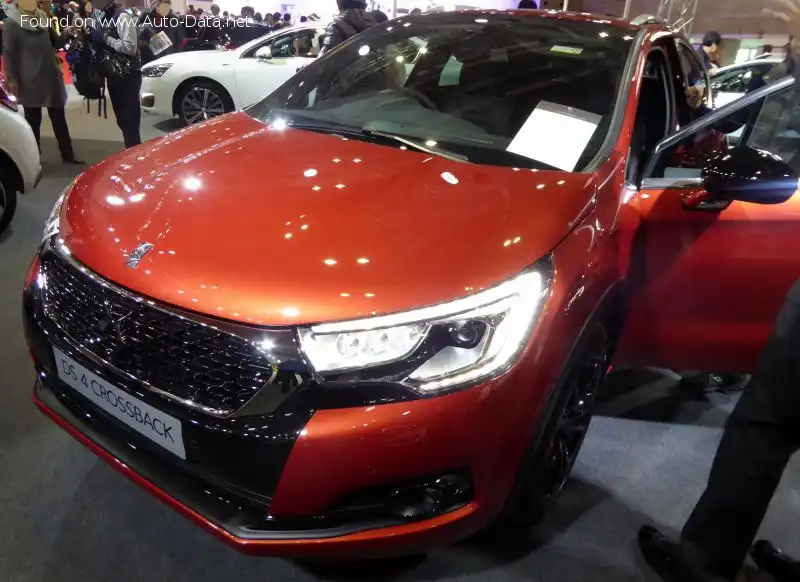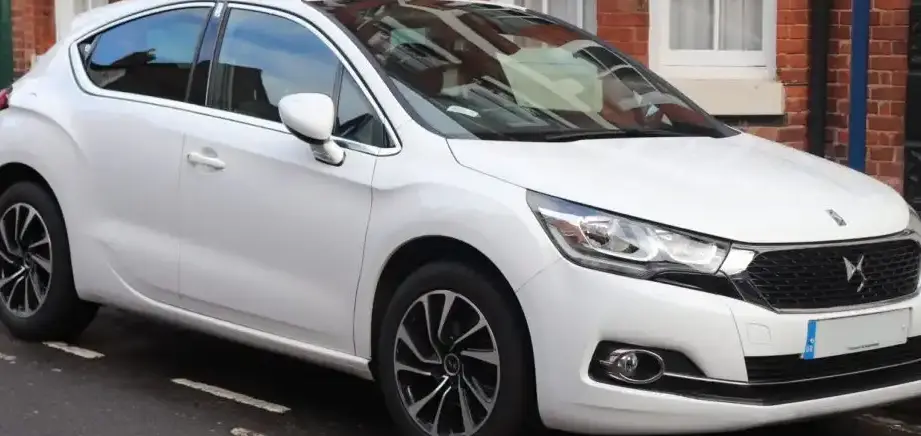
The DS 4 2.0 BlueHDi 150 Stop&Start, produced between 2015 and 2018, represents a significant offering within the DS Automobiles lineup, then a relatively new premium brand spun off from Citroën. Positioned as a compact hatchback, the DS 4 aimed to blend style, comfort, and efficiency. This particular variant, equipped with the 2.0-liter BlueHDi diesel engine and a six-speed manual transmission, served as a mid-range option, appealing to buyers seeking a balance between performance and fuel economy. It was part of the first generation DS 4 (often referred to as the B74 series internally), sharing its platform with the Peugeot 308 and Citroën C4 Picasso.
Technical Specifications
| Brand | DS |
| Model | 4 |
| Generation | 4 |
| Type (Engine) | 2.0 BlueHDi (150 Hp) Stop&Start |
| Start of production | 2015 |
| End of production | 2018 |
| Powertrain Architecture | Internal Combustion engine |
| Body type | Hatchback |
| Seats | 5 |
| Doors | 5 |
| Fuel consumption (urban) | 4.6-4.9 l/100 km (51.1 – 48 US mpg, 61.4 – 57.6 UK mpg, 21.7 – 20.4 km/l) |
| Fuel consumption (extra urban) | 3.8 l/100 km (61.9 US mpg, 74.3 UK mpg, 26.3 km/l) |
| Fuel consumption (combined) | 4.1-4.2 l/100 km (57.4 – 56 US mpg, 68.9 – 67.3 UK mpg, 24.4 – 23.8 km/l) |
| CO2 emissions | 106-111 g/km |
| Fuel Type | Diesel |
| Acceleration 0 – 100 km/h | 9.6 sec |
| Acceleration 0 – 62 mph | 9.6 sec |
| Acceleration 0 – 60 mph | 9.1 sec |
| Maximum speed | 207 km/h (128.62 mph) |
| Emission standard | Euro 6 |
| Weight-to-power ratio | 9.4 kg/Hp, 106.4 Hp/tonne |
| Weight-to-torque ratio | 3.8 kg/Nm, 262.4 Nm/tonne |
| Power | 150 Hp @ 4000 rpm |
| Power per litre | 75.1 Hp/l |
| Torque | 370 Nm @ 2000 rpm (272.9 lb.-ft. @ 2000 rpm) |
| Engine layout | Front, Transverse |
| Engine Model/Code | AHR DW10FD |
| Engine displacement | 1997 cm3 (121.86 cu. in.) |
| Number of cylinders | 4 |
| Engine configuration | Inline |
| Cylinder Bore | 85 mm (3.35 in.) |
| Piston Stroke | 88 mm (3.46 in.) |
| Number of valves per cylinder | 4 |
| Fuel injection system | Diesel Commonrail |
| Engine aspiration | Turbocharger, Intercooler |
| Engine oil capacity | 6 l (6.34 US qt | 5.28 UK qt) |
| Kerb Weight | 1410-1474 kg (3108.52 – 3249.61 lbs.) |
| Max. weight | 1935 kg (4265.94 lbs.) |
| Max load | 461-525 kg (1016.33 – 1157.43 lbs.) |
| Trunk (boot) space – minimum | 359 l (12.68 cu. ft.) |
| Fuel tank capacity | 60 l (15.85 US gal | 13.2 UK gal) |
| Permitted trailer load with brakes (12%) | 1550 kg (3417.17 lbs.) |
| Permitted trailer load without brakes | 740 kg (1631.42 lbs.) |
| Permitted towbar download | 75 kg (165.35 lbs.) |
| Length | 4284 mm (168.66 in.) |
| Width | 1810 mm (71.26 in.) |
| Width including mirrors | 2052 mm (80.79 in.) |
| Height | 1497-1502 mm (58.94 – 59.13 in.) |
| Wheelbase | 2612 mm (102.83 in.) |
| Front track | 1532 mm (60.31 in.) |
| Rear (Back) track | 1527 mm (60.12 in.) |
| Front overhang | 933 mm (36.73 in.) |
| Rear overhang | 739 mm (29.09 in.) |
| Minimum turning circle | 10.7 m (35.1 ft.) |
| Drivetrain Architecture | The Internal combustion engine (ICE) drives the front wheels of the vehicle. |
| Drive wheel | Front wheel drive |
| Number of gears and type of gearbox | 6 gears, manual transmission |
| Front suspension | Independent type McPherson |
| Rear suspension | Semi-independent, coil spring |
| Front brakes | Ventilated discs |
| Rear brakes | Disc |
| Assisting systems | ABS (Anti-lock braking system) |
| Steering type | Steering rack and pinion |
| Power steering | Electric Steering |
| Tires size | 215/60 R16; 215/55 R17; 225/45 R18; 225/40 R19 |
| Wheel rims size | 16; 17; 18; 19 |
Powertrain & Engine Architecture
The heart of the DS 4 2.0 BlueHDi 150 is the DW10FD engine, a 2.0-liter four-cylinder diesel engine developed by PSA Group (Peugeot Société Anonyme). This engine is part of the BlueHDi family, incorporating Selective Catalytic Reduction (SCR) technology and an AdBlue injection system to significantly reduce nitrogen oxide (NOx) emissions, meeting stringent Euro 6 standards. The engine utilizes a common rail direct injection system, delivering fuel at extremely high pressures for optimized combustion. A turbocharger with an intercooler further enhances performance. The engine code ‘AHR’ often designates specific calibration and emission control configurations. The six-speed manual transmission provides precise gear changes, contributing to both fuel efficiency and driver engagement. The Stop&Start system automatically shuts off the engine when the vehicle is stationary (at traffic lights, for example) to conserve fuel and reduce emissions.
Driving Characteristics
The 150 horsepower and 370 Nm (272.9 lb-ft) of torque offered by the 2.0 BlueHDi engine provide a respectable level of performance for a compact hatchback. Acceleration from 0 to 62 mph takes approximately 9.6 seconds, and the car reaches a top speed of 207 km/h (128.62 mph). The engine delivers strong low-end torque, making it well-suited for everyday driving and overtaking maneuvers. Compared to the lower-powered 1.6 BlueHDi variants, the 2.0-liter engine offers noticeably more punch. While not as sporty as the petrol-powered DS 4 models, the 2.0 BlueHDi provides a smooth and refined driving experience. The manual transmission allows for greater driver control, although the gear ratios are tuned more for fuel efficiency than outright acceleration.
Equipment & Trim Levels
The DS 4 2.0 BlueHDi 150 Stop&Start typically came equipped with a generous level of standard features. These included air conditioning, a touchscreen infotainment system with Bluetooth connectivity, alloy wheels, and a suite of safety features such as ABS, ESP (Electronic Stability Program), and multiple airbags. Higher trim levels, such as Prestige or Performance, added features like leather upholstery, a panoramic sunroof, navigation system, and advanced driver-assistance systems (ADAS) like lane departure warning and automatic emergency braking. Interior upholstery was generally cloth on base models, with leather options available on higher trims. Dashboard configurations featured a mix of analog gauges and a digital display screen.
Chassis & Braking
The DS 4 utilizes a McPherson strut front suspension and a semi-independent coil spring rear suspension. This setup provides a good balance between ride comfort and handling. The front brakes are ventilated discs, while the rear brakes are solid discs, providing adequate stopping power for the vehicle’s weight and performance. The electric power steering offers a light and precise feel. Stabilizer bars are fitted to both the front and rear axles to reduce body roll during cornering.
Market Reception & Comparison
The DS 4 2.0 BlueHDi 150 Stop&Start was generally well-received by automotive critics. It was praised for its stylish design, comfortable ride, and fuel-efficient engine. However, some reviewers noted that the interior quality, while improved over Citroën models, still didn’t quite match that of its German rivals. Compared to the 1.6 BlueHDi variants, the 2.0-liter engine offered a significant performance upgrade, but at a slightly higher price point. Fuel economy was a strong point, with combined figures ranging from 4.1 to 4.2 l/100 km (57.4 – 56 US mpg). Reliability reports suggest that the DW10FD engine is generally robust, although regular maintenance is essential.
Legacy
The DS 4 2.0 BlueHDi 150 Stop&Start remains a relatively common sight on the used car market. The DW10FD engine has proven to be durable and reliable when properly maintained. However, potential buyers should be aware of the potential costs associated with diesel particulate filter (DPF) maintenance and AdBlue refills. The DS 4, as a whole, represented DS Automobiles’ attempt to establish itself as a premium brand, and the 2.0 BlueHDi variant offered a compelling combination of style, efficiency, and performance for buyers seeking a sophisticated and practical compact hatchback.