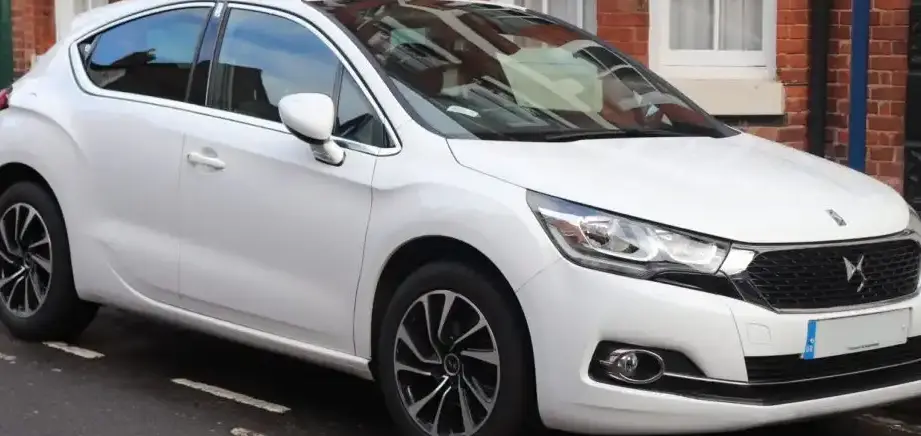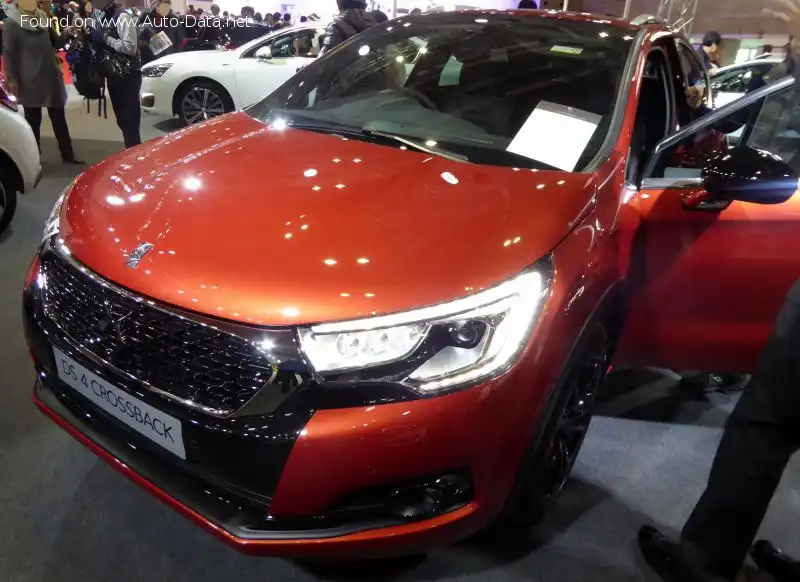
The DS 4 Crossback 1.6 THP 210 Stop&Start, produced between 2015 and 2018, represents a distinctive offering within the DS Automobiles lineup. Positioned as a compact crossover, it blended hatchback practicality with a slightly raised ride height and rugged styling cues. This variant occupied a mid-to-upper tier within the DS 4 Crossback range, offering a significant performance upgrade over the lower-powered engine options while remaining more accessible than potential future high-performance models. It was primarily marketed in Europe, aiming at buyers seeking a stylish, comfortable, and relatively efficient vehicle with a sporty edge.
Technical Specifications
| Brand | DS |
| Model | 4 |
| Generation | 4 Crossback |
| Type (Engine) | 1.6 THP (210 Hp) Stop&Start |
| Start of production | 2015 |
| End of production | 2018 |
| Powertrain Architecture | Internal Combustion engine |
| Body type | Crossover |
| Seats | 5 |
| Doors | 5 |
| Fuel consumption (urban) | 7.6 l/100 km (30.9 US mpg, 37.2 UK mpg, 13.2 km/l) |
| Fuel consumption (extra urban) | 5 l/100 km (47 US mpg, 56.5 UK mpg, 20 km/l) |
| Fuel consumption (combined) | 5.9 l/100 km (39.9 US mpg, 47.9 UK mpg, 16.9 km/l) |
| CO2 emissions | 138 g/km |
| Fuel Type | Petrol (Gasoline) |
| Acceleration 0 – 100 km/h | 8.4 sec |
| Acceleration 0 – 62 mph | 8.4 sec |
| Acceleration 0 – 60 mph | 8 sec |
| Maximum speed | 235 km/h (146.02 mph) |
| Emission standard | Euro 6 |
| Weight-to-power ratio | 6.3 kg/Hp, 159.9 Hp/tonne |
| Weight-to-torque ratio | 4.6 kg/Nm, 217.1 Nm/tonne |
| Power | 210 Hp @ 6000 rpm |
| Power per litre | 131.4 Hp/l |
| Torque | 285 Nm @ 1750 rpm (210.21 lb.-ft. @ 1750 rpm) |
| Engine layout | Front, Transverse |
| Engine Model/Code | 5GM EP6FDTX |
| Engine displacement | 1598 cm3 (97.52 cu. in.) |
| Number of cylinders | 4 |
| Engine configuration | Inline |
| Cylinder Bore | 77 mm (3.03 in.) |
| Piston Stroke | 85.8 mm (3.38 in.) |
| Number of valves per cylinder | 4 |
| Fuel injection system | Direct injection |
| Engine aspiration | Turbocharger, Intercooler |
| Engine oil capacity | 4.25 l (4.49 US qt | 3.74 UK qt) |
| Kerb Weight | 1313-1387 kg (2894.67 – 3057.81 lbs.) |
| Max. weight | 1845 kg (4067.53 lbs.) |
| Max load | 458-532 kg (1009.72 – 1172.86 lbs.) |
| Trunk (boot) space – minimum | 359 l (12.68 cu. ft.) |
| Fuel tank capacity | 60 l (15.85 US gal | 13.2 UK gal) |
| Permitted trailer load with brakes (12%) | 1250 kg (2755.78 lbs.) |
| Permitted trailer load without brakes | 655 kg (1444.03 lbs.) |
| Permitted towbar download | 75 kg (165.35 lbs.) |
| Length | 4284 mm (168.66 in.) |
| Width | 1810 mm (71.26 in.) |
| Width including mirrors | 2052 mm (80.79 in.) |
| Height | 1529-1535 mm (60.2 – 60.43 in.) |
| Wheelbase | 2612 mm (102.83 in.) |
| Front track | 1532 mm (60.31 in.) |
| Rear (Back) track | 1527 mm (60.12 in.) |
| Front overhang | 933 mm (36.73 in.) |
| Rear overhang | 739 mm (29.09 in.) |
| Minimum turning circle | 10.7 m (35.1 ft.) |
| Drivetrain Architecture | Front wheel drive |
| Drive wheel | Front wheel drive |
| Number of gears and type of gearbox | 6 gears, manual transmission |
| Front suspension | Independent type McPherson |
| Rear suspension | Semi-independent, coil spring |
| Front brakes | Ventilated discs |
| Rear brakes | Disc |
| Assisting systems | ABS (Anti-lock braking system) |
| Steering type | Steering rack and pinion |
| Power steering | Electric Steering |
| Tires size | 225/45 R18; 225/40 R19 |
| Wheel rims size | 18; 19 |
INTRODUCTION
The DS 4 Crossback 1.6 THP 210 Stop&Start, launched in 2015, was a key model in DS Automobiles’ attempt to establish itself as a premium brand separate from Citroën. Built on the EMP2 platform (also known as the 1HX0/A3 platform shared with Peugeot and Citroën vehicles), the Crossback variant distinguished itself from the standard DS 4 hatchback through its raised ground clearance, protective body cladding, and more rugged aesthetic. The 1.6 THP 210 engine represented a significant step up in performance compared to the base engine options, targeting drivers who desired a more engaging driving experience without sacrificing fuel efficiency. Production of this specific configuration concluded in 2018 as DS Automobiles refined its model range.
Powertrain & Engine Architecture
At the heart of the DS 4 Crossback 1.6 THP 210 lies the 5GM EP6FDTX engine, a 1.6-liter turbocharged inline-four cylinder petrol engine. This engine is part of the Prince engine family, a collaboration between PSA Group (Peugeot Société Anonyme, now Stellantis) and BMW. The engine utilizes direct fuel injection, delivering fuel directly into the combustion chamber for improved efficiency and power. It also features a twin-scroll turbocharger and an intercooler to maximize boost and reduce intake air temperature. The engine’s valvetrain employs dual overhead camshafts (DOHC) with four valves per cylinder, optimizing gas flow for enhanced performance. The Stop&Start system, standard on this variant, automatically shuts off the engine when the vehicle is stationary (at traffic lights, for example) to reduce fuel consumption and emissions. The engine is paired with a six-speed manual transmission, delivering power to the front wheels. While an automatic transmission was available on other DS 4 Crossback models, the 210 hp version was exclusively offered with the manual gearbox.
Driving Characteristics
The DS 4 Crossback 1.6 THP 210 offered a noticeably more spirited driving experience than its lower-powered siblings. The 210 horsepower and 285 Nm (210 lb-ft) of torque provided brisk acceleration, with a 0-62 mph (0-100 km/h) time of 8.4 seconds. The turbocharger delivers a noticeable surge of power from around 1750 rpm, providing strong mid-range acceleration for overtaking and merging. The six-speed manual transmission is well-matched to the engine’s characteristics, offering precise shifts and allowing the driver to maintain optimal engine speed. Compared to the 1.2 PureTech models, the 1.6 THP 210 felt significantly more responsive and capable, particularly at higher speeds. While not a dedicated performance car, it provided a satisfying level of performance for everyday driving and occasional spirited runs. The slightly raised ride height of the Crossback, while contributing to its rugged appearance, did introduce a small degree of body roll in corners compared to the standard DS 4 hatchback.
Equipment & Trim Levels
The DS 4 Crossback 1.6 THP 210 typically came well-equipped, reflecting its position as a mid-to-upper trim level. Standard features often included alloy wheels (typically 18-inch), automatic headlights and wipers, a touchscreen infotainment system with navigation, Bluetooth connectivity, and a leather-wrapped steering wheel. Interior upholstery was generally a combination of cloth and leather. Optional extras included a panoramic sunroof, premium audio system, parking sensors, and advanced driver-assistance systems such as blind-spot monitoring and lane departure warning. The interior design emphasized a premium feel, with high-quality materials and a focus on comfort. Trim levels varied slightly depending on the market, but generally offered a range of customization options for buyers.
Chassis & Braking
The DS 4 Crossback 1.6 THP 210 utilized a McPherson strut front suspension and a semi-independent coil spring rear suspension. This setup provided a good balance between ride comfort and handling. The front suspension featured a stabilizer bar to reduce body roll, while the rear suspension was tuned for stability. Braking duties were handled by ventilated discs at the front and solid discs at the rear, providing adequate stopping power. ABS (Anti-lock Braking System) was standard, enhancing safety during emergency braking situations. The steering system employed an electric power steering system, offering light and precise steering feel.
Market Reception & Comparison
The DS 4 Crossback 1.6 THP 210 received generally positive reviews from automotive critics. It was praised for its stylish design, comfortable interior, and strong performance. However, some critics noted that the ride could be slightly firm on rough roads and that the infotainment system could be complex to use. Compared to other compact crossovers in its class, such as the Audi Q3 and BMW X1, the DS 4 Crossback offered a more distinctive design and a competitive price point. In terms of fuel economy, the 1.6 THP 210 offered a reasonable compromise between performance and efficiency, achieving around 39.9 US mpg (47.9 UK mpg) on the combined cycle. Reliability reports suggested that the 1.6 THP engine was generally reliable, although some owners reported issues with the turbocharger and fuel injectors.
Legacy
The DS 4 Crossback 1.6 THP 210 remains a relatively uncommon vehicle on the used car market. The 1.6 THP engine, while generally reliable, requires regular maintenance, including oil changes and inspection of the timing chain. The turbocharger and fuel injectors are potential weak points that should be inspected during a pre-purchase inspection. Despite these potential issues, the DS 4 Crossback 1.6 THP 210 offers a compelling combination of style, performance, and comfort, making it an attractive option for buyers seeking a distinctive and capable compact crossover. Its position as a transitional model in the early stages of the DS Automobiles brand gives it a certain appeal to enthusiasts.