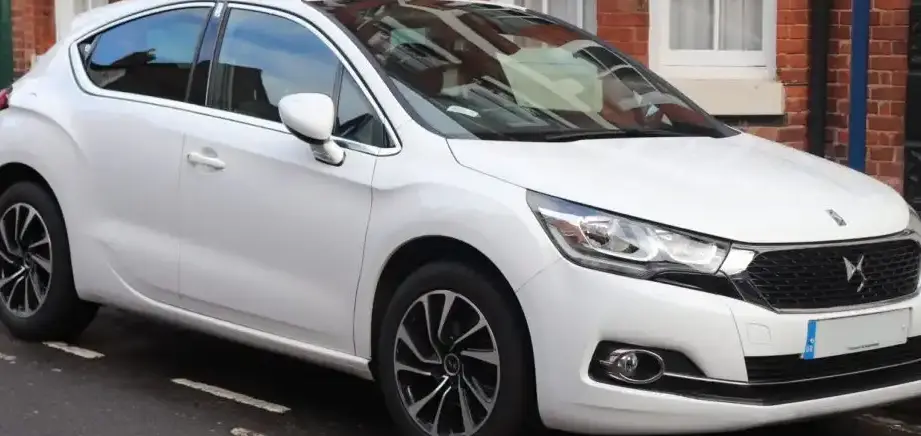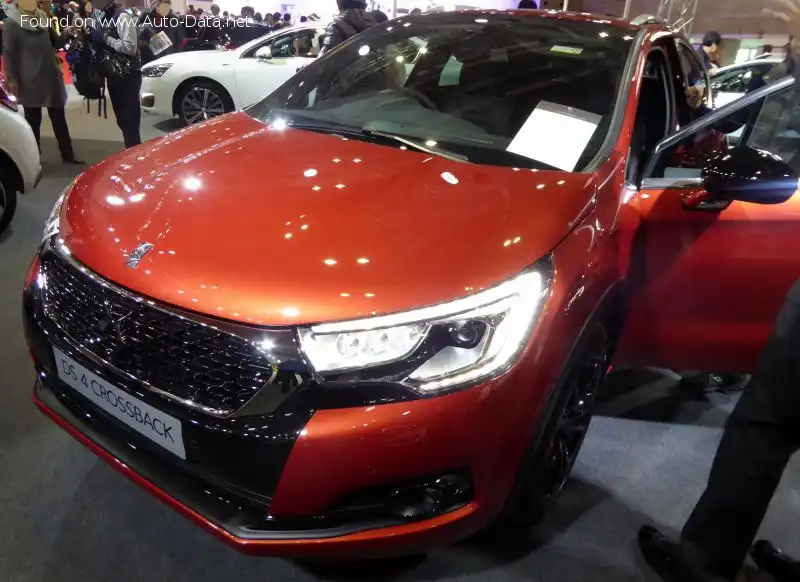
The DS 4 Crossback 2.0 BlueHDi 150 Stop&Start, produced between 2015 and 2018, represents a distinctive offering within the DS Automobiles lineup. Positioned as a compact crossover, it blended the practicality of a hatchback with the slightly elevated ride height and styling cues of an SUV. This variant occupied a mid-range position within the DS 4 Crossback family, offering a balance between performance, fuel efficiency, and equipment. It was primarily marketed in Europe, aiming at buyers seeking a premium, stylish, and economical vehicle. The DS 4 Crossback itself was based on the Citroën C4 platform, inheriting its core mechanical components but receiving a more upscale and refined treatment under the DS Automobiles brand.
Technical Specifications
| Brand | DS |
| Model | 4 |
| Generation | 4 Crossback |
| Type (Engine) | 2.0 BlueHDi (150 Hp) Stop&Start |
| Start of production | 2015 |
| End of production | 2018 |
| Powertrain Architecture | Internal Combustion engine |
| Body type | Crossover |
| Seats | 5 |
| Doors | 5 |
| Fuel consumption (urban) | 4.6-4.9 l/100 km (51.1 – 48 US mpg) |
| Fuel consumption (extra urban) | 3.8 l/100 km (61.9 US mpg) |
| Fuel consumption (combined) | 4.1-4.2 l/100 km (57.4 – 56 US mpg) |
| CO2 emissions | 106-111 g/km |
| Fuel Type | Diesel |
| Acceleration 0 – 100 km/h | 9.6 sec |
| Acceleration 0 – 62 mph | 9.6 sec |
| Acceleration 0 – 60 mph | 9.1 sec |
| Maximum speed | 207 km/h (128.62 mph) |
| Emission standard | Euro 6 |
| Weight-to-power ratio | 9.4 kg/Hp |
| Weight-to-torque ratio | 3.8 kg/Nm |
| Power | 150 Hp @ 4000 rpm |
| Torque | 370 Nm @ 2000 rpm (272.9 lb.-ft. @ 2000 rpm) |
| Engine layout | Front, Transverse |
| Engine Model/Code | AHR DW10FD |
| Engine displacement | 1997 cm3 (121.86 cu. in.) |
| Number of cylinders | 4 |
| Engine configuration | Inline |
| Cylinder Bore | 85 mm (3.35 in.) |
| Piston Stroke | 88 mm (3.46 in.) |
| Number of valves per cylinder | 4 |
| Fuel injection system | Diesel Commonrail |
| Engine aspiration | Turbocharger, Intercooler |
| Engine oil capacity | 6 l (6.34 US qt | 5.28 UK qt) |
| Kerb Weight | 1410-1474 kg (3108.52 – 3249.61 lbs.) |
| Max. weight | 1935 kg (4265.94 lbs.) |
| Max load | 461-525 kg (1016.33 – 1157.43 lbs.) |
| Trunk (boot) space – minimum | 359 l (12.68 cu. ft.) |
| Fuel tank capacity | 60 l (15.85 US gal | 13.2 UK gal) |
| Permitted trailer load with brakes (12%) | 1550 kg (3417.17 lbs.) |
| Permitted trailer load without brakes | 740 kg (1631.42 lbs.) |
| Permitted towbar download | 75 kg (165.35 lbs.) |
| Length | 4284 mm (168.66 in.) |
| Width | 1810 mm (71.26 in.) |
| Width including mirrors | 2052 mm (80.79 in.) |
| Height | 1529-1535 mm (60.2 – 60.43 in.) |
| Wheelbase | 2612 mm (102.83 in.) |
| Front track | 1532 mm (60.31 in.) |
| Rear (Back) track | 1527 mm (60.12 in.) |
| Front overhang | 933 mm (36.73 in.) |
| Rear overhang | 739 mm (29.09 in.) |
| Minimum turning circle | 10.7 m (35.1 ft.) |
| Drivetrain Architecture | Front wheel drive |
| Number of gears and type of gearbox | 6 gears, manual transmission |
| Front suspension | Independent type McPherson |
| Rear suspension | Semi-independent, coil spring |
| Front brakes | Ventilated discs |
| Rear brakes | Disc |
| Tires size | 215/60 R16; 215/55 R17; 225/45 R18; 225/40 R19 |
| Wheel rims size | 16; 17; 18; 19 |
Powertrain & Engine Architecture
The heart of the DS 4 Crossback 2.0 BlueHDi 150 is the DW10FD engine, a 2.0-liter four-cylinder diesel engine. This engine, developed by PSA Group (Peugeot Citroën), is a common rail direct injection diesel, known for its efficiency and refinement. The ‘BlueHDi’ designation indicates the inclusion of Selective Catalytic Reduction (SCR) technology and a Diesel Particulate Filter (DPF) to significantly reduce NOx emissions and particulate matter, meeting stringent Euro 6 emission standards. The engine produces 150 horsepower at 4000 rpm and a substantial 370 Nm (272.9 lb-ft) of torque at 2000 rpm. This torque output provides strong pulling power, particularly useful for everyday driving and occasional highway journeys. The engine features a turbocharger with an intercooler, enhancing power and efficiency. The 6-speed manual transmission was standard, offering precise gear changes and contributing to the vehicle’s overall fuel economy. The engine code AHR is often associated with specific calibrations and emission control systems within the DW10FD family.
Driving Characteristics
The DS 4 Crossback 2.0 BlueHDi 150, with its manual transmission, delivers a composed and refined driving experience. While not overtly sporty, the engine’s torque allows for brisk acceleration, achieving 0-60 mph in approximately 9.1 seconds. The gear ratios are well-chosen, providing adequate power across the rev range. Compared to the more powerful DS 4 Crossback variants, this 150 hp version prioritizes fuel efficiency over outright performance. The manual gearbox provides the driver with more control, but it does require more engagement than an automatic. The suspension setup, featuring McPherson struts at the front and a semi-independent coil spring arrangement at the rear, provides a comfortable ride, absorbing bumps and imperfections in the road surface effectively. Steering is precise and well-weighted, offering a good level of feedback.
Equipment & Trim Levels
The DS 4 Crossback 2.0 BlueHDi 150 typically came equipped with a generous level of standard features. These included air conditioning, a touchscreen infotainment system with Bluetooth connectivity, USB ports, and steering wheel-mounted audio controls. Safety features such as ABS, Electronic Stability Control (ESC), and multiple airbags were also standard. Higher trim levels offered additional features such as leather upholstery, a panoramic sunroof, navigation system, and parking sensors. Interior upholstery was typically cloth, with options for leather upgrades. The dashboard layout was modern and stylish, reflecting the premium aspirations of the DS Automobiles brand.
Chassis & Braking
The DS 4 Crossback utilizes a front-wheel-drive chassis. The front suspension employs independent McPherson struts, providing good handling and ride comfort. The rear suspension uses a semi-independent coil spring setup, which is a cost-effective solution that still delivers acceptable ride quality. Braking duties are handled by ventilated discs at the front and solid discs at the rear, providing adequate stopping power. ABS (Anti-lock Braking System) is standard, enhancing safety during emergency braking situations. The steering system is a rack and pinion type with electric power assistance, offering precise control and ease of maneuverability.
Market Reception & Comparison
The DS 4 Crossback 2.0 BlueHDi 150 was generally well-received by automotive critics. It was praised for its stylish design, comfortable ride, and fuel-efficient engine. However, some critics noted that the interior, while well-appointed, lacked the outright luxury of some of its German rivals. Compared to other engines in the DS 4 Crossback lineup, the 2.0 BlueHDi 150 offered a good balance between performance and economy. It was more affordable than the higher-powered petrol variants, while still providing ample power for most driving situations. Its fuel economy of 4.1-4.2 l/100 km (57.4 – 56 US mpg) was a significant selling point, making it an attractive option for drivers covering long distances.
Legacy
The DS 4 Crossback 2.0 BlueHDi 150 has proven to be a relatively reliable vehicle in the used car market. The DW10FD engine is known for its durability, provided it has been properly maintained. Regular servicing, including oil changes and DPF maintenance, is crucial to ensure long-term reliability. Common issues reported by owners include occasional DPF blockages and wear and tear on suspension components. However, these are generally minor issues that can be addressed with routine maintenance. Today, the DS 4 Crossback 2.0 BlueHDi 150 remains a popular choice for buyers seeking a stylish, economical, and practical crossover vehicle.