
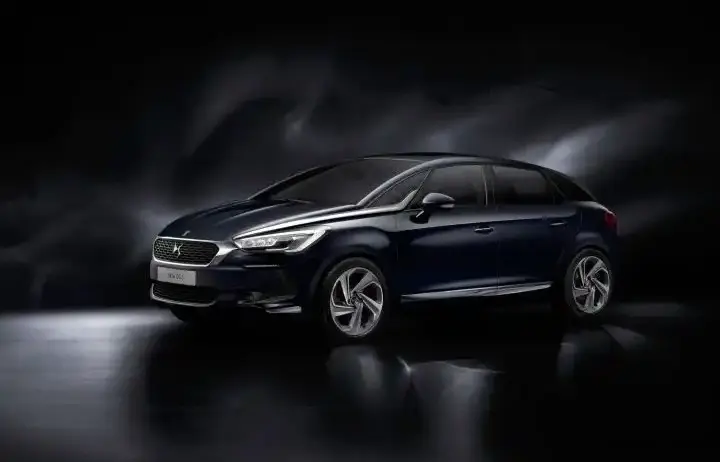
The DS 5 2.0 Hybrid 4×4 ETG, produced between 2015 and 2018, represents a unique offering within the DS Automobiles lineup. Positioned as a premium compact hatchback, it combined a diesel-electric hybrid powertrain with all-wheel drive, aiming to deliver both efficiency and performance. This variant sat towards the higher end of the DS 5 range, offering a more sophisticated and technologically advanced option compared to the standard diesel or petrol models. It was primarily marketed in Europe, where demand for fuel-efficient and stylish vehicles was strong. The DS 5 itself was a distinctive vehicle, originally conceived as the Citroën DS5 before the DS brand was established as a separate entity focused on premium vehicles.
Technical Specifications
| Brand | DS |
| Model | 5 |
| Generation | 5 |
| Type (Engine) | 2.0 (200 Hp) Hybrid 4×4 ETG |
| Start of production | 2015 |
| End of production | 2018 |
| Powertrain Architecture | FHEV (Full Hybrid Electric Vehicle) |
| Body type | Hatchback |
| Seats | 5 |
| Doors | 5 |
| Fuel consumption (urban) | 3.0-3.2 l/100 km (78.4 – 73.5 US mpg) |
| Fuel consumption (extra urban) | 3.7-4.3 l/100 km (63.6 – 54.7 US mpg) |
| Fuel consumption (combined) | 3.5-3.9 l/100 km (67.2 – 60.3 US mpg) |
| CO2 emissions | 90-103 g/km |
| Fuel Type | Diesel |
| Acceleration 0 – 100 km/h | 8.6 sec |
| Acceleration 0 – 62 mph | 8.6 sec |
| Acceleration 0 – 60 mph | 8.2 sec |
| Maximum speed | 211 km/h (131.11 mph) |
| Emission standard | Euro 6 |
| Weight-to-power ratio | 8.3 kg/Hp, 120.5 Hp/tonne |
| Weight-to-torque ratio | 5.5 kg/Nm, 180.7 Nm/tonne |
| Electric motor power | 37 Hp @ 2500 rpm |
| Electric motor Torque | 200 Nm (147.51 lb.-ft.) |
| System power | 200 Hp |
| Internal combustion engine power | 163 Hp @ 3850 rpm |
| Power per litre | 81.6 Hp/l |
| Torque | 300 Nm @ 1750 rpm (221.27 lb.-ft. @ 1750 rpm) |
| Engine layout | Front, Transverse |
| Engine Model/Code | RHC DW10CTED4 |
| Engine displacement | 1997 cm3 (121.86 cu. in.) |
| Number of cylinders | 4 |
| Engine configuration | Inline |
| Cylinder Bore | 85 mm (3.35 in.) |
| Piston Stroke | 88 mm (3.46 in.) |
| Number of valves per cylinder | 4 |
| Fuel injection system | Diesel Commonrail |
| Engine aspiration | Turbocharger, Intercooler |
| Engine oil capacity | 5 l (5.28 US qt | 4.4 UK qt) |
| Kerb Weight | 1660-1781 kg (3659.67 – 3926.43 lbs.) |
| Max. weight | 2265 kg (4993.47 lbs.) |
| Max load | 484-605 kg (1067.04 – 1333.8 lbs.) |
| Trunk (boot) space – minimum | 325 l (11.48 cu. ft.) |
| Trunk (boot) space – maximum | 1145 l (40.44 cu. ft.) |
| Fuel tank capacity | 60 l (15.85 US gal | 13.2 UK gal) |
| Permitted trailer load with brakes (12%) | 800 kg (1763.7 lbs.) |
| Permitted trailer load without brakes | 500 kg (1102.31 lbs.) |
| Permitted towbar download | 75 kg (165.35 lbs.) |
| Length | 4530 mm (178.35 in.) |
| Width | 1871-2128 mm (73.66 – 83.78 in.) |
| Height | 1505-1539 mm (59.25 – 60.59 in.) |
| Wheelbase | 2727 mm (107.36 in.) |
| Front track | 1575-1582 mm (62.01 – 62.28 in.) |
| Rear (Back) track | 1599-1609 mm (62.95 – 63.35 in.) |
| Front overhang | 996 mm (39.21 in.) |
| Rear overhang | 807 mm (31.77 in.) |
| Minimum turning circle (turning diameter) | 11.2 m (36.75 ft.) |
| Drive wheel | All wheel drive (4×4) |
| Number of gears and type of gearbox | 6 gears, automatic transmission ETG |
| Front suspension | Independent, type McPherson with coil spring and anti-roll bar |
| Rear suspension | Semi-independent, coil spring |
| Front brakes | Ventilated discs |
| Rear brakes | Disc |
| Assisting systems | ABS (Anti-lock braking system) |
| Steering type | Steering rack and pinion |
| Power steering | Electric Steering |
| Tires size | 215/55 R17; 225/45 R18; 225/40 R19 |
| Wheel rims size | 17; 18; 19 |
INTRODUCTION
The DS 5 2.0 Hybrid 4×4 ETG, launched in 2015, was a key model in DS Automobiles’ attempt to establish itself as a distinct premium brand. Building upon the Citroën DS5, the DS 5 offered a more luxurious and technologically advanced package. The “Hybrid 4×4” designation signified a full hybrid powertrain combining a 2.0-liter diesel engine with an electric motor, providing all-wheel drive capability. The ETG (Efficient Tronic Gearbox) was a six-speed automated manual transmission, designed to maximize fuel efficiency. Production continued until 2018, with the model representing a significant step towards DS’s ambition of competing with established German premium brands.
Powertrain & Engine Architecture
At the heart of the DS 5 2.0 Hybrid 4×4 ETG lies the DW10CTED4 engine, a 2.0-liter four-cylinder diesel engine producing 163 horsepower at 3850 rpm and 300 Nm (221 lb-ft) of torque at 1750 rpm. This engine features a turbocharger and intercooler for enhanced performance. The diesel engine is paired with a 37 horsepower electric motor, bringing the total system output to 200 horsepower. The electric motor delivers 200 Nm (147 lb-ft) of torque. The hybrid system utilizes a common rail direct injection system for precise fuel delivery. The ETG transmission, while marketed for its efficiency, is essentially an automated manual gearbox. It operates without a traditional torque converter, using actuators to shift gears. This design contributes to lower fuel consumption but can sometimes result in less smooth gear changes compared to conventional automatic transmissions.
Driving Characteristics
The DS 5 2.0 Hybrid 4×4 ETG offered a unique driving experience. The combination of the diesel engine and electric motor provided decent acceleration, achieving 0-60 mph in approximately 8.2 seconds. The all-wheel drive system enhanced traction, particularly in adverse weather conditions. However, the ETG transmission was often criticized for its hesitant shifts and lack of refinement, especially during low-speed maneuvers. Compared to the standard DS 5 diesel models with manual transmissions, the hybrid version offered improved fuel economy but at the expense of some responsiveness. The electric motor provided a boost in torque at lower speeds, but the overall driving experience wasn’t as engaging as some of its competitors.
Equipment & Trim Levels
The DS 5 2.0 Hybrid 4×4 ETG typically came well-equipped, reflecting its premium positioning. Standard features included leather upholstery, automatic climate control, a touchscreen infotainment system with navigation, and parking sensors. Higher trim levels offered additional features such as a panoramic sunroof, premium audio system, and advanced driver-assistance systems like adaptive cruise control and blind-spot monitoring. Interior design emphasized comfort and sophistication, with high-quality materials and a distinctive dashboard layout. The DS 5 also featured a unique “watch strap” design element on the leather upholstery, adding to its distinctive aesthetic.
Chassis & Braking
The DS 5 2.0 Hybrid 4×4 ETG utilized an independent McPherson strut suspension at the front and a semi-independent coil spring suspension at the rear. This setup provided a comfortable ride, although it wasn’t particularly sporty. The all-wheel drive system distributed power between the front and rear axles as needed, enhancing stability and traction. Braking duties were handled by ventilated discs at the front and solid discs at the rear, equipped with ABS (Anti-lock Braking System). The suspension was tuned to balance comfort and handling, but the added weight of the hybrid system and all-wheel drive components did impact agility compared to lighter DS 5 variants.
Market Reception & Comparison
The DS 5 2.0 Hybrid 4×4 ETG received mixed reviews from automotive critics. While the fuel economy and all-wheel drive capability were praised, the ETG transmission was a common point of criticism. Many reviewers found the gear changes to be jerky and slow, detracting from the overall driving experience. Compared to rivals like the Audi Q3 and BMW X1, the DS 5 offered a more distinctive design and a lower price point, but it lacked the refinement and driving dynamics of its German competitors. The hybrid powertrain offered competitive fuel economy, but other hybrid and diesel options in the segment provided a smoother and more engaging driving experience.
Legacy
The DS 5 2.0 Hybrid 4×4 ETG, while not a runaway success, played a crucial role in establishing the DS brand’s identity. It demonstrated DS Automobiles’ commitment to innovation and its willingness to experiment with alternative powertrains. On the used car market, these models are relatively affordable, but potential buyers should be aware of the potential issues with the ETG transmission. Regular maintenance and careful driving are essential to ensure the longevity of this powertrain. The DS 5’s distinctive styling and unique features continue to appeal to buyers looking for a premium hatchback that stands out from the crowd. The hybrid technology, while somewhat dated, still offers reasonable fuel efficiency for its age and class.
