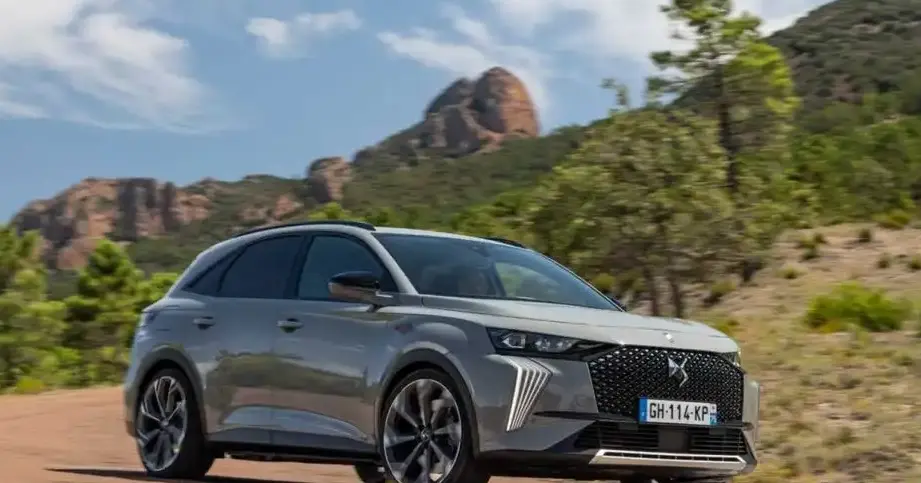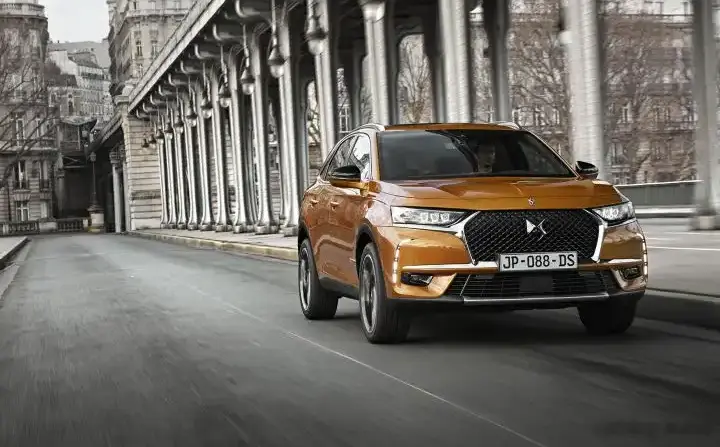
The DS 7 Crossback 1.5 BlueHDi (130 hp) was a diesel-powered variant of the DS 7 Crossback, a compact luxury SUV produced by the French manufacturer DS Automobiles from November 2017 to January 2020. Positioned as a mid-range offering within the initial DS 7 Crossback lineup, it aimed to balance fuel efficiency with acceptable performance for everyday driving. This model represented DS Automobiles’ initial foray into the premium SUV segment, leveraging Peugeot-Citroën’s EMP2 platform (also known as the 1HX0/A3 platform) and offering a distinctive French take on the burgeoning crossover market. The 1.5 BlueHDi engine was a key component of DS’s strategy to offer a diverse powertrain portfolio, appealing to European buyers accustomed to diesel’s fuel economy benefits.
Technical Specifications
| Brand | DS |
| Model | 7 |
| Generation | 7 Crossback |
| Type (Engine) | 1.5 BlueHDi (130 Hp) |
| Start of production | November, 2017 |
| End of production | January, 2020 |
| Powertrain Architecture | Internal Combustion engine |
| Body type | SUV |
| Seats | 5 |
| Doors | 5 |
| Fuel consumption (urban) | 4.5-4.6 l/100 km (52.3 – 51.1 US mpg, 62.8 – 61.4 UK mpg, 22.2 – 21.7 km/l) |
| Fuel consumption (extra urban) | 3.7-3.8 l/100 km (63.6 – 61.9 US mpg, 76.3 – 74.3 UK mpg, 27 – 26.3 km/l) |
| Fuel consumption (combined) | 4.0-4.1 l/100 km (58.8 – 57.4 US mpg, 70.6 – 68.9 UK mpg, 25 – 24.4 km/l) |
| CO2 emissions | 104-107 g/km |
| Fuel Type | Diesel |
| Acceleration 0 – 100 km/h | 10.8 sec |
| Acceleration 0 – 62 mph | 10.8 sec |
| Acceleration 0 – 60 mph | 10.3 sec |
| Maximum speed | 195 km/h (121.17 mph) |
| Emission standard | Euro 6 |
| Weight-to-power ratio | 10.9 kg/Hp, 91.5 Hp/tonne |
| Weight-to-torque ratio | 4.7 kg/Nm, 211.3 Nm/tonne |
| Power | 130 Hp @ 3750 rpm |
| Power per litre | 86.7 Hp/l |
| Torque | 300 Nm @ 1750 rpm (221.27 lb.-ft. @ 1750 rpm) |
| Engine layout | Front, Transverse |
| Engine Model/Code | YHZ DV5RC |
| Engine displacement | 1499 cm3 (91.47 cu. in.) |
| Number of cylinders | 4 |
| Engine configuration | Inline |
| Cylinder Bore | 75 mm (2.95 in.) |
| Piston Stroke | 84.8 mm (3.34 in.) |
| Number of valves per cylinder | 4 |
| Fuel injection system | Diesel Commonrail |
| Engine aspiration | Turbocharger, Intercooler |
| Engine oil capacity | 4 l (4.23 US qt | 3.52 UK qt) |
| Kerb Weight | 1420-1608 kg (3130.56 – 3545.03 lbs.) |
| Max. weight | 2030 kg (4475.38 lbs.) |
| Max load | 422-610 kg (930.35 – 1344.82 lbs.) |
| Trunk (boot) space – minimum | 555 l (19.6 cu. ft.) |
| Fuel tank capacity | 55 l (14.53 US gal | 12.1 UK gal) |
| Max. roof load | 80 kg (176.37 lbs.) |
| Permitted trailer load with brakes (12%) | 1500 kg (3306.93 lbs.) |
| Permitted trailer load without brakes | 745 kg (1642.44 lbs.) |
| Permitted towbar download | 64 kg (141.1 lbs.) |
| Length | 4573 mm (180.04 in.) |
| Width | 1895 mm (74.61 in.) |
| Height | 1620 mm (63.78 in.) |
| Wheelbase | 2738 mm (107.8 in.) |
| Front overhang | 925 mm (36.42 in.) |
| Rear overhang | 910 mm (35.83 in.) |
| Drivetrain Architecture | The Internal combustion engine (ICE) drives the front wheels of the vehicle. |
| Drive wheel | Front wheel drive |
| Number of gears and type of gearbox | 6 gears, manual transmission |
| Front brakes | Ventilated discs |
| Rear brakes | Disc |
| Assisting systems | ABS (Anti-lock braking system) |
| Steering type | Steering rack and pinion |
| Power steering | Electric Steering |
| Tires size | 215/65 R17; 235/55 R18; 235/50 R19 |
| Wheel rims size | 17; 18; 19 |
Powertrain & Engine Architecture
The DS 7 Crossback 1.5 BlueHDi utilized the DV5RC engine code, a 1.5-liter inline-four cylinder diesel engine. This engine was part of the PSA Group’s (Peugeot Société Anonyme) BlueHDi range, known for its focus on reducing particulate matter and NOx emissions through the use of a Selective Catalytic Reduction (SCR) system and a Diesel Particulate Filter (DPF). The engine featured a turbocharger with an intercooler to enhance power output and efficiency. Fuel was delivered via a common rail direct injection system, allowing for precise fuel metering and optimized combustion. The engine produced 130 horsepower at 3750 rpm and 300 Nm (221 lb-ft) of torque at 1750 rpm. The engine’s relatively small displacement and turbocharging contributed to its fuel efficiency. The 6-speed manual transmission was standard, providing a balance between fuel economy and driver control.
Driving Characteristics
The 1.5 BlueHDi engine, paired with the 6-speed manual transmission, offered a comfortable and efficient driving experience. Acceleration from 0-60 mph took approximately 10.3 seconds, which was adequate for everyday driving but not particularly sporty. The engine’s torque peak at 1750 rpm provided good low-end responsiveness, making it easy to navigate city traffic and execute overtaking maneuvers. Compared to the more powerful DS 7 Crossback variants (like those with larger engines), the 1.5 BlueHDi felt less eager to accelerate, requiring more downshifting for quicker responses. The manual transmission allowed for greater driver engagement, but the gear ratios were tuned for fuel economy rather than outright performance. The front-wheel-drive configuration contributed to a slight tendency for understeer during spirited cornering.
Equipment & Trim Levels
The DS 7 Crossback 1.5 BlueHDi typically came equipped with a respectable level of standard features. These included automatic headlights, rain-sensing wipers, a 12.3-inch digital instrument cluster, an 8-inch touchscreen infotainment system with Apple CarPlay and Android Auto compatibility, and a suite of safety features such as automatic emergency braking, lane departure warning, and traffic sign recognition. Interior upholstery was typically cloth, with options for leather upgrades. Available optional extras included a panoramic sunroof, premium audio system, and advanced driver-assistance systems like adaptive cruise control and blind-spot monitoring. Trim levels varied by market, but generally offered progressive enhancements in terms of interior materials, exterior styling, and technology features.
Chassis & Braking
The DS 7 Crossback featured a MacPherson strut front suspension and a multi-link rear suspension, providing a comfortable ride quality. The suspension was tuned to prioritize comfort over sporty handling. Front brakes were ventilated discs, while rear brakes were solid discs. Anti-lock Braking System (ABS) was standard, along with Electronic Stability Control (ESC). The chassis was designed to provide a good balance between ride comfort and handling stability. Stabilizer bars were fitted to both the front and rear axles to reduce body roll during cornering.
Market Reception & Comparison
The DS 7 Crossback 1.5 BlueHDi was generally well-received by critics for its stylish design, comfortable interior, and fuel-efficient engine. However, some reviewers noted that the 1.5-liter engine felt underpowered compared to larger engine options. In terms of fuel economy, the 1.5 BlueHDi consistently outperformed the more powerful gasoline variants, making it an attractive option for drivers prioritizing efficiency. Compared to competitors like the Audi Q3 and BMW X1, the DS 7 Crossback offered a more distinctive design and a more affordable price point, but lacked the brand prestige of its German rivals. Reliability reports were generally positive, with the BlueHDi engine proving to be relatively robust.
Legacy
The DS 7 Crossback 1.5 BlueHDi played a significant role in establishing DS Automobiles as a credible player in the premium SUV market. While the 1.5 BlueHDi engine was later superseded by more advanced powertrains, it remains a popular choice in the used car market due to its fuel efficiency and relatively low maintenance costs. The engine’s proven reliability and the DS 7 Crossback’s overall build quality contribute to its continued appeal. The model helped to pave the way for DS Automobiles’ expansion into new markets and the development of its future models.