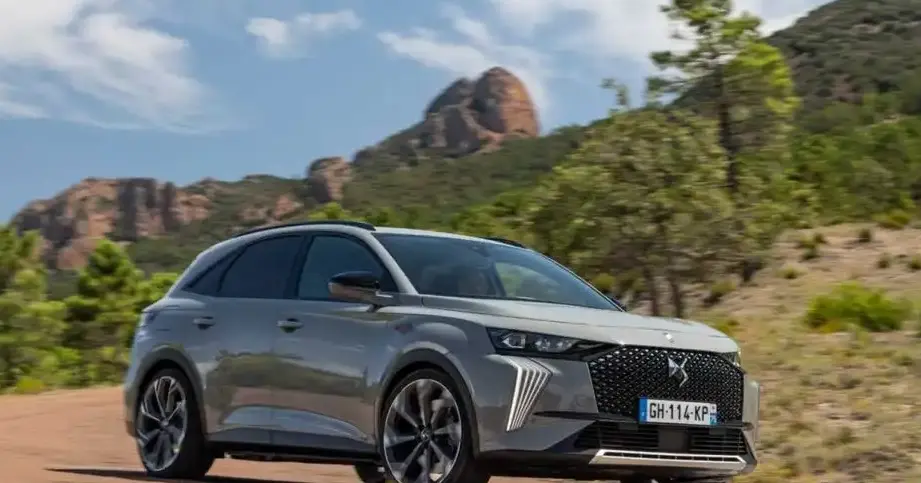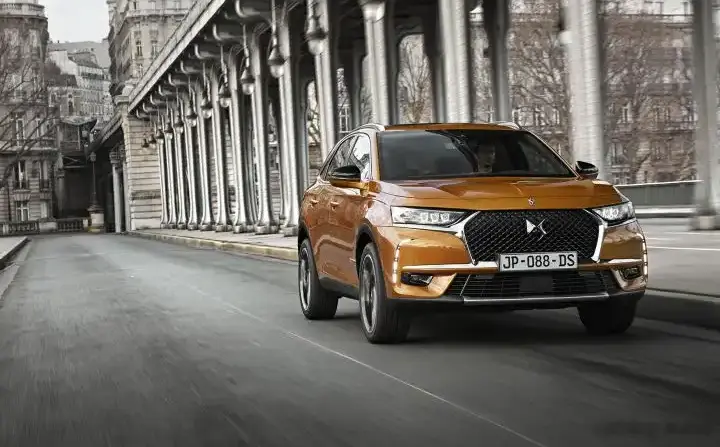
The DS 7 Crossback 2.0 BlueHDi (180 hp) Automatic was a key variant in the initial lineup of the DS 7 Crossback, launched in March 2017 and remaining in production through January 2020. Representing a mid-range offering within the DS 7 family, this model combined a potent diesel engine with a smooth-shifting eight-speed automatic transmission, aimed at buyers prioritizing comfort and efficiency in a premium compact SUV package. It was positioned as a more refined alternative to mainstream competitors, leveraging the DS brand’s focus on luxury and technology. The DS 7 Crossback itself was the first vehicle fully developed by DS Automobiles following its separation from Citroën, and represented a significant step in establishing the brand’s distinct identity.
Technical Specifications
| Brand | DS |
| Model | 7 |
| Generation | 7 Crossback |
| Type (Engine) | 2.0 BlueHDi (180 Hp) Automatic |
| Start of production | March, 2017 |
| End of production | January, 2020 |
| Powertrain Architecture | Internal Combustion engine |
| Body type | SUV |
| Seats | 5 |
| Doors | 5 |
| Fuel consumption (urban) | 5.6 l/100 km (42 US mpg, 50.4 UK mpg, 17.9 km/l) |
| Fuel consumption (extra urban) | 4.4 l/100 km (53.5 US mpg, 64.2 UK mpg, 22.7 km/l) |
| Fuel consumption (combined) | 4.9 l/100 km (48 US mpg, 57.6 UK mpg, 20.4 km/l) |
| CO2 emissions | 128 g/km |
| Fuel Type | Diesel |
| Acceleration 0 – 100 km/h | 9.4 sec |
| Acceleration 0 – 62 mph | 9.4 sec |
| Acceleration 0 – 60 mph | 8.9 sec |
| Maximum speed | 215 km/h (133.59 mph) |
| Emission standard | Euro 6 2 |
| Weight-to-power ratio | 8.5 kg/Hp, 117.3 Hp/tonne |
| Weight-to-torque ratio | 3.8 kg/Nm, 260.6 Nm/tonne |
| Power | 180 Hp @ 3750 rpm |
| Power per litre | 90.1 Hp/l |
| Torque | 400 Nm @ 2000 rpm (295.02 lb.-ft. @ 2000 rpm) |
| Engine layout | Front, Transverse |
| Engine Model/Code | EHZ DW10FC |
| Engine displacement | 1997 cm3 (121.86 cu. in.) |
| Number of cylinders | 4 |
| Engine configuration | Inline |
| Fuel injection system | Diesel Commonrail |
| Engine aspiration | Turbocharger, Intercooler |
| Engine oil capacity | 6 l (6.34 US qt | 5.28 UK qt) |
| Kerb Weight | 1535 kg (3384.1 lbs.) |
| Max. weight | 2115 kg (4662.78 lbs.) |
| Max load | 580 kg (1278.68 lbs.) |
| Trunk (boot) space – minimum | 555 l (19.6 cu. ft.) |
| Trunk (boot) space – maximum | 1752 l (61.87 cu. ft.) |
| Fuel tank capacity | 55 l (14.53 US gal | 12.1 UK gal) |
| AdBlue tank | 18 l (4.76 US gal | 3.96 UK gal) |
| Max. roof load | 80 kg (176.37 lbs.) |
| Permitted trailer load with brakes (12%) | 1850 kg (4078.55 lbs.) |
| Permitted trailer load without brakes | 750 kg (1653.47 lbs.) |
| Permitted towbar download | 80 kg (176.37 lbs.) |
| Length | 4573 mm (180.04 in.) |
| Width | 1895 mm (74.61 in.) |
| Height | 1620 mm (63.78 in.) |
| Wheelbase | 2738 mm (107.8 in.) |
| Front overhang | 925 mm (36.42 in.) |
| Rear overhang | 910 mm (35.83 in.) |
| Minimum turning circle | 10.45 m (34.28 ft.) |
| Drivetrain Architecture | The Internal combustion engine (ICE) drives the front wheels of the vehicle. |
| Drive wheel | Front wheel drive |
| Number of gears | 8 gears, automatic transmission |
| Front suspension | Independent, type McPherson with coil spring and anti-roll bar |
| Rear suspension | Independent multi-link spring suspension with stabilizer |
| Front brakes | Ventilated discs |
| Rear brakes | Disc |
| Assisting systems | ABS (Anti-lock braking system) |
| Steering type | Steering rack and pinion |
| Power steering | Electric Steering |
| Tires size | 235/45 R20 |
| Wheel rims size | 20 |
Powertrain & Engine Architecture
The DS 7 Crossback 2.0 BlueHDi utilized the DW10FC engine family, a 2.0-liter inline-four cylinder diesel engine. This engine, often identified by the EHZ engine code in this application, was a mainstay in the PSA Group (Peugeot Société Anonyme) lineup. It featured a common-rail direct fuel injection system, delivering fuel at extremely high pressure for optimized combustion. A turbocharger with an intercooler was employed to boost power output and improve efficiency. The engine produced 180 horsepower at 3750 rpm and a substantial 400 Nm (295 lb-ft) of torque at 2000 rpm. This torque figure was a key characteristic, providing strong pulling power for everyday driving and towing. The engine also incorporated a diesel particulate filter (DPF) to meet stringent Euro 6 emissions standards. Paired with the engine was an Aisin-sourced eight-speed automatic transmission, known for its smooth shifts and responsiveness. This transmission was specifically tuned to complement the engine’s torque curve, providing seamless acceleration and efficient cruising.
Driving Characteristics
The 2.0 BlueHDi Automatic variant of the DS 7 Crossback offered a comfortable and refined driving experience. The engine’s ample torque meant that strong acceleration was readily available, even from low speeds. The eight-speed automatic transmission contributed to this, selecting the appropriate gear for optimal performance and efficiency. While not a sports-oriented vehicle, the DS 7 Crossback 2.0 BlueHDi could accelerate from 0 to 60 mph in approximately 8.9 seconds, and reach a top speed of 133.59 mph. Compared to the lower-powered 1.5 BlueHDi variants, the 2.0-liter engine provided noticeably more punch, particularly when fully loaded or tackling inclines. It also offered a more relaxed driving experience on the highway, with less need for frequent downshifts. Compared to manual transmission versions, the automatic offered greater convenience, especially in urban environments, but some drivers might have preferred the greater control offered by a manual gearbox.
Equipment & Trim Levels
The DS 7 Crossback 2.0 BlueHDi Automatic was typically offered in well-equipped trim levels, often positioned as mid-range options. Standard features generally included automatic climate control, a touchscreen infotainment system with Apple CarPlay and Android Auto compatibility, rear parking sensors, and a suite of safety features such as automatic emergency braking and lane departure warning. Interior upholstery was typically a combination of cloth and leather, with options for full leather trim. Higher trim levels added features such as a panoramic sunroof, premium audio system, and advanced driver-assistance systems like adaptive cruise control and blind-spot monitoring. The DS 7 Crossback was known for its distinctive interior design, featuring quilted leather upholstery and unique detailing.
Chassis & Braking
The DS 7 Crossback featured a front-wheel-drive layout, with an independent suspension system at both the front and rear. The front suspension utilized a McPherson strut design, while the rear employed a multi-link setup. This configuration provided a good balance between ride comfort and handling. The vehicle was equipped with ventilated disc brakes at the front and solid disc brakes at the rear. Anti-lock braking system (ABS) was standard, along with electronic stability control. The steering system was an electric power-assisted rack and pinion system, providing precise and responsive steering feel.
Market Reception & Comparison
The DS 7 Crossback 2.0 BlueHDi Automatic was generally well-received by automotive critics. It was praised for its comfortable ride, refined engine, and stylish interior. Fuel economy was also a strong point, with combined fuel consumption figures around 48 US mpg. Compared to other diesel SUVs in its class, such as the Peugeot 3008 and the Volkswagen Tiguan, the DS 7 Crossback offered a more luxurious and distinctive experience. However, some critics noted that the infotainment system could be complex to use, and the price was relatively high compared to some competitors. Reliability reports have been mixed, with some owners reporting issues with the DPF system and electronic components.
Legacy
The DS 7 Crossback 2.0 BlueHDi Automatic remains a relatively common sight on the used car market. The DW10FC engine is known for its durability, although regular maintenance, including DPF regeneration, is crucial. The eight-speed automatic transmission has also proven to be reliable. While diesel engines have faced increasing scrutiny in recent years, the 2.0 BlueHDi continues to offer a good balance of fuel efficiency and performance. The DS 7 Crossback itself established the DS brand as a serious contender in the premium SUV segment, and paved the way for future DS models.