
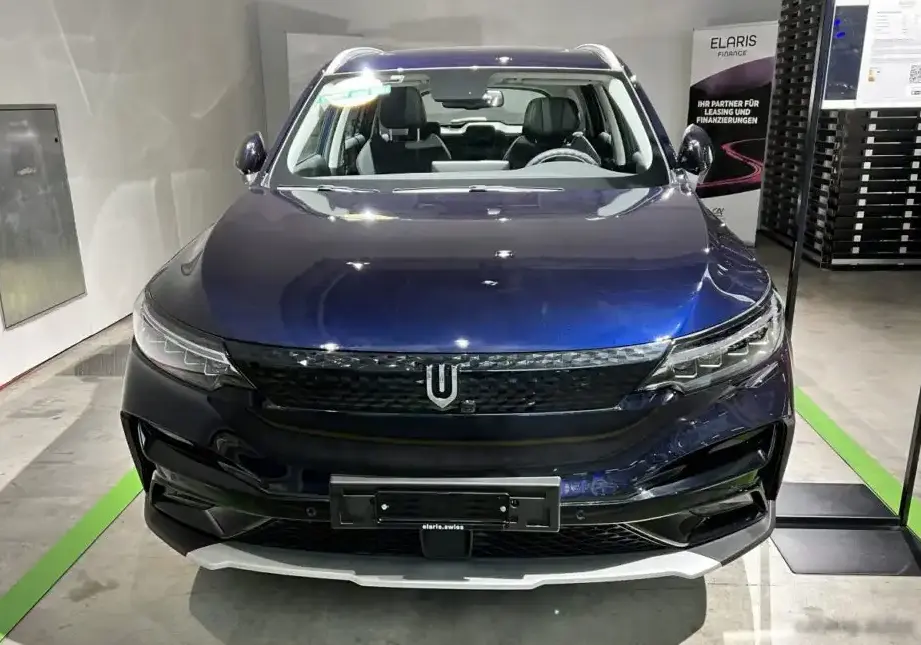
The Elaris Beo 86 kWh (204 Hp) is an all-electric compact SUV introduced in 2023 by Elaris, a relatively new automotive manufacturer. Positioned as a mainstream electric vehicle, the Beo aims to provide a practical and affordable entry point into the growing EV market. It represents Elaris’s initial foray into the SUV segment, targeting consumers seeking a spacious, efficient, and technologically equipped vehicle for daily commuting and family use. The Beo is built upon a dedicated electric vehicle platform, prioritizing battery capacity and range within its price bracket.
Technical Specifications
| Brand | Elaris |
| Model | Beo |
| Generation | Beo |
| Type (Engine) | 86 kWh (204 Hp) |
| Start of production | 2023 |
| Powertrain Architecture | BEV (Electric Vehicle) |
| Body type | SUV |
| Seats | 5 |
| Doors | 5 |
| Fuel Type | Electricity |
| Maximum speed | 150 km/h (93.21 mph) |
| Gross battery capacity | 86 kWh |
| Battery technology | Lithium-ion (Li-Ion) |
| All-electric range (WLTP) | 489 km (303.85 mi) |
| Average Energy consumption (WLTP) | 19.8 kWh/100 km (31.87 kWh/100 mi) |
| Average Energy consumption (MPGe) | 106 MPGe |
| Average Energy consumption (km/kWh) | 5.1 km/kWh |
| Average Energy consumption (mi/kWh) | 3.1 mi/kWh |
| Electric motor power | 204 Hp |
| Electric motor Torque | 320 Nm (236.02 lb.-ft.) |
| Electric motor location | Front axle, Transverse |
| Electric motor type | Synchronous |
| System power | 204 Hp |
| System torque | 320 Nm (236.02 lb.-ft.) |
| Trunk (boot) space – minimum | 467 l (16.49 cu. ft.) |
| Trunk (boot) space – maximum | 1141 l (40.29 cu. ft.) |
| Length | 4698 mm (184.96 in.) |
| Width | 1908 mm (75.12 in.) |
| Height | 1696 mm (66.77 in.) |
| Wheelbase | 2800 mm (110.24 in.) |
| Ride height (ground clearance) | 159 mm (6.26 in.) |
| Drivetrain Architecture | One electric motor drives the front wheels. |
| Drive wheel | Front wheel drive |
| Number of gears and type of gearbox | 1 gears, automatic transmission |
| Front brakes | Ventilated discs |
| Rear brakes | Disc |
| Assisting systems | ABS (Anti-lock braking system) |
| Steering type | Steering rack and pinion |
| Power steering | Electric Steering |
| Tires size | 235/50 R19 |
| Wheel rims size | 19 |
Powertrain & Engine Architecture
The Elaris Beo 86 kWh is powered by a single synchronous electric motor located on the front axle. This motor delivers 204 horsepower and 320 Nm (236.02 lb.-ft.) of torque. The vehicle utilizes an 86 kWh lithium-ion battery pack, providing a WLTP-certified range of 489 km (303.85 miles). The battery supports fast charging capabilities, though specific charging times vary depending on the charging infrastructure used. The powertrain is characterized by its immediate torque delivery, typical of electric vehicles, resulting in brisk acceleration. The single-speed automatic transmission simplifies the driving experience, offering seamless power delivery without the need for gear changes.
Driving Characteristics
The Beo 86 kWh offers a smooth and quiet driving experience. The instant torque from the electric motor provides responsive acceleration, making it well-suited for urban driving and highway merging. While not a performance-oriented vehicle, the Beo delivers adequate power for most driving situations. The front-wheel-drive configuration provides predictable handling, and the relatively low center of gravity, due to the battery pack’s placement, contributes to stability. The single-speed transmission ensures a linear power delivery, without the noticeable shifts of a traditional multi-gear automatic. The regenerative braking system allows for one-pedal driving in certain conditions, enhancing efficiency and driver convenience.
Equipment & Trim Levels
The Elaris Beo 86 kWh comes standard with a range of features designed to enhance comfort, convenience, and safety. Standard equipment typically includes air conditioning, a touchscreen infotainment system with smartphone integration (Apple CarPlay and Android Auto), power windows and locks, and a suite of advanced driver-assistance systems (ADAS) such as automatic emergency braking and lane departure warning. Interior upholstery is generally cloth, with options for leatherette upgrades. Available optional extras may include a panoramic sunroof, heated seats, and a premium audio system. The dashboard layout is modern and minimalist, emphasizing the vehicle’s technological focus.
Chassis & Braking
The Elaris Beo utilizes a conventional suspension setup, featuring MacPherson struts at the front and a multi-link suspension at the rear. Ventilated disc brakes are fitted to the front wheels, while solid discs are used at the rear. The braking system is augmented by an anti-lock braking system (ABS) and electronic brake-force distribution (EBD) to ensure optimal stopping performance. The steering system employs an electric power steering (EPS) unit, providing light and precise steering feel. The vehicle rides on 19-inch alloy wheels with 235/50 R19 tires, offering a balance of comfort and handling.
Market Reception & Comparison
The Elaris Beo 86 kWh has been generally well-received as a competitively priced electric SUV. Critics have praised its spacious interior, long range, and comprehensive standard equipment list. However, some reviews have noted the relatively basic interior materials and the lack of all-wheel-drive options. Compared to other EVs in its class, such as the Hyundai Kona Electric or the MG ZS EV, the Beo offers a comparable range and features at a potentially lower price point. Its energy consumption of 19.8 kWh/100 km is competitive within the segment, translating to a respectable 106 MPGe.
Legacy
As a relatively new model, the long-term reliability of the Elaris Beo 86 kWh is still being established. However, the use of proven lithium-ion battery technology and a relatively simple electric powertrain suggests a good level of durability. The availability of spare parts and service support may be a concern, given Elaris’s status as a new entrant to the automotive market. In the used car market, the Beo is expected to hold its value reasonably well, particularly as demand for electric vehicles continues to grow. The Beo represents a significant step for Elaris, establishing the brand as a contender in the increasingly competitive electric vehicle landscape.
