
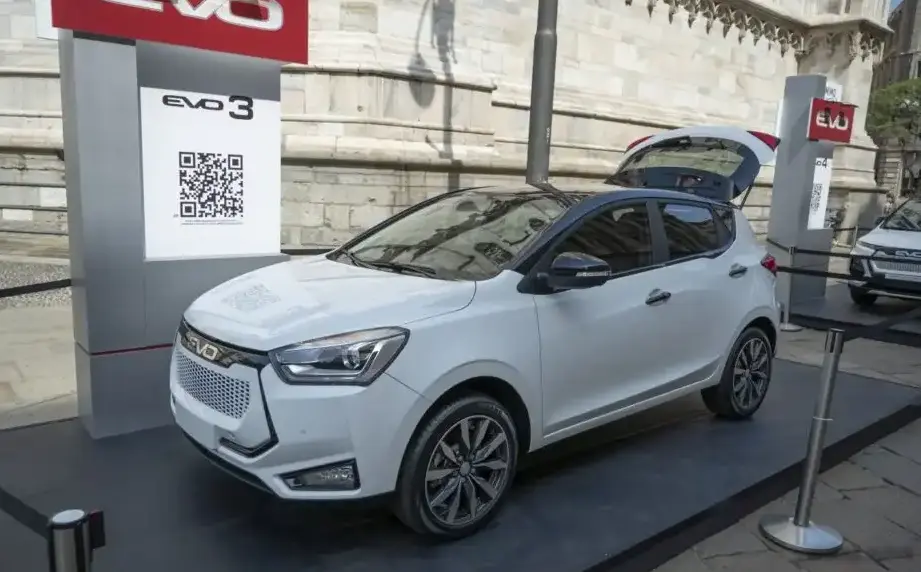
The EVO 3, specifically the 40 kWh (116 Hp) Electric variant, represents a significant step in the EVO brand’s transition towards electric mobility. Introduced in 2020, this model is a compact SUV designed to offer a practical and affordable entry point into the burgeoning electric vehicle market. Positioned as the base trim level within the EVO 3 range, it aimed to provide a balance between range, performance, and cost, targeting urban commuters and environmentally conscious buyers. The EVO 3 is built upon a dedicated electric vehicle platform, prioritizing battery placement and overall weight distribution for optimal efficiency.
Technical Specifications
| Brand | EVO |
| Model | 3 |
| Generation | 3 |
| Type (Engine) | 40 kWh (116 Hp) Electric |
| Start of production | 2020 |
| Powertrain Architecture | BEV (Electric Vehicle) |
| Body type | SUV |
| Seats | 5 |
| Doors | 5 |
| Fuel Type | Electricity |
| Acceleration 0 – 100 km/h | 12 sec |
| Acceleration 0 – 62 mph | 12 sec |
| Acceleration 0 – 60 mph | 11.4 sec |
| Maximum speed | 130 km/h (80.78 mph) |
| Weight-to-power ratio | 13.2 kg/Hp, 75.6 Hp/tonne |
| Weight-to-torque ratio | 5.7 kg/Nm, 175.9 Nm/tonne |
| Gross battery capacity | 40 kWh |
| Battery technology | Lithium-ion (Li-Ion) |
| Battery location | Below the floor, under the rear seats |
| All-electric range | 300 km (186.41 mi) |
| Average Energy consumption | 13.3 kWh/100 km (21.4 kWh/100 mi, 157 MPGe, 7.5 km/kWh, 4.7 mi/kWh) |
| Electric motor power | 116 Hp |
| Electric motor Torque | 270 Nm (199.14 lb.-ft.) |
| Electric motor location | Front axle, Transverse |
| System power | 116 Hp |
| System torque | 270 Nm (199.14 lb.-ft.) |
| Kerb Weight | 1535 kg (3384.1 lbs.) |
| Max. weight | 1980 kg (4365.15 lbs.) |
| Max load | 445 kg (981.06 lbs.) |
| Trunk (boot) space – minimum | 250 l (8.83 cu. ft.) |
| Trunk (boot) space – maximum | 450 l (15.89 cu. ft.) |
| Length | 4135 mm (162.8 in.) |
| Width | 1750 mm (68.9 in.) |
| Height | 1560 mm (61.42 in.) |
| Wheelbase | 2490 mm (98.03 in.) |
| Drivetrain Architecture | One electric motor drives the front wheels. |
| Drive wheel | Front wheel drive |
| Front suspension | Independent type McPherson |
| Rear suspension | Torsion |
| Front brakes | Ventilated discs |
| Assisting systems | ABS (Anti-lock braking system) |
| Steering type | Steering rack and pinion |
| Power steering | Electric Steering |
| Tires size | 205/50 R17 |
| Wheel rims size | 17 |
Powertrain & Engine Architecture
The EVO 3 40 kWh Electric utilizes a front-wheel-drive, Battery Electric Vehicle (BEV) powertrain. The heart of the system is a single electric motor, transversely mounted on the front axle, producing 116 horsepower and 270 Nm (199.14 lb.-ft.) of torque. The motor is powered by a 40 kWh lithium-ion battery pack positioned under the floor and extending under the rear seats. This placement contributes to a lower center of gravity, enhancing stability. The battery pack employs a liquid thermal management system to maintain optimal operating temperatures, crucial for longevity and performance. The vehicle doesn’t have a traditional multi-gear transmission; instead, it uses a single-speed reduction gear to deliver power to the front wheels. The power electronics and inverter manage the flow of energy between the battery and the motor, optimizing efficiency and responsiveness.
Driving Characteristics
The 116 hp output and 270 Nm of instant torque provide adequate, though not exhilarating, performance for urban and suburban driving. Acceleration from 0 to 60 mph takes approximately 11.4 seconds, and the top speed is limited to 130 km/h (80.78 mph). The single-speed transmission delivers a linear power curve, making it easy to modulate acceleration. Compared to potential higher-powered variants (which were not initially offered), the 40 kWh model prioritizes efficiency over outright speed. The front-wheel-drive configuration offers predictable handling in most conditions, but can exhibit some torque steer under hard acceleration. The regenerative braking system allows for one-pedal driving in certain situations, increasing efficiency and reducing brake wear.
Equipment & Trim Levels
The base EVO 3 40 kWh Electric trim came standard with a respectable array of features. Interior appointments included cloth upholstery, a basic infotainment system with a touchscreen display (typically around 7-8 inches), Bluetooth connectivity, and manual air conditioning. Safety features such as ABS, electronic stability control, and multiple airbags were standard. Optional extras included a larger touchscreen display with navigation, a rearview camera, parking sensors, and upgraded interior trim materials. The overall interior design was functional and modern, prioritizing usability over luxury.
Chassis & Braking
The EVO 3 utilizes a McPherson strut independent suspension at the front and a torsion beam suspension at the rear. This configuration represents a cost-effective solution for providing a comfortable ride and acceptable handling characteristics. The front brakes are ventilated discs, providing adequate stopping power, while the rear brakes are drum brakes, a cost-saving measure for the base model. Electric power steering provides light and precise steering feel. The vehicle rides on 17-inch alloy wheels with 205/50 R17 tires, offering a balance between comfort and grip.
Market Reception & Comparison
The EVO 3 40 kWh Electric was generally well-received by critics as an affordable and practical EV option. Reviewers praised its comfortable ride, decent range for urban commuting (around 186 miles), and competitive pricing. However, some criticized its relatively slow acceleration and basic interior appointments compared to more expensive EV rivals. In terms of fuel economy, the EVO 3 achieves an impressive 157 MPGe and consumes approximately 13.3 kWh per 100 km. Compared to a potential higher-range variant, the 40 kWh model offered a lower entry price but at the expense of range and performance.
Legacy
The EVO 3 40 kWh Electric played a crucial role in establishing EVO as a contender in the electric vehicle market. While early reports suggest generally good reliability for the powertrain, long-term battery health remains a key consideration for used car buyers. The relatively simple electric powertrain minimizes potential maintenance issues compared to internal combustion engine vehicles. As the used EV market matures, the EVO 3 40 kWh Electric represents a potentially attractive option for budget-conscious buyers seeking an affordable and environmentally friendly transportation solution. Its availability and relatively low running costs contribute to its continued presence in the used car market.
