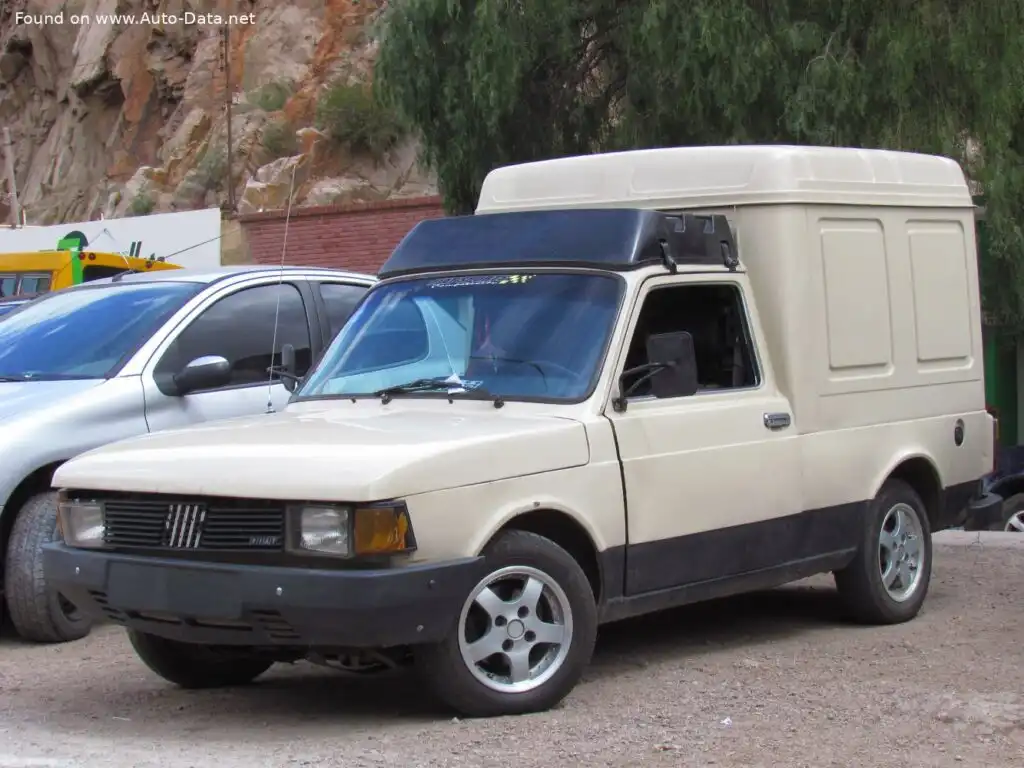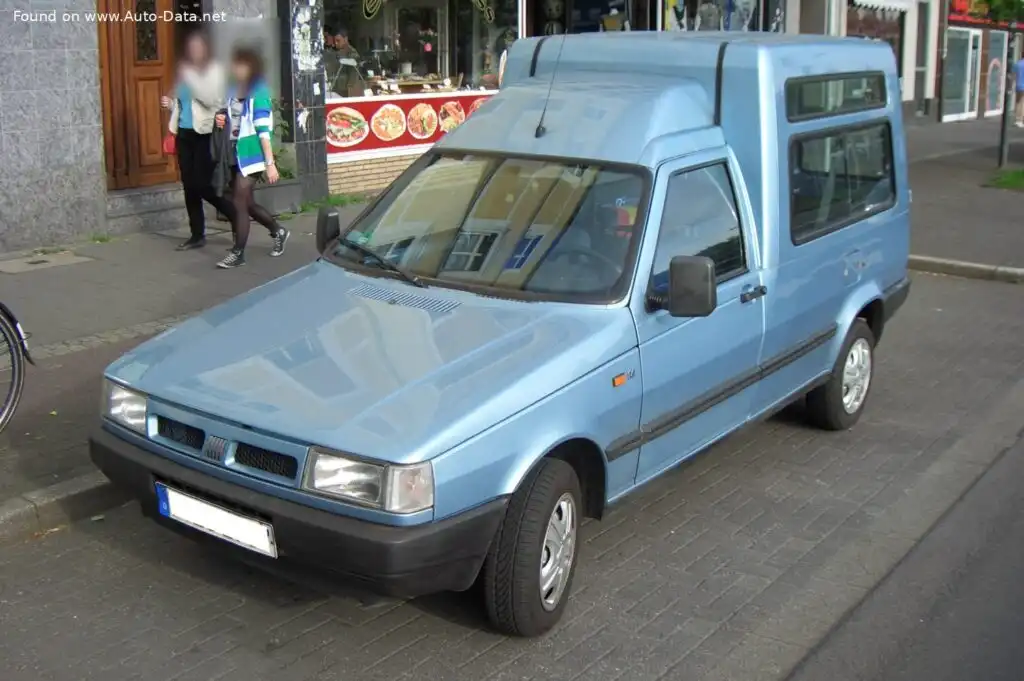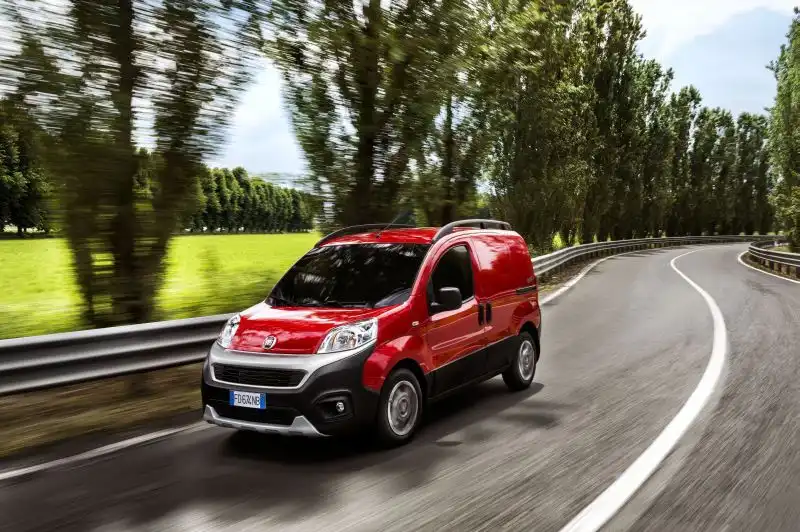
The Fiat Fiorino, specifically the facelifted version introduced in 2016 with the 1.4-liter engine producing 77 horsepower (70 hp when running on Compressed Natural Gas – CNG), represents a practical and economical entry point into the small commercial vehicle segment. This variant was positioned as a budget-friendly option within the Fiorino range, appealing to businesses and individuals needing a versatile, compact van for urban deliveries and light commercial tasks. Production of this configuration spanned from 2016 onwards, falling within the broader lifecycle of the Fiorino’s third generation (225 project), which is based on the Fiat Punto platform. The 2016 facelift brought updated styling and improved efficiency, making it a competitive offering in the European market.
Technical Specifications
| Brand | Fiat |
| Model | Fiorino |
| Generation | Fiorino (facelift 2016) |
| Type (Engine) | 1.4 (77/70 Hp) CNG |
| Start of production | 2016 |
| Powertrain Architecture | Internal Combustion engine |
| Body type | Minivan |
| Seats | 2-5 |
| Doors | 5 |
| Fuel consumption (economy) – urban | 8.9 l/100 km (26.4 US mpg, 31.7 UK mpg, 11.2 km/l) |
| Fuel consumption (economy) – urban (CNG) | 5.6 kg/100 km |
| Fuel consumption (economy) – extra urban | 5.6 l/100 km (42 US mpg, 50.4 UK mpg, 17.9 km/l) |
| Fuel consumption (economy) – extra urban (CNG) | 3.6 kg/100 km |
| Fuel consumption (economy) – combined | 6.8 l/100 km (34.6 US mpg, 41.5 UK mpg, 14.7 km/l) |
| Fuel consumption (economy) – combined (CNG) | 4.4 kg/100 km |
| CO2 emissions | 158 g/km |
| CO2 emissions (CNG) | 119 g/km |
| Fuel Type | Petrol / CNG |
| Maximum speed | 149 km/h (92.58 mph) |
| Emission standard | Euro 6 |
| Weight-to-power ratio | 15.3 kg/Hp, 65.3 Hp/tonne |
| Weight-to-torque ratio | 10.3 kg/Nm, 97.5 Nm/tonne |
| Power | 77 Hp @ 6000 rpm |
| Power per litre | 56.3 Hp/l |
| Power (CNG) | 70 Hp @ 6000 rpm |
| Power per litre (CNG) | 51.2 Hp/l |
| Torque | 115 Nm @ 3000 rpm (84.82 lb.-ft. @ 3000 rpm) |
| Torque (CNG) | 104 Nm @ 3000 rpm |
| Engine layout | Front, Transverse |
| Engine Model/Code | 350 A1.000 |
| Engine displacement | 1368 cm3 (83.48 cu. in.) |
| Number of cylinders | 4 |
| Engine configuration | Inline |
| Compression ratio | 11.1:1 |
| Number of valves per cylinder | 2 |
| Fuel injection system | Multi-port manifold injection |
| Engine aspiration | Naturally aspirated engine |
| Engine oil capacity | 2.6 l (2.75 US qt | 2.29 UK qt) |
| Kerb Weight | 1180 kg (2601.45 lbs.) |
| Max. weight | 1680 kg (3703.77 lbs.) |
| Max load | 500 kg (1102.31 lbs.) |
| Trunk (boot) space – maximum | 2400 l (84.76 cu. ft.) |
| Fuel tank capacity | 45 l (11.89 US gal | 9.9 UK gal) |
| CNG cylinder capacity | 13.2 kg |
| Length | 3957 mm (155.79 in.) |
| Width | 1716 mm (67.56 in.) |
| Height | 1721 mm (67.76 in.) |
| Wheelbase | 2513 mm (98.94 in.) |
| Front track | 1469 mm (57.83 in.) |
| Rear (Back) track | 1465 mm (57.68 in.) |
| Front overhang | 854 mm (33.62 in.) |
| Rear overhang | 590 mm (23.23 in.) |
| Minimum turning circle (turning diameter) | 9.95 m (32.64 ft.) |
| Drivetrain Architecture | The Internal combustion engine (ICE) drives the front wheels of the vehicle. |
| Drive wheel | Front wheel drive |
| Number of gears and type of gearbox | 5 gears, manual transmission |
| Front suspension | Independent type McPherson |
| Rear suspension | Torsion |
| Front brakes | Ventilated discs |
| Rear brakes | Drum |
| Assisting systems | ABS (Anti-lock braking system) |
| Steering type | Steering rack and pinion |
| Tires size | 185/65 R15 |
| Wheel rims size | 15 |
Powertrain & Engine Architecture
The heart of this Fiorino variant is the Fiat 350 A1.000 1.4-liter inline-four cylinder engine. This engine utilizes a naturally aspirated configuration and a multi-point fuel injection system. The 8-valve (2 valves per cylinder) design prioritizes simplicity and reliability over outright performance. When operating on gasoline, the engine produces 77 horsepower at 6000 rpm and 115 Nm (84.82 lb-ft) of torque at 3000 rpm. Switching to CNG reduces the output slightly to 70 horsepower. The engine features a compression ratio of 11.1:1. The engine is transversely mounted at the front of the vehicle. The Fiorino utilizes a standard five-speed manual transmission, chosen for its cost-effectiveness and suitability for commercial applications. The transmission’s gear ratios are geared towards maximizing fuel efficiency and providing adequate pulling power for light loads.
Driving Characteristics
The 1.4-liter engine, paired with the five-speed manual transmission, delivers modest performance. Acceleration is adequate for urban driving and light highway use, but it’s not designed for rapid overtaking or carrying heavy loads. The CNG mode further reduces performance, making it best suited for city driving where the lower running costs outweigh the power reduction. The gear ratios are relatively long, prioritizing fuel economy over spirited driving. Compared to higher-output versions of the Fiorino, such as those equipped with the 1.3 Multijet diesel engine, this variant feels noticeably slower. However, the lighter engine weight contributes to a more nimble feel in city traffic. The suspension is tuned for comfort and practicality, rather than sporty handling.
Equipment & Trim Levels
The 1.4-liter CNG Fiorino typically came with a basic level of equipment, reflecting its position as an entry-level commercial vehicle. Standard features generally included power steering, central locking, and a basic audio system. Safety features included ABS brakes and driver and passenger airbags. Interior upholstery was typically hard-wearing fabric. Optional extras included air conditioning, electric windows, and a more advanced audio system. The dashboard layout was functional and straightforward, prioritizing ease of use over aesthetic appeal. Trim levels were often limited, with the focus being on providing a practical and affordable van for businesses.
Chassis & Braking
The Fiorino’s chassis is based on the Fiat Punto platform, providing a robust and reliable foundation. The front suspension utilizes an independent McPherson strut setup, while the rear suspension employs a torsion beam axle. This configuration provides a good balance between ride comfort and load-carrying capacity. The braking system features ventilated discs on the front wheels and drum brakes on the rear. ABS (Anti-lock Braking System) is standard, enhancing safety during emergency braking. The steering is a rack and pinion system, providing precise and responsive control.
Market Reception & Comparison
The Fiat Fiorino 1.4 CNG was generally well-received as a cost-effective and practical solution for urban deliveries and light commercial tasks. Critics praised its fuel efficiency, particularly when running on CNG, and its compact size, which made it easy to maneuver in congested city streets. However, the engine’s limited power was a common criticism. Compared to the diesel-powered Fiorino variants, the 1.4 CNG offered lower performance but significantly lower running costs, especially for operators who could take advantage of CNG refueling infrastructure. The petrol/CNG flexibility was a key selling point, allowing drivers to switch between fuel sources depending on availability and cost.
Legacy
The 1.4-liter CNG engine, while not known for its high performance, proved to be a reliable and durable powertrain. The Fiorino, in general, has established a reputation for being a dependable and affordable commercial vehicle. On the used car market, these models are often sought after by small businesses and individuals looking for a low-cost, fuel-efficient van. Maintenance costs are generally reasonable, and parts availability is good. The CNG conversion, if properly maintained, can provide significant long-term savings on fuel costs, making this variant a viable option for budget-conscious buyers.