
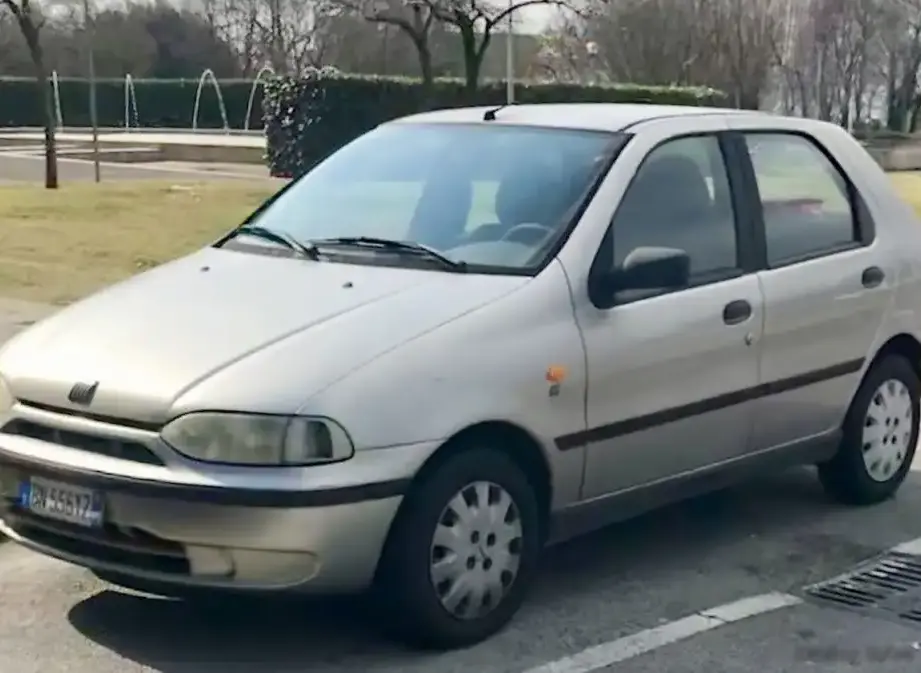
The Fiat Palio 1.0 i 16V (70 hp) was a popular subcompact hatchback produced between 1996 and 2002 as part of the 178 series. Introduced as a modern replacement for the aging Fiat Uno, the Palio aimed to offer a more spacious and refined experience in the competitive European small car segment. This particular 1.0-liter variant served as the entry point to the Palio range, prioritizing affordability and fuel efficiency over outright performance. It was a key model for Fiat, particularly in emerging markets where value for money was paramount. The Palio, and this 1.0L trim specifically, played a significant role in establishing Fiat’s presence in these regions.
Technical Specifications
| Brand | Fiat |
| Model | Palio |
| Generation | Palio (178) |
| Type (Engine) | 1.0 i 16V (70 Hp) |
| Start of production | 1996 |
| End of production | 2002 |
| Powertrain Architecture | Internal Combustion engine |
| Body type | Hatchback |
| Seats | 5 |
| Doors | 3-5 |
| Fuel consumption (urban) | 8 l/100 km (29.4 US mpg) |
| Fuel consumption (extra urban) | 5 l/100 km (47 US mpg) |
| Fuel Type | Petrol (Gasoline) |
| Acceleration 0 – 100 km/h | 14 sec |
| Acceleration 0 – 62 mph | 14 sec |
| Acceleration 0 – 60 mph | 13.3 sec |
| Maximum speed | 160 km/h (99.42 mph) |
| Weight-to-power ratio | 13 kg/Hp |
| Weight-to-torque ratio | 9.7 kg/Nm |
| Power | 70 Hp @ 5750 rpm |
| Power per litre | 70.1 Hp/l |
| Torque | 94 Nm @ 4000 rpm (69.33 lb.-ft. @ 4000 rpm) |
| Engine layout | Front, Transverse |
| Engine displacement | 999 cm3 (60.96 cu. in.) |
| Number of cylinders | 4 |
| Engine configuration | Inline |
| Cylinder Bore | 70 mm (2.76 in.) |
| Piston Stroke | 64.9 mm (2.56 in.) |
| Compression ratio | 10.2:1 |
| Number of valves per cylinder | 4 |
| Fuel injection system | Multi-port manifold injection |
| Engine aspiration | Naturally aspirated |
| Kerb Weight | 910 kg (2006.21 lbs.) |
| Max. weight | 1310 kg (2888.06 lbs.) |
| Max load | 400 kg (881.85 lbs.) |
| Trunk (boot) space – minimum | 280 l (9.89 cu. ft.) |
| Trunk (boot) space – maximum | 920 l (32.49 cu. ft.) |
| Fuel tank capacity | 48 l (12.68 US gal) |
| Length | 3740 mm (147.24 in.) |
| Width | 1614 mm (63.54 in.) |
| Height | 1445 mm (56.89 in.) |
| Wheelbase | 2360 mm (92.91 in.) |
| Front track | 1388 mm (54.65 in.) |
| Rear track | 1378 mm (54.25 in.) |
| Drivetrain Architecture | Front wheel drive |
| Number of gears | 5 |
| Gearbox type | Manual transmission |
| Front suspension | Spring Strut |
| Rear suspension | Trailing arm |
| Front brakes | Disc |
| Rear brakes | Drum |
| Steering type | Steering rack and pinion |
| Tires size | 165/70 R13 |
Powertrain & Engine Architecture
The heart of the Palio 1.0 i 16V was the Fiat 178A.046 engine, a 999cc inline-four cylinder unit. This engine featured a 16-valve cylinder head, a relatively sophisticated design for a small displacement engine, contributing to its respectable power output for its size. It utilized a multi-point fuel injection system, which helped improve fuel efficiency and reduce emissions. The engine’s 10.2:1 compression ratio was a compromise between performance and the ability to run on readily available fuel grades. The 5-speed manual transmission was the standard offering, chosen for its simplicity and cost-effectiveness. The transmission’s gear ratios were tuned for maximizing fuel economy and providing adequate acceleration in urban environments. This engine code was a common sight in many Fiat and associated brands vehicles during the late 90s and early 2000s.
Driving Characteristics
The Palio 1.0 i 16V wasn’t designed for speed. With 70 horsepower, acceleration was modest, taking around 14 seconds to reach 60 mph. However, the engine was surprisingly rev-happy and offered a usable amount of torque at lower speeds, making it suitable for city driving. The 5-speed manual transmission allowed drivers to keep the engine in its optimal power band. Compared to the more powerful 1.6-liter versions of the Palio, the 1.0L felt significantly slower, but it offered a more economical and forgiving driving experience. The steering was light and easy, making it maneuverable in tight spaces. The suspension, while basic, provided a reasonably comfortable ride on most road surfaces.
Equipment & Trim Levels
The 1.0 i 16V typically represented the base trim level of the Palio range. Standard equipment generally included power steering, central locking, and a basic audio system. Interior upholstery was typically cloth, and the dashboard featured a simple, functional design. Optional extras included air conditioning, electric windows, and alloy wheels. The Palio’s interior, while not luxurious, was reasonably spacious for a subcompact car, offering adequate headroom and legroom for passengers. The 3-door and 5-door body styles were available, with the 5-door version offering greater practicality for families.
Chassis & Braking
The Palio 1.0 i 16V utilized a relatively simple chassis design. Front suspension consisted of MacPherson struts, while the rear employed a trailing arm setup. This configuration provided a good balance between ride comfort and handling. Braking was handled by disc brakes at the front and drum brakes at the rear. While adequate for the car’s performance, the braking system wasn’t particularly powerful. The Palio’s relatively light weight helped to compensate for the modest braking performance. Stabilizer bars were often omitted on the base trim to keep costs down.
Market Reception & Comparison
The Palio 1.0 i 16V was generally well-received as an affordable and practical small car. Critics praised its fuel efficiency and maneuverability, but noted its lack of outright performance. Compared to rivals like the Renault Clio and Peugeot 206, the Palio offered a more basic driving experience, but it was often cheaper to purchase and maintain. The 1.6-liter Palio models offered significantly more performance, but at a higher price point. The 1.0L version appealed to buyers who prioritized economy and practicality over sporty driving dynamics. Fuel economy was a strong point, consistently achieving around 47 mpg on the extra-urban cycle.
Legacy
The Fiat Palio 1.0 i 16V has proven to be a relatively reliable and durable car. The 1.0-liter engine is known for its longevity, provided it is properly maintained. Today, these Palios are often found as affordable used cars, particularly in regions where they were originally sold in large numbers. While not a collector’s item, the Palio 1.0 i 16V remains a popular choice for budget-conscious buyers seeking a simple and economical mode of transportation. Parts availability can be a concern in some markets, but the engine’s widespread use in other Fiat models means that components are often readily available. The Palio, in its various forms, helped solidify Fiat’s reputation for building practical and affordable cars.
