
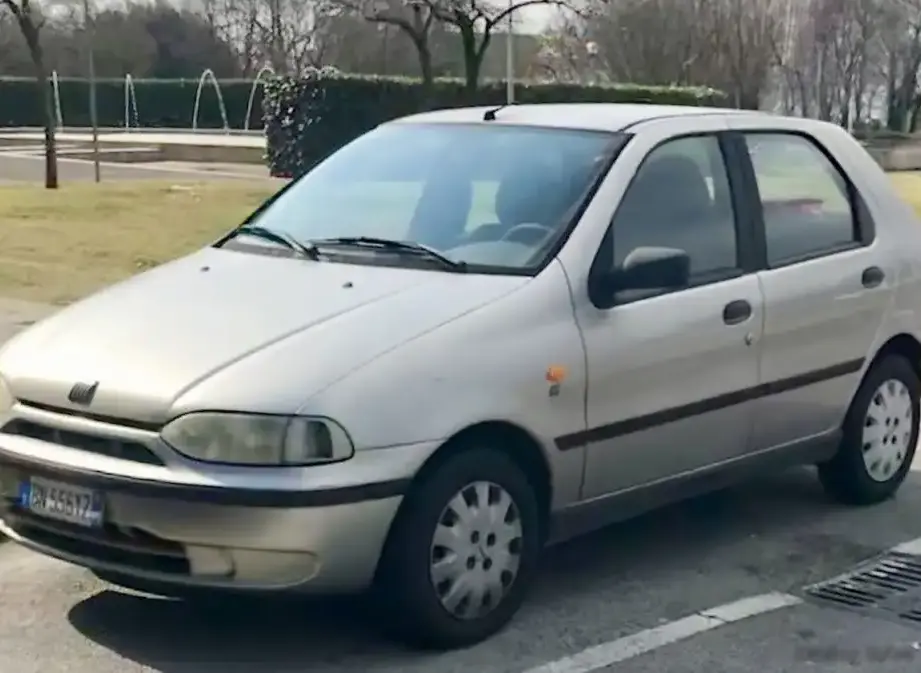
The Fiat Palio 1.6 i (80 Hp), produced between 1996 and 2002, represents a significant iteration within the 178 series Palio range. Positioned as a mid-range offering, this variant aimed to balance affordability with a degree of performance and practicality. The Palio, launched in 1996, was Fiat’s entry into the increasingly competitive supermini and compact hatchback segment, intended to replace the aging Uno in many markets. The 1.6 i model, available in both 3-door and 5-door body styles, served as a step up from the base 1.2-liter engine, offering a more refined driving experience and appealing to buyers seeking additional power for highway driving or carrying a full passenger load. It was primarily marketed in Europe and Latin America, where compact, economical cars were in high demand.
Technical Specifications
| Brand | Fiat |
| Model | Palio |
| Generation | Palio (178) |
| Type (Engine) | 1.6 i (80 Hp) |
| Start of production | 1996 |
| End of production | 2002 |
| Powertrain Architecture | Internal Combustion engine |
| Body type | Hatchback |
| Seats | 5 |
| Doors | 3-5 |
| Fuel Type | Petrol (Gasoline) |
| Acceleration 0 – 100 km/h | 12.1 sec |
| Acceleration 0 – 62 mph | 12.1 sec |
| Acceleration 0 – 60 mph | 11.5 sec |
| Maximum speed | 173 km/h (107.5 mph) |
| Weight-to-power ratio | 11.8 kg/Hp, 85.1 Hp/tonne |
| Weight-to-torque ratio | 7.3 kg/Nm, 136.2 Nm/tonne |
| Power | 80 Hp @ 5750 rpm |
| Power per litre | 50.6 Hp/l |
| Torque | 128 Nm @ 2750 rpm (94.41 lb.-ft. @ 2750 rpm) |
| Engine layout | Front, Transverse |
| Engine displacement | 1581 cm3 (96.48 cu. in.) |
| Number of cylinders | 4 |
| Engine configuration | Inline |
| Cylinder Bore | 86.4 mm (3.4 in.) |
| Piston Stroke | 67.4 mm (2.65 in.) |
| Compression ratio | 9.2:1 |
| Number of valves per cylinder | 2 |
| Fuel injection system | Multi-port manifold injection |
| Engine aspiration | Naturally aspirated engine |
| Kerb Weight | 940 kg (2072.35 lbs.) |
| Trunk (boot) space – minimum | 280 l (9.89 cu. ft.) |
| Trunk (boot) space – maximum | 920 l (32.49 cu. ft.) |
| Fuel tank capacity | 48 l (12.68 US gal | 10.56 UK gal) |
| Length | 3735 mm (147.05 in.) |
| Width | 1614 mm (63.54 in.) |
| Height | 1445 mm (56.89 in.) |
| Wheelbase | 2360 mm (92.91 in.) |
| Front track | 1388 mm (54.65 in.) |
| Rear (Back) track | 1378 mm (54.25 in.) |
| Drivetrain Architecture | The Internal combustion engine (ICE) drives the front wheels of the vehicle. |
| Drive wheel | Front wheel drive |
| Number of gears and type of gearbox | 5 gears, manual transmission |
| Front suspension | Spring Strut |
| Rear suspension | Trailing arm |
| Front brakes | Disc |
| Rear brakes | Drum |
| Steering type | Steering rack and pinion |
| Power steering | Hydraulic Steering |
| Tires size | 175/70 R13 |
Powertrain & Engine Architecture
The heart of the Palio 1.6 i is the Fiat 1.6-liter inline-four cylinder engine, typically identified by engine codes such as 178B.2.000. This engine is a naturally aspirated unit featuring a single overhead camshaft (SOHC) design with two valves per cylinder. The multi-port fuel injection system, a common feature for the time, delivered fuel directly into the intake ports, optimizing combustion efficiency. While not a particularly high-tech engine by modern standards, it was known for its relative simplicity and durability. The 1.6-liter engine produced 80 horsepower at 5750 rpm and 128 Nm (94.41 lb-ft) of torque at 2750 rpm. The engine’s power delivery was relatively linear, making it suitable for everyday driving. The Palio 1.6 i was exclusively offered with a five-speed manual transmission, providing drivers with full control over gear selection. An automatic transmission was not available for this specific engine/trim combination.
Driving Characteristics
The Palio 1.6 i offered a noticeable improvement in performance over the base 1.2-liter models. The 0-60 mph time of around 11.5 seconds, while not blistering, was adequate for comfortable highway merging and overtaking. The five-speed manual transmission allowed drivers to keep the engine in its optimal power band, maximizing acceleration. The gear ratios were fairly well-spaced, providing a balance between responsiveness and fuel efficiency. Compared to the more powerful Palio 1.6 16V models, the 8-valve engine felt less eager to rev, but it offered a broader, more usable torque curve. Handling was typical for a supermini of the era – safe and predictable, but not particularly sporty. The steering was light and easy to use, making it well-suited for urban driving.
Equipment & Trim Levels
The Palio 1.6 i typically came equipped with a reasonable level of standard features. These included power steering, central locking, front electric windows, and a basic audio system. Interior upholstery was generally cloth, with a simple, functional dashboard layout. Optional extras included air conditioning, alloy wheels, and a more advanced audio system. Trim levels varied depending on the market, but generally, the 1.6 i sat in the middle of the Palio range, offering a step up in comfort and convenience compared to the base models. The interior plastics were durable but not particularly luxurious, reflecting the car’s affordable price point.
Chassis & Braking
The Palio 1.6 i utilized a relatively simple chassis design. Front suspension consisted of MacPherson strut springs, while the rear employed a trailing arm setup. This configuration provided a comfortable ride, although it wasn’t particularly sophisticated in terms of handling. Braking was handled by disc brakes on the front wheels and drum brakes on the rear. While adequate for normal driving conditions, the braking system lacked the stopping power of more modern vehicles. The Palio 1.6 i’s curb weight of around 940 kg (2072 lbs) contributed to its relatively nimble handling.
Market Reception & Comparison
The Fiat Palio 1.6 i was generally well-received by automotive critics as a practical and affordable hatchback. It was praised for its fuel efficiency, comfortable ride, and relatively spacious interior. However, some critics noted that the engine lacked refinement and that the interior materials were somewhat basic. Compared to rivals such as the Renault Clio and Peugeot 206, the Palio offered a more affordable price point but lacked the same level of sophistication. The 1.6-liter engine provided a good balance between performance and fuel economy, making it a popular choice for buyers who needed a versatile and economical car.
Legacy
The Fiat Palio 1.6 i, while not a groundbreaking vehicle, proved to be a reliable and durable car. The 1.6-liter engine, when properly maintained, is known for its longevity. Today, Palio 1.6 i models are relatively common in the used car market, particularly in Europe and Latin America. They represent an affordable and practical option for buyers seeking a simple, reliable hatchback. Parts availability is generally good, and maintenance costs are relatively low. The Palio’s enduring popularity is a testament to its practicality and affordability, cementing its place as a significant vehicle in Fiat’s history.
