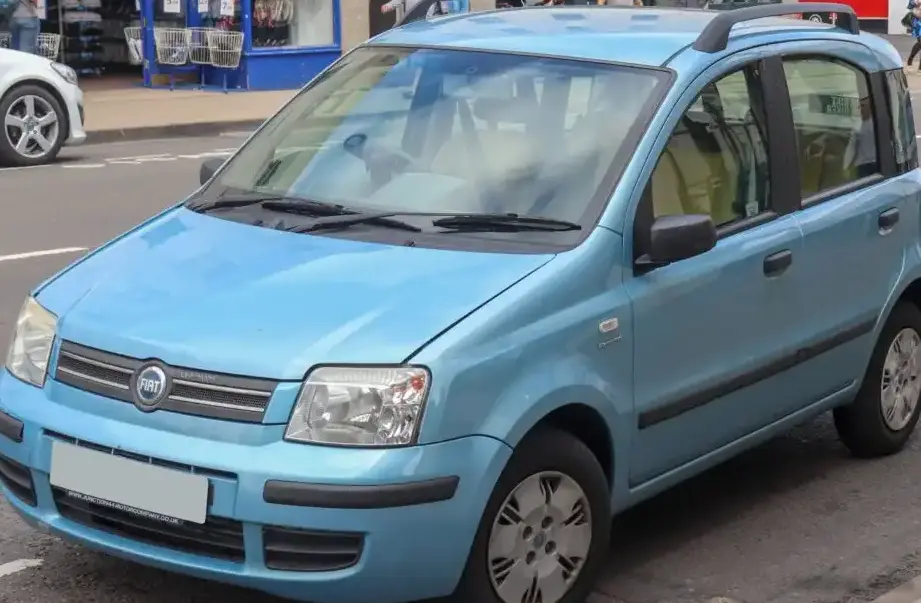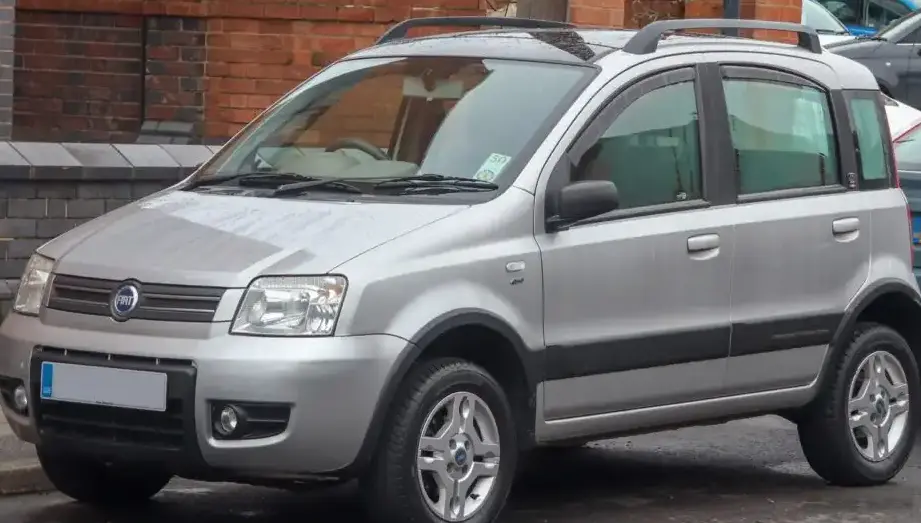
The Fiat Panda II 4×4 1.2 MPI (60 hp) was a compact, all-wheel drive hatchback produced by Fiat between 2004 and 2010. It represented a niche offering within the broader Panda II range (introduced in 2003), capitalizing on the enduring popularity of small, capable 4×4 vehicles, particularly in mountainous regions of Europe. This variant aimed to provide affordable all-wheel drive functionality in a practical, city-friendly package. It was positioned as the entry-level 4×4 option, offering a more economical alternative to the more powerful and often better-equipped versions.
Technical Specifications
| Brand | Fiat |
| Model | Panda |
| Generation | Panda II 4×4 |
| Type (Engine) | 1.2 MPI (60 Hp) 4×4 |
| Start of production | 2004 |
| End of production | 2010 |
| Powertrain Architecture | Internal Combustion engine |
| Body type | Hatchback |
| Seats | 5 |
| Doors | 5 |
| Fuel consumption (urban) | 7.9 l/100 km (29.8 US mpg, 35.8 UK mpg, 12.7 km/l) |
| Fuel consumption (extra urban) | 5.8 l/100 km (40.6 US mpg, 48.7 UK mpg, 17.2 km/l) |
| Fuel consumption (combined) | 6.6 l/100 km (35.6 US mpg, 42.8 UK mpg, 15.2 km/l) |
| Fuel Type | Petrol (Gasoline) |
| Acceleration 0 – 100 km/h | 20 sec |
| Acceleration 0 – 62 mph | 20 sec |
| Acceleration 0 – 60 mph | 19 sec |
| Maximum speed | 145 km/h (90.1 mph) |
| Power | 60 Hp @ 5000 rpm |
| Power per litre | 48.3 Hp/l |
| Torque | 102 Nm @ 2500 rpm (75.23 lb.-ft. @ 2500 rpm) |
| Engine layout | Front, Transverse |
| Engine Model/Code | 188A4000 |
| Engine displacement | 1242 cm3 (75.79 cu. in.) |
| Number of cylinders | 4 |
| Engine configuration | Inline |
| Cylinder Bore | 70.8 mm (2.79 in.) |
| Piston Stroke | 78.86 mm (3.1 in.) |
| Compression ratio | 9.8:1 |
| Number of valves per cylinder | 2 |
| Fuel injection system | Multi-port manifold injection |
| Engine aspiration | Naturally aspirated engine |
| Valvetrain | OHC |
| Engine oil capacity | 2.8 l (2.96 US qt | 2.46 UK qt) |
| Coolant capacity | 4.6 l (4.86 US qt | 4.05 UK qt) |
| Trunk (boot) space – minimum | 230 l (8.12 cu. ft.) |
| Trunk (boot) space – maximum | 780 l (27.55 cu. ft.) |
| Fuel tank capacity | 30 l (7.93 US gal | 6.6 UK gal) |
| Length | 3538 mm (139.29 in.) |
| Width | 1578 mm (62.13 in.) |
| Height | 1590 mm (62.6 in.) |
| Wheelbase | 2305 mm (90.75 in.) |
| Front track | 1366 mm (53.78 in.) |
| Rear track | 1358 mm (53.46 in.) |
| Minimum turning circle | 9.6 m (31.5 ft.) |
| Drive wheel | All wheel drive (4×4) |
| Number of gears | 5 gears, manual transmission |
| Front suspension | Spring Strut |
| Rear suspension | Trailing arm |
| Front brakes | Ventilated discs |
| Rear brakes | Disc |
| Steering type | Steering rack and pinion |
| Tires size | 185/65 R14 |
Introduction
The Fiat Panda II 4×4 1.2 MPI (60 hp) was produced from 2004 to 2010, falling within the second generation of the iconic Fiat Panda. The Panda II, designated as the 169 project internally, represented a significant departure from its predecessor, offering a more modern design and improved safety features. The 4×4 variant, in particular, built upon the Panda’s reputation for practicality and affordability, adding the capability of all-wheel drive. This model was primarily aimed at the European market, where compact 4x4s are popular in regions with challenging terrain or inclement weather. It offered a unique blend of urban maneuverability and off-road capability.
Powertrain & Engine Architecture
At the heart of the Panda II 4×4 1.2 MPI was the 188A4000 engine, a 1.2-liter inline-four cylinder petrol engine. This engine utilized a multi-point fuel injection system, providing adequate fuel delivery for its modest power output. The engine featured a single overhead camshaft (OHC) valvetrain, operating two valves per cylinder. The 60 horsepower peak was achieved at 5000 rpm, while the 102 Nm (75.23 lb-ft) of torque was available at 2500 rpm. The engine’s relatively low compression ratio of 9.8:1 contributed to its ability to run on readily available fuel grades. The transmission was a five-speed manual gearbox, chosen for its simplicity and efficiency. The 4×4 system employed a viscous coupling to distribute power between the front and rear axles, providing automatic engagement of all-wheel drive when traction was lost.
Driving Characteristics
The 1.2-liter engine and five-speed manual transmission combination in the Panda II 4×4 resulted in a driving experience focused on practicality rather than performance. Acceleration was modest, with a 0-60 mph time of around 19 seconds. The car’s top speed was approximately 90 mph. The gear ratios were tuned for fuel efficiency and low-speed tractability, making it well-suited for urban driving and navigating challenging terrain at slower speeds. Compared to higher-output versions of the Panda II, such as the 1.4-liter models, the 1.2 MPI felt noticeably slower, particularly when fully loaded or climbing steep hills. However, the 4×4 system provided significantly improved grip and stability on loose surfaces, making it a capable performer in off-road conditions. The viscous coupling 4×4 system was not intended for sustained aggressive off-roading, but rather for providing enhanced traction in slippery conditions.
Equipment & Trim Levels
The Panda II 4×4 1.2 MPI was typically equipped with a relatively basic level of standard features, reflecting its position as an entry-level model. Standard equipment generally included power steering, central locking, and a basic audio system. Interior upholstery was typically a durable cloth material. Optional extras included air conditioning, electric windows, and upgraded audio systems. The dashboard layout was functional and straightforward, prioritizing usability over aesthetics. Safety features were also relatively basic, typically including driver and passenger airbags and ABS brakes. The trim level was often simply designated as “4×4,” with limited opportunities for further customization.
Chassis & Braking
The Panda II 4×4 featured a simple yet effective chassis design. The front suspension utilized a MacPherson strut setup, while the rear suspension employed a trailing arm configuration. This setup provided a reasonable balance between ride comfort and handling. Braking duties were handled by ventilated discs at the front and solid discs at the rear. The braking system was adequate for the car’s weight and performance, but lacked the sophistication of more advanced systems found in higher-end vehicles. The relatively narrow tires (185/65 R14) contributed to fuel efficiency and reduced rolling resistance, but also limited grip in dry conditions.
Market Reception & Comparison
The Fiat Panda II 4×4 1.2 MPI was generally well-received by critics as an affordable and capable small 4×4. It was praised for its practicality, fuel efficiency, and surprisingly competent off-road performance. However, it was also criticized for its modest power output and basic interior. Compared to other trims in the Panda II lineup, the 1.2 MPI 4×4 offered the lowest price point for all-wheel drive capability. The 1.4-liter versions provided more power and refinement, but at a higher cost. In terms of fuel economy, the 1.2 MPI 4×4 offered competitive figures for a vehicle of its type, achieving around 35.6 US mpg on the combined cycle. Reliability was generally good, with the 1.2-liter engine proving to be durable and relatively trouble-free.
Legacy
The Fiat Panda II 4×4 1.2 MPI has established a reputation as a reliable and affordable small 4×4 in the used car market. Its simple mechanical design and robust engine make it relatively easy and inexpensive to maintain. While not a performance car, it remains a popular choice for those seeking a practical and capable vehicle for navigating challenging terrain or inclement weather. The Panda II 4×4’s enduring appeal lies in its ability to provide all-wheel drive functionality in a compact and affordable package, making it a unique and valuable offering in the small car segment.