Technical Specifications
| Brand | Fiat |
| Model | Panda |
| Generation | Panda II 4×4 |
| Type (Engine) | 1.3 16V Multijet (75 Hp) 4×4 DPF |
| Start of production | September, 2010 |
| End of production | January, 2012 |
| Powertrain Architecture | Internal Combustion engine |
| Body type | Hatchback |
| Seats | 5 |
| Doors | 5 |
| Fuel consumption (urban) | 6.4 l/100 km (36.8 US mpg, 44.1 UK mpg, 15.6 km/l) |
| Fuel consumption (extra urban) | 4.0 l/100 km (58.8 US mpg, 70.6 UK mpg, 25 km/l) |
| Fuel consumption (combined) | 4.9 l/100 km (48 US mpg, 57.6 UK mpg, 20.4 km/l) |
| CO2 emissions | 128 g/km |
| Fuel Type | Diesel |
| Acceleration 0 – 100 km/h | 16.1 sec |
| Acceleration 0 – 62 mph | 16.1 sec |
| Acceleration 0 – 60 mph | 15.3 sec |
| Maximum speed | 152 km/h (94.45 mph) |
| Emission standard | Euro 5 |
| Weight-to-power ratio | 14.3 kg/Hp, 69.8 Hp/tonne |
| Weight-to-torque ratio | 7.4 kg/Nm, 134.9 Nm/tonne |
| Power | 75 Hp @ 4000 rpm |
| Power per litre | 60.1 Hp/l |
| Torque | 145 Nm @ 1500 rpm (106.95 lb.-ft. @ 1500 rpm) |
| Engine layout | Front, Transverse |
| Engine Model/Code | 169A1000 |
| Engine displacement | 1248 cm3 (76.16 cu. in.) |
| Number of cylinders | 4 |
| Engine configuration | Inline |
| Cylinder Bore | 69.5 mm (2.74 in.) |
| Piston Stroke | 82 mm (3.23 in.) |
| Compression ratio | 18:1 |
| Number of valves per cylinder | 4 |
| Fuel injection system | Diesel Commonrail |
| Engine aspiration | Turbocharger, Intercooler |
| Valvetrain | DOHC |
| Engine oil capacity | 3 l (3.17 US qt | 2.64 UK qt) |
| Coolant | 6.5 l (6.87 US qt | 5.72 UK qt) |
| Kerb Weight | 1075 kg (2369.97 lbs.) |
| Max. weight | 1520 kg (3351.03 lbs.) |
| Max load | 445 kg (981.06 lbs.) |
| Trunk (boot) space – minimum | 200 l (7.06 cu. ft.) |
| Trunk (boot) space – maximum | 855 l (30.19 cu. ft.) |
| Fuel tank capacity | 35 l (9.25 US gal | 7.7 UK gal) |
| Max. roof load | 50 kg (110.23 lbs.) |
| Permitted trailer load with brakes (12%) | 900 kg (1984.16 lbs.) |
| Permitted trailer load without brakes | 400 kg (881.85 lbs.) |
| Permitted towbar download | 60 kg (132.28 lbs.) |
| Length | 3574 mm (140.71 in.) |
| Width | 1605 mm (63.19 in.) |
| Height | 1632 mm (64.25 in.) |
| Wheelbase | 2305 mm (90.75 in.) |
| Front track | 1366 mm (53.78 in.) |
| Rear (Back) track | 1366 mm (53.78 in.) |
| Ride height (ground clearance) | 160 mm (6.3 in.) |
| Minimum turning circle (turning diameter) | 9.6 m (31.5 ft.) |
| Approach angle | 24° |
| Departure angle | 42° |
| Ramp-over (brakeover) angle | 24° |
| Wading depth | 400 mm (15.75 in.) |
| Drivetrain Architecture | The Internal combustion engine (ICE) drives the front wheels permanently, and the rear wheels are driven through an electrically or mechanically operated clutch if necessary. |
| Drive wheel | All wheel drive (4×4) |
| Number of gears and type of gearbox | 5 gears, manual transmission |
| Front suspension | Independent, type McPherson with coil spring and anti-roll bar |
| Rear suspension | Spring Strut, Semi-dependent beam with stabilizer lateral stability |
| Front brakes | Ventilated discs, 240 mm |
| Rear brakes | Drum, 203 mm |
| Assisting systems | ABS (Anti-lock braking system) |
| Steering type | Steering rack and pinion |
| Power steering | Electric Steering |
| Tires size | 185/65 R14 |
| Wheel rims size | 14 |
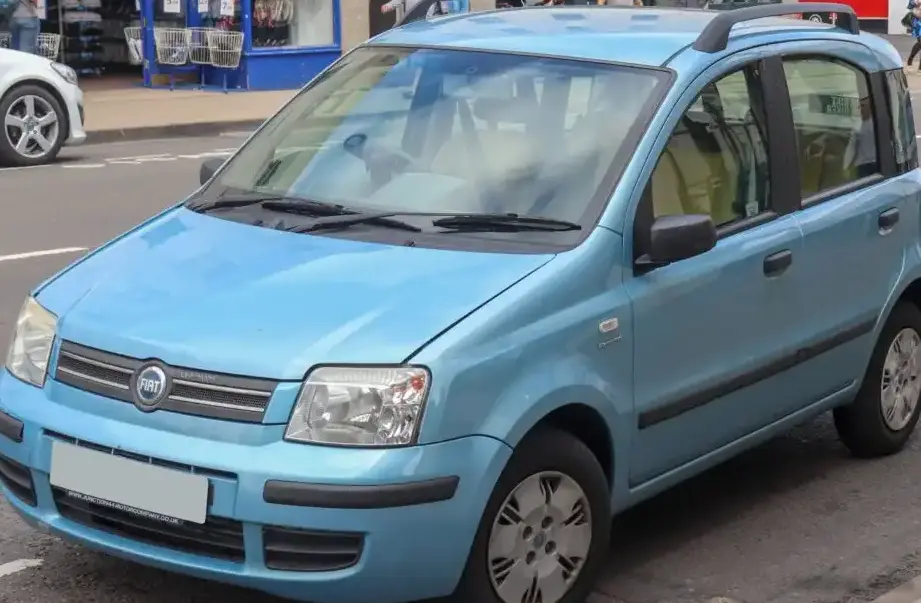
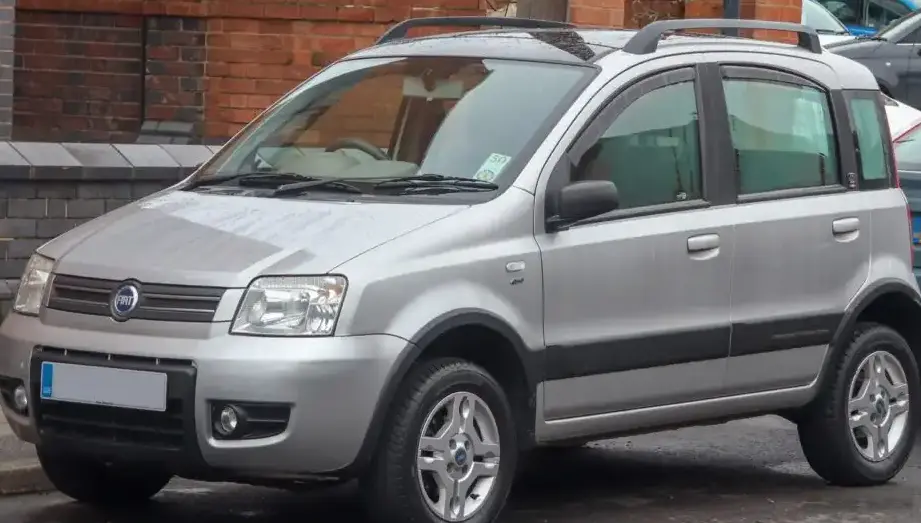
The Fiat Panda II 4×4 1.3 16V Multijet, launched in 2010, was a continuation of Fiat’s long-standing tradition of producing small, affordable, and surprisingly capable vehicles. Built on the Panda II platform (also shared with the Fiat 500 and Lancia Ypsilon – 1HX0/A3 project), this variant distinguished itself with its permanent four-wheel-drive system and a relatively efficient 1.3-liter Multijet diesel engine. It aimed to provide a solution for drivers needing all-weather traction without the expense or size of a larger SUV. Production was limited, ending in January 2012, making it a relatively rare find today.
Powertrain & Engine Architecture
At the heart of the Panda II 4×4 was the 169A1000 engine, a 1.3-liter inline-four cylinder diesel. This engine was a member of Fiat’s Multijet family, utilizing second-generation common rail direct injection technology. This system allowed for multiple injections per combustion cycle, improving efficiency, reducing noise, and enhancing driveability. The engine produced 75 horsepower at 4000 rpm and 145 Nm (106.95 lb-ft) of torque at 1500 rpm. The engine featured a single overhead camshaft (SOHC) design with four valves per cylinder (16V). A turbocharger with an intercooler was employed to boost power and torque. The 4×4 model exclusively came with a five-speed manual transmission, chosen for its robustness and efficiency. The four-wheel-drive system was a torque-on-demand setup, primarily driving the front wheels but automatically engaging the rear wheels via a viscous coupling when front wheel slip was detected.
Driving Characteristics
The 1.3 Multijet engine, while not particularly powerful, provided adequate performance for everyday driving. Acceleration was modest, taking around 16 seconds to reach 60 mph, but the engine’s strong low-end torque made it feel more responsive in real-world conditions. The five-speed manual transmission was well-matched to the engine’s characteristics, offering a reasonable spread of gears. The 4×4 system significantly enhanced traction on slippery surfaces, making the Panda II 4×4 a surprisingly capable vehicle in snow, mud, and gravel. Compared to the standard front-wheel-drive Panda, the 4×4 model felt more planted and secure, particularly when cornering on loose surfaces. However, the added weight of the 4×4 system did slightly impact fuel economy and handling on dry pavement.
Equipment & Trim Levels
The Panda II 4×4 1.3 Multijet was generally well-equipped for its price point. Standard features included air conditioning, power steering, ABS brakes, and a radio/CD player. The interior was functional and durable, with hard-wearing plastics and cloth upholstery. Optional extras included alloy wheels, electric windows, and central locking. The interior design was typical of the Panda II, prioritizing practicality and space efficiency over luxury. The rear seats could be folded down to increase cargo capacity, making the Panda II 4×4 a versatile vehicle for carrying both passengers and luggage.
Chassis & Braking
The Panda II 4×4 utilized a McPherson strut front suspension with a stabilizer bar, providing a comfortable and controlled ride. The rear suspension was a semi-independent twist beam setup, which was simple and effective. The braking system consisted of ventilated discs on the front wheels and drum brakes on the rear. While adequate for the vehicle’s weight and performance, the rear drum brakes were a cost-saving measure and didn’t offer the same stopping power as disc brakes. The steering was a rack-and-pinion system with electric power assistance, providing light and precise steering feel.
Market Reception & Comparison
The Panda II 4×4 1.3 Multijet was generally well-received by automotive critics, who praised its affordability, fuel efficiency, and surprisingly capable four-wheel-drive system. It was often compared to other small, all-wheel-drive vehicles, such as the Suzuki Swift 4×4 and the Dacia Sandero Stepway. The Panda II 4×4 offered a more affordable alternative to these competitors, but it lacked some of their refinement and features. Fuel economy was a strong point, with combined fuel consumption averaging around 48 US mpg. Reliability was generally good, although the diesel engine required regular maintenance to ensure optimal performance.
Legacy
The Fiat Panda II 4×4 1.3 Multijet has become a sought-after vehicle in the used car market, particularly among enthusiasts and those seeking a reliable and affordable all-wheel-drive vehicle. The 169A1000 engine is known for its durability, but regular servicing is essential to prevent issues. The 4×4 system is generally robust, but the viscous coupling may require replacement after many years of use. The Panda II 4×4 represents a unique and practical offering from Fiat, combining the affordability and efficiency of the Panda with the added capability of four-wheel drive. Its limited production run and growing popularity among enthusiasts ensure that it will remain a desirable vehicle for years to come.